Full article · 7 min read
Failed supernovae: when a star dies without the fireworks
Most people imagine a supernova as the ultimate cosmic finale: a star detonates in a blast so bright it can briefly rival the light of an entire galaxy. But not every massive star ends its life in such a dramatic display. Some appear to do something far stranger. They collapse, dim, and seem to vanish.
That possibility has turned the death of certain stars into one of the most intriguing ideas in astronomy: the failed supernova. Instead of producing a brilliant explosion, a collapsing star may form a black hole with little radiated energy, leaving behind almost no visible show at all.
What a supernova usually is
A supernova is a powerful and luminous explosion of a star. It can happen in two broad ways: either a white dwarf is pushed into runaway nuclear fusion, or the core of a massive star suddenly collapses under its own gravity.
In the massive-star version, nuclear fusion inside the star normally pushes outward while gravity pulls inward. That balance cannot last forever. Once the core can no longer produce enough energy from fusion to support the star against its own weight, collapse begins.
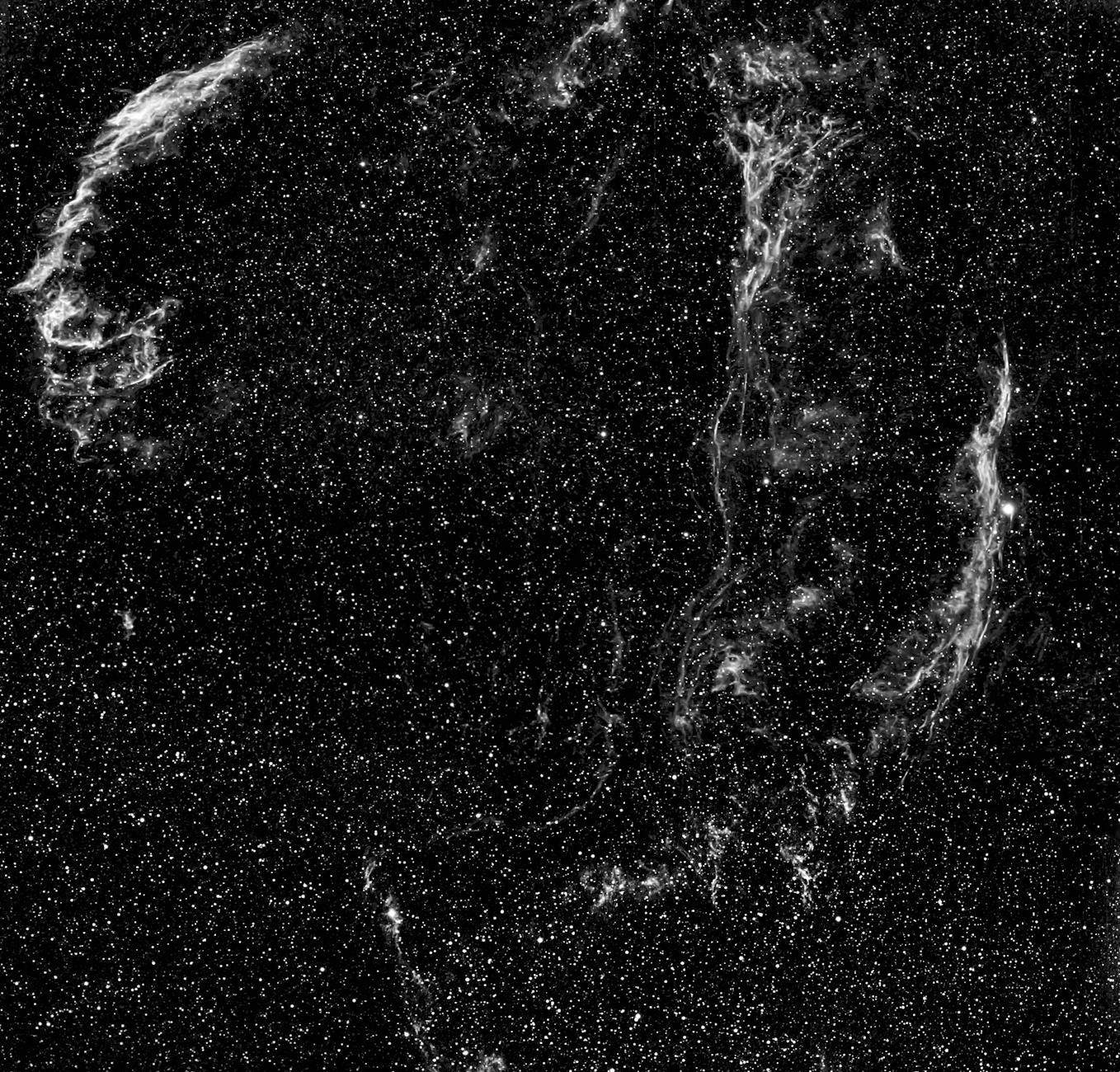
In many cases, that collapse leads to a violent expulsion of the star’s outer layers. Material can be blasted outward at speeds up to several percent of the speed of light. The explosion drives a shock wave into surrounding gas and dust, creating a supernova remnant and scattering heavy elements into space.
But this familiar story may not always happen.
When the rebound fails
A failed supernova is what astronomers call the core collapse of a massive star that does not result in a visible supernova. In plain terms, the star starts to die in the usual way, but the mechanism that would reverse the collapse into an explosion does not succeed.
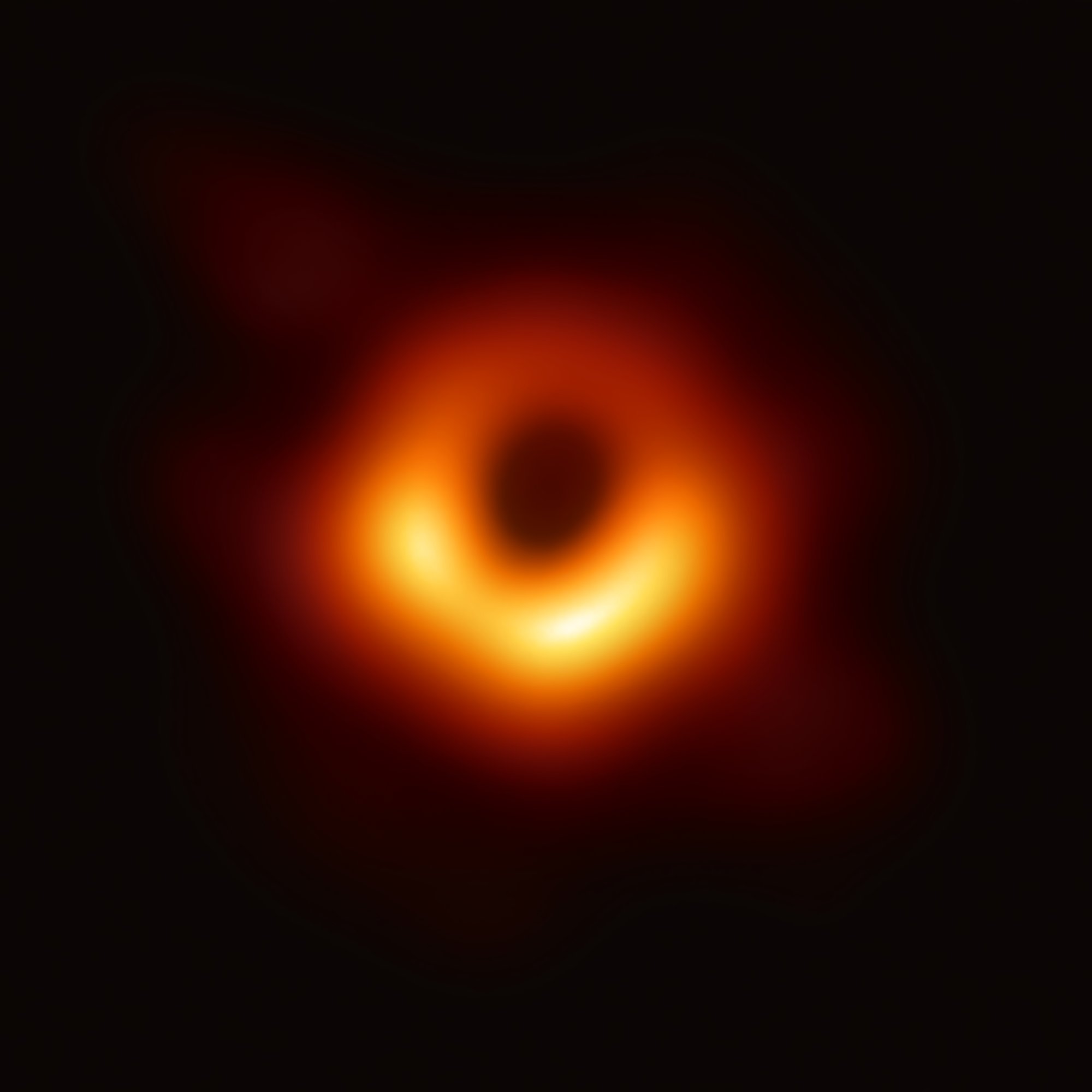
Why might that happen? One leading possibility is that the core is simply too massive. During core collapse, a star’s center can compress to extraordinary densities. In lower-mass cases, the collapse may halt and leave behind a neutron star. But in heavier cases, the core may continue inward and form a black hole.
If the collapse cannot be reversed by whatever process normally powers the explosion, then the star may not blow off its outer layers in a bright display. Instead, it may collapse inward with very little visible radiation. The result is an event that is much harder to detect than an ordinary supernova.
This is the idea behind the episode’s haunting phrase: a star that dies without a show.
The case of N6946-BH1
One of the best-known candidate examples is N6946-BH1 in the galaxy NGC 6946. This object drew attention because it did not behave like a typical brilliant supernova.
Instead, it underwent a modest outburst in March 2009 and then faded from view. Afterward, only a faint infrared source remained at the star’s location.
That pattern is exactly what makes the object so compelling. There was some activity, but not the kind of bright, sustained event expected from a normal supernova. Then the star effectively disappeared from ordinary view, as if it had quietly winked out.
Infrared light is light just beyond red in the spectrum, often associated with heat. A faint infrared source suggests that something may still be present or that surrounding material is still glowing weakly, even though the visible star is gone.
Why these events are so difficult to find
Ordinary supernovae are already rare in any one galaxy. In the Milky Way, they are thought to occur only a few times per century on average. Failed supernovae are even trickier because they may produce little light.
That creates an observational challenge. Astronomers are used to finding stellar deaths by looking for something new and bright. But a failed supernova may be more like a subtraction than an addition: a star that was there is suddenly no longer there.
To catch one, astronomers need repeated observations of the same stars over time. They must notice not a flash, but a disappearance. That means careful long-term monitoring, and even then the evidence can be subtle: a modest outburst, fading brightness, then darkness except perhaps for weak infrared emission.
Because these events are so hard to catch, astronomers suspect there could be a hidden population of massive stars that skip the bright finale entirely.
Implosion instead of explosion
The word implosion is useful here. An explosion sends material outward in a violent blast. An implosion is the opposite idea: collapse inward.
Massive stars nearing the ends of their lives are already in a precarious state. Their cores evolve through fusion of heavier and heavier elements. Eventually, the core can no longer support the overlying layers. Gravity wins. The center collapses at enormous speed.
In the better-known supernova picture, that collapse somehow powers the outer layers back outward. In a failed supernova, the outward rescue appears to fail. The star does not light up the sky. It simply falls inward and likely forms a black hole.
That is what makes the phenomenon so eerie. A huge star, perhaps a red supergiant, can spend ages shining and then disappear with barely a trace.
The red supergiant connection
A red supergiant is a very large, cool star in a late stage of life. These stars are among the expected progenitors of many core-collapse supernovae. In fact, the next supernova in the Milky Way is thought likely to come from the collapse of an unremarkable red supergiant.
But red supergiants may not all meet the same end. Some appear to explode visibly. Others may not. The possible existence of failed supernovae suggests that at least some massive stars may collapse directly into black holes.
That matters because it could help explain why certain kinds of expected stellar deaths seem to be missing from the sky. If some massive stars do not produce a bright supernova at all, then the census of stellar endings changes.
Why failed supernovae matter
This is not just a curiosity. Failed supernovae touch on some major questions in astrophysics.
First, they may reveal how black holes form. If a massive star can collapse directly into a black hole with little radiated energy, then black hole birth can sometimes be surprisingly quiet.
Second, they may help explain gaps between theory and observation in the study of supernova progenitors. Astronomers know that core-collapse supernovae come from massive stars, but the full picture of which stars explode visibly and which do not remains incomplete.
Third, failed supernovae remind us that the universe is not always flashy. Some of the most dramatic transformations may leave only indirect clues.
A different kind of cosmic detective story
There is something almost unsettling about the idea. We expect the death of a massive star to announce itself. Instead, astronomy sometimes finds the opposite: a star dims, vanishes, and leaves behind only weak infrared light.
That turns the search into a detective story. Researchers are not just chasing bright transients. They are comparing images over years, checking whether a known star is still present, and asking whether darkness itself is evidence.
In that sense, failed supernovae are among the most ghostly events in the sky. They do not proclaim themselves with brilliance. They hide in silence.
The quiet ending of a giant star
A supernova is one of the most powerful events in the universe, but not every massive star seems to get that spectacular farewell. Some may undergo core collapse, fail to launch a visible explosion, and slip directly into a black hole.
N6946-BH1 remains a striking example of this possibility: a modest outburst, then disappearance, with only faint infrared left behind. If more such objects are found, they may show that many stars do not end with fireworks after all.
Some of the universe’s biggest deaths may be its quietest.
Sources
Based on information from Supernova.
More like this
Some stars go out in silence — don’t let your curiosity do the same. Download DeepSwipe and catch the hidden stories of the universe.