Full article · 8 min read
Comets and the Origins of Life: Did Icy Wanderers Bring Earth’s Building Blocks?
Comets have long captured human imagination, but they are more than dramatic objects with glowing comas and sweeping tails. These icy bodies may also hold clues to one of the biggest questions in science: how the ingredients for life reached Earth.
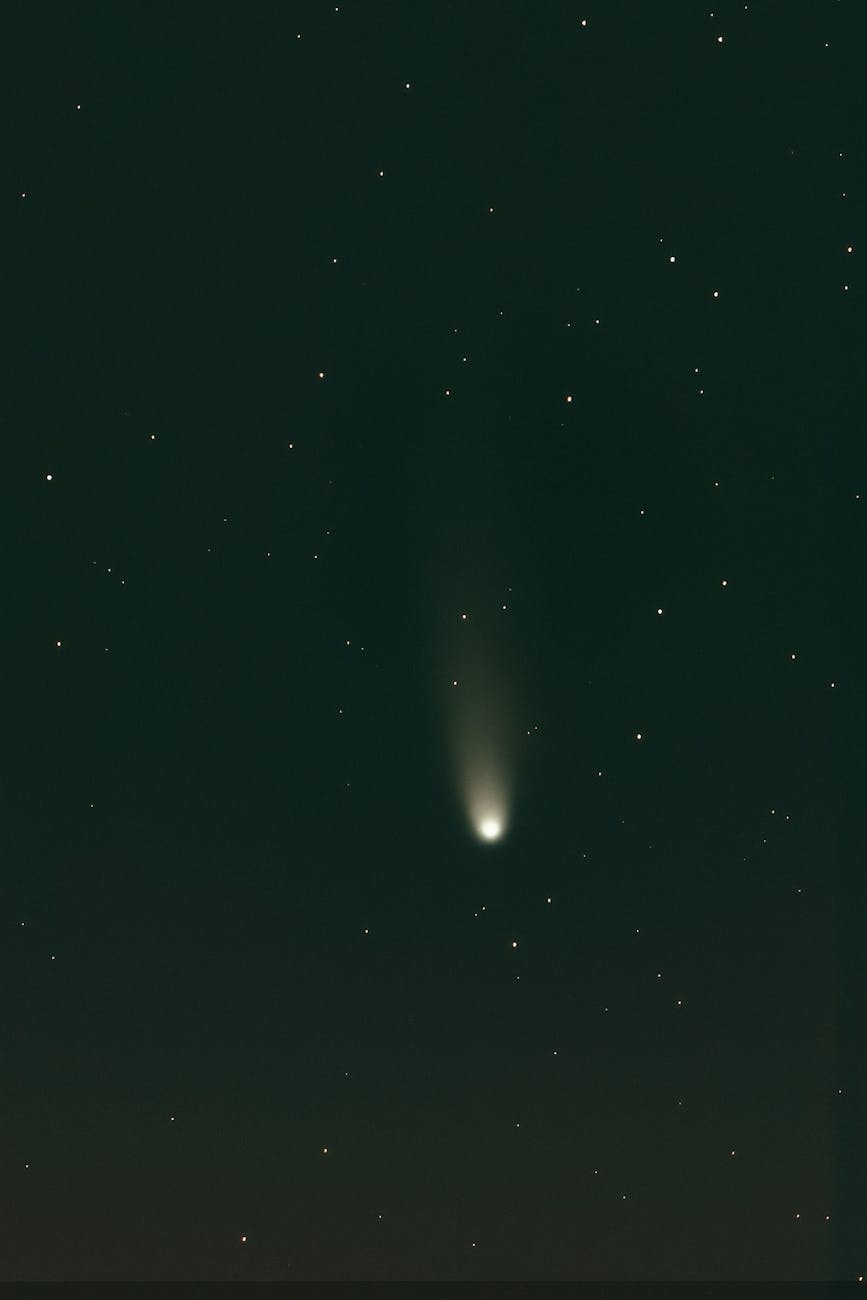
A comet is a small icy body that begins releasing gas when it passes close to the Sun. This process, called outgassing, creates a thin atmosphere around the nucleus known as a coma, and often a tail of gas and dust. Inside the nucleus are mixtures of ice, dust, and rocky material. Importantly for the story of life, comet nuclei also contain a variety of organic compounds.
Organic compounds are carbon-based molecules. That does not mean they are alive, but carbon chemistry is central to life as we know it. Because comets preserve material from the Solar System’s colder outer regions, they are often studied as possible cosmic carriers of the raw materials that living systems need.
Why comets matter in the life debate
Many scientists have suggested that comets striking the young Earth about 4 billion years ago may have delivered vast quantities of water, or at least a significant portion of it. That idea is famous, but it remains debated. Some researchers support a major cometary role, while others have cast doubt on it.
Even beyond water, comets are intriguing because they contain organic molecules in significant quantities. This has led to speculation that comets or meteorites may have brought the precursors of life to Earth. A precursor of life is not life itself, but rather a chemical ingredient that could help life emerge.
That possibility becomes even more interesting when you look at what has actually been detected in comets.
Comets carry organic molecules
The surface and dust of comets are not just frozen water and rock. Cometary nuclei contain a range of organic compounds that may include methanol, hydrogen cyanide, formaldehyde, ethanol, ethane, and perhaps even more complex molecules such as long-chain hydrocarbons and amino acids.
Amino acids matter because they are the molecules that make up proteins. Proteins are essential parts of living systems, so finding amino acids in comet-related material immediately raises exciting questions about whether comets helped stock the early Earth with chemical building blocks.
One especially important result came in 2009, when the amino acid glycine was confirmed in comet dust returned by NASA’s Stardust mission. Stardust collected material from the comet Wild 2 and brought it back to Earth for analysis. Glycine is the simplest amino acid, and its detection showed that at least some ingredients linked to biology can be present in comet material.
There was another provocative clue in 2011, when a report based on NASA studies of meteorites found on Earth suggested that DNA and RNA components, including adenine and guanine, may have formed on asteroids and comets. DNA and RNA are the molecules used by life to store and transmit genetic information, so even the possibility that some of their components can form in such bodies is a major reason comets remain central to origin-of-life discussions.
Clues from comet dust changed the picture
The Stardust mission did more than detect glycine. It also found that some material from a comet’s tail was crystalline and could only have formed at extremely high temperatures of over 1,000 °C. That is surprising because comets formed in the outer Solar System, a much colder environment.
This finding suggested that material in the early Solar System was mixed around far more than once imagined. Hot inner Solar System material appears to have been redistributed through the protoplanetary disk, the disk of gas and dust from which the planets formed. As a result, comets may preserve not just cold outer material, but a record of conditions from very different parts of the young Solar System.
That matters for the life question because it means comets may contain a chemically rich blend of ingredients rather than a simple frozen sample of the outer Solar System.
The Stardust findings were so striking that they pushed scientists to rethink the nature of comets and how sharply they can be distinguished from asteroids.
Can impacts actually make life-related molecules?
One of the most fascinating ideas is that comets may not only carry useful molecules, but also help create them.
In 2013, it was suggested that impacts between rocky and icy surfaces, such as comet impacts, had the potential to create amino acids through shock synthesis. Shock synthesis is a process in which the enormous pressure and energy of an impact drive smaller molecules into forming larger ones.
In simple terms, a high-speed collision does not just smash things apart. Under the right conditions, it can also force chemistry to happen very quickly. According to this idea, the speed at which comets entered an atmosphere, combined with the energy released on impact, could allow smaller molecules to condense into larger macro-molecules that served as a foundation for life.
This makes comets especially compelling in origin-of-life research. They may have delivered ingredients, and their impacts may also have helped transform those ingredients into more complex chemistry.
Did comets bring Earth’s water?
The idea that comets delivered Earth’s water is one of the most famous comet theories. The young Earth endured many collisions with comets and asteroids, and some scientists think those impacts brought much of the water that now fills Earth’s oceans, or at least a significant share of it.
But this question is not settled. The evidence has not closed the debate, and some scientists remain skeptical of a dominant cometary role. So while comets are serious candidates in the story of Earth’s water, they are not a confirmed answer.
Comets may also have delivered water elsewhere. Over long timescales, comet impacts are suspected of bringing significant quantities of water to Earth’s Moon, where some of it may have survived as lunar ice.
The 67P oxygen surprise
Comets are also important because they can stop scientists from making the wrong assumptions.
In 2015, scientists found significant amounts of molecular oxygen in the outgassing of comet 67P/Churyumov–Gerasimenko. Molecular oxygen is O2, the same form of oxygen humans breathe. Because oxygen is often discussed as a possible sign of life, this discovery was a major twist.
The result suggested that molecular oxygen may occur more often in non-living settings than had been thought. In other words, O2 may be less reliable as a biosignature than many people assumed.
A biosignature is a chemical sign that might indicate life. The discovery at 67P showed that at least some molecules often associated with biology can arise without biology. That does not weaken the importance of comet research. It strengthens it, because understanding non-biological chemistry is essential if scientists want to recognize true signs of life elsewhere.
What comets are made of beneath the drama
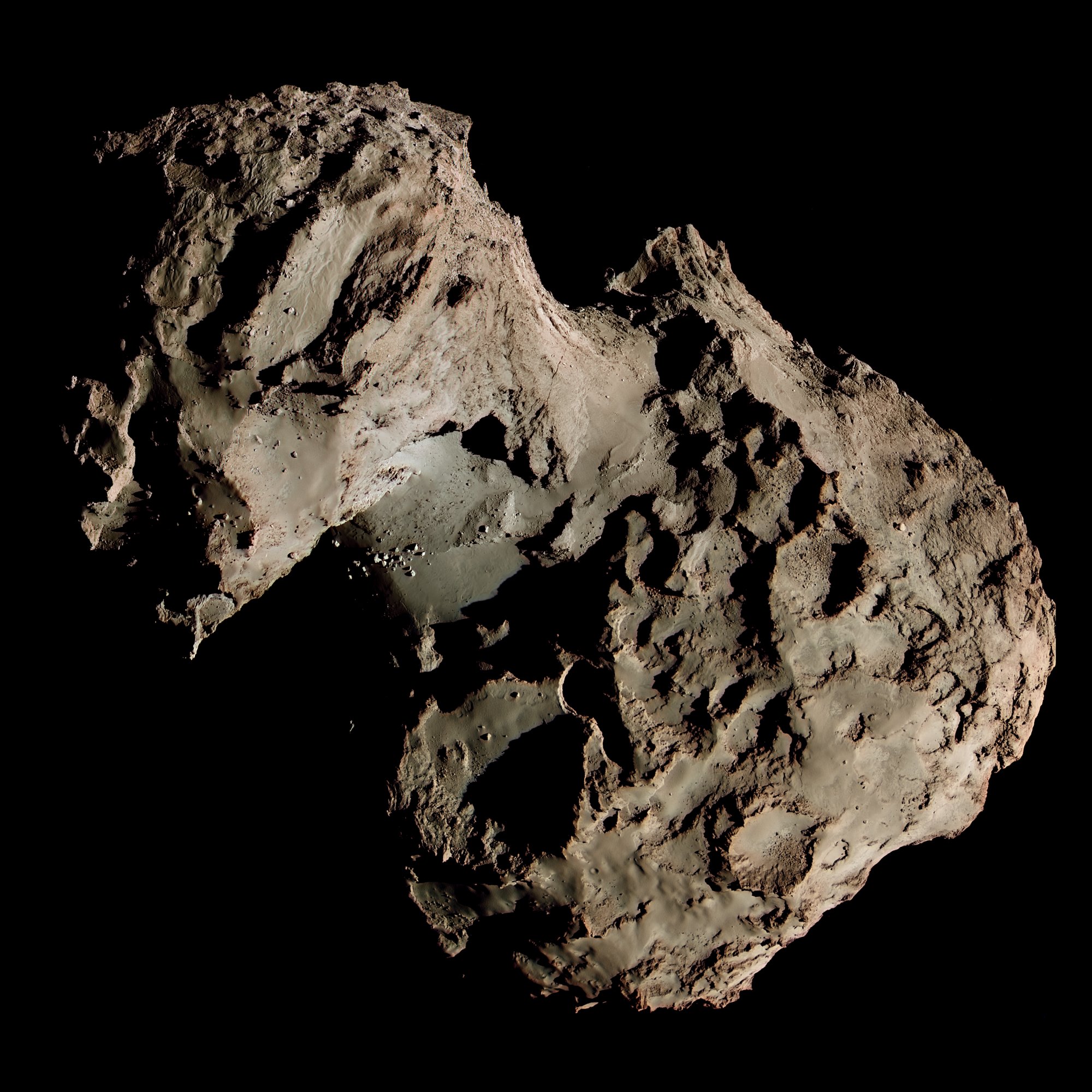
Part of what makes comets so useful is their composition. Their nuclei are made from rock, dust, water ice, and frozen carbon dioxide, carbon monoxide, methane, and ammonia. The surface is often dark, dry, and dusty, with ices hidden below a crust several meters thick.
They are also surprisingly dark objects. Halley’s Comet reflects only about four percent of the light that falls on it, and Comet Borrelly reflects even less than three percent. That low reflectivity helps comet surfaces absorb heat, which drives the outgassing that creates the coma and tails.
When a comet gets close enough to the Sun, water can make up to 90% of the volatile material flowing out from the nucleus. Volatile materials are substances that vaporize easily when heated. This released gas and dust forms the comet’s coma, which can grow to enormous size, sometimes even larger than the Sun.
These spectacular features are not just pretty. They are the source of dust and gas that spacecraft can sample, allowing scientists to analyze comet chemistry directly.
Why the question remains open
The case for comets as carriers of life’s ingredients is tantalizing because multiple pieces fit together:
- comets contain organic compounds
- glycine has been found in comet dust
- studies suggest DNA and RNA components may have formed on asteroids and comets
- impacts may be able to create amino acids through shock synthesis
- comets may have delivered some of Earth’s water
And yet, none of this amounts to final proof that comets caused life to begin.
That is the key distinction. Comets may have delivered ingredients. They may have contributed water. They may have helped generate more complex molecules during impacts. But the full chain from comet chemistry to living organisms is not established.
So the most honest answer is also the most exciting one: comets remain one of the strongest and most fascinating candidates in the search for how Earth became habitable and chemically fertile.
Cosmic messengers, not magical answers
Comets are not simple “life seeds” drifting through space with ready-made organisms inside them. The more grounded and powerful idea is that they may be cosmic messengers carrying useful chemistry from the early Solar System.
They preserve ices, dust, and organics. They reveal how material moved through the Solar System when it was young. They may have struck Earth with both water and carbon-based molecules. And their chemistry keeps reminding scientists that nature can produce surprisingly life-like ingredients without any biology involved.
That combination is exactly why comets matter so much. They sit at the crossroads of astronomy, chemistry, and the story of life itself.
Sources
Based on information from Comet.
More like this
Chase the tail of curiosity — download DeepSwipe and explore big cosmic questions, one swipe at a time.