Full article · 8 min read
Black Holes, Hawking Radiation, and Why the Universe Still Feeds Them
Black holes are famous for trapping light, but quantum theory gives them a surprising twist: they are not perfectly black. They are expected to emit a faint thermal glow known as Hawking radiation. That idea sounds dramatic enough on its own, yet the real cosmic punchline is even stranger. For the black holes astronomers actually observe, this glow is so weak that the universe warms them faster than they cool.
In other words, black holes can radiate and still gain mass.
What Hawking radiation actually means
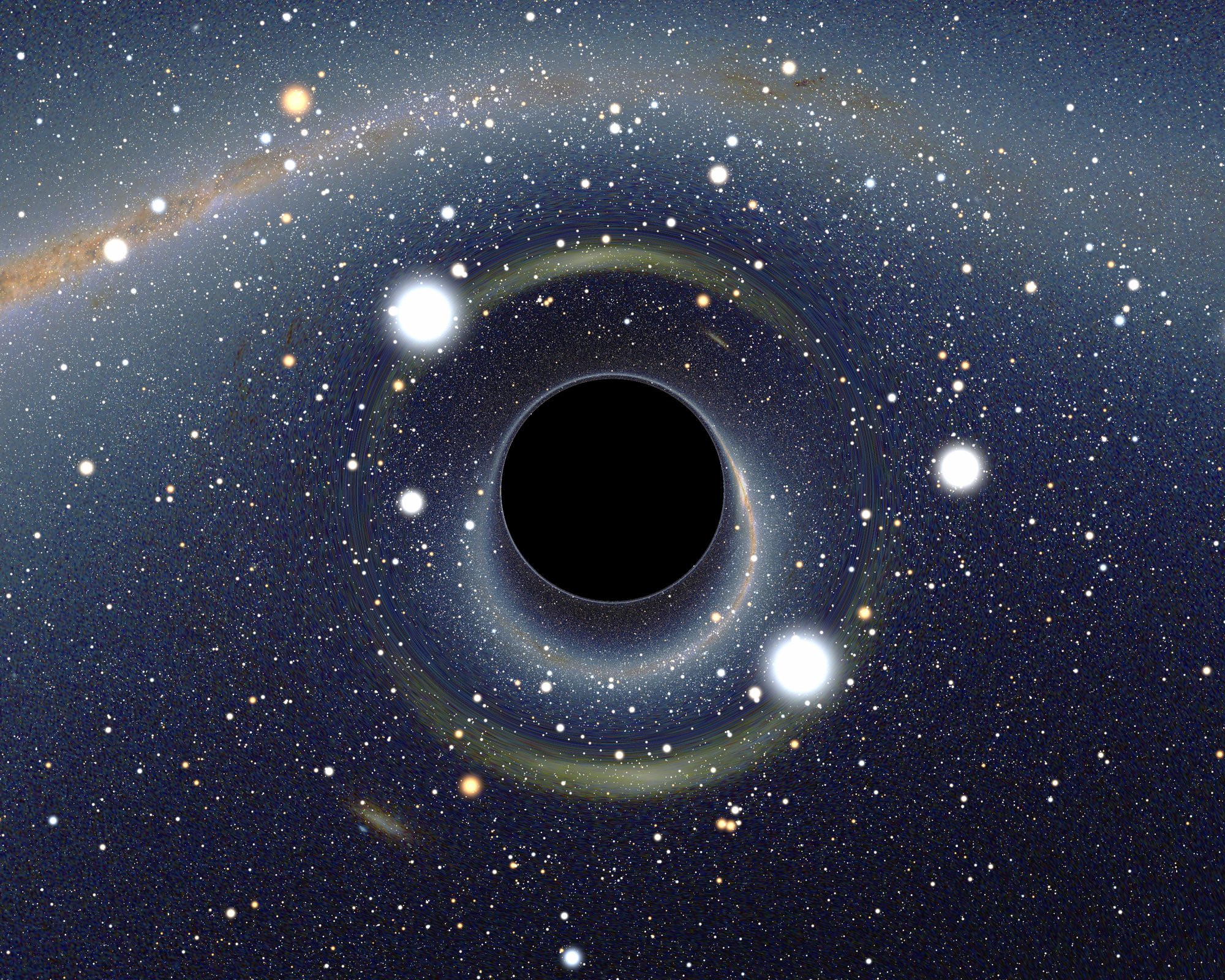
In black hole physics, Hawking radiation is the prediction that an event horizon emits radiation with a temperature. The event horizon is the boundary around a black hole beyond which nothing can escape. In everyday descriptions, it is often called the point of no return.
This radiation is a quantum effect, and its strength depends on the black hole’s mass. The larger the black hole, the lower its temperature and the weaker its emission. The article states this clearly: the Hawking temperature is inversely proportional to mass. So if you make a black hole more massive, you make it colder.
That reverses a lot of normal intuition. A hotter stove radiates more if you make it bigger, but a black hole behaves differently. In black hole thermodynamics, a small black hole is the one that would radiate more intensely, while a large one becomes extraordinarily cold.
A black hole colder than deep space
For a stellar black hole with a mass equal to that of the Sun, the Hawking temperature would be about 62 nanokelvins. A nanokelvin is one billionth of a kelvin, and a kelvin is a temperature unit measured from absolute zero.
That number is almost absurdly tiny. The cosmic microwave background, the leftover glow from the Big Bang that fills the universe, has a temperature of about 2.7 kelvins. Compared with that background radiation, a one-solar-mass black hole is frigid.
This matters because heat tends to flow from hotter surroundings toward colder objects. Since the universe around such a black hole is warmer than the black hole’s Hawking temperature, the black hole absorbs more energy from the cosmic microwave background than it loses through Hawking radiation.
So although Hawking radiation makes black holes lose mass in principle, stellar black holes in the present universe are not shrinking overall. They are growing.
Why observed black holes are not evaporating away
The smallest observed class of black holes discussed here is stellar black holes, which form from gravitational collapse of massive stars. These are already too massive and too cold to evaporate faster than they gain energy from the cosmic microwave background.
The article explains that stellar-mass or larger black holes receive more mass from the cosmic microwave background than they emit through Hawking radiation. That means the black holes known from collapsed stars are not in danger of disappearing by Hawking evaporation any time soon.
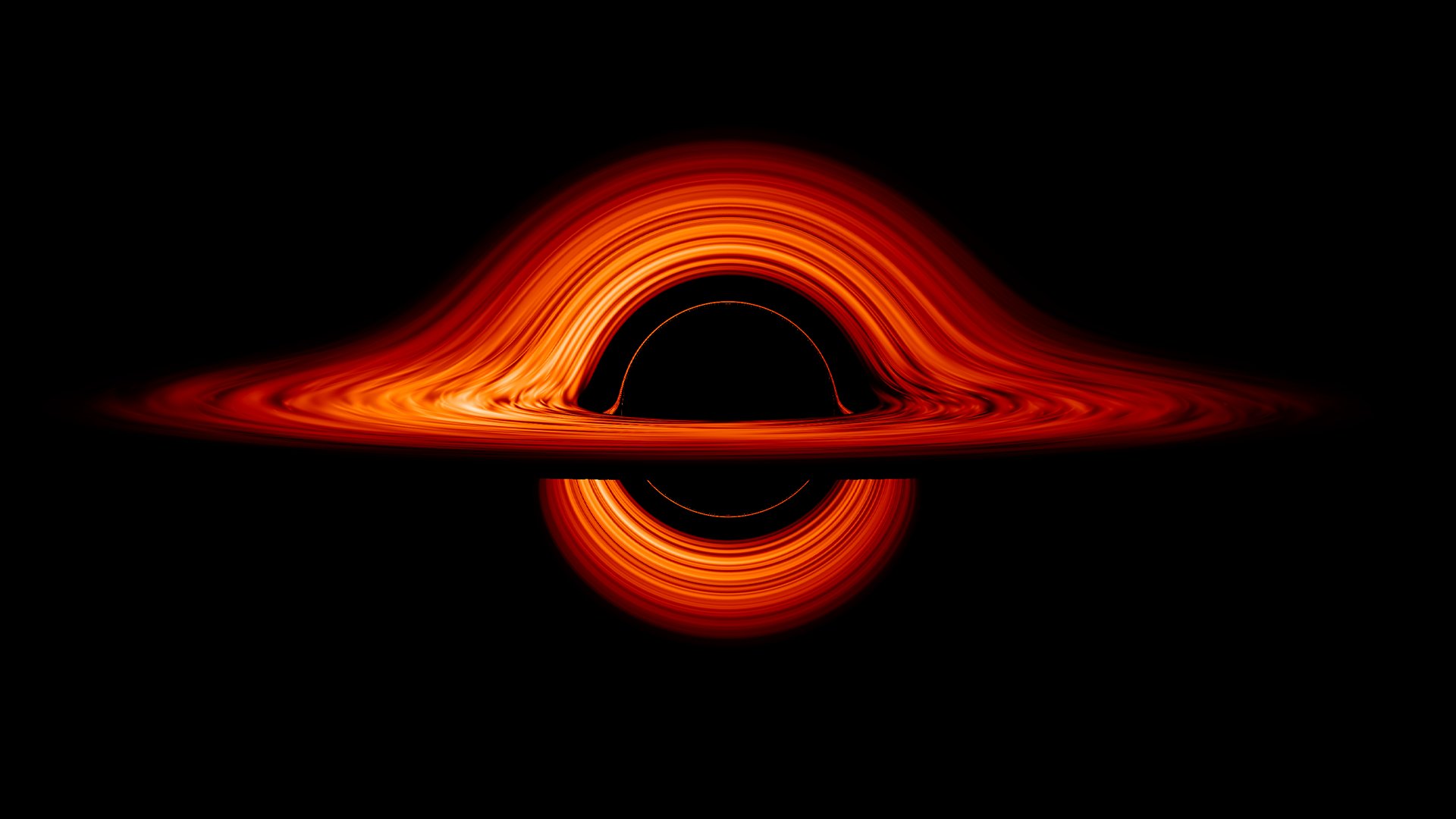
This also helps explain why Hawking radiation has remained so hard to detect directly. For astrophysical black holes, the expected emission is exceedingly weak. Black holes may be associated with violent and brilliant phenomena such as X-rays, accretion disks, quasars, and jets, but those are produced by surrounding matter, not by Hawking radiation itself. The Hawking glow is far fainter.
How small would a black hole need to be to evaporate today?
To have a Hawking temperature greater than the 2.7-kelvin cosmic microwave background, a black hole would need to be less massive than the Moon. The article adds a vivid size comparison: such a black hole would have a diameter of less than a tenth of a millimetre.
That is one of the strangest size-to-mass combinations in physics. A black hole lighter than the Moon could be smaller than a grain of dust in diameter and still pack in enough mass to qualify as a black hole.
Only black holes below that threshold would be hot enough to lose mass faster than they gain it from the ambient radiation of the universe today. Those are not the ordinary black holes formed by collapsing stars. They would have to belong to a different category, such as primordial black holes.
Primordial black holes: ancient, hypothetical, and potentially explosive
Primordial black holes are hypothetical black holes that may have formed in the early universe, soon after the Big Bang, from dense fluctuations in spacetime. Unlike stellar black holes, they would not need to come from stars at all.
Because primordial black holes could in principle have formed with a huge range of masses, some might have been extremely small. The article notes that primordial black holes with masses less than 10^15 grams would have evaporated by now due to Hawking radiation.
That raises an exciting possibility. If some low-mass primordial black holes survived long enough to reach their final stages of evaporation in the modern universe, they should produce a burst of gamma rays. Gamma rays are the highest-energy form of electromagnetic radiation, much more energetic than visible light or X-rays.
Those final flashes would be a spectacular signature of Hawking evaporation in action.
The missing gamma-ray flashes
Astronomers have searched for these predicted bursts, but so far they have not found them. The article states that searches for flashes from the last stage of primordial black hole evaporation have been unsuccessful. It also notes that NASA’s Fermi Gamma-ray Space Telescope has searched for such flashes and has not yet found any.
That absence matters. It places strong limits on how many low-mass primordial black holes can exist. Modern research cited here predicts that primordial black holes must make up less than a fraction of 10−7 of the universe’s total mass.
So the lack of gamma-ray bursts is not just a disappointing non-detection. It is useful evidence. It narrows the possibilities for primordial black holes and for where Hawking radiation might be observable.
Black hole evaporation is real in theory, but slow in practice
If Hawking’s theory is correct, black holes lose mass over time by emitting photons and other particles. This gradual loss is often called black hole evaporation. But the timescale depends enormously on mass.
Small black holes are hotter and radiate more strongly. Large black holes are colder and radiate less. Since the black holes astronomers usually study are stellar-mass or supermassive, their Hawking emission is tiny. In fact, large black holes emit less radiation than small ones, and in today’s universe they are effectively being bathed in warmer background radiation.
That creates a fascinating contrast between theory and observation:
- In theory, black holes are not eternal and can evaporate.
- In the current universe, known astrophysical black holes are too cold to shrink overall.
- The best chance of seeing late-stage evaporation would come from very small primordial black holes.
- Searches for those expected final gamma-ray flashes have so far found nothing.
The wider significance of Hawking radiation
Hawking radiation is important far beyond the question of whether black holes glow. It connects general relativity, which describes gravity as the curvature of spacetime, with quantum mechanics, which governs the behaviour of matter and radiation on very small scales.
It also transformed black holes from simple cosmic traps into thermodynamic objects with temperature and entropy. Work by Bardeen, Bekenstein, Carter, and Hawking helped establish black hole thermodynamics, where properties such as mass, surface area, and surface gravity are related to concepts like energy, entropy, and temperature.
That shift changed black holes from being viewed mainly as odd mathematical solutions into deep physical systems tied to some of the biggest unsolved questions in physics.
One of those questions is the information paradox. If black holes are defined only by mass, charge, and angular momentum, and if they slowly evaporate through Hawking radiation that appears not to preserve the detailed information about what fell in, then what happens to that information? The article presents this as an unresolved issue and one that may be important for any future theory of quantum gravity.
The cosmic irony of black holes today
Black holes have a reputation as unstoppable consumers, and Hawking radiation seems at first to challenge that image. But for the black holes we actually observe, the universe still wins the feeding contest.
A stellar black hole may have a temperature of only 62 nanokelvins, vastly colder than the 2.7-kelvin cosmic microwave background. That means it absorbs more from the leftover heat of the Big Bang than it emits as Hawking radiation. Instead of fading away, it gains mass.
Only much smaller black holes, lighter than the Moon and tiny enough to fit within a sub-millimetre scale, would be hot enough to evaporate in today’s universe. If any such primordial black holes are out there, their final moments should blaze in gamma rays. Yet the sky has not revealed those flashes.
So the current picture is beautifully strange: black holes glow, but most known black holes are too cold for that glow to beat the warmth of the cosmos around them.
Sources
Based on information from Black hole.
More like this
Black holes may lose a little and gain a lot—do the same with your brain. Download DeepSwipe and accrete fresh knowledge daily.