Full article · 8 min read
Africa: Why the Name Has So Many Possible Origins
The word “Africa” feels simple today: it names a vast continent stretching across the equator and containing immense cultural, historical, and environmental diversity. But the name itself has a surprisingly tangled past. Its history is full of old languages, shifting empires, competing explanations, and changing maps.
What makes the story especially fascinating is that there is no single, universally settled origin. Instead, “Africa” sits at the crossroads of Roman geography, North African peoples, Berber vocabulary, Phoenician comparisons, Arabic continuity, and later historical speculation. In other words, the name has endured for centuries precisely because it gathered meanings as it traveled.
The Roman starting point: Afri
One of the oldest anchors for the name is the Latin word Afri. Romans used this term for the inhabitants of what they understood as northern Africa west of the Nile. In its broadest use, it could refer to lands south of the Mediterranean that were also known in antiquity as Ancient Libya.
This matters because it suggests that “Africa” may have begun not as the name of an entire continent, but as a name connected to a particular people or region. Over time, that regional label expanded. As geographical knowledge widened, so did the scope of the word.
The article traces Afri to what seems to have been a native Libyan tribe, linked to the ancestors of modern Berbers. Berbers are the Indigenous peoples of much of North Africa, and Berber languages are a major language family of the region. If this line of interpretation is right, then “Africa” may have deep roots in North African ethnonyms rather than being merely a label imposed from outside.
Dust or caves? Two famous linguistic ideas
Among the best-known explanations are two very different word origins.
The first connects the name to the Phoenician word ʿafar, meaning “dust.” Phoenicians were ancient seafaring traders whose language circulated widely around the Mediterranean. A connection to “dust” sounds plausible in a poetic sense, especially for lands associated with arid zones, but it remains a hypothesis rather than a settled fact.
The second major idea links the term to the Berber word ifri, with the plural ifran, meaning “cave,” supposedly in reference to cave dwellers. This explanation gained support in a 1981 hypothesis. It also has the attraction of connecting the name directly to North African language and place traditions.
That same Berber root appears in several names. It is associated with the Banu Ifran, a Berber tribe from Algeria and Tripolitania, originally from Yafran in northwestern Libya, and also with the Moroccan city of Ifrane. These echoes make the “ifri” theory especially memorable: it gives the name “Africa” a possible family of related words still visible in the geography and history of North Africa.
How Carthage helped preserve the name
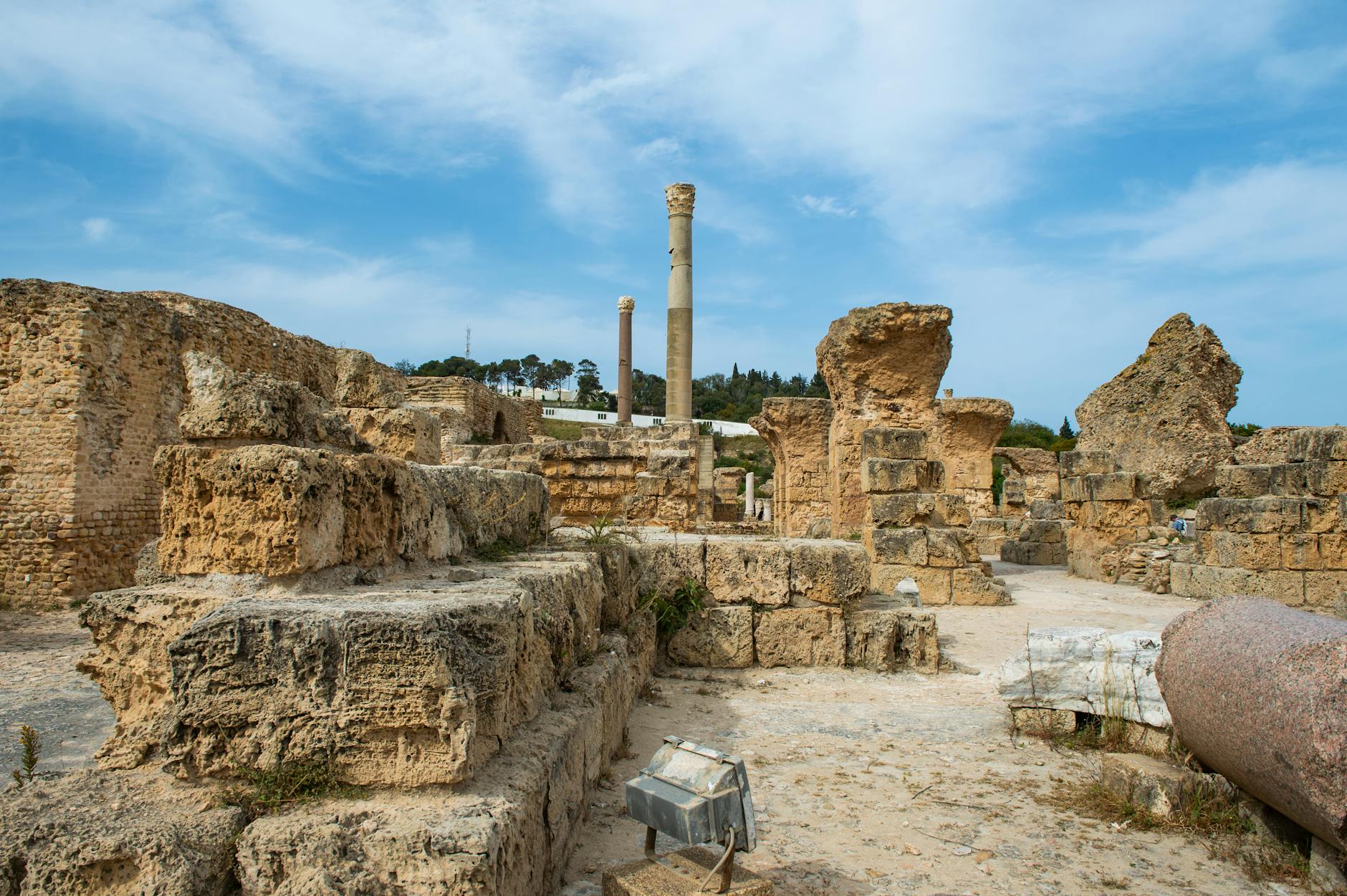
The Roman world gave the word one of its most durable political forms. After Rome defeated Carthage in the Third Punic War in 146 BC, Carthage became the capital of the province called Africa Proconsularis. This province included the coastal part of what is now modern Libya as well as territory centered on the old Carthaginian sphere.
This was a crucial moment. Once a name becomes attached to a formal province of a powerful empire, it tends to survive. Administrative language has a long memory. “Africa” was no longer just a label for a people; it was now embedded in Roman political geography.
The Latin suffix “-ica” can denote a land, which helps explain how an ethnonym or regional name could become the name of a larger territory. The article gives Celtica as a parallel example. In that sense, Africa can be understood as a Roman-style territorial naming form built from an older root.
Ifriqiya: the medieval bridge
The name did not vanish with Rome. A later Muslim region called Ifriqiya preserved a version of it after the conquest of the Byzantine Exarchatus Africae. Ifriqiya roughly covered parts of what are now Tunisia and neighboring areas.
This continuity is one of the most important parts of the story. Names often survive because each new political order inherits and reshapes the vocabulary of the one before it. Ifriqiya shows how the old Roman-rooted term remained alive in Arabic usage, carrying the sound and identity of the name into a new era.
That continuity also helps explain why the word feels so ancient and so stable, even though its exact original meaning remains debated. The name kept being reused, adapted, and recognized.
Africa and Asia: how ancient geographers drew the line
Roman and later classical geography also shaped what the name referred to. According to Roman understanding, Africa lay west of Egypt, while “Asia” referred to Anatolia and lands to the east. The geographer Ptolemy drew a more definite line between the two continents, using Alexandria along the prime meridian and treating the Isthmus of Suez and the Red Sea as the boundary between Asia and Africa.
This shows that “Africa” was never just a word floating free from maps. It was also a geographical concept whose size and meaning changed as people learned more about the world. As Europeans came to understand more of the continent’s full extent, the idea of “Africa” expanded with that knowledge.
That expansion is key to the modern meaning of the name. What may have started as a label for a North African people or province eventually became the name for the world’s second-largest continent.
Other theories: sunny lands, south winds, and biblical links
The history of the word becomes even more intriguing when you look at the many additional theories proposed over the centuries.
One explanation, offered by Isidore of Seville in the 7th century, suggests that “Africa” comes from the Latin aprica, meaning “sunny.” It is easy to see why this appealed to later interpreters: it gives the continent a bright, climatic identity.
Another proposal links the word to africus, meaning “south wind,” thought to be of Umbrian origin and originally to have meant “rainy wind.” This is a reminder that ancient place names were often connected to climate, direction, or environmental associations.
A 1984 proposal suggested a connection to the Hebrew Ophir, described as “rich.” Ophir is a legendary place name associated with wealth, so this theory ties “Africa” to long traditions of imagining lands of abundance.
There are also historical and legendary explanations. The 1st-century historian Flavius Josephus claimed the name came from Epher, grandson of Abraham, whose descendants supposedly invaded Libya. Ibn Khallikan and some other historians linked the name to a Himyarite king called Afrikin ibn Kais ibn Saifi, said to have subdued Ifriqiya.
These theories do not settle the question, but they reveal something important: people across eras kept trying to explain the word in ways that made sense within their own linguistic, religious, or historical frameworks.
Egyptian and Arabic explanations
The article also records an 1881 proposal deriving Africa from the Egyptian expression af-rui-ka, interpreted as “to turn toward the opening of the Ka.” In this explanation, the Ka is an energetic double of a person, and the “opening of the Ka” refers to a womb or birthplace, making Africa “the birthplace.”
Whether or not this theory is accepted, it is striking because it frames the name in terms of origin and emergence.
Arabic-based explanations also appear in the long list of possibilities. One links the word to Arabic forms such as afrīqā and ifrīqiyā and to roots involving dust, dryness, and withering under the sun. Another possible connection is to a Phoenician word meaning “colony” or “separation.”
Together, these proposals show how the name has invited interpretation from many linguistic traditions around the Mediterranean and North Africa.
Why scholars still debate it
The reason the etymology remains unsettled is simple: ancient names often come down to us through fragments, overlapping languages, and later reinterpretations. A tribal name may become a provincial name. A provincial name may be reshaped by another language. Centuries later, scholars may propose explanations based on resemblance, sound, meaning, or historical association.
That is exactly what happened with “Africa.” It may preserve a memory of a North African people. It may also have been influenced by words associated with dust, caves, sunshine, wind, or regional rule. The different theories are not just random guesses; they reflect the layered history of the Mediterranean, North Africa, and the wider continent.
The modern meaning became much larger than the original one
Today, Africa refers to a continent of about 30.3 million square kilometers, including adjacent islands, and home to nearly 1.4 billion people as of 2021. It includes 54 fully recognized sovereign states, Madagascar, and various archipelagos. It stretches from the Mediterranean in the north to the Atlantic in the west and the Indian Ocean in the southeast.
Yet the name did not begin at that scale. Its story is one of widening horizons. What started as a term tied to northern Africa became attached to a Roman province, endured in medieval Ifriqiya, and ultimately expanded as geographic knowledge expanded.
That is why the name feels both ancient and open-ended. It has never belonged to only one explanation.
A name with many lives
“Africa” is not just a place name. It is a record of contact between peoples and languages: Roman, Berber, Phoenician, Arabic, and others. It reflects conquest and continuity, local roots and imperial administration, geography and imagination.
In the end, perhaps the most accurate thing to say is not that the word has one clear origin, but that it has many lives. Its history mirrors the way names survive in the real world: they are inherited, repurposed, translated, debated, and enlarged.
That complexity is exactly what makes the name unforgettable. “Africa” is a word with many origin stories because it has traveled through many worlds.
Sources
Based on information from Africa.
More like this
Got a taste for names with hidden histories? Download DeepSwipe and keep wandering through the world, one swipe at a time.