Full article · 7 min read
Where Does Europe End? The Border with Asia Is More Complicated Than Most Maps Suggest
Europe looks neatly outlined on many classroom maps, but its eastern edge is one of geography’s most debated lines. Unlike continents clearly separated by oceans, Europe and Asia share the same giant landmass: Eurasia. That means the line between them is not a simple natural break. Instead, it has been drawn and redrawn over centuries using rivers, seas, mountain ranges, and, just as importantly, ideas about culture and history.
So where does Europe actually end? The short answer is that there is no single, timeless answer. The longer answer is much more interesting.
Why Europe’s border is unusually hard to define
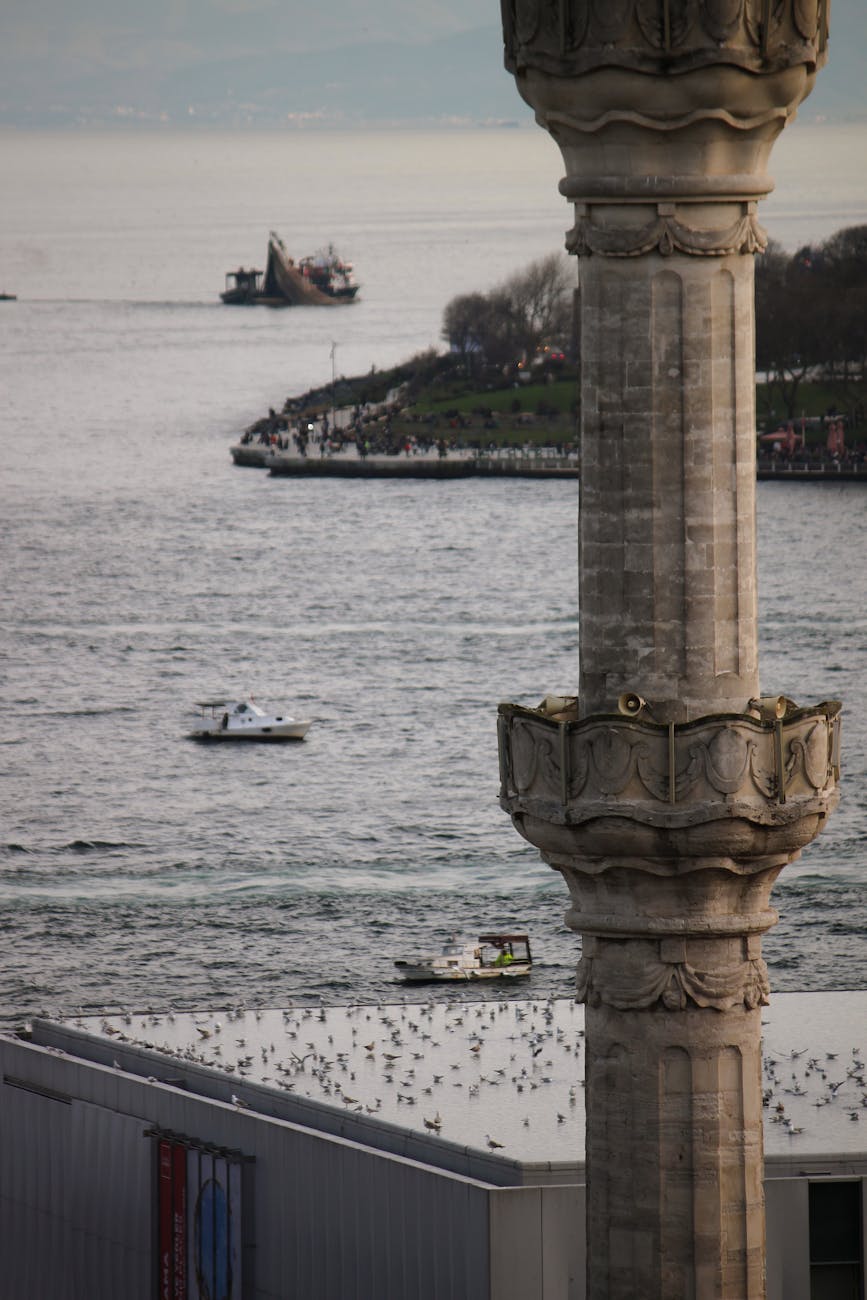
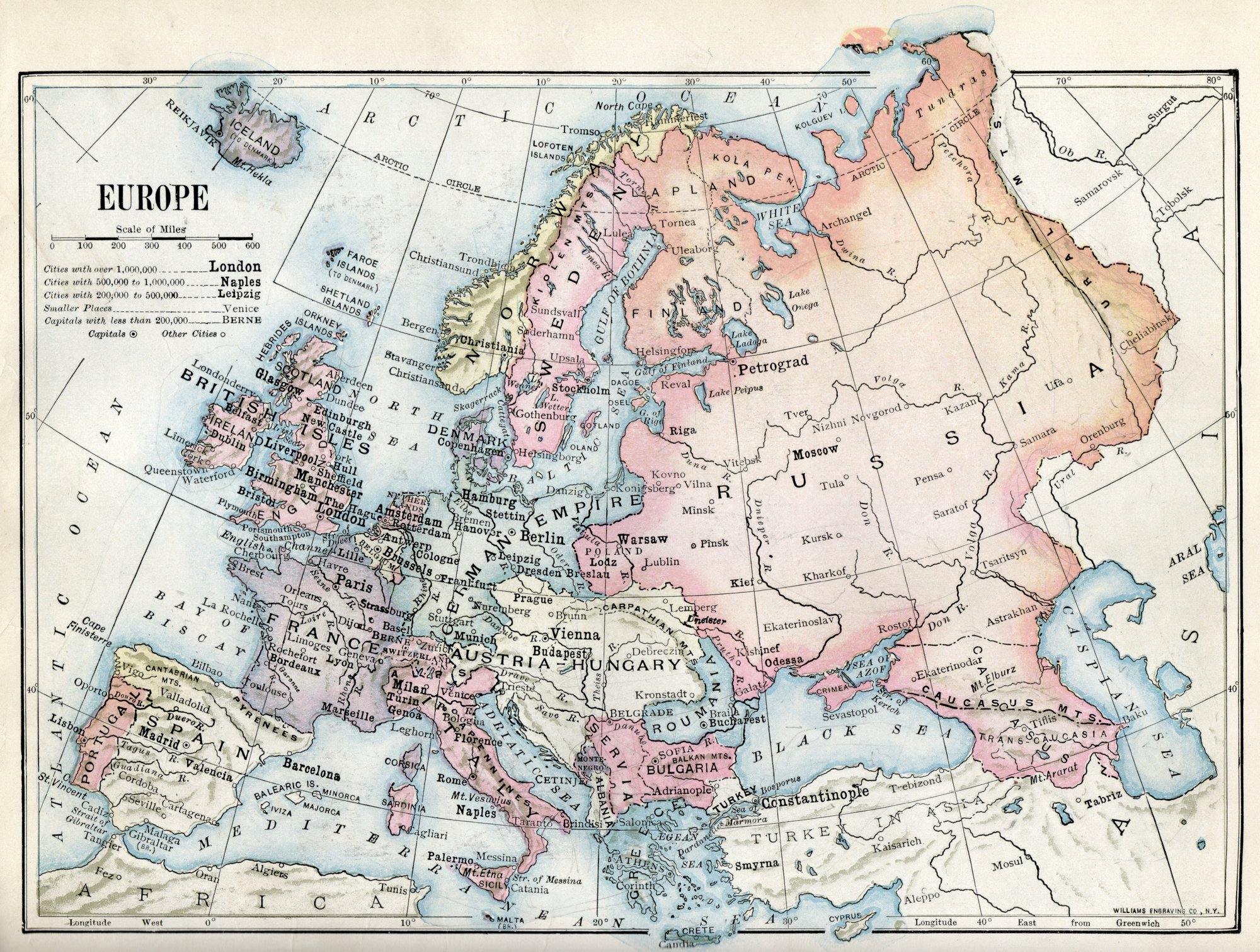
Europe is commonly described as a continent bordered by the Arctic Ocean to the north, the Atlantic Ocean to the west, and the Mediterranean Sea to the south. To the east, however, things get messy. Europe is usually said to be separated from Asia by the watershed of the Ural Mountains, the Ural River, the Caspian Sea, the Greater Caucasus, the Black Sea, and the Turkish straits.
A watershed is the high ground that separates river systems. In this case, it is being used as a dividing line between large regions. The Turkish straits are the narrow waterways linking the Black Sea to the Mediterranean. Together, these features create the modern conventional boundary.
But this boundary is not inevitable. It is a human convention. In fact, the present eastern boundary is often described as somewhat arbitrary and inconsistent when compared with the idea of a continent as a clearly separate landmass.
Ancient ideas: rivers first, mountains later
The concept of Europe as a geographic region goes back to ancient Greek thought. Early writers did not use the same border most people learn today. In the 6th century BCE, Anaximander and Hecataeus used the Phasis River, the modern Rioni River in present-day Georgia, as the boundary between Europe and Asia. Herodotus in the 5th century BCE discussed similar ideas, though he noted that some people used the River Don instead.
Later, in the 1st century, the geographer Strabo defined Europe’s eastern frontier at the Don River. This river boundary remained influential for a very long time. Roman-era authors such as Posidonius, Strabo and Ptolemy helped pass on a version of Europe that stretched eastward only as far as the Tanais, the ancient name for the Don.
In the Middle Ages and well into the modern period, this older convention survived. For centuries, mapmakers and scholars imagined the Europe–Asia divide mainly as a chain of rivers, seas, and straits rather than mountain ranges.
The big shift: from the Don to the Urals
The modern border most people recognize took shape much later. In the early 18th century, mapmakers began proposing alternatives to the classical Don River boundary.
Around 1715, Herman Moll drew a boundary using a chain of waterways that ran from the Turkish straits and the Don toward rivers draining into the Arctic Ocean. But this idea did not become standard.
A more influential change came in 1725, when Philip Johan von Strahlenberg proposed a line that included the Ural Mountains. This was a major departure from older classical thinking. Instead of relying only on water, he argued that mountain ranges could also serve as continental boundaries. He traced the line along the Volga system and then northward through the Urals.
This approach was endorsed by the Russian Empire and gradually became widely accepted. Over time, the Urals became the best-known symbol of the Europe–Asia divide, even though later geographers questioned whether the mountains truly made a meaningful continental border.
Why the border is still debated today
Even with the modern convention in place, the eastern edge of Europe has never become fully settled. By the 19th century, several competing boundaries were still in use. Some followed the Don, some the Volga and related waterways, and others preferred the Kuma–Manych Depression or the crest of the Caucasus.
The Caucasus is the mountain region between the Black Sea and the Caspian Sea. Whether the boundary should run along the Greater Caucasus watershed or farther north has long been controversial. In different periods, Russian, Soviet, and Western geographers supported different versions.
By the later 20th century, the boundary along the Caucasus crest had become the more common convention, although alternatives continued to appear on some maps.
This is why the question “Where does Europe end?” still does not have a perfectly fixed answer. The border exists because people agreed to use it, not because nature carved out a single undeniable dividing line.
A continent shaped by culture as much as geography
One reason the border is so contested is that Europe has never been only a physical idea. It has also been a cultural one.
After the fall of the Western Roman Empire, the term “Europe” increasingly came to describe a cultural sphere linked to Latin and the Catholic Church. In the Carolingian Renaissance of the 9th century, “Europe” was used for the sphere of influence of the Western Church, in contrast to the Eastern Orthodox world and the Islamic world.
Over time, this gave the concept of Europe a cultural meaning as well as a geographic one. That helps explain why the division of Eurasia into Europe and Asia is often said to reflect East–West cultural, linguistic and ethnic differences that vary along a spectrum rather than along a sharp line.
In other words, the border is not just about mountains and rivers. It is also about how people have historically grouped societies, religions and empires.
Transcontinental countries show how blurry the line is
If the border were obvious, there would be little confusion about which countries belong to which continent. But several countries sit awkwardly across the divide.
Turkey is generally considered a transcontinental country divided entirely by water. Russia and Kazakhstan are also transcontinental, with only part of their territory in Europe. According to the current convention, Georgia and Azerbaijan are transcontinental as well, because the line is drawn using mountains in the Caucasus region.
The idea gets even more complicated when overseas territories enter the picture. Spain, for example, has territories south of the Mediterranean Sea: Ceuta and Melilla, which are in Africa and share a border with Morocco. France, the Netherlands and Portugal also have territory located on other continents, separated from Europe by large bodies of water.
These examples show that the question is not simply “Which side of the line are you on?” Geography, politics and history do not always line up neatly.
Islands, exceptions, and political choices
Even islands reveal how flexible the idea of Europe can be. Islands are generally grouped with the nearest continental landmass, which is why Iceland is considered part of Europe while Greenland is usually assigned to North America, despite being politically connected to Denmark.
Yet there are exceptions. Cyprus is geographically closest to Anatolia, or Asia Minor, but is politically considered part of Europe and is a member state of the European Union. Malta was once considered an island of North-western Africa for centuries, but is now regarded as part of Europe.
These cases make one thing clear: the map of Europe is not built on distance alone. Political and cultural considerations matter too.
Is the Europe–Asia divide arbitrary?
Many geographers have argued that the boundary lacks a strong physical basis. The Ural Mountains, though often taught as the continental divide, have been called an arbitrary border. Some modern analytical geographers saw little validity in using them to separate continents.
There is also a deeper criticism: that dividing Eurasia into Europe and Asia may be a residue of Eurocentrism. Eurocentrism means seeing the world mainly from a European point of view. Critics point out that the vast Eurasian landmass is physically continuous, and that the split into two continents reflects historical habits and cultural assumptions as much as natural geography.
That does not mean the concept of Europe is useless. It means Europe is partly a geographic category and partly a historical and cultural one.
So where does Europe end?
On most modern maps, Europe ends at a conventional chain of features: the Ural Mountains, the Ural River, the Caspian Sea, the Greater Caucasus, the Black Sea, and the Turkish straits. That is the most common answer.
But the fuller answer is that Europe ends wherever a particular tradition of mapmaking, politics and culture says it ends. In the ancient world, the border ran along rivers like the Don or the Phasis. In the modern era, mountains like the Urals and Caucasus were added. And throughout history, the meaning of Europe has been shaped not only by physical geography, but by religion, empire, language and identity.
That is what makes the question so fascinating. Europe is a place, certainly. But it is also an idea that has shifted for centuries.
Sources
Based on information from Europe.
More like this
Still crossing borders in your mind? Download DeepSwipe and explore big questions one swipe at a time.