Full article · 8 min read
Africa’s 10,000 Polities: The Deep Political Map of Precolonial Africa
It is a huge mistake to imagine precolonial Africa as an empty political space waiting to be divided. Long before European conquest, Africa contained as many as 10,000 different states and polities. A polity is any organised political community with its own leadership and rules. That could mean a small family-based hunter-gatherer society, a walled trading city, an autonomous kingdom, or a sprawling empire.
This political variety is one of the most striking features of African history. Across the continent, people built systems of rule that matched very different landscapes, economies, and beliefs. In southern Africa there were San hunter-gatherer groups. In central, southern, and eastern Africa there were larger clan-based Bantu societies. In the Horn of Africa, there were heavily structured clan groups. In the Sahel, the broad semi-arid belt south of the Sahara, powerful kingdoms emerged around trade and agriculture. Along the southeast coast, Swahili city-states thrived through Indian Ocean commerce.
Far from being politically uniform, precolonial Africa was a mosaic.
What “10,000 polities” really means
The number itself is powerful because it forces a rethink. A polity is not only a kingdom with a crown and capital. It includes many forms of collective organisation. Some African societies were stateless or heterarchical, meaning power was not always concentrated in one ruler or one rigid hierarchy. Others were highly centralised and ruled through dynasties, priest-kings, or royal courts.
That means precolonial Africa cannot be reduced to a single political model. The continent held small-scale communities, city-states, clan federations, and empires all at once. Commerce, religion, oral tradition, and local ecology helped shape these systems.
Oral tradition was especially important. In many African societies, history was preserved and transmitted by spoken narratives, proverbs, music, and communal memory rather than by written chronicles alone. This is one reason Africa’s political past was often under-appreciated by outsiders, even though it was long, complex, and deeply organised.
The Sahel: where states stretched across the savannah
One of the great belts of political development lay across the sub-Saharan savannah. By the 9th century AD, a chain of dynastic states extended from western regions to central Sudan. Among the most powerful were Ghana, Gao, and the Kanem-Bornu Empire.
The setting mattered. The Sahel sits between the Sahara Desert to the north and more forested and wetter regions to the south. This made it a zone of exchange. Deserts, grasslands, and forests formed long east-west belts, and these contrasting environments encouraged symbiotic trade relations. In simple terms, communities in different ecological zones needed different goods from one another.
Earlier foundations had already been laid. In West Africa, settled communities grew with the domestication of millet and sorghum, while cattle pastoralism began around 2500 BC. The Tichitt culture in what is now Mauritania and Mali became the oldest known complexly organised society in West Africa. Later, the Ghana Empire, also called Wagadu, rose out of this deeper regional history.
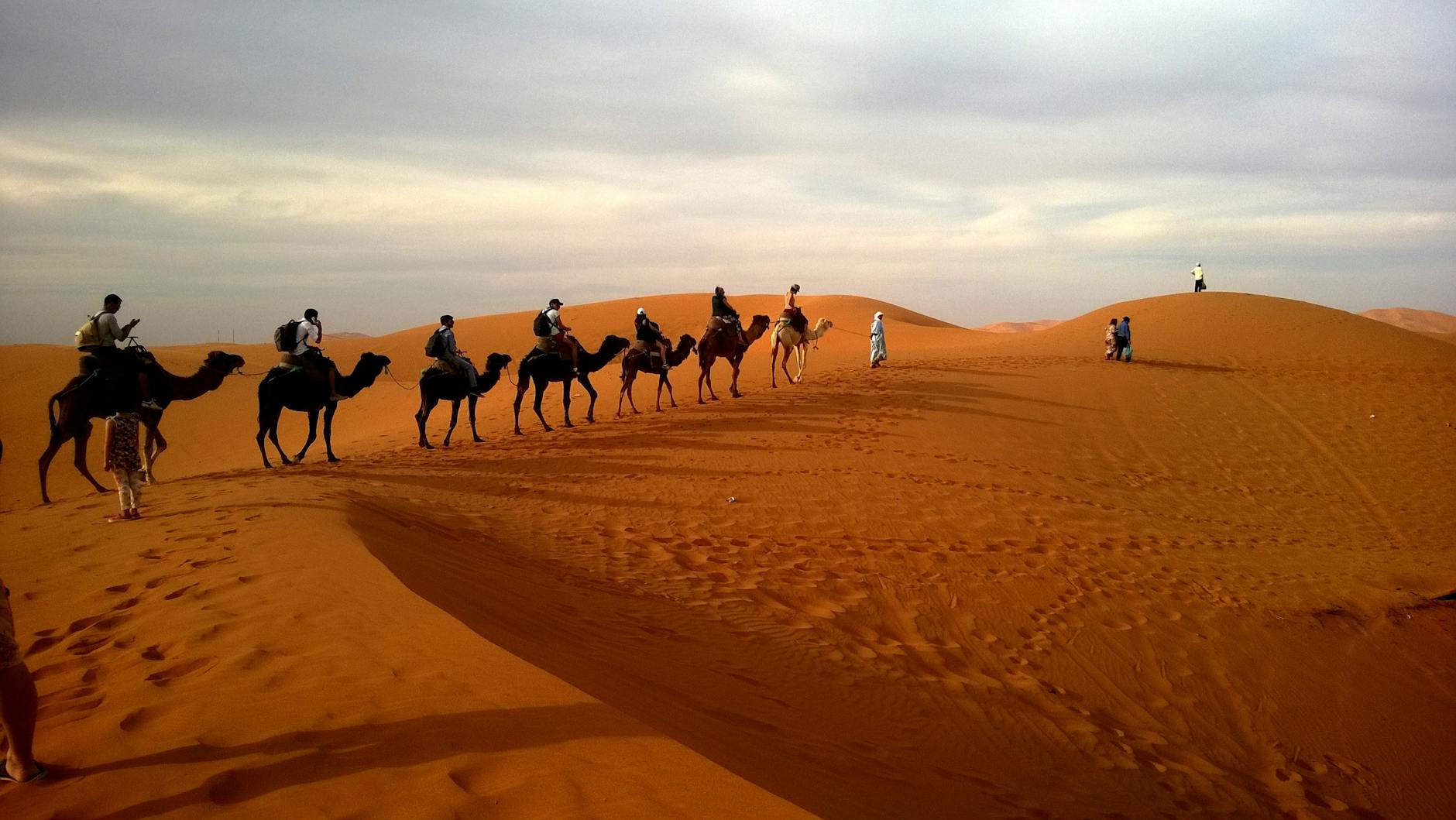
Wagadu grew wealthy after the camel was introduced to the western Sahel. That changed trans-Saharan trade by making long-distance desert transport more practical. The empire’s capital and Aoudaghost became linked with Tahert and Sijilmasa in North Africa. Trade was not some side activity. It was a political engine.
City walls, caravans, and Hausa power
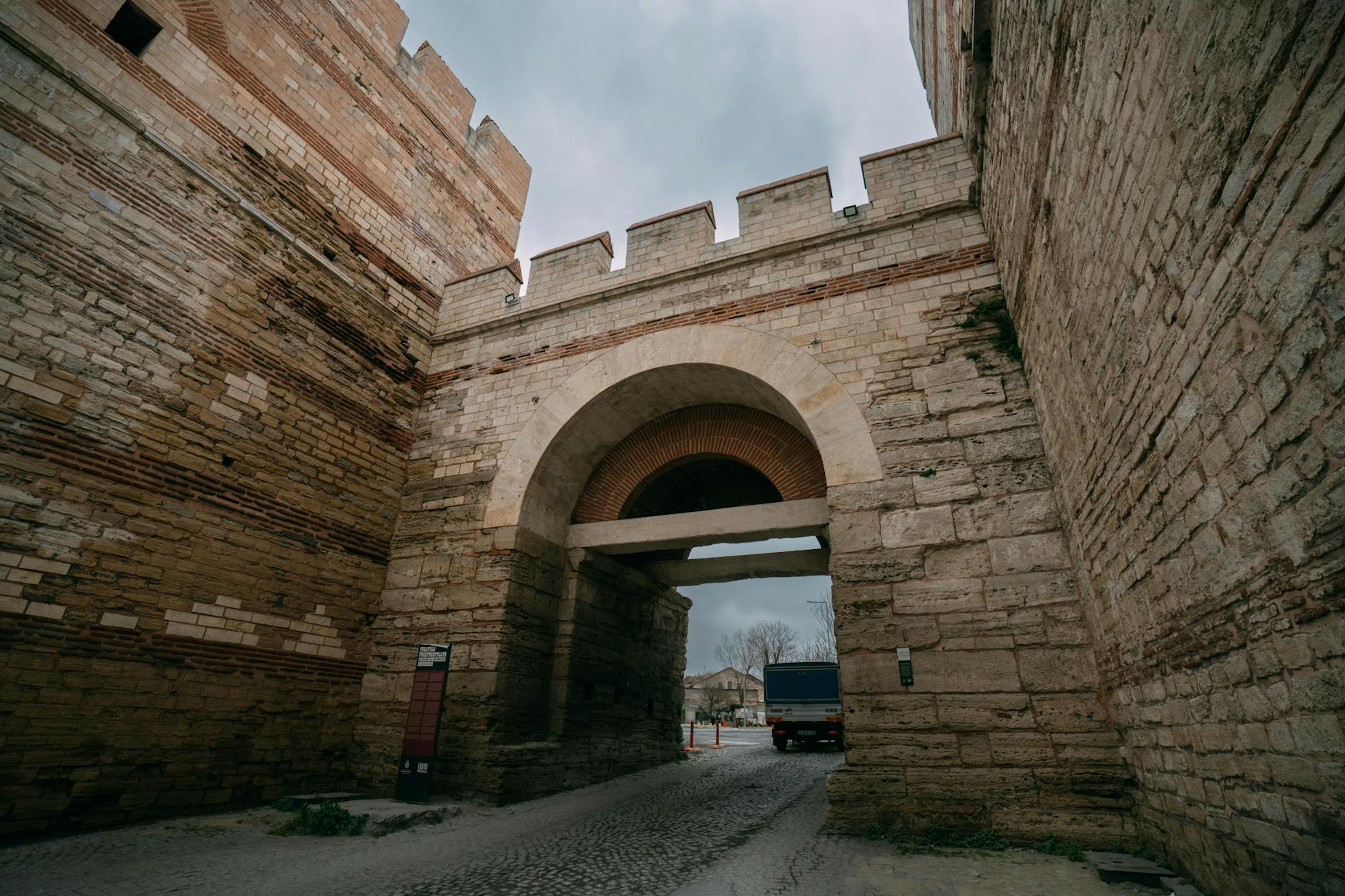
The image of “city walls and caravans” captures an important part of African statecraft. By the 11th century, some Hausa states such as Kano, Jigawa, Katsina, and Gobir had developed into walled towns. These were not isolated settlements. They engaged in trade, serviced caravans, and manufactured goods.
A caravan was a group of traders travelling together, often across long and dangerous routes such as the Sahara. Walled towns provided security, storage, markets, and political control. In that sense, walls were not just military features. They also marked cities as organised economic centres.
For a long time, these Hausa states stood on the periphery of larger Sudanic empires, paying tribute to Songhai in the west and Kanem-Borno in the east. Even so, their urban development shows how varied African political life was. Not every important polity was an empire. Some were city-based powers tied into wider networks of trade and taxation.
Kingdoms, priestly rulers, and sacred authority
Political authority in precolonial Africa took many forms. Some rulers were kings in a familiar dynastic sense. Others ruled through sacred office.
The Kingdom of Ife, regarded historically as the first of the Yoruba city-states or kingdoms, established government under a priestly oba, a ruler whose role blended political and religious authority. The title of its ruler was the Ooni of Ife. Ife became a major religious and cultural centre in West Africa and was noted for a unique naturalistic tradition of bronze sculpture.
Its model of government influenced the Oyo Empire, where rulers known as Alaafins of Oyo controlled many Yoruba and non-Yoruba city-states and kingdoms, including the Fon Kingdom of Dahomey.
This helps explain the phrase “many ways to rule.” In precolonial Africa, governance could be sacred, urban, imperial, local, hereditary, or communal. Priestly kings, autonomous towns, and large kingdoms existed side by side.
Empires of trade, faith, and scholarship
Some African polities became vast imperial powers. Ghana declined in the eleventh century, but it was succeeded by the Mali Empire, which consolidated much of western Sudan in the thirteenth century. After Mali weakened, Sonni Ali founded the Songhai Empire in the region of the middle Niger and western Sudan.
Songhai was built on more than conquest. Sonni Ali seized Timbuktu in 1468 and Jenne in 1473, and his regime rested on trade revenues and cooperation with Muslim merchants. His successor, Askia Mohammad I, made Islam the official religion, built mosques, and brought Muslim scholars to Gao.
That matters because political power was often linked to religion and learning as well as to armies and taxation. Timbuktu, Gao, and Jenne were not just dots on a map. They were centres in networks of exchange, scholarship, and state formation.
Kanem, meanwhile, accepted Islam in the eleventh century, showing again how faith could become part of political identity in some regions without making Africa politically uniform as a whole.
Forest kingdoms and coastal city-states
Not all major African polities were shaped by the Muslim north or Saharan trade. In the forested regions of the West African coast, independent kingdoms grew with little influence from the Muslim north.
The Kingdom of Nri, ruled by the Eze Nri and established around the ninth century, was one of the oldest kingdoms in present-day Nigeria. It became known for elaborate bronzes found at Igbo-Ukwu. This is another reminder that African political history includes important centres outside the better-known desert trade routes.
On the opposite side of the continent, the Swahili coastal trading towns of Southeast Africa represent yet another model. These were autonomous city-states tied to maritime trade rather than inland empires. Their place in the broader list of African polities shows how coastlines could produce different political forms from savannahs or forests.
From clan groups to empires
The full spectrum of African political organisation is astonishing. Precolonial Africa included:
- small family groups of hunter-gatherers such as the San of southern Africa
- family clan groupings among many Bantu peoples of central, southern, and eastern Africa
- heavily structured clan groups in the Horn of Africa
- large Sahelian kingdoms
- autonomous city-states and kingdoms among Akan, Edo, Yoruba, and Igbo peoples in West Africa
- Swahili trading towns in Southeast Africa
This range matters because it challenges the false idea that political sophistication only counts when it looks like a European-style monarchy or a modern nation-state. African societies developed institutions suited to their own settings and priorities.
Why this political diversity is so often overlooked
One reason is that most present-day African states emerged through decolonisation after World War II and retained colonial borders. Those borders often cut across much older political realities. Traditional power structures were then used in governance to varying degrees, but the map itself reflected colonial rule rather than the full complexity of earlier African polities.
Another reason is the old habit of flattening African history into a single story. But the continent’s history is described as long, complex, and varied. Its societies often preserved memory through oral civilisation, where knowledge was transmitted through speech, performance, and inherited narrative.
Once that wider perspective is restored, the idea of 10,000 polities no longer sounds exaggerated. It sounds like a clue to how politically inventive Africa has always been.
A continent of political invention
Precolonial Africa was not a blank map. It was a crowded political landscape of walled towns, caravan hubs, sacred kingdoms, clan-based societies, autonomous cities, and great empires. Some states were linked by commerce, some by faith, some by kinship, and many by all three.
From Sahelian empires to Hausa trading cities, from the priestly authority of Ife to the coastal networks of the Swahili towns, Africa’s past reveals political diversity on a massive scale. The phrase “10,000 polities” is not just a number. It is a reminder that African history cannot be reduced to absence. It is a story of institutions, adaptation, and power in many different forms.
Sources
Based on information from Africa.
More like this
Swipe through history like a caravan crossing the Sahel — download DeepSwipe and discover worlds hidden behind the map.