Full article · 8 min read
World War I Far from Europe: Pacific Seizures, Commerce Raiders, and Africa’s Long Campaigns
When people think of World War I, they usually picture trenches in France and Belgium. But the war stretched far beyond Europe. In the opening months alone, fighting and conquest reached the Pacific, China, and Africa. German colonies and overseas naval bases quickly became targets, while a handful of German warships tried to disrupt Allied trade across the seas.
These distant campaigns were often fast-moving, improvised, and surprisingly consequential. In the Pacific, German possessions fell within months. At sea, raiders like SMS Emden caused alarm out of all proportion to their size. In Africa, however, one campaign dragged on stubbornly, with German forces in East Africa continuing to resist even after the guns had fallen silent in Europe.
Why the war spread so widely
World War I was a global conflict between the Allies and the Central Powers, and its major areas of conflict included not just Europe and the Middle East, but also parts of Africa and the Asia-Pacific. That global reach mattered immediately. European empires had colonial territories, coaling stations, ports, and naval squadrons scattered around the world. Once war began, these possessions became exposed.
Overseas colonies were valuable for prestige and strategy, but many were isolated. If they could not be reinforced by sea, they were vulnerable to seizure by nearby Allied forces. At the same time, German cruisers already stationed abroad could attack merchant shipping, threaten communications, and force the Royal Navy and its partners to spread out in pursuit.
Pacific grabs: Germany’s island empire collapses fast
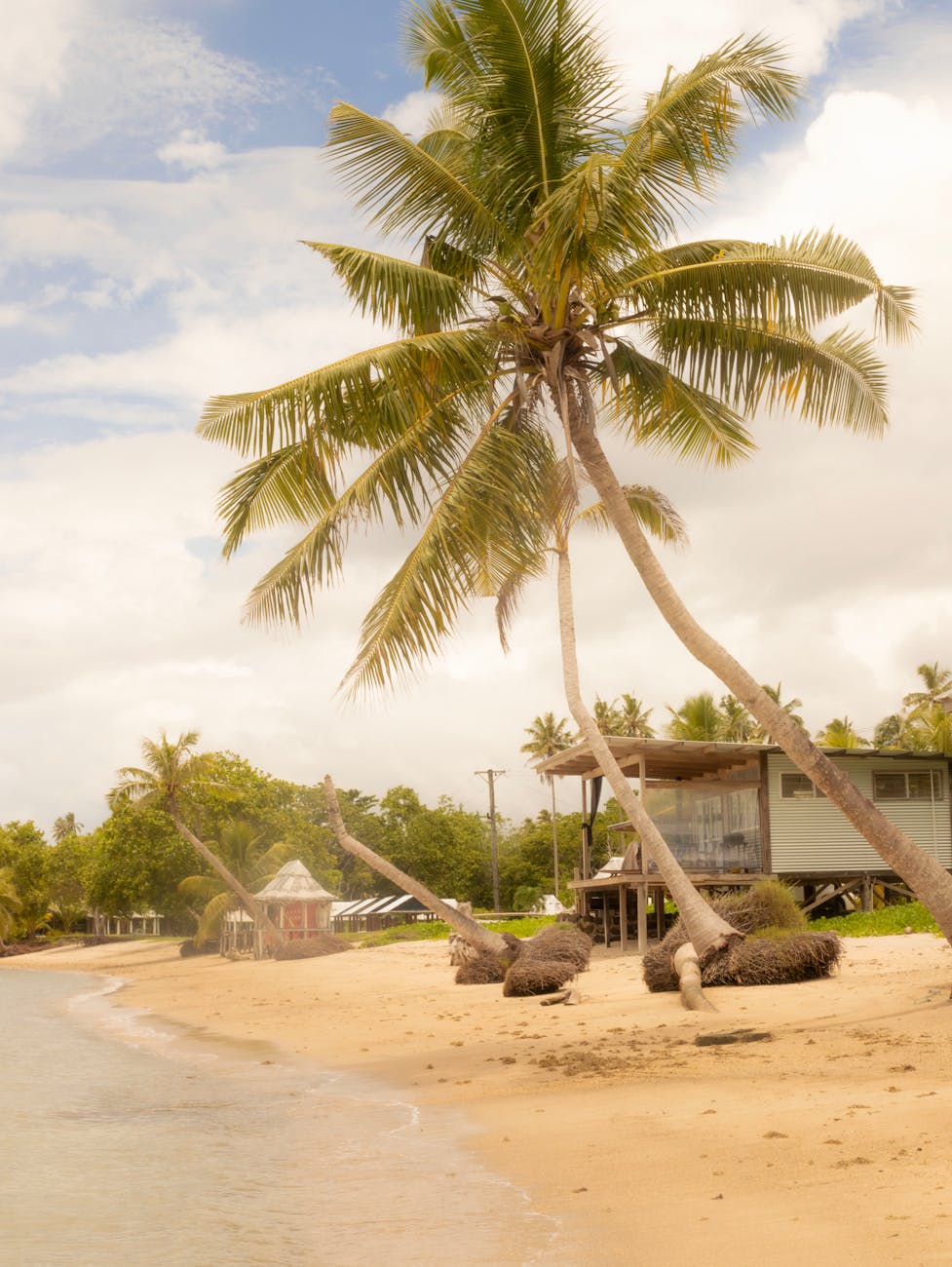
The Pacific saw some of the quickest changes of control in the entire war. On 30 August 1914, New Zealand occupied German Samoa, now Samoa. Soon after, on 11 September, the Australian Naval and Military Expeditionary Force landed on the island of New Britain, then part of German New Guinea.
Japan also moved against German possessions. It declared war on Germany and seized territories in the Pacific that later became the South Seas Mandate. It also targeted German treaty ports on the Chinese Shandong peninsula, especially Tsingtao, now called Qingdao. Tsingtao was a German-controlled port in China, and its capture showed how rapidly a European war could reshape power in East Asia.
The conflict widened further when Vienna refused to withdraw the cruiser SMS Kaiserin Elisabeth from Tsingtao. Japan then declared war on Austria-Hungary as well, and the ship was scuttled in November 1914. To scuttle a ship means to deliberately sink it, usually to prevent it from falling into enemy hands.
Within a few months, Allied forces had seized all German territories in the Pacific, leaving only isolated commerce raiders and a few holdouts in New Guinea. That speed is striking. In Europe, fronts hardened into trench deadlock. In the Pacific, by contrast, Germany’s position unraveled rapidly.
Tsingtao and the meaning of a treaty port
Tsingtao stands out because it was not just another island possession. It was one of Germany’s treaty ports on the Shandong peninsula in China. A treaty port was a port opened to foreign powers under treaty arrangements, often giving them special rights or control. In wartime, such ports could serve as coaling stations, naval outposts, and symbols of imperial reach.
Its seizure mattered because it removed a German foothold in East Asia and helped clear the region of formal German bases. Once those bases were lost, German naval units in the Pacific and Indian Ocean became even more isolated.
Raiders on the loose: the fearsome career of SMS Emden
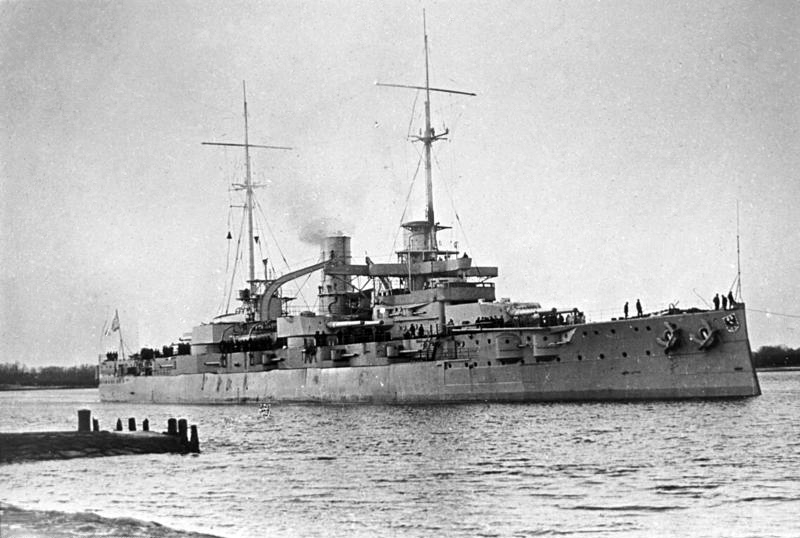
Among those isolated ships, none became more famous than SMS Emden. At the start of the war, German cruisers were scattered across the globe, and some were used to attack Allied merchant shipping. Merchant ships were the cargo vessels that carried goods, supplies, and raw materials. Attacking them was a way to disrupt trade and force the enemy to divert warships into escort and hunting duties.
SMS Emden was one of the most successful of these raiders. It was part of the German East Asia Squadron stationed at Qingdao. Before it was finally cornered, Emden seized or sank 15 merchantmen, a Russian cruiser, and a French destroyer. One of its most dramatic actions came on 28 October 1914, when it sank the Russian cruiser Zhemchug in the Battle of Penang.
That helps explain why Emden looms so large in the story of the war outside Europe. It was not changing the entire balance of the conflict, but it was doing exactly what a commerce raider was meant to do: creating uncertainty, damaging shipping, and forcing the Allies to react.
The article notes that German cruisers attacking trade were systematically hunted down by the Royal Navy, though not before causing considerable damage. That pattern captures the naval war beyond the main battle fleets. A single fast cruiser could create a major headache, but only for a time. Once the Allied naval net tightened, its options narrowed.
The wider hunt: German squadrons and collapsing options
Emden was only part of a larger story. Most of the German East Asia Squadron was returning to Germany when it sank two British armoured cruisers at the Battle of Coronel in November 1914. But the squadron was then virtually destroyed at the Battle of the Falkland Islands in December.
One ship, SMS Dresden, escaped with a few auxiliaries, but after the Battle of Más a Tierra, these too were either destroyed or interned. To be interned meant being detained, usually in a neutral country, rather than continuing combat operations.
This sequence shows how brief Germany’s overseas naval war really was. German ships could score dramatic successes, but without secure bases and long-term supply, they were living on borrowed time.
Africa’s long chase: a very different kind of war
If the Pacific story was one of rapid Allied conquest, Africa offered a stark contrast. Some of the first clashes of the war involved British, French, and German colonial forces. On 6–7 August, French and British troops invaded the German protectorates of Togoland and Kamerun. On 10 August, German forces in South-West Africa attacked South Africa. Fighting there remained sporadic and fierce for the rest of the war.
But the most remarkable campaign unfolded in German East Africa. There, German colonial forces under Colonel Paul von Lettow-Vorbeck fought a guerrilla warfare campaign and only surrendered two weeks after the armistice took effect in Europe.
Guerrilla warfare refers to a style of fighting based on mobility, surprise, and smaller-scale operations rather than large set-piece battles. Instead of trying to defeat a stronger enemy head-on, guerrilla forces aim to survive, harass, and wear down opponents over time. In a vast region with difficult terrain and long supply lines, that approach helped the East African campaign continue long after Germany’s wider position had collapsed.
Paul von Lettow-Vorbeck and endurance in East Africa
Paul von Lettow-Vorbeck became one of the best-known German commanders of the war outside Europe because of how long he kept fighting. The key fact is not just that he resisted, but that his campaign outlasted the conflict in Europe itself. The armistice on the Western Front took effect on 11 November 1918, yet his forces surrendered only two weeks later.
That delay captures the fragmented nature of a world war fought across continents. News, communications, and military realities did not always move at the same speed. In distant theatres, campaigns could continue despite political collapse elsewhere.
Why the Pacific fell quickly but East Africa did not
The contrast between these theatres is one of the most interesting parts of World War I beyond Europe.
In the Pacific, German territories were isolated islands and outposts. Allied naval superiority and nearby forces from New Zealand, Australia, and Japan made those possessions hard to defend. Once ports and islands were occupied, there was little room for prolonged resistance.
In East Africa, conditions were different. Fighting took place across a large land area, and the German commander adopted guerrilla warfare. That meant the campaign did not depend on holding a single major port or fortress in the same way. Instead, it became a drawn-out chase.
So while Allied forces seized all German Pacific territories within a few months, East Africa became a campaign of endurance.
A global war, even where the trenches were absent
These overseas campaigns remind us that World War I was not only a trench war. It was also a conflict of colonial conquest, naval pursuit, and scattered but intense local campaigns. New Zealand’s occupation of German Samoa, Australia’s landing in New Britain, Japan’s capture of German possessions including Tsingtao, and the destruction or isolation of German raiders all formed part of the rapid Allied move to eliminate Germany’s overseas presence.
Yet Africa shows the other side of the story. There, the war did not end in a few dramatic months. In East Africa, Lettow-Vorbeck’s long guerrilla campaign stretched beyond the European armistice itself.
Taken together, these episodes reveal how uneven the global war could be. In some places, imperial possessions changed hands almost overnight. In others, fighting lingered on, shaped by geography, logistics, and the choices of local commanders.
The overlooked map of World War I
Looking beyond Europe changes the map of the war. The Pacific was rapidly stripped of German colonies. German cruisers briefly made the oceans dangerous for Allied trade. African campaigns tied down troops and stretched on through difficult conditions.
That broader view helps explain why the conflict was truly a world war. It was fought not only in famous places like Verdun and the Somme, but also in Samoa, New Britain, Qingdao, Penang, Togoland, Kamerun, South-West Africa, and East Africa. The war’s reach was global, and some of its most surprising stories happened far from the trenches most people remember.
Sources
Based on information from World War I.
More like this
Sail beyond the trenches and raid the world’s most fascinating stories — download DeepSwipe and explore history one swipe at a time.