Full article · 7 min read
Jupiter’s Moons and the Resonance That Heats Worlds
Jupiter’s four largest moons are among the most fascinating bodies in the Solar System, and three of them are locked into a remarkable orbital rhythm that literally reshapes their worlds. Io, Europa, and Ganymede move in a pattern called a Laplace resonance: for every four orbits Io completes around Jupiter, Europa completes two, and Ganymede completes one.
That repeating pattern is not just a mathematical curiosity. It is a powerful gravitational arrangement that continually pulls on the moons, distorts their shapes, and generates heat inside them. The result is a dramatic chain of effects that helps explain why Io is so volcanically active and why Europa’s surface appears geologically young.
What is the Laplace resonance?
A resonance in astronomy is a repeating relationship between orbital periods. In this case, Io, Europa, and Ganymede are linked so that their motions stay in step over time. Because each moon receives regular gravitational tugs from its neighbors at the same points in their orbits, the effect does not average away. Instead, it builds into a persistent dynamical system.
The orbits of these three moons are therefore not perfectly circular. They are slightly elliptical, meaning each moon is sometimes a little closer to Jupiter and sometimes a little farther away. That detail matters enormously.
Jupiter’s gravity constantly tries to circularize, or round out, their orbits. But the resonance keeps reintroducing orbital eccentricity. Eccentricity is simply a measure of how stretched an orbit is compared with a perfect circle. This ongoing tug-of-war between orbital forcing and gravitational smoothing is what powers tidal flexing.
How tidal flexing turns gravity into heat
Tidal flexing happens because a moon’s shape is repeatedly deformed as gravitational forces change over the course of its orbit. When one of these moons swings closer to Jupiter, Jupiter’s enormous gravity stretches it more strongly. When it moves farther away, that stretching eases, and the moon can relax toward a rounder shape.
Because Io, Europa, and Ganymede are kept on eccentric orbits by resonance, this squeezing and stretching happens again and again. Inside the moon, that continual kneading creates friction. Friction generates heat.
This is not a small effect. The repeated flexing is enough to transform entire worlds from the inside out.
Io: the most dramatic example
Of the three resonant moons, Io shows the strongest result of tidal heating. The constant flexing of its interior is seen most dramatically in its volcanic activity. The reason Io experiences the greatest effect is that it is subject to the strongest tidal forces among the three.
That makes Io a vivid example of how orbital mechanics can shape planetary bodies. Its volcanism is not just a surface curiosity; it is evidence of deep internal heating driven by gravity.
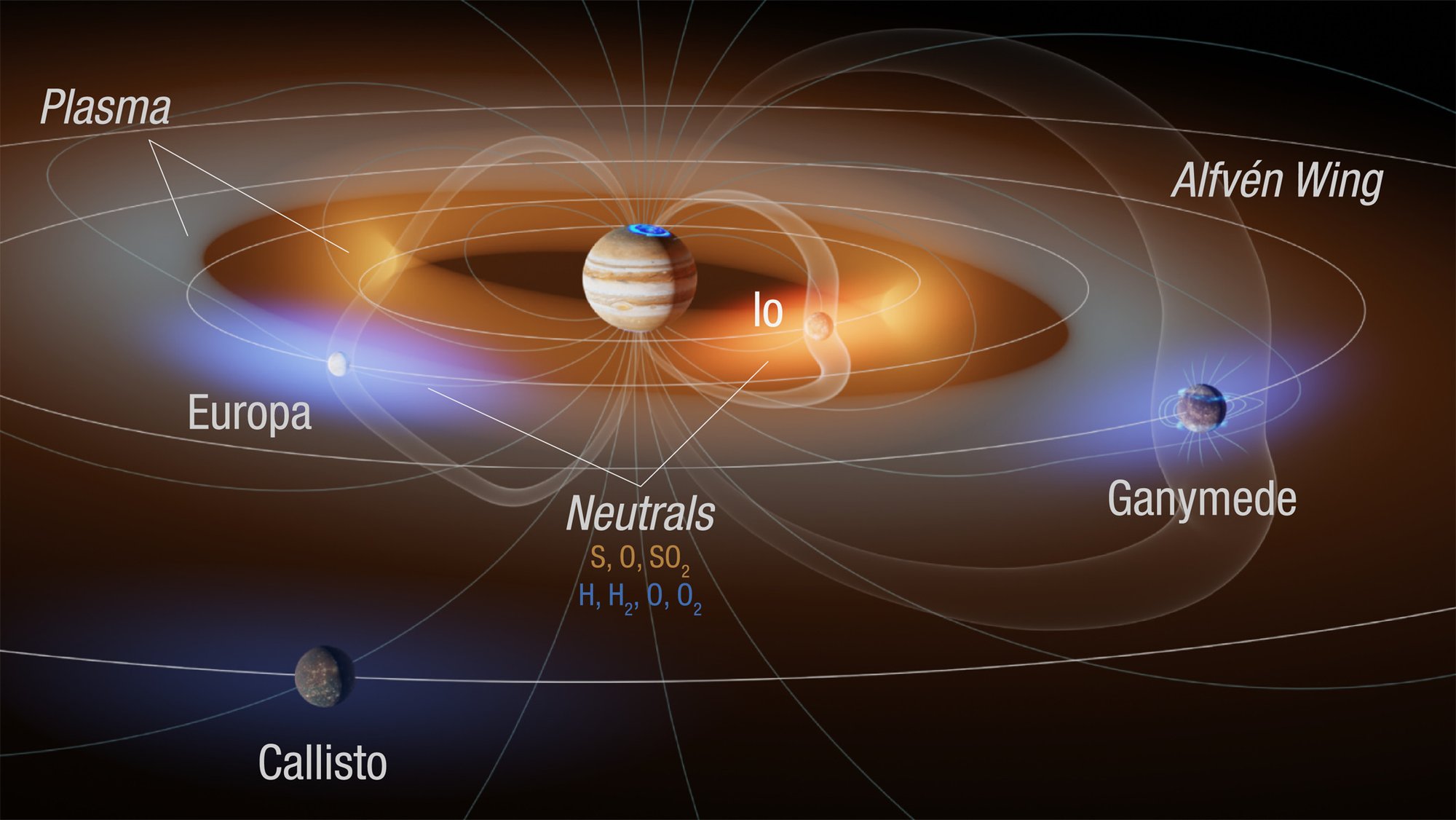
Io also plays another important role in the Jovian system. Its volcanoes emit large amounts of sulfur dioxide, forming a gas torus along its orbit. In Jupiter’s magnetosphere, that gas becomes ionized, producing sulfur and oxygen ions. Together with hydrogen ions from Jupiter’s atmosphere, they form a plasma sheet in Jupiter’s equatorial plane. This shows that Io is not only geologically active, but also strongly connected to Jupiter’s immense magnetic environment.
Europa: a world with a young-looking surface
Europa offers a different clue to the same process. Its surface shows signs of geological youth, which indicates recent resurfacing of the moon’s exterior. Resurfacing means that older terrain has been covered or replaced by newer material, leaving the surface looking comparatively fresh.
The resonance with Io and Ganymede helps maintain the eccentric orbit that allows Europa to keep flexing internally. That flexing generates heat, and the resulting internal activity is linked to the evidence that Europa’s outer layer has been renewed.
Europa is one of the larger icy moons that has attracted interest for future study. Missions aimed at Jupiter’s system have focused strongly on these larger icy moons, especially because they may have subsurface liquid oceans.
Ganymede: giant moon, key participant
Ganymede is the largest of the Galilean moons, and it is larger than the planet Mercury. Even though Io and Europa often get more attention in discussions of tidal heating, Ganymede is an essential part of the 4:2:1 resonance that keeps the system going.
Without Ganymede’s orbital role, the repeating gravitational pattern among the three moons would not be the same. Its steady participation helps preserve the resonance that pumps eccentricity into the inner moons.
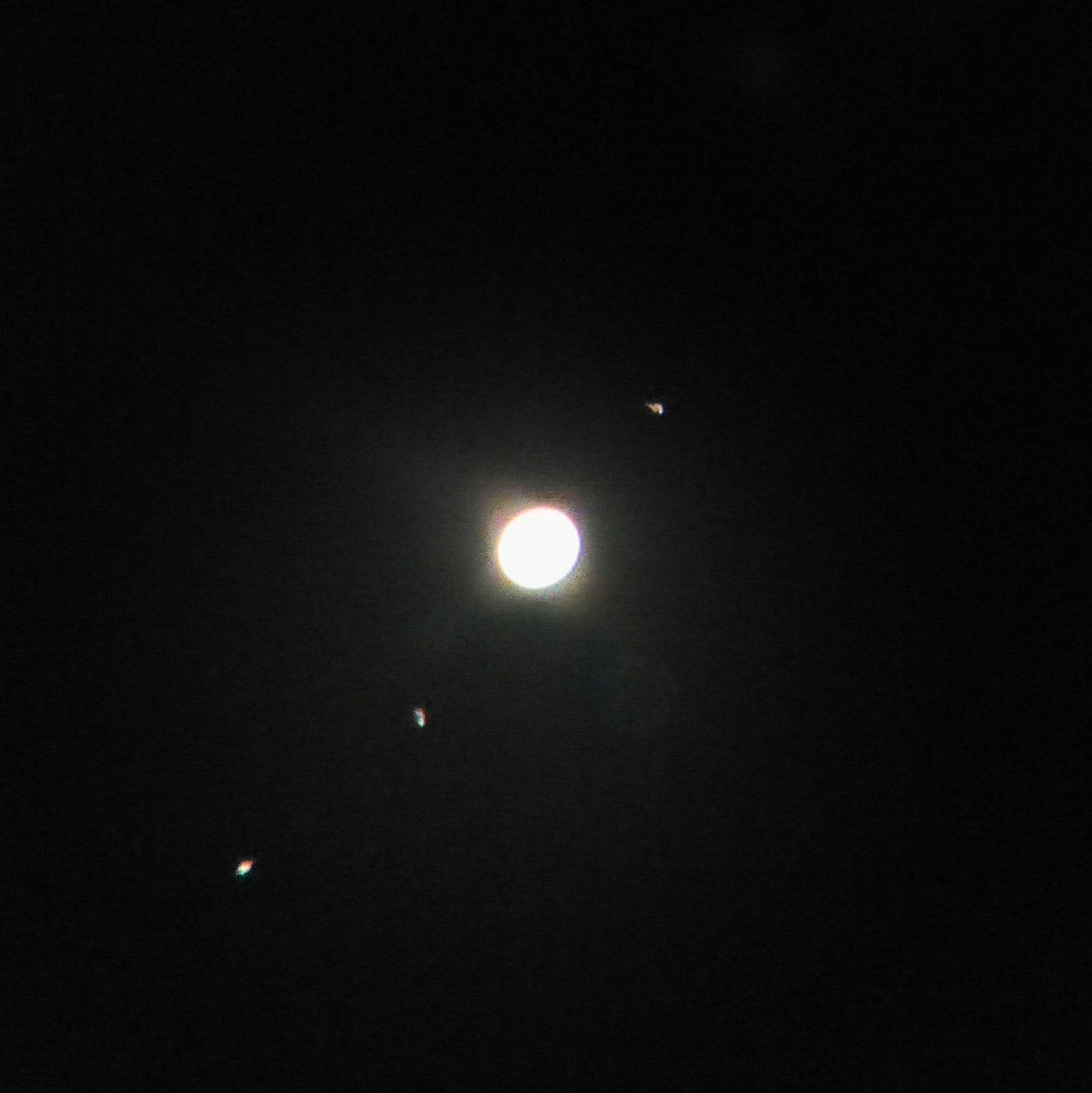
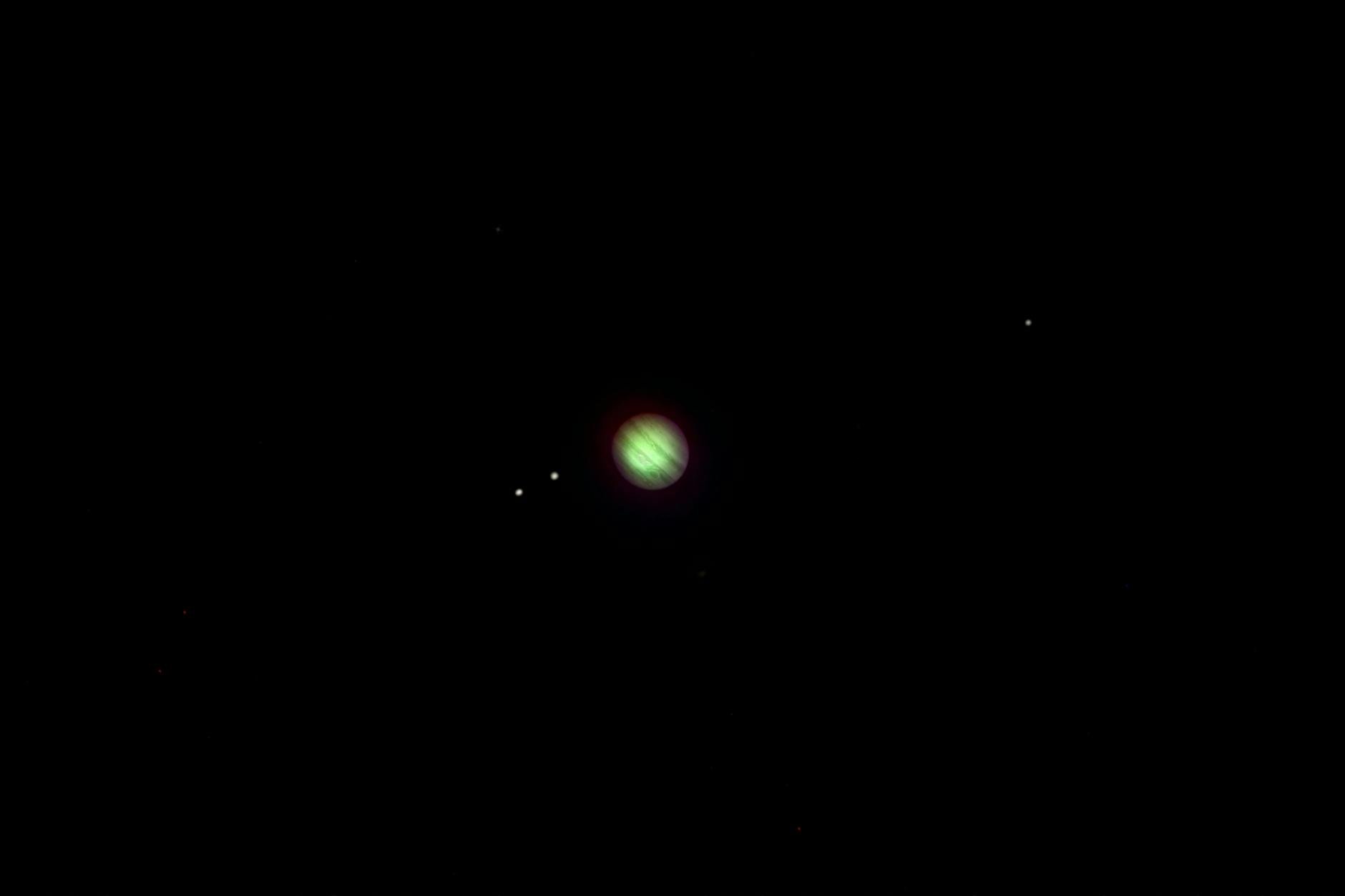
Ganymede is also one of the four big moons of Jupiter that can be seen from Earth with common binoculars on a clear night. That accessibility has helped make the Galilean moons one of the most rewarding sights for amateur skywatchers.
The fourth Galilean moon: Callisto
The four Galilean moons, discovered by Galileo, are Io, Europa, Ganymede, and Callisto, listed in order of decreasing size. They are among the largest moons in the Solar System.
In the famous resonance discussed here, only Io, Europa, and Ganymede participate in the 4:2:1 pattern. Callisto is still one of the major moons and is visible from Earth with binoculars, but it is not part of that three-moon resonant chain.
All four orbit within Jupiter’s magnetosphere, the vast region dominated by the planet’s magnetic field. That magnetic field is the strongest of any planet in the Solar System and extends so far outward that it nearly reaches the orbit of Saturn on Jupiter’s lee side.
Why Jupiter matters so much
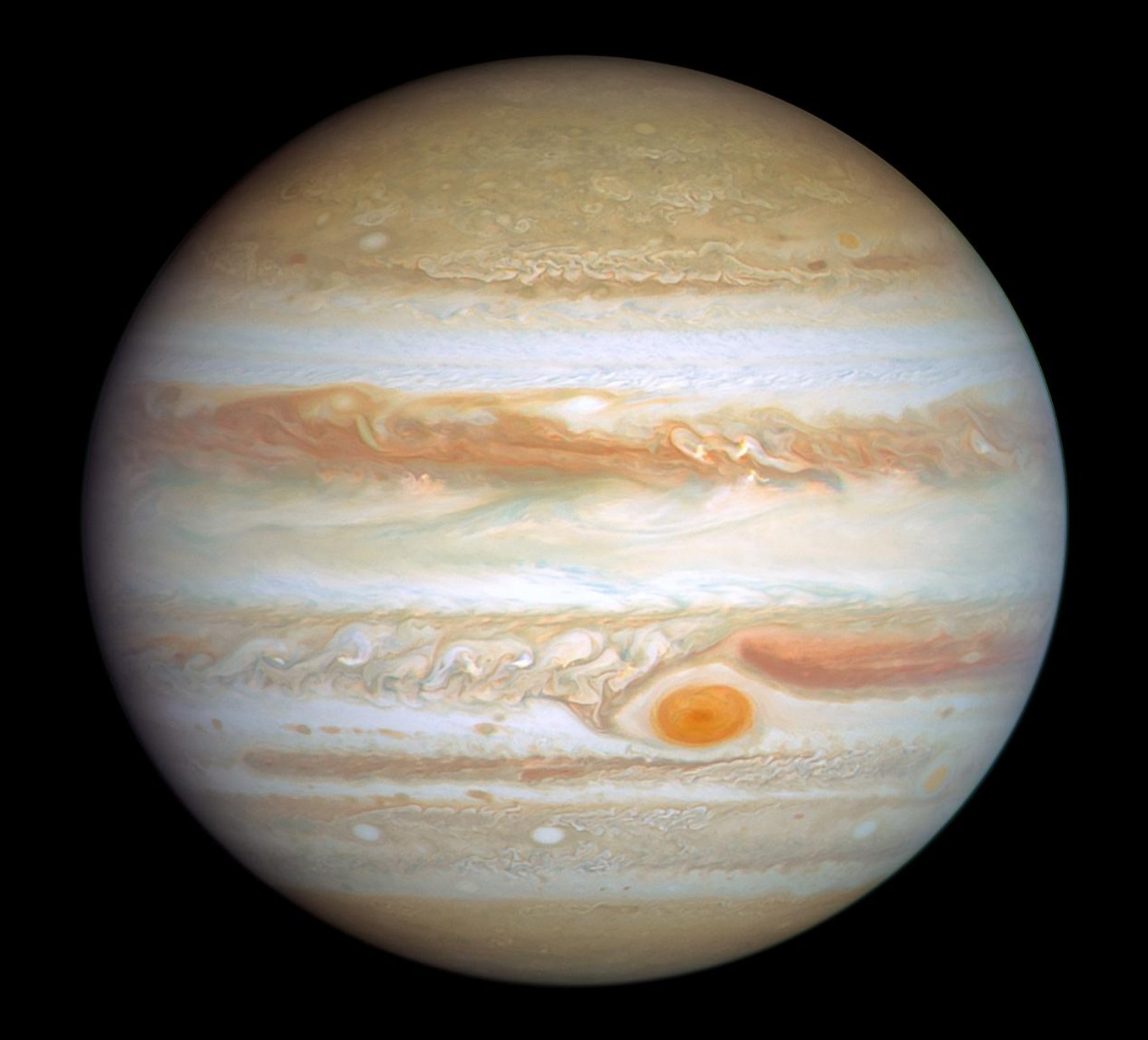
Jupiter is the largest planet in the Solar System, with a mass 2.5 times that of all the other planets combined. Its sheer size gives it enormous gravitational influence. That influence helps shape the motions of moons, asteroids, and even the broader architecture of the Solar System.
For its moons, Jupiter’s gravity is the central force that drives tidal effects. Yet the story is not simply that Jupiter pulls on them. The real magic comes from the combination of Jupiter’s pull and the moons’ synchronized orbital relationships with each other.
That is what makes the Laplace resonance so important. It is a gravitational engine that keeps the moons from settling into perfectly circular, quieter orbits. Instead, the system preserves motion, stress, and internal heating over time.
A discovery that changed astronomy
The Galilean moons were discovered in 1610 by Galileo Galilei using a telescope. This was the first telescopic observation of moons other than Earth’s. Their discovery became a major point in favor of the heliocentric view that planets orbit the Sun.
These moons remain historically important because they provided a visible example that not everything in the heavens revolves around Earth. Scientifically, they are still crucial today because they offer a natural laboratory for studying resonance, tidal heating, geology, and magnetospheric interactions.
Visible even with simple equipment
One reason the Galilean moons are so beloved is that they are not just objects for giant observatories or spacecraft. They are visible with common binoculars on a clear night. Even a small telescope usually shows the four moons and the cloud belts of Jupiter.
That makes Jupiter a wonderful gateway to deeper astronomy. A casual observer can look up and see the very moons whose orbital resonance helps melt interiors, trigger volcanism, and renew frozen surfaces.
A system still under close study
Modern spacecraft have greatly expanded what is known about Jupiter and its moons. The Voyager missions improved understanding of the Galilean moons and found a torus of ionized atoms along Io’s orbital path, linked to volcanoes on Io. The Galileo mission later orbited Jupiter for over seven years and performed multiple flybys of all the Galilean moons and Amalthea. More recently, Juno has studied Jupiter in detail from a polar orbit.
Future and ongoing interest in Jupiter’s icy moons reflects how important these worlds are for planetary science. Europa and Ganymede, in particular, are central to understanding how moons evolve under the influence of giant planets.
The deeper lesson of the 4:2:1 beat
The resonance among Io, Europa, and Ganymede reveals a powerful truth about the Solar System: motion itself can be a source of planetary change. A repeating orbital pattern can generate enough internal energy to drive volcanism, alter surfaces, and keep worlds active.
What looks from afar like a neat orbital ratio is, in reality, a world-shaping mechanism. Io is heated into extreme volcanism. Europa shows signs of recent resurfacing. Ganymede helps sustain the pattern. And all four Galilean moons remain visible reminders that even through simple binoculars, the Solar System is far more dynamic than it first appears.
Sources
Based on information from Jupiter.
More like this
Catch the rhythm of the cosmos — download DeepSwipe and keep your brain in orbital resonance with new knowledge every day.