Full article · 7 min read
Jupiter’s Lightning and Mushballs: The Wild Weather Inside the Solar System’s Biggest Storm Factory
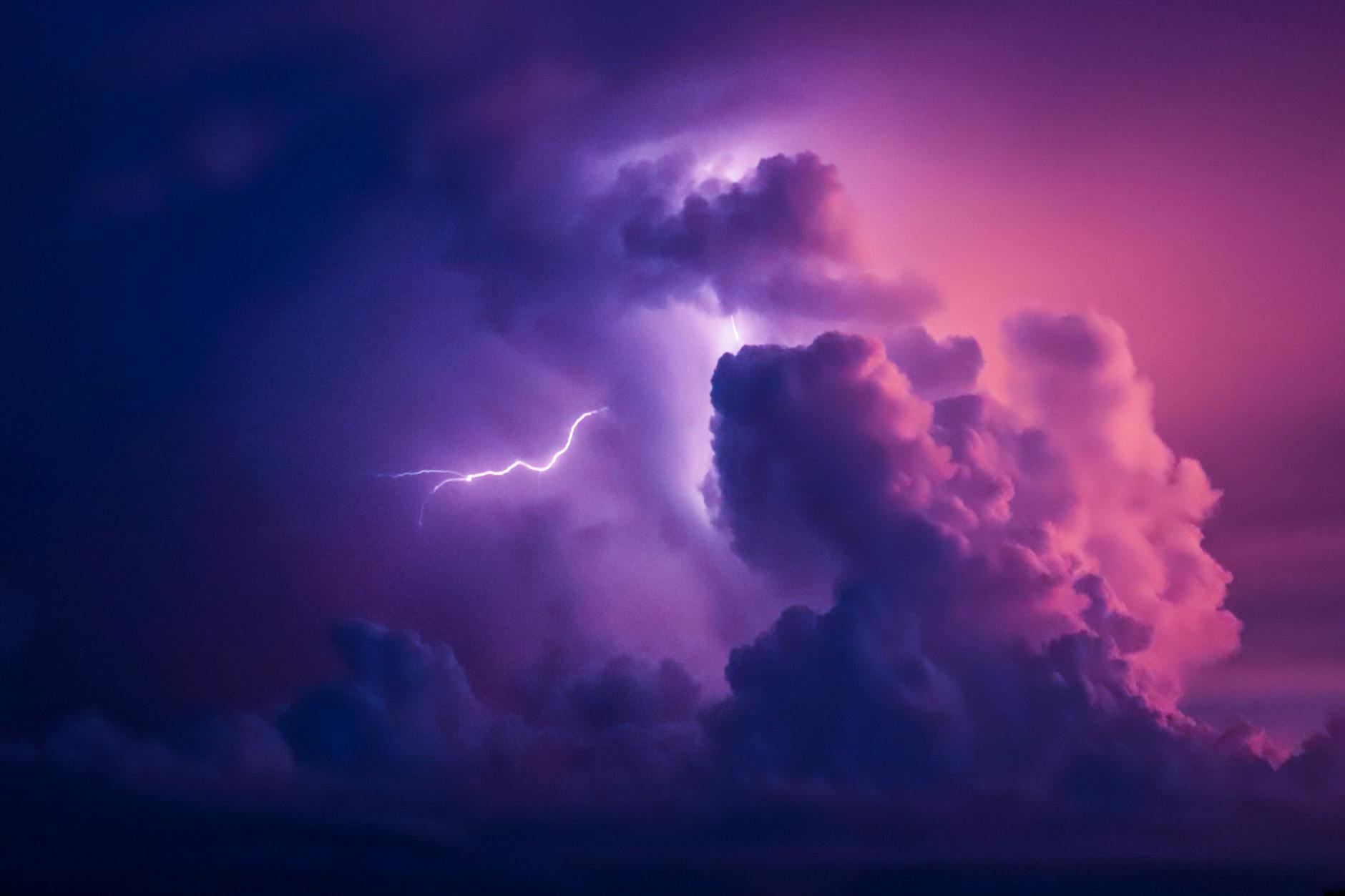
Jupiter is famous for its stripes and its Great Red Spot, but some of the planet’s most fascinating drama happens in flashes too fast for the eye to follow. Deep in its enormous atmosphere, thunderstorms rage with extraordinary power. Some lightning bolts are up to a thousand times stronger than those on Earth. Even stranger, high-altitude storms can create odd slushy objects nicknamed mushballs: clumps of water-ammonia slush coated in ice that plunge downward into the atmosphere like alien hail.
These discoveries reveal that Jupiter’s clouds are not just decorative bands. They are part of a restless, heat-driven system that stirs chemicals, powers storms, and helps explain the planet’s striking colors.
A planet built for extreme weather
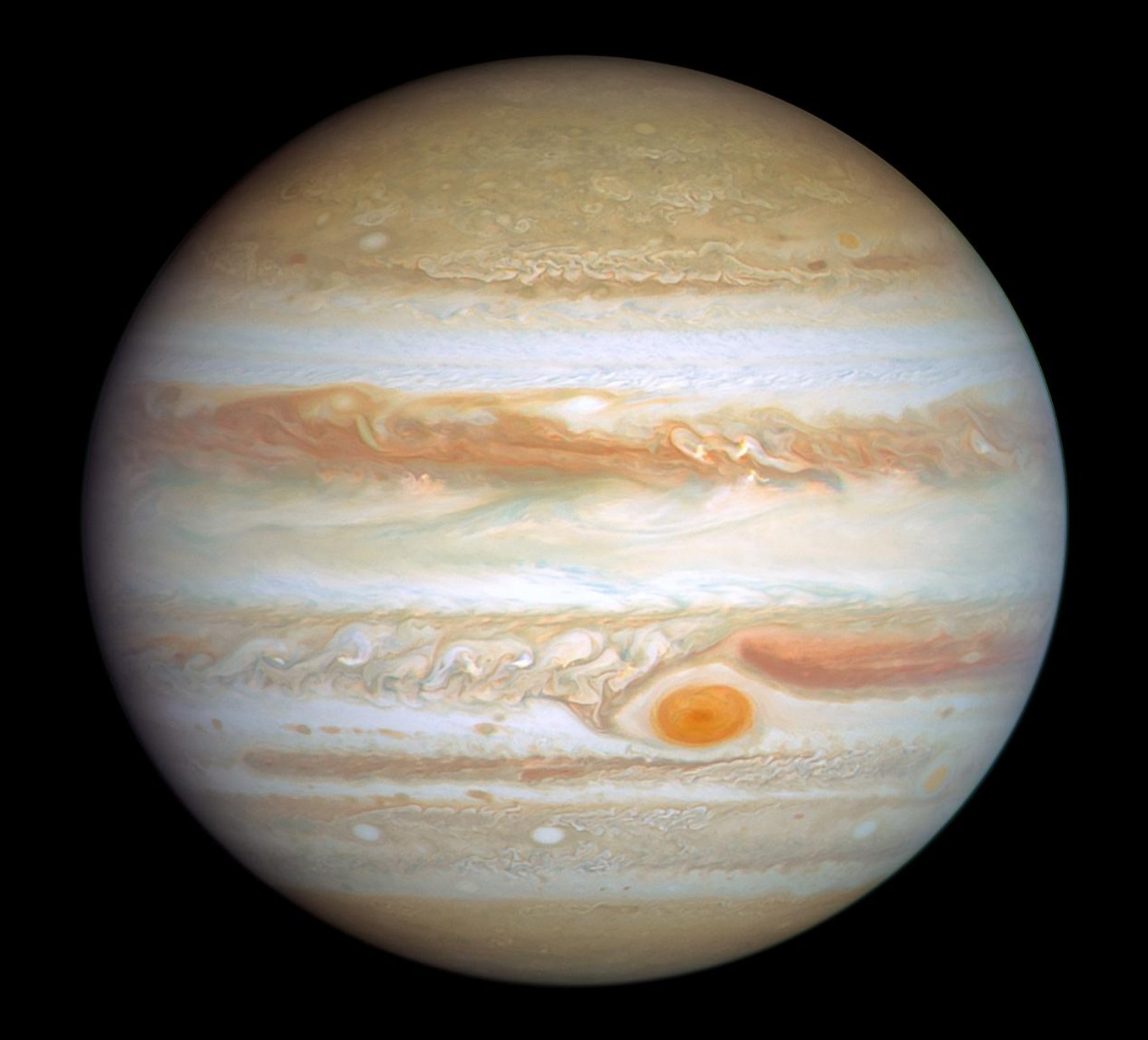
Jupiter is the largest planet in the Solar System, a gas giant made mostly of hydrogen and helium. Its atmosphere is divided into light zones and darker belts arranged in latitudinal bands. Where these circulation patterns meet, turbulence and storms appear.
The planet rotates in slightly less than ten hours, the fastest rotation of any planet in the Solar System. That rapid spin helps shape Jupiter’s atmospheric dynamics and contributes to the organized bands and powerful jet streams. Winds of 100 metres per second are common in these zonal flows.
Jupiter also gives off more heat than it receives from the Sun. That internal heat matters enormously: it helps drive convection, the process in which warmer material rises and cooler material sinks. On Jupiter, convection is a major engine of weather. Rather than being controlled mainly by sunlight, much of the planet’s atmospheric activity is energized from below.
What are shallow lightning and mushballs?
For a long time, Jupiter’s thunderstorms were linked to deep water clouds, much as storms on Earth are associated with water and rising heat. Flashes detected in Jupiter’s atmosphere suggested that lightning there could be tremendously powerful.
Juno added an important twist. It revealed shallow lightning, a form of lightning that occurs relatively high in Jupiter’s atmosphere in ammonia-water clouds. This was surprising because lightning had been expected deeper down.
These high-altitude discharges are connected to mushballs. A mushball is a lump of water-ammonia slush covered in ice. Instead of being a simple ice hailstone, it is a mixed, slushy object formed in Jupiter’s unusual cloud chemistry. Once formed, mushballs fall deep into the atmosphere, carrying ammonia and water downward.
That makes them important beyond their novelty. They help move material from one atmospheric level to another, showing that Jupiter’s weather is also a transport system, not just a spectacle.
Why Jupiter’s lightning is so intense
Lightning on Jupiter can be up to a thousand times as powerful as lightning on Earth. That tells us the storms generating it are extremely energetic.
The likely storm source is water clouds beneath the ammonia cloud decks. These clouds are thought to produce thunderstorms in a way similar to terrestrial storms, with heat from the interior rising upward and fueling atmospheric instability. On Jupiter, that energy source is especially significant because the planet’s interior continues to release heat.
The cloud structure itself is layered. Jupiter is perpetually covered by ammonia crystal clouds, and the main cloud layer is about 50 kilometres deep, with at least two decks of ammonia clouds. There may also be a thin layer of water clouds below them. In that environment, storms can generate not only conventional deep lightning but also the shallower ammonia-water lightning detected by Juno.
Elves and sprites above Jovian storms
Jupiter’s electrical activity does not stop inside the clouds. High above the storms, the upper atmosphere can light up with brief flashes known as elves and sprites.
These are upper-atmospheric lightning phenomena. On Jupiter, they appear as bright blue or pink flashes lasting around 1.4 milliseconds. Their colors are linked to hydrogen in the atmosphere.
If the names sound whimsical, the physics is not. Elves and sprites are signs that powerful storm systems can affect atmospheric layers far above the main cloud decks. They are part of the same chain of energy moving upward from Jupiter’s storm zones.
The chemistry behind Jupiter’s cloud colors
Jupiter’s atmosphere is not only stormy but vividly colored. Its orange and brown cloud tones come from upwelling compounds that change color when exposed to ultraviolet light from the Sun. The exact makeup of these coloring agents is uncertain, but they are thought to involve phosphorus, sulfur, or possibly hydrocarbons.
These substances are called chromophores. In simple terms, chromophores are materials that absorb certain wavelengths of light and therefore give visible color to what we see. On Jupiter, they mix with warmer clouds in the lower deck.
The lighter zones form where rising convection cells create crystallizing ammonia that hides these chromophores from view. So cloud color is not just a paint job: it reflects atmospheric motion. Where material rises, sinks, mixes, and reacts with sunlight, the planet’s appearance changes.
That means storms and convection are directly tied to Jupiter’s famous face. Lightning, cloud chemistry, and color all belong to the same system.
Convection: the hidden engine of Jupiter’s atmosphere
Convection is one of the key ideas behind Jupiter’s weather. Warm material rises, cool material sinks, and heat is moved from one place to another. On Jupiter, this process helps power thunderstorms and also redistributes energy across the planet.
Despite Jupiter’s low axial tilt, which means the poles receive less solar radiation than the equator, temperatures at the cloud layer are balanced by convective transport from the interior. In other words, the atmosphere does not simply mirror sunlight patterns. Heat rising from inside the planet helps smooth out the temperature difference from equator to pole.
This helps explain why Jupiter behaves so differently from a rocky world. It is not just a planet sitting under sunshine. It is a giant, active heat machine with weather driven from below.
Jupiter’s atmosphere is made for strange phenomena
The upper atmosphere is about 90% hydrogen and 10% helium by volume, with traces of compounds including ammonia, water vapour, phosphine, hydrogen sulfide, and hydrocarbons such as methane, ethane, and benzene. The outermost layer even contains crystals of frozen ammonia.
That mixture creates atmospheric conditions unlike anything on Earth. Water is present, but not in isolation. Ammonia plays a major role, especially in the shallow lightning and mushball story. Because the atmosphere extends about 3,000 kilometres below the cloud layers, storms are taking place within an enormous vertical system.
Jupiter’s cloud tops are only the visible surface of a much deeper world.
More than just the Great Red Spot
The Great Red Spot is Jupiter’s most famous storm, but it is only one part of a much bigger weather system. This giant anticyclonic storm has been observed since 1831, and possibly even earlier. It rotates counterclockwise with a period of about six days and rises about 8 kilometres above the surrounding cloud tops.
Jupiter also hosts cyclone groups at the poles, along with other major vortices such as Oval BA, sometimes called the Little Red Spot. In 2017, scientists identified a Great Cold Spot in Jupiter’s thermosphere near the north pole, a giant cool feature that has remained in roughly the same place for more than 15 years.
Taken together, these features show that Jupiter’s atmosphere is full of long-lived structures, fast-moving flows, and intense electrical storms. Lightning and mushballs are part of that larger picture of a planet in constant motion.
Why lightning and mushballs matter
At first glance, mushballs may sound like a quirky footnote. In reality, they help explain how Jupiter transports ammonia and water through its atmosphere. Shallow lightning shows that storm activity occurs higher than many expected. Elves and sprites reveal that the effects of storms extend upward into the upper atmosphere.
Most importantly, all of this connects weather to heat transport and cloud chemistry. Thunderstorms help move energy. Convection helps regulate temperatures. Upwelling material contributes to the cloud colors that make Jupiter so recognizable.
Jupiter is not just a giant ball of gas with pretty bands. It is a dynamic world where heat, chemistry, electricity, and motion are all entangled. Every blue-pink flash and every falling mushball adds another clue to how this enormous planet works.
A brighter look at a stormy giant
Because Jupiter is one of the brightest natural objects in Earth’s night sky, it has fascinated skywatchers since prehistoric times. Through a small telescope, observers can already see its cloud belts. But modern missions like Juno have shown that behind those bands lies an atmosphere far stranger than anyone once imagined.
A place with shallow lightning in ammonia-water clouds. A place where mushballs of icy slush fall into the depths. A place where storms can launch fleeting upper-atmosphere flashes and shape the very colors we see from millions of kilometres away.
Jupiter’s weather is not merely extreme. It is one of the most remarkable atmospheric systems in the Solar System.
Sources
Based on information from Jupiter.
More like this
Catch knowledge in a flash like Jovian lightning — download DeepSwipe and let your brain gobble up a few mushballs of wonder every day.