Full article · 7 min read
Visual Arts: How Sculpture Escaped the Pedestal
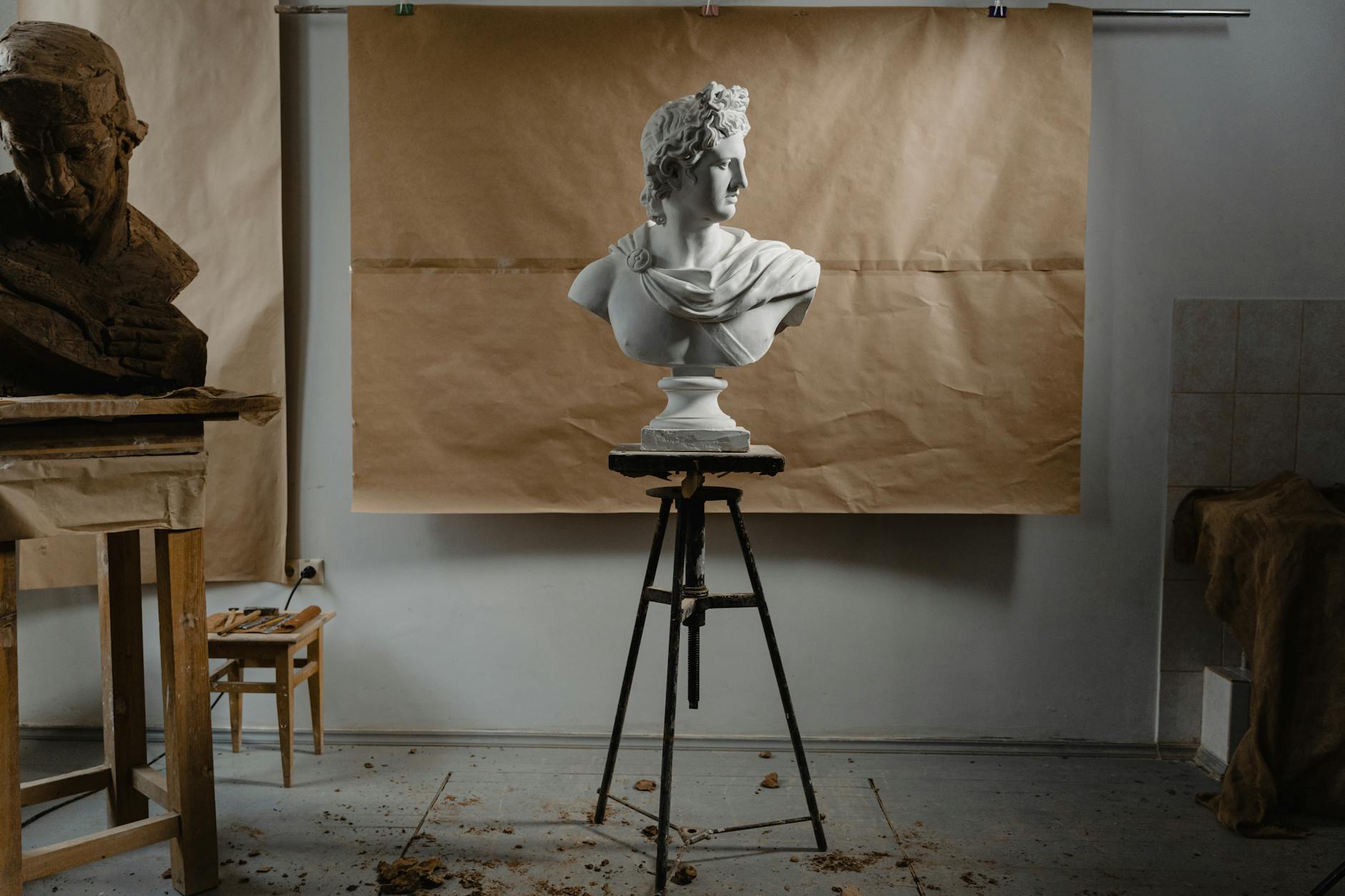
Sculpture is often imagined as a carved block of marble standing on a pedestal in a museum hall. But sculpture has always been much bigger than that. It is one of the oldest art forms in human history, and it includes far more than chiseling stone. Sculpture can be built, assembled, fired, welded, molded, cast, or carved. It can be made from stone, clay, metal, glass, or wood. It can even incorporate sound, text, or light.
That wide definition helps explain how sculpture “escaped the pedestal.” It moved beyond the traditional image of a freestanding object and expanded into gardens, fabricated industrial forms, and even entire landscapes.
What sculpture actually is
At its core, sculpture is three-dimensional artwork. Unlike drawing or painting, which usually create images on a flat surface, sculpture occupies space. It has height, width, and depth, and that changes how people experience it. You can walk around it, view it from different angles, and understand it as a physical object rather than only as an image.
A sculptor may create work by shaping a material directly, such as carving stone or wood. Sculpture can also be made by combining separate parts, assembling elements together, welding metal, molding softer materials, casting forms, or firing pieces after they are built. Because it involves molding or modulation of material, sculpture is considered one of the plastic arts.
The term “plastic arts” does not refer to the modern synthetic material plastic. In art, it means art forms shaped through physical manipulation of a material. That includes sculpture and ceramics, and in a broader sense has also been applied to visual arts in general.
One of humanity’s earliest art forms
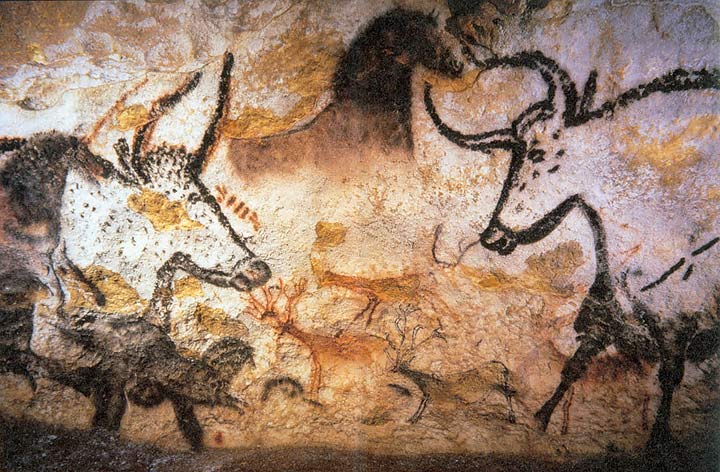
Sculpture reaches back into deep prehistory. The earliest undisputed examples belong to the Aurignacian culture, active in Europe and southwest Asia at the beginning of the Upper Paleolithic.
The Upper Paleolithic is the later part of the Old Stone Age, a prehistoric era associated with early art and toolmaking. The Aurignacian people are known not only for some of the earliest cave art, but also for producing three-dimensional figurines. They made finely crafted stone tools as well as pendants, bracelets, ivory beads, and bone flutes.
That matters because it shows sculpture was not a late invention of advanced civilizations. Humans were making small, shaped objects tens of thousands of years ago. From the beginning, sculpture was tied to skill, material knowledge, and the human urge to give form to ideas in physical space.
Sculpture is not just carving
The popular image of sculpture usually focuses on carving, but carving is only one method among many. A sculpture might be assembled from multiple components, built up from soft material, cast in a mold, or fabricated from industrial materials.
This broader view changes the way sculpture is understood. A carved marble figure and a welded metal construction both count as sculpture. So does a molded clay form, a cast work, or a piece that combines text and light. Sculpture is defined less by one technique than by its three-dimensional presence and the artist’s shaping of materials or elements.
That is one reason sculpture has remained so flexible over time. It can absorb new methods without losing its identity.
Why sculpture moved beyond the handmade ideal
For a long time, people often associated sculpture with direct manual craft: the artist’s hand shaping the final object. But in the 20th century, increasing technology and the popularity of conceptual art over technical mastery changed that picture.
Conceptual art places special importance on the idea behind a work. In that context, the artist’s role may center on designing the piece rather than personally executing every step of its construction. This shift helped normalize the use of art fabricators.
With fabrication, the artist creates a design and pays a fabricator to produce the artwork. A fabricator is a specialist or workshop that constructs the physical piece according to the artist’s plan. This process made it possible for sculptors to create larger and more complex works from materials such as cement, metal, and plastic—materials that might be difficult or impossible for one person to handle alone by hand.
This was a major step in sculpture’s escape from the pedestal. Once artists could think at larger scales and rely on fabrication, sculpture was no longer limited to what one sculptor could personally carve or model in a studio. It could become architectural in size, industrial in method, and public in ambition.
Public art and the expanding scale of sculpture
The majority of public art is sculpture. That fact helps explain why sculpture so often moves out of galleries and into shared spaces. A sculpture can mark a plaza, shape a park, anchor a civic space, or transform the way people move through an environment.
When multiple sculptures are arranged in a garden setting, the result is sometimes called a sculpture garden. Even this idea hints at sculpture’s expansion. Instead of one isolated object on one base, sculpture becomes part of a larger spatial experience.
As scale increased, sculpture became more capable of engaging directly with architecture, open land, and public life. It no longer had to be something you encountered only indoors. It could become part of the world outside.
When the landscape becomes the sculpture
One of the most dramatic ways sculpture escaped the pedestal is through monumental works that use the natural landscape itself as a medium. In these works, the “material” is not just stone or metal brought into a studio. The site becomes part of the artwork.
A notable example is the Litlington White Horse in East Sussex, England. This 20th-century geoglyph is a form of relief sculpture created by the subtractive method of removing turf to reveal the underlying white chalk.
A geoglyph is a large design made on the ground, often by arranging or removing natural material. Relief sculpture usually means a sculpted form that projects from a flat surface rather than standing fully free. In the case of the Litlington White Horse, the effect comes from subtraction: material is removed so that the image appears through contrast.
That contrast is essential. The white chalk stands out against the green downland, and regular maintenance is required to preserve the image’s visibility. So this is not a sculpture that simply gets made once and then left alone. Its continued existence depends on ongoing care.
This kind of work pushes sculpture far beyond the traditional pedestal-bound object. It is large, site-specific, and inseparable from the landscape around it.
The meaning of relief and subtraction in sculpture
The Litlington White Horse also reveals something important about sculptural thinking. Sculpture is often imagined as adding material, but subtraction can be just as important.
In relief sculpture, form emerges in relation to a surface. Instead of existing completely free in space, the image depends on a background plane. In subtractive work, the artist removes material to expose or define the final form. Carving is one familiar subtractive method, but the White Horse shows that even earth and turf can be handled in a sculptural way.
This expands the idea of what counts as sculptural material. It is not only marble, bronze, or clay that can be shaped. Land itself can be cut, revealed, and maintained as an image in space.
New tools, same artistic impulse
Modern technology has continued to widen sculpture’s possibilities. Sculptures can also be made with 3-D printing technology. That means a sculpture may begin as a digital design and end as a physical object produced through a technical process very different from carving or modeling.
Yet even with new tools, the core impulse remains familiar: giving form to an idea in three dimensions. Whether the material is stone, wood, metal, cement, plastic, light, or land, sculpture still revolves around shaping physical presence.
This is why sculpture has remained central within the visual arts. It adapts. It absorbs new materials and techniques. And it keeps redefining where art can exist.
From object to environment
The story of sculpture is not just the story of objects. It is also the story of environments, methods, and scale. From Aurignacian figurines to fabricated works in modern materials, sculpture has repeatedly expanded its boundaries.
What began as shaped forms small enough to hold in the hand eventually grew into public monuments, fabricated structures, sculpture gardens, and land-based works. Along the way, sculpture proved that it was never confined to carving stone or sitting politely on a pedestal.
It could be assembled. It could be cast. It could be welded. It could be designed by one person and built by another. It could occupy a plaza or alter a hillside. It could be made not only from solid material, but from light, text, and even the landscape itself.
That is how sculpture escaped the pedestal: not by abandoning its past, but by stretching the very idea of what three-dimensional art could be.
Sources
Based on information from Visual arts.
More like this
Step off the pedestal and into bigger ideas — download DeepSwipe and sculpt your daily knowledge bite by bite.


