Full article · 7 min read
Opera as a Total Artwork
Opera is often introduced as a form of music, but that description is only the beginning. What makes opera so compelling is that it brings together many different arts at once. In a traditional opera, the experience is built from sets, costumes, acting, a libretto, singers, and an orchestra. Rather than functioning as separate ingredients, these elements are fused into a single artistic event.
That is why opera stands out in discussions of multidisciplinary art. It does not simply place music next to theatre or visual design. It combines artistic disciplines into one shared experience, where story, sound, movement, and spectacle all work together.
What makes opera different?
Opera belongs to the performing arts, the broad group that includes dance, music, theatre, opera, and mime. Performing arts are defined by performance itself: they unfold over time in front of an audience. Unlike a painting or sculpture, they are not static objects. They happen.
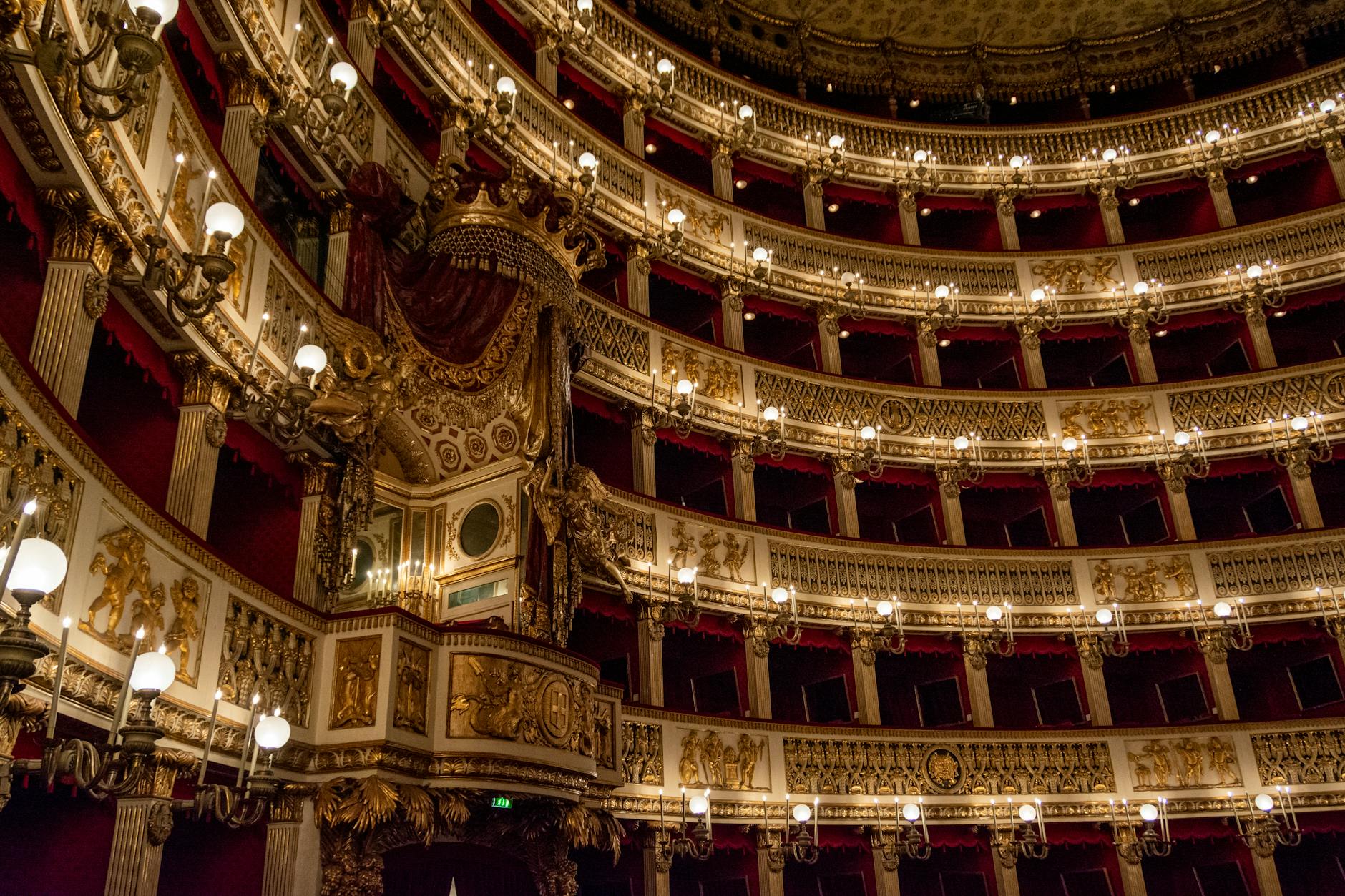
Opera is especially rich because it draws from several artistic branches at once. It connects to music through singing and orchestral accompaniment. It connects to theatre through acting and storytelling. It connects to the visual arts through sets and costumes. It also depends on a libretto, which is the text of the work and gives opera a literary dimension as well.
That mixture is part of the reason opera can feel so immersive. Audiences are not just hearing music or following a plot. They are entering a fully constructed world shaped by sound, language, visual design, and human performance.
The role of the libretto
One term that often appears in opera is libretto. A libretto is the sung text or script of the work. It provides the words, dramatic structure, and narrative framework that singers perform.
Because of the libretto, opera is never only about melody. It is also about language and drama. The literary side of opera helps guide the emotional and theatrical power of the music. In a traditional opera, the libretto works alongside acting, costumes, and orchestral sound to shape the full experience.
This is one reason opera can be seen as more than a concert. It is a staged, story-driven form in which text and performance are inseparable from music.
Richard Wagner and the “synthesis of the arts”
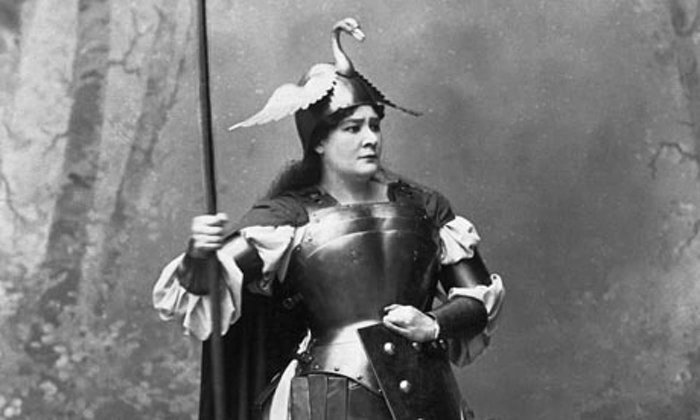
Few figures are more closely tied to the idea of opera as a unified artwork than the composer Richard Wagner. He emphasized the fusion of many disciplines into a single work of opera and used his cycle Der Ring des Nibelungen, or The Ring of the Nibelung, as an example of that ideal.
Wagner did not use the term opera for his works. Instead, he used the German term Gesamtkunstwerk. This means “synthesis of the arts,” and it is sometimes translated as “music drama.” The phrase captures his belief that a major stage work should not treat music as the only important element. In his view, the literary and theatrical components were as important as the music.
That idea helps explain why opera can be so powerful when it is working at its highest level. The score, the text, the acting, and the staging are not supposed to compete for attention. They are meant to support one another, creating a more complete artistic whole than any one form could produce by itself.
More than music, more than theatre
It can be tempting to think of opera as just theatre with singing, or as a concert with costumes. But the form is more integrated than either description suggests.
Theatre, as a performing art, is concerned with acting out stories in front of an audience using combinations of speech, gesture, music, dance, sound, and spectacle. Opera belongs in that world of theatrical storytelling, yet it also gives music a central structural role through singers and orchestra. At the same time, its sets and costumes bring in visual design, shaping how the audience experiences mood, place, and character.
This is what makes the phrase “total artwork” so useful. Opera demonstrates how art forms can remain distinct while still contributing to something larger. Literature provides text. Music provides sound. Theatre provides embodied action. Visual design provides the world of the stage. Together, they become one event.
Opera and other blended art forms
Opera is not the only art form that combines disciplines, but it is one of the clearest examples. Classical ballet is another major form built from artistic fusion. It emerged in the 17th century and combines orchestral music with dance.
That comparison is revealing. In ballet, movement and music are inseparable. In opera, music and drama are inseparable, while visual and literary elements are also built into the performance. Both forms show how the arts can overlap rather than remain in separate boxes.
This broader mixing of forms appears again in later creative work. Performance art, for example, is a performance over time that can combine instruments, objects, and art within a structure that may be predefined or less well-defined. Some performance art can be improvised, while other works are scripted, random, or carefully organized. Audience participation may even occur.
Seen this way, opera is part of a larger history of artists experimenting with artistic combination. It stands as a classic example of what happens when creators refuse to keep music, text, image, and action apart.
Why multidisciplinary art matters
The arts are often grouped into three main branches: visual arts, literature, and performing arts. Opera is fascinating because it reaches into all three.
From the visual arts, it uses designed stage environments such as sets and costumes. From literature, it draws on the libretto. From the performing arts, it brings in singing, acting, orchestral music, and staged performance before an audience.
That crossing of boundaries reflects a wider truth about the arts: art forms can be discrete and self-contained, but they can also combine and interweave with other art forms. The arts are continually being redefined, and multidisciplinary works show just how flexible artistic categories can be.
Opera therefore matters not just as entertainment, but as a model of artistic integration. It demonstrates that the most memorable experiences can emerge when different creative traditions are brought into dialogue.
From opera to film and performance art
The idea of a “total work” naturally leads to a bigger question: what art forms continue this tradition today?
Film is one obvious example of a multidisciplinary work. It includes visual elements and sound, and it belongs to a broader category of artistic works that incorporate multiple artistic fields. Performance art also continues the blending impulse in a different way, combining objects, actions, and varying degrees of structure over time.
These later forms do not replace opera. Instead, they show that the drive toward synthesis did not stop with the great operatic tradition. Artists kept finding new ways to merge disciplines, test boundaries, and create experiences that are more than the sum of their parts.
That makes opera feel both historical and surprisingly modern. Its structure anticipates an enduring artistic ambition: to create works that engage the ear, the eye, the mind, and the emotions all at once.
The enduring appeal of the total artwork
Opera remains one of the clearest expressions of how ambitious the arts can be. In a single work, it can unite literary text, theatrical performance, visual design, vocal expression, and orchestral sound. Wagner’s idea of Gesamtkunstwerk gave this fusion a memorable name, but the appeal is larger than any one artist or theory.
At its core, the attraction of opera as a total artwork lies in artistic convergence. Instead of asking an audience to appreciate only one mode of expression, it offers many at once. It transforms separate arts into one shared event unfolding in time.
That is why opera continues to matter in conversations about creativity. It shows how the arts can collaborate, overlap, and amplify one another. And it keeps raising an exciting question for every new generation of artists: what new total artworks are still waiting to be made?
Sources
Based on information from The arts.
More like this
Craving more total works for your brain? Download DeepSwipe and let music, drama, and big ideas take the stage daily.