Full article · 7 min read
Worlds Without Number in the Milky Way
The Milky Way is home to the Solar System, but on a larger scale it is something even more staggering: a galaxy containing an estimated 100 to 400 billion stars and at least that many planets. That means our home galaxy may be packed with worlds on a scale that is hard to picture.
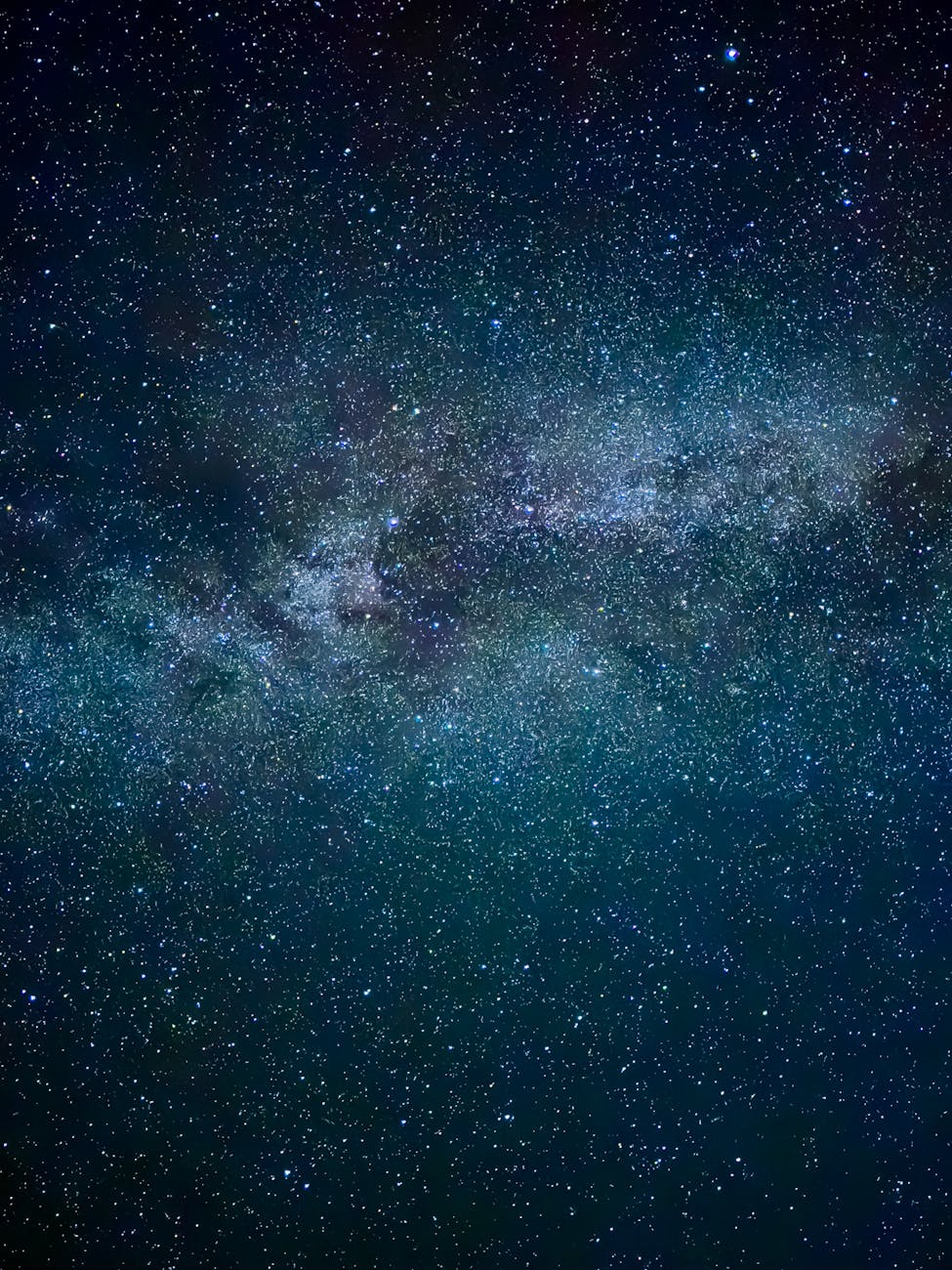
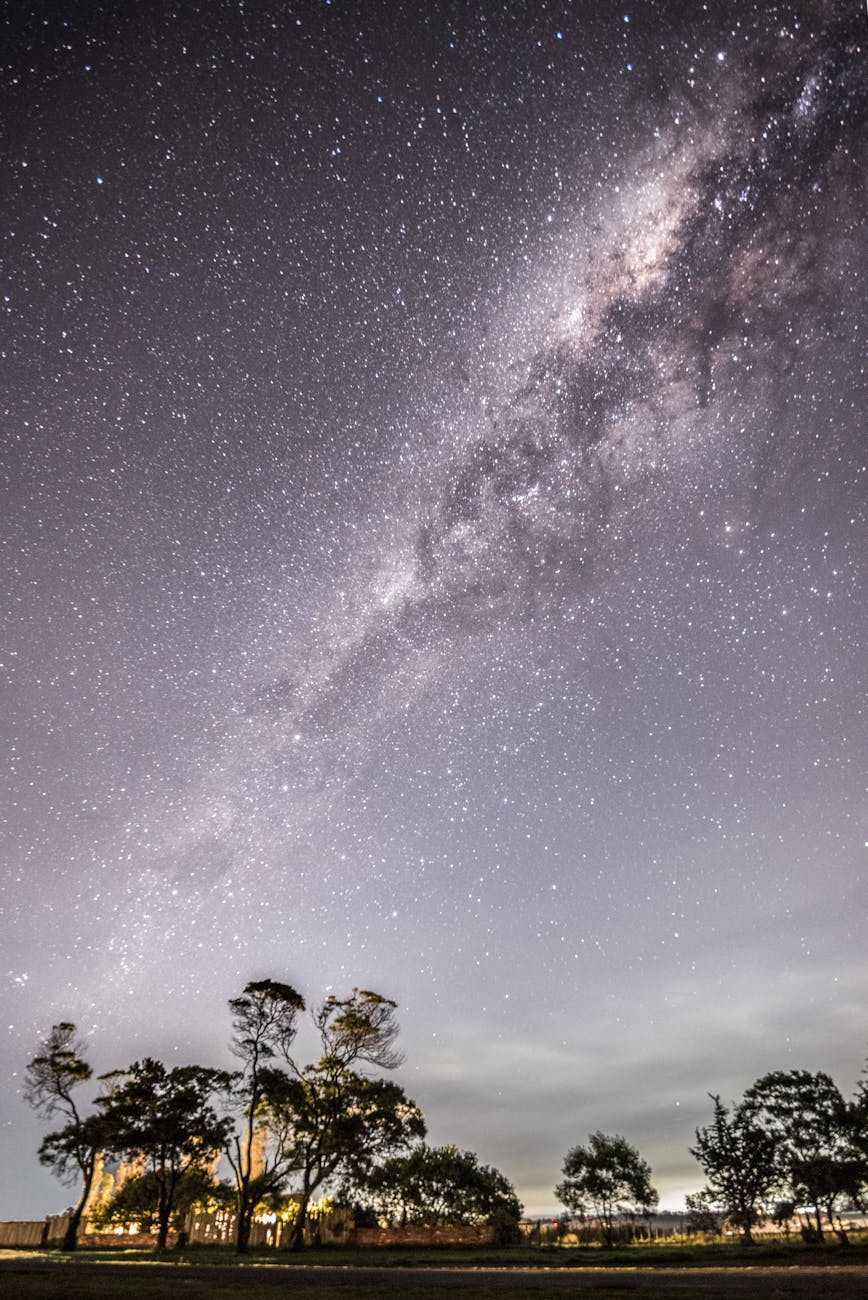
This is what makes the idea so captivating. When people imagine the Milky Way, they often picture a hazy river of light across the night sky. But that glowing band is also a vast planetary realm, with star systems, drifting rogue planets, and billions of Earth-sized worlds scattered across a barred spiral galaxy tens of thousands of light-years wide.
A galaxy crowded with stars — and planets
The Milky Way is estimated to contain between 100 and 400 billion stars. According to the same broad picture, it also has at least that many planets. In other words, planets are not a rare side effect of stars. They appear to be a basic feature of the galaxy.
That simple comparison already changes the way the Milky Way feels. Our Solar System stops looking like an isolated case and starts looking like one example among an immense population of planetary systems.
Astronomers cannot arrive at one exact count because very-low-mass stars are difficult to detect, especially at distances greater than about 300 light-years from the Sun. But even with that uncertainty, the total still points to an extraordinary conclusion: the Milky Way is likely filled with worlds.
What microlensing reveals about hidden planets
One of the methods used to estimate the abundance of planets is gravitational microlensing. In simple terms, microlensing happens when gravity from an object in the foreground briefly brightens light from a more distant background star. That temporary brightening can reveal objects that are otherwise very difficult to detect.
Microlensing observations indicate that there may be at least as many planets bound to stars as there are stars in the Milky Way. Even more strikingly, microlensing measurements suggest there are more rogue planets than stars.
Rogue planets are planets not bound to host stars. Instead of orbiting a sun, they drift through space on their own. That idea sounds almost like science fiction, but it fits into the bigger message of the Milky Way: not every world belongs to a tidy planetary system.
So the galaxy may not just be full of solar systems. It may also be full of lonely planets traveling through interstellar space.
Earth-sized planets may be everywhere
The most exciting numbers often involve worlds that are closer in size to Earth. A January 2013 analysis of data from the Kepler space observatory estimated that at least 17 billion Earth-sized exoplanets reside in the Milky Way.
An exoplanet is simply a planet beyond our Solar System. Kepler helped transform the search for them by detecting large numbers of planets around distant stars.
Another estimate reported in November 2013 suggested there could be as many as 40 billion Earth-sized planets orbiting in the habitable zones of Sun-like stars and red dwarfs in the Milky Way. Of those, 11 billion may orbit Sun-like stars.
A habitable zone is the region around a star where liquid water could potentially exist on a planet’s surface. It does not guarantee life, and it does not mean a planet is definitely Earth-like in every way. But it does make those planets especially interesting, because liquid water is one of the key conditions scientists look for when considering possible habitability.
Over 300 million potentially habitable worlds
The numbers become even more intriguing when the focus shifts from Earth-sized planets in general to planets that may be habitable. More recently, over 300 million habitable exoplanets were estimated to exist in the Milky Way Galaxy.
That does not mean astronomers have identified 300 million individual Earth twins. It means the galaxy may contain an enormous population of planets with conditions that could be favorable for habitability.
Even if only a fraction of those worlds turn out to be especially promising, the scale is remarkable. The Milky Way is not just a galaxy with stars. It may be a galaxy with vast numbers of places where life-friendly conditions could exist.
How close is the nearest exoplanet?
For all the enormity of the Milky Way, one of the most compelling facts is that another planet may be very close by on cosmic terms. According to a 2016 study, the nearest exoplanet may be 4.2 light-years away, orbiting the red dwarf Proxima Centauri.
A light-year is the distance light travels in one year. It is often used for interstellar distances because ordinary units quickly become impractical in astronomy.
That 4.2-light-year distance is tiny compared with the scale of the galaxy as a whole. The Sun is about 27,000 light-years from the Galactic Center, the dense central region of the Milky Way. So while the galaxy spans an enormous range of distances, one of the nearest known planetary neighbors is still relatively close in the grand map of our galactic home.
Our place inside the Milky Way
The Solar System lies on the inner edge of the Orion Arm, one of the spiral-shaped concentrations of gas and dust in the Milky Way. The galaxy itself is a barred spiral galaxy, meaning it has a central bar-shaped structure with spiral arms extending outward.
From Earth, the Milky Way appears as a hazy band of light in the night sky because we are looking through the dense plane of our own galaxy. The glow is produced by vast numbers of distant stars that cannot be individually distinguished by the naked eye.
The Galactic Center, in the direction of Sagittarius, is the brightest part of that band. At the center lies Sagittarius A*, an intense radio source understood to be a supermassive black hole of about 4.100 million solar masses.
This broader galactic setting matters because every exoplanet discovery, every estimate of Earth-sized worlds, and every clue about rogue planets is part of a larger structure: a galaxy with a bulge, bar, spiral arms, gas, dust, and a huge population of stars spread across tens of thousands of light-years.
Why these numbers matter
It is easy to hear “billions” so often that the word loses force. But in this case, the numbers truly reshape perspective.
If the Milky Way contains 100 to 400 billion stars and at least as many planets, then planets are a normal outcome of galactic evolution. If there are at least 17 billion Earth-sized exoplanets, then worlds roughly comparable in size to Earth are not rare curiosities. If as many as 40 billion Earth-sized planets occupy habitable zones around Sun-like stars and red dwarfs, then potentially favorable environments may be widespread. And if over 300 million habitable exoplanets exist in the Milky Way, then the search for life has an enormous arena to explore.
The galaxy stops being just a backdrop of stars and becomes a census of possible worlds.
The search has only begun
The Milky Way has been studied for centuries, from Galileo’s 1610 telescopic observations showing that the hazy band is made of huge numbers of faint stars, to modern missions such as Kepler and Gaia that have transformed how astronomers map stars and infer planetary populations.
Yet even with all of that progress, the search is still in its early stages. Many worlds remain too small, too dim, or too distant to detect easily. Rogue planets are especially elusive. Earth-sized planets are harder to find than gas giants at great distances. And habitability is far more complicated than a simple size or orbit label.
Still, the broad picture is already astonishing. The Milky Way may contain not just countless stars, but worlds without number: bound worlds, drifting worlds, Earth-sized worlds, and hundreds of millions of planets that may be habitable.
That possibility is one of the most powerful ideas in astronomy. When you look up at the Milky Way, you are not just seeing stars. You may be looking at a galaxy crowded with planets beyond counting.
Sources
Based on information from Milky Way.
More like this
Swipe through the galaxy of ideas — download DeepSwipe and discover more worlds of knowledge every day.