Full article · 6 min read
Hawaii’s Cliff Gardeners: Why Brighamia Needs Human Help
On the steep sea cliffs of Hawaii, plant conservation can look more like mountaineering than gardening. To help one of the islands’ rarest plants survive, biologists descend roughly 910-metre cliffs and pollinate flowers by hand. It is one of the most striking examples of how fragile island ecosystems can be.
Brighamia is an endemic Hawaiian plant, meaning it occurs naturally only in Hawaii and nowhere else. Today, it requires hand-pollination because its natural pollinator is presumed to be extinct. In the wild, only around 120 individual plants remain. That makes every flower, every seed, and every successful pollination incredibly important.
A rescue mission on vertical cliffs
Most people imagine botany as field notebooks, greenhouses, and garden plots. Brighamia changes that picture completely.
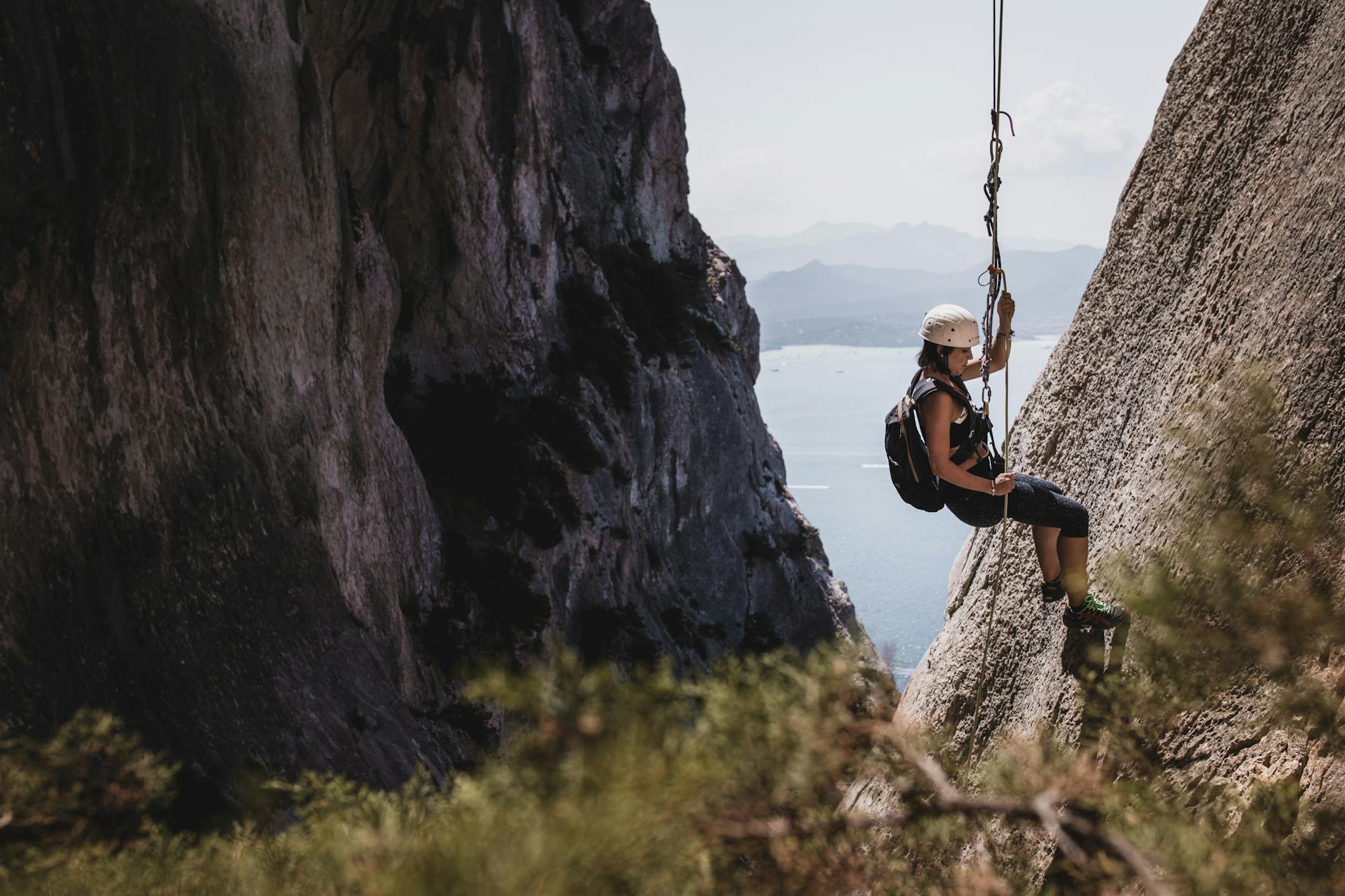
Because the plant survives on cliffs, conservation workers must rappel down sheer rock faces to reach it. Once there, they manually move pollen onto the plant’s stigmas so it can set seed. In simple terms, they are stepping in for the missing animal that once carried pollen from flower to flower.
This is not just unusual conservation work; it is urgent conservation work. When a species falls to such low numbers, reproduction becomes one of the biggest bottlenecks to survival. If flowers are not pollinated, no seeds form. If no seeds form, there is no next generation.
What makes Brighamia so vulnerable?
The key problem is ecological dependence. Brighamia evolved in a very specific environment and relied on a natural pollinator that is now presumed gone. That kind of tight relationship is common on islands, where species often adapt to narrow niches.
A niche is the particular set of conditions a species fits into: where it lives, what conditions it needs, and how it interacts with other living things. On islands, these relationships can become especially specialized. If one partner disappears, the other may suddenly struggle to survive.
That is exactly what makes Brighamia’s situation so dramatic. The plant itself still exists, but one of the biological relationships it depended on appears to have broken down. Without human intervention, reproduction becomes far more difficult.
Why Hawaii creates so many unique species
Hawaii is famous for its extraordinary natural variety. Even though it is in the tropics, the island of Hawaii hosts four of the five major Köppen climate groups on a surface of just 10,430 square kilometres. The Hawaiian Islands also receive most of their precipitation during the winter months, from October to April.
That environmental diversity helps explain why so many species in Hawaii are unique. Different elevations, rainfall patterns, and landforms create isolated habitats where plants and animals can evolve in distinct ways. Over time, those isolated populations can become endemic species found nowhere else on Earth.
But that same uniqueness comes with a cost: rarity. Species that evolve in narrowly defined habitats can be highly sensitive to disruption. If conditions change, or if a partner species vanishes, there may be nowhere else to go.
A plant on the edge
Brighamia’s numbers reveal just how serious the crisis is. In the wild, the two species of Brighamia, B. rockii and B. insignis, are represented by around 120 individual plants. That is an astonishingly low number for any wild plant.
At such small population sizes, every reproductive event matters. A single successful round of pollination can help produce seeds that may support future generations. That is why the cliff descents are so important. The work is painstaking, risky, and highly targeted, but it can make the difference between decline and persistence.
The image is unforgettable: biologists suspended on ropes, brushing pollen onto flowers on nearly inaccessible cliffs. Yet behind that drama is a basic truth of conservation biology. Sometimes saving a species comes down to restoring one missing step in its life cycle.
Hawaii’s wider ecological story
Brighamia is not the only example of Hawaii’s unusual and vulnerable biodiversity. The islands are home to endemic species whose survival can depend on very specific ecological conditions. Hawaii’s isolation helped create a remarkable natural world, but isolation also makes recovery harder when species begin to disappear.
The islands support a wide range of climates and landscapes despite their limited land area, and that variation has allowed life to diversify in extraordinary ways. In such settings, relationships between species can become highly refined over long periods of time. When those relationships are broken, conservation can become both more difficult and more hands-on.
That is why Brighamia has become such a powerful symbol. It is not merely a rare plant. It is a reminder that extinction does not always happen in one sudden moment. Sometimes it begins with the loss of a connection: a pollinator disappears, seeds stop forming, and a species slowly slips toward the edge.
What hand-pollination really means
Hand-pollination sounds simple, but it represents a profound shift. Instead of an ecological process happening naturally, humans now have to actively replace it.
Pollination is the transfer of pollen that allows a flowering plant to reproduce. In Brighamia’s case, humans use brushes to transfer pollen by hand. That act may look small, but for a plant with so few remaining individuals, it can be the difference between reproduction and failure.
This kind of intervention also shows how conservation often works in stages. First, scientists try to prevent total reproductive collapse. Then they can focus on producing seeds, maintaining populations, and giving the species a better chance of surviving into the future.
For Brighamia, each seed is precious because there are so few parent plants left. The phrase “every seed counts” is not a slogan here. It is a biological reality.
A fragile paradise, hanging by a thread
Hawaii is often imagined as lush, stable, and abundant. In some ways it is. But island ecosystems can also be among the most delicate on Earth.
A place can be rich in beauty and still be biologically fragile. Hawaii’s dramatic cliffs, varied climates, and isolated habitats have produced species that are wonderfully distinctive. Yet that distinctiveness can also leave them exposed. When a plant depends on a vanished pollinator, survival may literally require people to descend cliffs with ropes and pollen brushes.
Brighamia’s story captures that tension perfectly. It belongs to a paradise of extraordinary diversity, but it survives in one of the narrowest margins imaginable.
Why this story matters
The effort to save Brighamia is compelling because it combines danger, rarity, and hope. There is danger in the cliff work, rarity in the tiny number of plants left, and hope in the fact that successful pollination can still produce seeds.
It is also a vivid lesson in how ecosystems function. Species do not exist alone. They depend on landscapes, climates, and other organisms. On islands like Hawaii, those dependencies can be especially tight. When one piece disappears, the effects can ripple quickly.
So the next time you picture conservation, think beyond fenced reserves and seed banks. Sometimes it means a botanist hanging on a rope above the Pacific, reaching out to touch a flower that has almost no margin left for error.
And sometimes, that careful touch is enough to keep a species in the story a little longer.
Sources
Based on information from Oceania.
More like this
Hang onto knowledge like Brighamia on a cliff — download DeepSwipe and let your curiosity bloom every day.


