Full article · 6 min read
Animal Technology: Tools Beyond Humans
For a long time, tool use was treated as something that set humans apart from the rest of the animal world. That idea did not survive contact with observation. Evidence from other species showed that basic technology is not exclusive to humans at all.
If technology is understood as using knowledge to achieve practical goals, then some animals clearly qualify in their own ways. Chimpanzees, dolphins, crows, capuchin monkeys, and beavers all appear in this story. Their behaviors may not look like computers, engines, or machines, but they still reveal something profound: making and using tools is not only a human habit.
When tool use stopped being “uniquely human”
Tool use was once considered a defining characteristic of the genus Homo. In simpler terms, people believed that using tools was one of the key traits that made humans human.
That view changed after researchers found evidence of tool use in non-human animals. Among the animals named in this evidence are chimpanzees, other primates, dolphins, and crows. This was a major intellectual shift. It suggested that the ability to manipulate objects for practical purposes can emerge outside our own species.
This does not mean all animal tool use is the same, or that every species uses technology in equally complex ways. But it does mean the old boundary was drawn too sharply. Once scientists watched animals more closely, the picture became much richer.
Chimpanzees and the power of simple tools
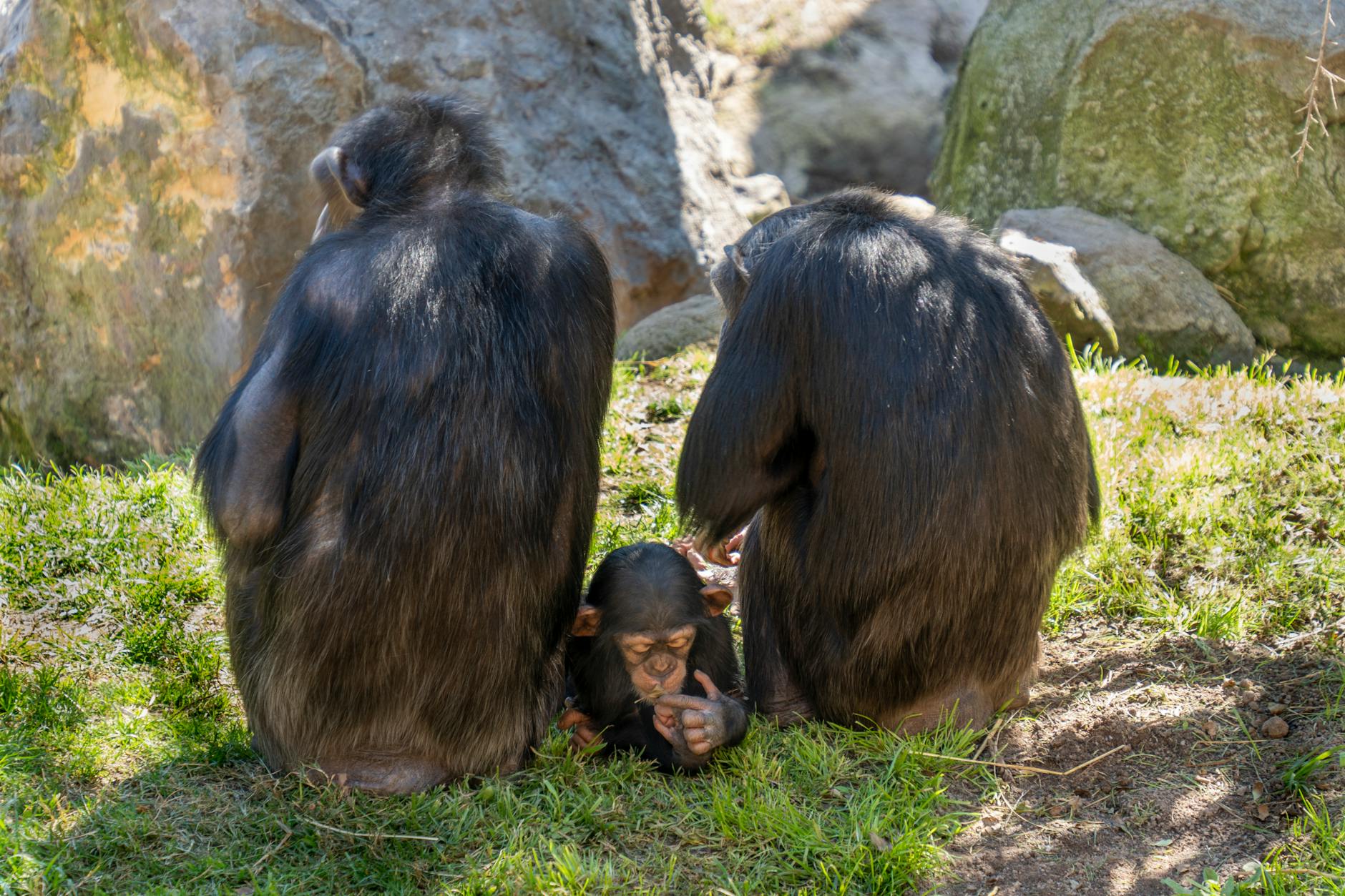
Chimpanzees are among the clearest examples of non-human technology use. Researchers have observed wild chimpanzees using basic foraging tools. Foraging means searching for and obtaining food, so these are tools that help chimps eat more effectively.
Their toolkit is surprisingly varied. Chimpanzees have been seen using pestles, levers, leaves as sponges, and tree bark or vines as probes to fish termites. Each of these examples shows a practical match between an object and a problem.
A pestle is a heavy tool used for pounding or crushing. A lever is an object used to pry or lift. A probe is something slender used to reach into a narrow space. When chimpanzees use bark or vines to fish termites, they are effectively inserting a thin tool into a termite colony to draw insects out. When they use leaves as sponges, they are using plant material to absorb liquid and then make it easier to consume.
None of this requires metal, electricity, or manufacturing. But it does fit the broad idea of technology: applying know-how to achieve a practical goal in a repeatable way.
Stone hammers and anvils in the wild
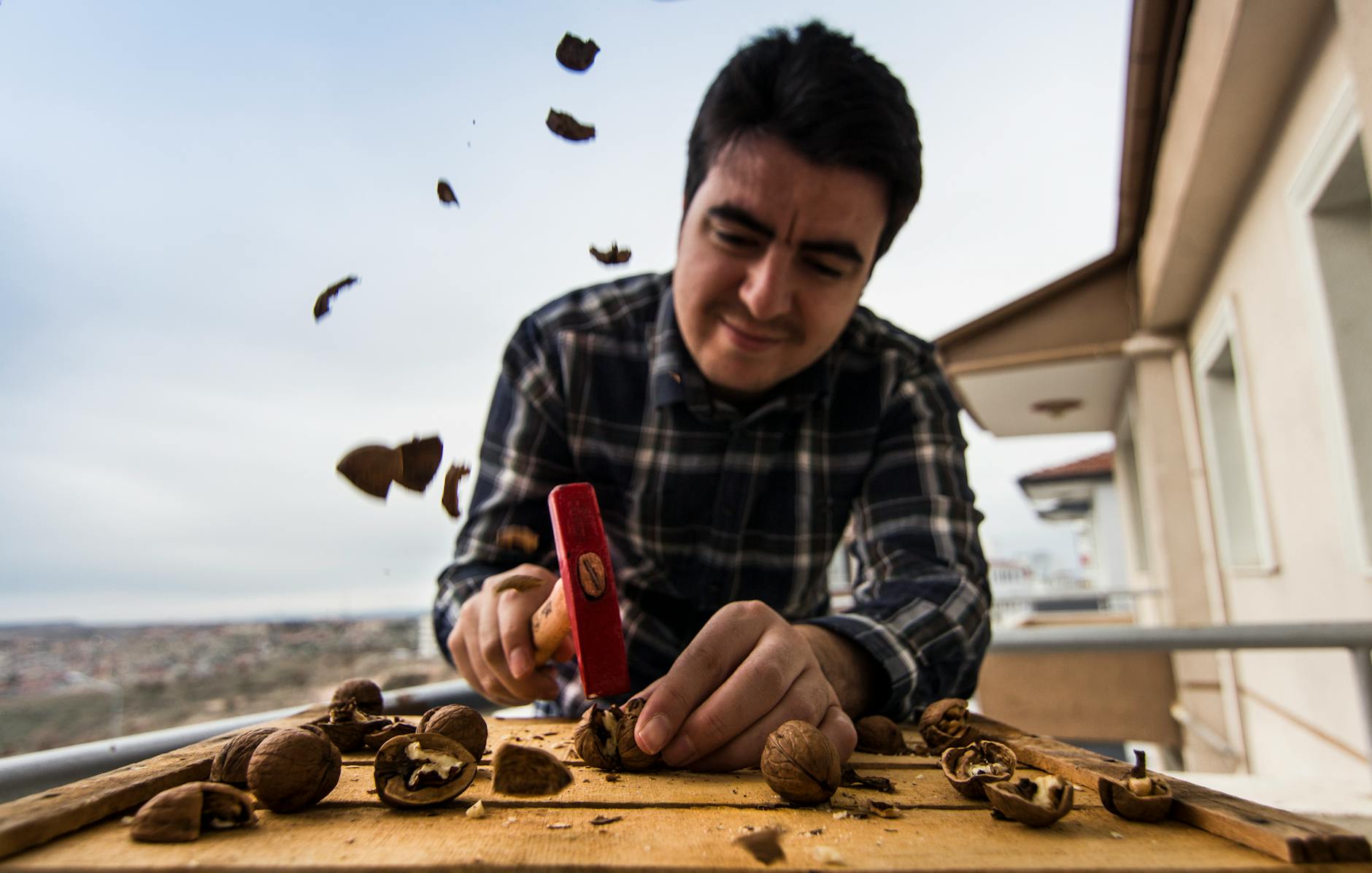
One of the most striking examples comes from West African chimpanzees. They use stone hammers and anvils for cracking nuts.
This behavior is easy to recognize as a form of technology because it resembles a basic human workshop setup. A hammer delivers force. An anvil provides a hard surface that supports the object being struck. Together, they allow the chimpanzee to break open a tough shell and get at the food inside.
What makes this especially fascinating is not just the use of stones, but the combination of objects into a working system. The hammer and anvil have different roles. One hits; the other supports. That pairing shows organized problem-solving rather than random object handling.
In a broader sense, this is exactly why tool use in animals attracted so much attention: it reveals that practical intelligence can take material form.
Capuchin monkeys join the club
Chimpanzees are not alone among primates. Capuchin monkeys of Boa Vista, Brazil, also use stone hammers and anvils for cracking nuts.
That matters because it shows that this kind of technological behavior is not limited to one branch of the primate family. Different animals can arrive at similar solutions when facing similar problems. A hard nut, a hard surface, and a striking object can become a functional system in more than one species.
This kind of repeated pattern strengthens the case that animal technology is not just a curiosity. It is a real phenomenon that appears in multiple places in the natural world.
Dolphins and crows in the bigger picture
Dolphins and crows are also listed among the non-human animals whose tool use helped overturn the old human-only assumption.
Even without detailing every behavior here, their inclusion is important. It broadens the story beyond primates. Chimpanzees and capuchins are mammals closely related to humans compared with many other animals, so skeptics might expect them to show some familiar traits. But when tool use also appears in dolphins and crows, the pattern becomes harder to dismiss as a narrow family resemblance.
Instead, it points to a wider truth: practical interaction with objects can evolve in very different kinds of animals.
Beaver dams are technology too
Tool use is not the only form of animal technology. Beavers offer one of the strongest examples of this.
Beaver dams, built with wooden sticks or large stones, are described as a technology with dramatic impacts on river habitats and ecosystems. That sentence opens up an important distinction. Technology does not have to be handheld. It can also be something constructed.
A beaver dam is an engineered structure in the plainest sense of the word: it is assembled from physical materials to alter the environment. Sticks and stones are arranged in ways that affect the movement of water. The result is not just shelter or convenience for one animal, but a large-scale transformation of the surrounding habitat.
An ecosystem is the network of living things and their physical environment. A habitat is the place where organisms live. So when beaver dams have dramatic effects on river habitats and ecosystems, that means these structures do more than solve a small local problem. They reshape conditions for many forms of life.
Why this changes how we think about technology
Many people hear the word technology and picture electronics, software, or industrial machines. But technology can also mean practical tools and methods much older and simpler than anything digital.
Seen in that broader way, animal behavior becomes newly interesting. A leaf used as a sponge, a vine used as a termite probe, a stone used as a hammer, or a dam made from sticks and stones all fit into a wider understanding of technology as purposeful problem-solving through material means.
This matters because it strips away a modern bias. Technology is not only about advanced industry or invention in the human sense. At its core, it is about getting something done.
That is why animal technology is such a compelling topic. It forces us to rethink a familiar word and reconsider our place in the living world. Humans remain extraordinary tool makers, but the evidence shows we are not alone in crossing the threshold from simply living in an environment to physically manipulating it with practical intent.
Beyond the myth of human exclusivity
The old belief that tool use belonged only to humans was powerful because it seemed to offer a clean dividing line. But nature rarely respects clean dividing lines.
Chimpanzees use foraging tools, pestles, levers, leaf sponges, and bark or vine probes. West African chimpanzees crack nuts with stone hammers and anvils. Capuchin monkeys in Boa Vista do the same. Dolphins and crows belong in the same broader conversation. Beavers build dams from sticks and stones that dramatically alter river ecosystems.
Taken together, these examples show that the roots of technology run deeper through the animal world than many once assumed. The story of tools is not just the story of us. It is part of a much larger story about intelligence, adaptation, and the many ways life solves problems.
Sources
Based on information from Technology.
More like this
Curious like a crow and crafty like a chimp? Download DeepSwipe and build your knowledge toolkit one swipe at a time.