Full article · 8 min read
Music Across Cultures: Why Every Society Has It, Even When It Means Different Things
Music appears everywhere humans do. It is found in all human societies, which is why it is often described as a cultural universal. That does not mean every culture defines music in exactly the same way. In fact, one of the most fascinating things about music is that people across the world make it, use it, and value it deeply, while not always agreeing on what should count as “music” in the first place.
This makes music more than just entertainment. It is a way of organizing sound into forms such as melody, rhythm, and harmony, but it is also tied to ceremony, community, creativity, memory, and emotion. In some traditions it is inseparable from dance. In others, it is closely connected to speech, ritual, or song. Looking across cultures reveals that music is universal, but the idea of music is not identical everywhere.
A universal human activity
Music is generally recognized as present in all human societies. People create it through composition, improvisation, and performance. It may be sung with the human voice, played on instruments, or produced mechanically or electronically. It appears in festivals, concerts, religious ceremonies, and private life. It is also part of films, television shows, operas, and video games.
Because music is so widespread, it has become part of many human systems beyond performance itself. It connects to education, philosophy, psychology, journalism, therapy, and industry. That breadth helps explain why cultures may treat music differently: it can be art, ritual, social glue, entertainment, or all of these at once.
Even the basic definition is debated. Scholars agree that music involves a small number of specific elements, but there is no full consensus on which elements are absolutely necessary. That uncertainty becomes even more interesting when comparing cultures, because the Western habit of grouping many different sound traditions under one big label, “music,” is not universal.
Why the word “music” does not translate perfectly everywhere
In the modern Western world, music is often treated as a broad umbrella term covering many genres, styles, and traditions. But not all cultures historically used one word in that broad way.
Some languages only recently adopted a more general word that matches the wide Western idea. Modern Indonesian uses musik, and Shona uses musakazo, reflecting a more universal concept that was not previously expressed in exactly the same way.
Before Western contact in East Asia, neither Japan nor China had a single word that covered music in this all-encompassing sense. That does not mean those cultures lacked rich musical traditions. Quite the opposite: it means their way of organizing the arts and sound was different.
This difference matters because language shapes categories. If a culture does not bundle song, instrumental sound, dance-related sound, and ceremonial performance into one exact category, then translating everything simply as “music” can flatten important distinctions.
When music is tied to dance and speech
In some parts of Africa, music cannot easily be separated from other kinds of expression. The musicologist J. H. Kwabena Nketia emphasized that African music often has an inseparable connection to dance and speech in general.
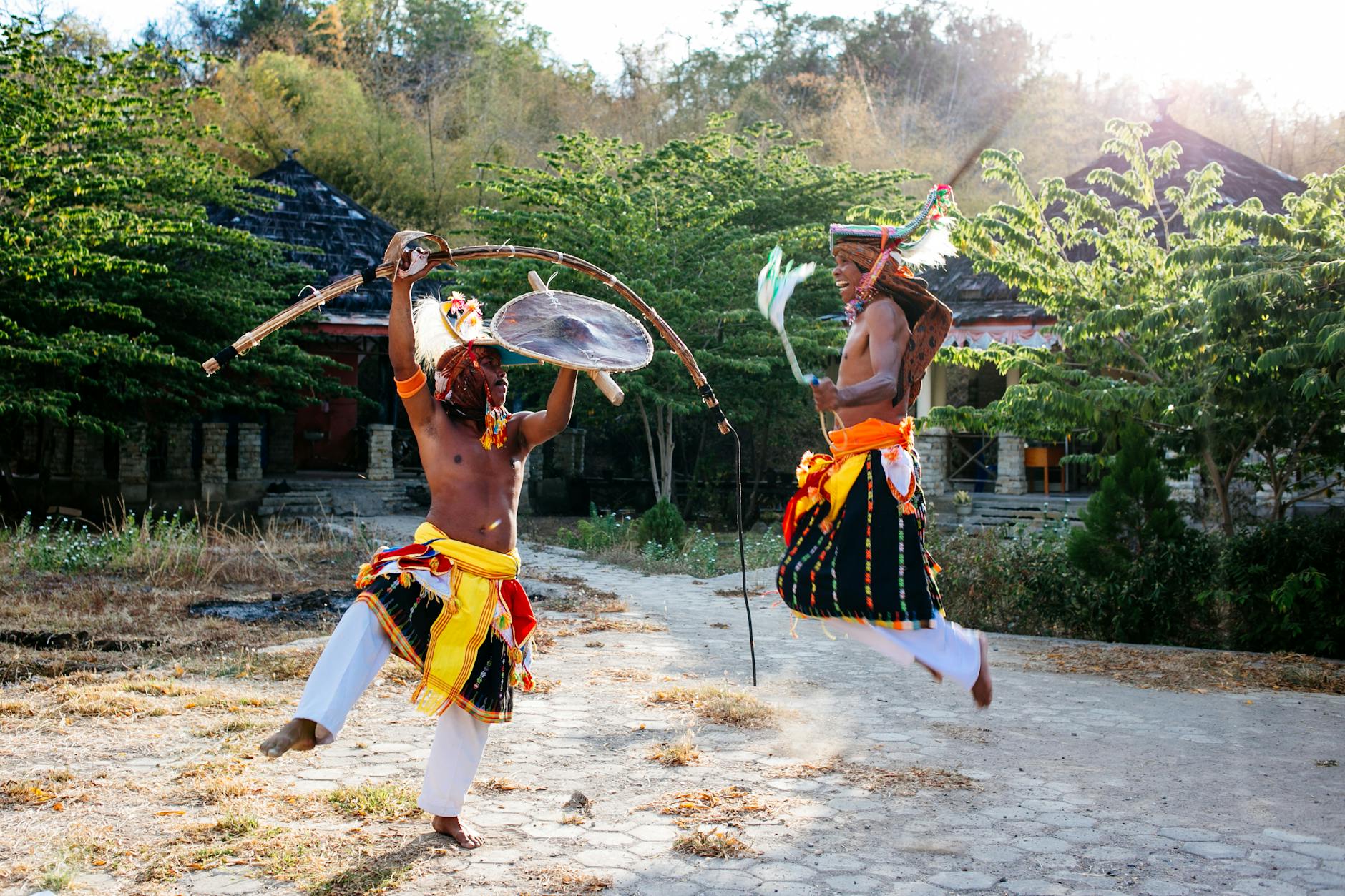
That idea challenges a common modern assumption that music stands alone as its own isolated art form. In many settings, rhythm, bodily movement, spoken pattern, and social participation belong together. What one culture labels as a single “musical performance,” another might experience as a blend of movement, language, and communal action.
The diversity of Africa is too great for sweeping generalizations, but some examples show how varied these ideas can be. The Songye people of the Democratic Republic of the Congo and the Tiv people of Nigeria are described as having a strong and broad conception of what outsiders might call music, yet without a corresponding single word in their native languages. In other words, the concept is there, but the exact linguistic package is different.
Sometimes the word means song, not all sound
Words translated as “music” can be more specific than they first appear. In Hindi, the word sangita properly refers to art music. In many Indigenous languages of the Americas, the words used for music refer specifically to song, while instrumental music is described differently.
This is a revealing distinction. In many Western contexts, song is treated as one branch of music. But in other traditions, song may be the central or original category, while instrumental sound is viewed separately. That suggests that the human voice can hold a special status in how a culture thinks about organized sound.
Arabic also offers a nuanced picture. The word musiqi can refer to all music, but it is usually used for instrumental and metric music. Metric music means music organized by a regular rhythmic structure or meter. Meanwhile, khandan identifies vocal and improvised music. So even within one language environment, different kinds of sound-making may be grouped in distinct ways.
The Chinese idea of yue: music, joy, and the arts
One of the most striking examples comes from Chinese. The closest word to mean music is yue. It shares a character with le, meaning joy. Originally, yue referred to all the arts before its meaning narrowed.
That older meaning is powerful. It suggests a view in which music was not sharply separated from other artistic expression. The shared link with joy also hints at an emotional and social dimension built into the concept itself.
Rather than treating music as only a technical arrangement of sounds, this history points toward a broader cultural role. Music could be understood as part of a larger artistic and human experience, connected not just to performance but to feeling, celebration, and aesthetic life.
A global art with local meanings
Across Asia, music traditions developed through trade, religion, and philosophical exchange, while preserving distinct local styles. Indian classical music, Indonesian gamelan, and Chinese classical music all show how long and varied these traditions are.
Indian classical music is described as one of the oldest musical traditions in the world. It is monophonic, meaning it centers on a single melodic line, and that line is organized through ragas and talas. A raga is a melodic framework, while tala refers to rhythmic organization. Indonesian traditional music often uses percussion instruments such as kendang and gongs, with gamelan being the most popular form. Chinese classical music has its own systems of notation, tuning, pitch, instruments, and genres, with a history stretching back about 3,000 years.
These examples show that music is universal, but its structures are not uniform. Different cultures emphasize different instruments, scales, tuning systems, and performance styles. What counts as beautiful, complete, sacred, joyful, or skillful in music can vary greatly.
Music as social life, not just sound
One reason music appears in every culture is that it is deeply social. It plays a key role in social events and religious ceremonies. It is often passed down through cultural tradition. People perform it in public and private settings, and it helps create communities.
Ethnographic studies describe music as a participatory, community-based activity. That means music is not only something people listen to; it is something they do together. A person may experience music alone, but music also binds people in shared settings, from small gatherings to large concerts.
Different societies organize those settings differently. In some places, solo performance is highly valued. In others, group performance is especially important. Some traditions prize strict continuity with inherited forms. Others expect performers to modify, ornament, or improvise.
Why definitions stay messy
The reason music is so hard to define globally is simple: it sits at the crossroads of sound, culture, and meaning. It can involve pitch, rhythm, melody, harmony, texture, timbre, and form, but not every tradition emphasizes these in the same way. It can be written down in notation, taught by ear, improvised in the moment, or preserved through memory and ritual.
Philosophers have long asked what music is, what it means, and how it connects to mind and emotion. Psychologists study how culture shapes musical memory, preference, and emotional reaction. These questions remain open partly because music is both universal and variable. Humans always seem to make it, but they do not always package it into the same concept.
That is what makes music across cultures so interesting. It is one of the clearest examples of something all humans share, while also being one of the clearest examples of how differently humans can organize experience.
The big takeaway
Every culture has music, but not every culture has one neat, matching word for it. In some traditions, the category overlaps with dance, speech, or ritual. In others, the closest term may focus mainly on song, instrumental sound, or art music. And in Chinese, the word closest to music once reached beyond sound into the arts more broadly, while sharing a link with joy.
So the global story of music is not just about melodies and rhythms. It is also about language, worldview, and the many ways societies decide what belongs together. Music may be universal, but its meaning is always local as well.
Sources
Based on information from Music.
More like this
Tune into the world’s biggest playlist of ideas — download DeepSwipe and keep your curiosity in rhythm.