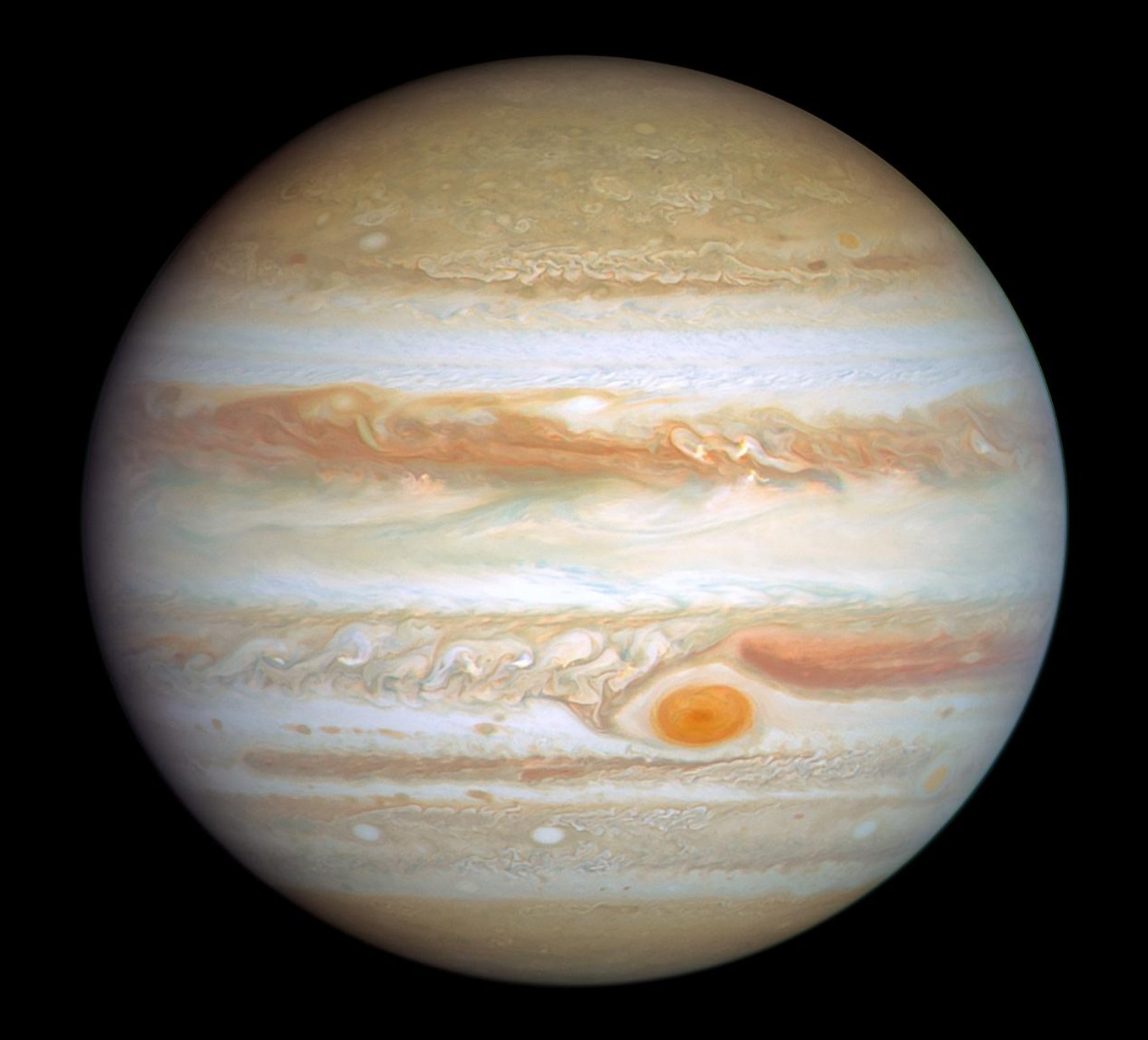
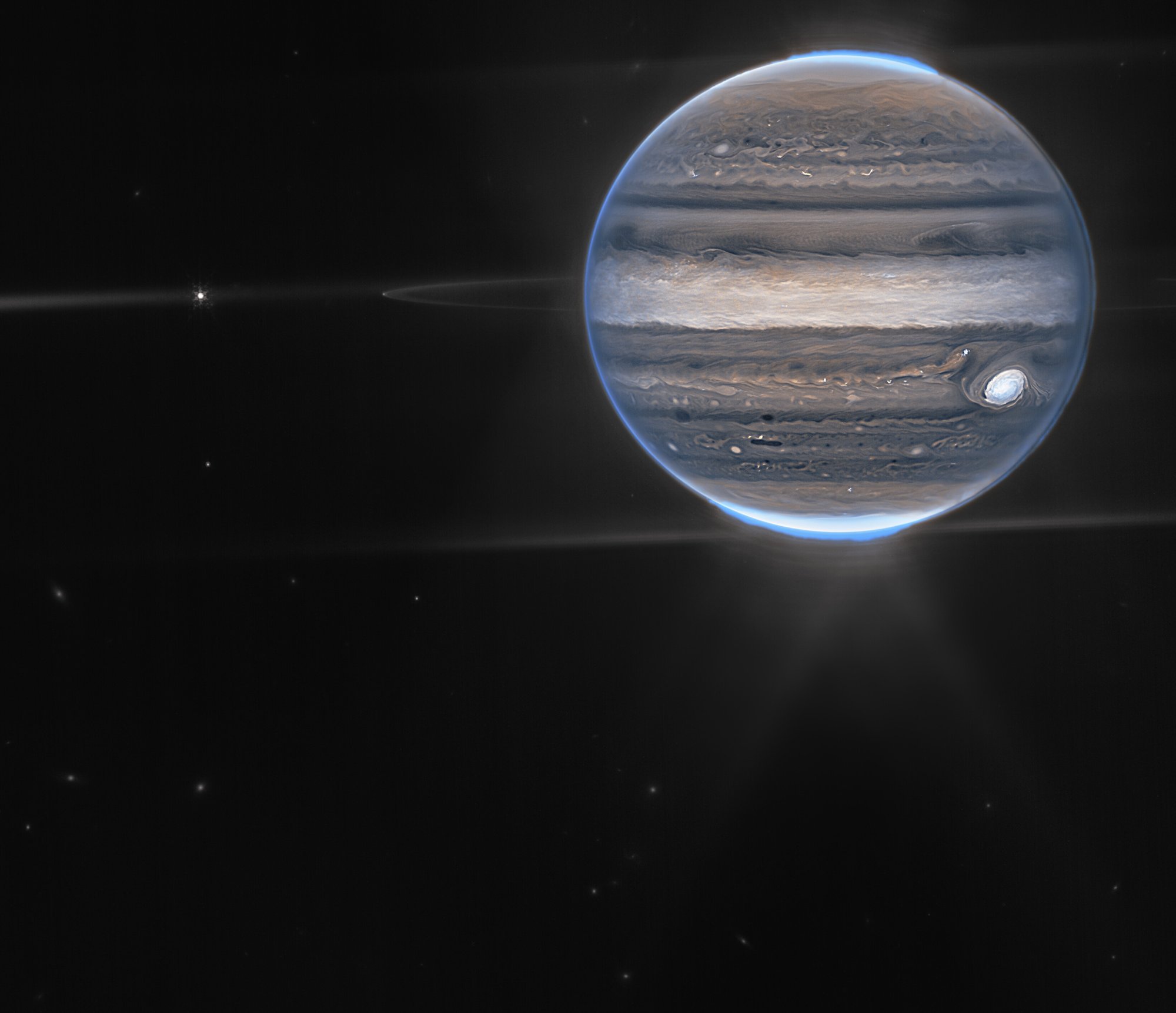
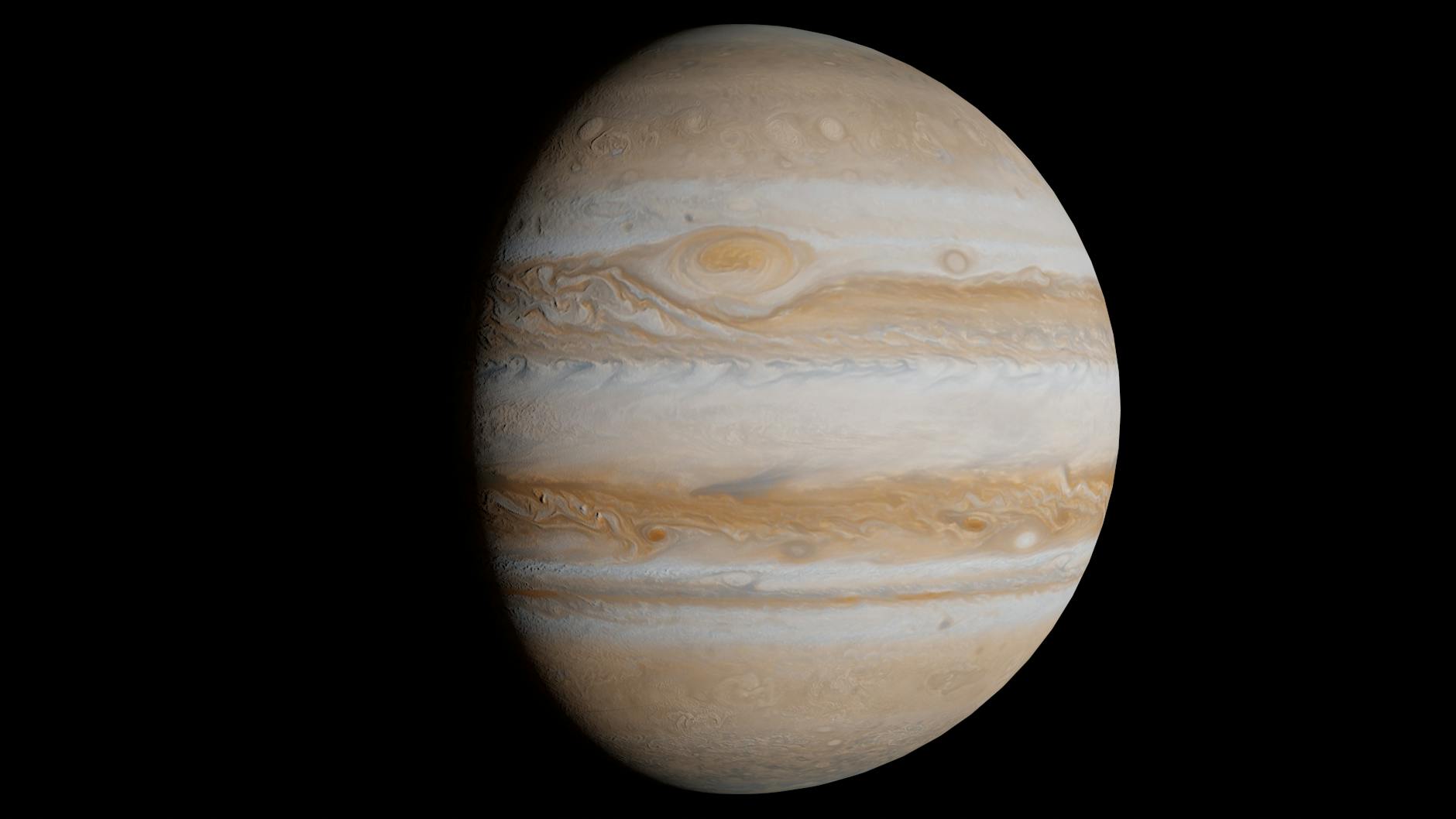
Jupiter is famous for its size, its striped clouds, and the Great Red Spot. But one of its most astonishing features is invisible: an enormous magnetic environment that turns the planet into a natural radio source. In fact, Jupiter can emit radio bursts in the 0.6–30 MHz range that are sometimes detectable from Earth with consumer-grade shortwave radio receivers.
That makes Jupiter more than just something to look at through a telescope. It is also a planet you can, in the right circumstances, hear.
Watch the story on DeepSwipe
What is a magnetosphere?
A magnetosphere is the region around a planet controlled by that planet’s magnetic field. It acts like a vast magnetic bubble that interacts with charged particles and with the solar wind, the stream of particles flowing outward from the Sun.
Jupiter’s magnetosphere is extraordinary. Its magnetic field is the strongest of any planet in the Solar System, and the magnetosphere stretches outward on the side away from the Sun until it nearly reaches the orbit of Saturn. At around 75 Jupiter radii from the planet, the interaction with the solar wind creates a bow shock, while farther in there is a magnetopause, the boundary where Jupiter’s magnetic field pushes back against the surrounding flow.
This is not just a passive bubble. It is a huge, active system full of particles, currents, waves, and radiation.

Why Jupiter’s magnetic field is so powerful
Jupiter is a gas giant made mostly of hydrogen and helium. Deep inside, scientists think it contains a layer of fluid metallic hydrogen. Metallic hydrogen is hydrogen compressed so intensely that it can conduct electricity like a metal. According to current understanding, swirling electrical currents within this fluid metallic hydrogen generate Jupiter’s magnetic field.
The field is exceptionally strong. Its surface magnetic field ranges from about 2 gauss up to 20 gauss, and its dipole moment is the strongest of any planet in the Solar System. The field is also tilted by 10.31° relative to Jupiter’s rotation axis, which helps create a dynamic and complex magnetic environment as the planet spins.
And Jupiter spins fast. It rotates in slightly less than ten hours, the fastest rotation of any planet in the Solar System. That rapid spin helps shape the behavior of plasma and charged particles trapped within the magnetosphere.
The moon Io is a key part of the story
One of the most surprising facts about Jupiter’s magnetosphere is that it is not powered by Jupiter alone. Its moon Io plays a major role.
Io is the innermost of Jupiter’s four large Galilean moons and is known for intense volcanic activity. Those volcanoes release large amounts of sulfur dioxide. That gas spreads out along Io’s orbit, forming a torus, a donut-shaped ring of material around Jupiter.
Inside Jupiter’s magnetosphere, that gas becomes ionized, meaning its atoms or molecules gain or lose electrons and become electrically charged. This produces sulfur and oxygen ions. Together with hydrogen ions from Jupiter’s atmosphere, they help create a plasma sheet in Jupiter’s equatorial plane.
Plasma is often described as an electrically active state of matter made of charged particles. In Jupiter’s case, this plasma does not just sit there. It co-rotates with the planet, meaning it is dragged around as Jupiter spins, and in doing so it deforms the magnetic field into a magnetodisk.
How Jupiter produces radio bursts
The radio emissions that make Jupiter “audible” are tied to the motion of electrons inside this magnetized environment.
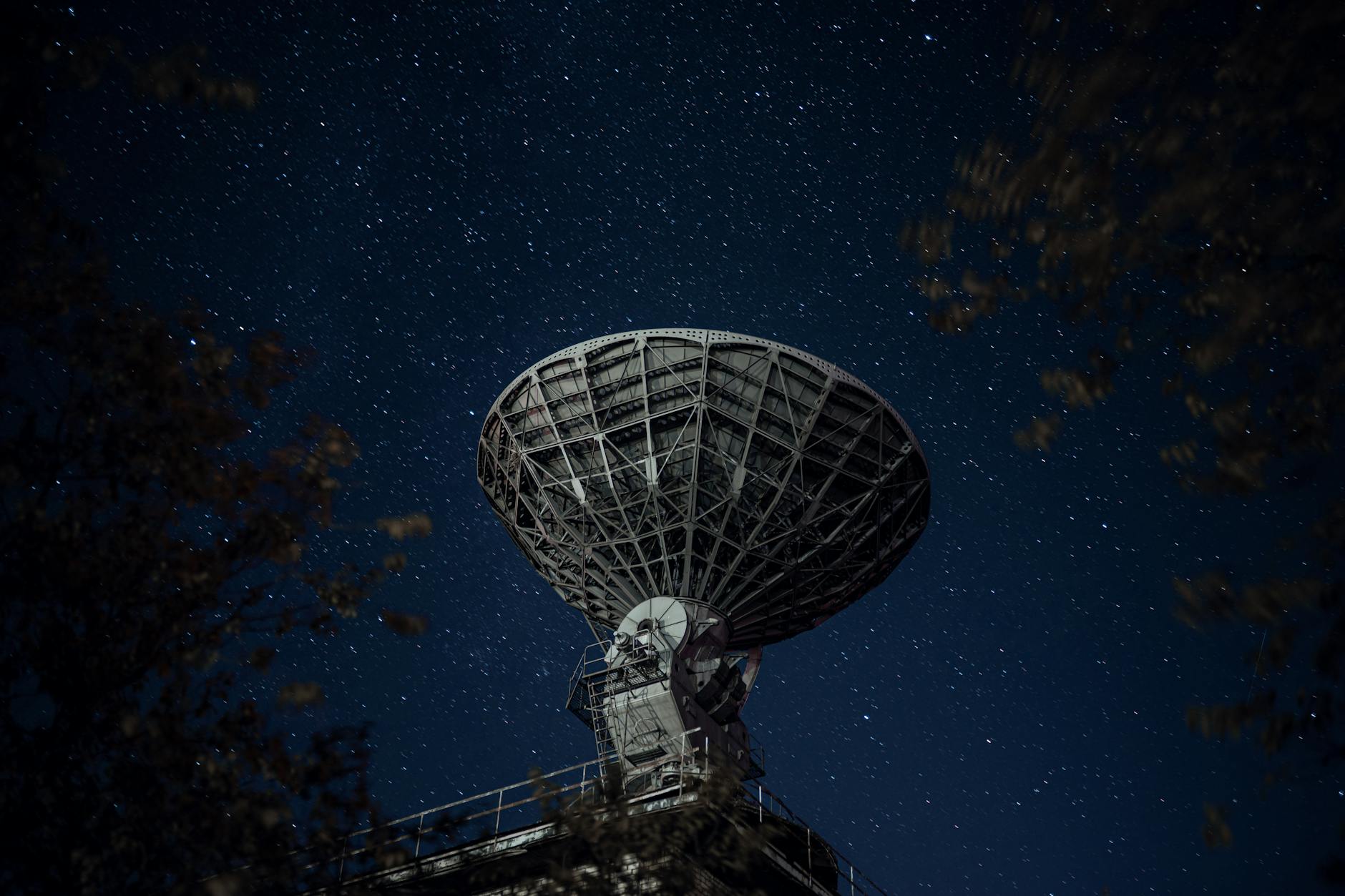
Electrons within the plasma sheet generate a strong radio signature. Some of these emissions appear as short, superimposed bursts in the 0.6–30 MHz range. These are detectable from Earth under the right conditions, and remarkably, the article notes that consumer-grade shortwave radio receivers can pick them up.
The process gets even more interesting near Io. As Io moves through the gas torus associated with its orbit, the interaction generates Alfvén waves. These are ripples that travel through plasma along magnetic field lines. They carry ionized matter into Jupiter’s polar regions.
There, radio waves are generated through a cyclotron maser mechanism. In simple terms, electrons spiraling in a magnetic field can amplify radio emission, producing intense beams of radio energy. This energy is transmitted outward along a cone-shaped surface. When Earth happens to pass through that cone, Jupiter’s radio emissions can become especially strong.
In fact, they can exceed the radio output of the Sun.
A planet louder than the Sun
That is one of the most striking facts in planetary science: when Earth intersects the cone of Jupiter’s radio beam, the radio emissions from Jupiter can be stronger than the Sun’s radio output.
This does not mean Jupiter looks brighter than the Sun in visible light. It means that in certain radio frequencies and geometries, Jupiter becomes an exceptionally powerful source. The effect depends on the alignment of Jupiter, its magnetic field, the plasma environment, and Earth’s location relative to the outgoing radio cone.
So although Jupiter is usually thought of as a bright object in the night sky, it is also a radio beacon with behavior shaped by orbital mechanics and electromagnetic physics.
The four big moons live inside this magnetic bubble
Jupiter’s four largest moons are Io, Europa, Ganymede, and Callisto. All four orbit within Jupiter’s magnetosphere. That means they sit inside this giant magnetic shield rather than directly in the solar wind.
On one hand, the magnetosphere protects them from the solar wind. On the other hand, the environment around Jupiter is intense. Charged particles trapped in the magnetic field create strong radiation conditions near the planet.
This was not just a theoretical concern. Early spacecraft encounters showed that the radiation fields near Jupiter were much stronger than expected. The Pioneer missions, which obtained the first close-up images of Jupiter and several of its moons, discovered just how severe this environment could be, though both spacecraft survived.
Later missions continued to study this harsh region in more detail.
Spacecraft discoveries changed our picture of Jupiter
Much of what we know about Jupiter’s magnetosphere comes from robotic exploration.
The Pioneer spacecraft revealed that the radiation environment near Jupiter was more powerful than scientists had anticipated. The Voyager missions then added major discoveries, including a torus of ionized atoms along Io’s orbital path, linked to volcanoes on Io’s surface. That finding helped confirm just how closely Jupiter’s magnetic system and Io’s volcanism are connected.
In 1992, the Ulysses solar probe flew by Jupiter and studied its magnetosphere, even though it carried no cameras for photographing the planet. Later, the Galileo mission orbited Jupiter for more than seven years and conducted repeated flybys of the Galilean moons, giving scientists long-term observations of the Jovian system.
NASA’s Juno mission, which arrived in 2016, was designed to study Jupiter in detail from a polar orbit. Because Juno travels through regions influenced by Jupiter’s magnetosphere, the mission has had to contend with high radiation levels that could damage instruments.
A magnetic system on a colossal scale
Jupiter’s magnetosphere is impressive not only because of its strength, but because of its scale and structure. The solar wind compresses it on the Sun-facing side and stretches it out on the opposite side into a vast tail. The result is a magnetosphere that dominates a huge region of space.
Within it, charged particles from Io, hydrogen ions from Jupiter, and the effects of rapid planetary rotation all combine to create a system unlike anything around Earth. Bow shock, magnetopause, plasma sheet, magnetodisk, Alfvén waves, and cyclotron maser emission are all parts of the same giant machine.
And unlike many distant planetary processes, this one creates something humans can directly detect: radio sound.
Why Jupiter’s magnetosphere is so fascinating
Jupiter’s magnetic environment is a reminder that planets are not just round bodies orbiting stars. They can be dynamic systems with weather, rings, moons, radiation belts, and giant electromagnetic structures.
Jupiter already stands out as the largest planet in the Solar System, with a mass 2.5 times that of all the other planets combined. But its magnetosphere gives it another claim to fame. It is the Solar System’s most powerful planetary magnetic system, inflated to immense size by the solar wind and energized by deep interior currents and the volcanic fury of Io.
That combination turns Jupiter into a world that is not only visible in the sky, but audible in radio waves.
If you ever think of Jupiter as just a bright point of light, remember: hidden around that point is a magnetic bubble so vast it nearly reaches Saturn, loaded with plasma from a volcanic moon, and capable of sending radio bursts across space all the way to Earth.