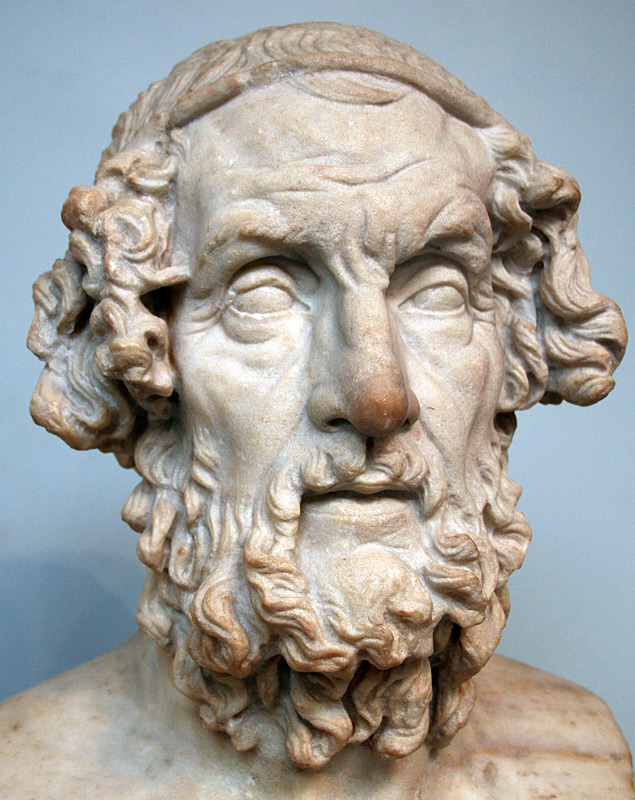
Few names in world literature feel as solid as Homer. The Iliad and the Odyssey are usually linked to a single legendary poet, as if one towering genius simply sat down and created both. But the debate known as the Homeric Question asks whether that picture is too simple.
At its heart, the mystery is not just “Who was Homer?” It also asks whether the Iliad and the Odyssey were created by one author or shaped by many voices over time, and when these poems became the written texts we know today. The result is one of the most fascinating puzzles in literary history: perhaps the most famous “author” in the ancient world was not just a person, but part of a much larger storytelling tradition.
Why scholars began to doubt the simple story
Questions about Homer are not new. They go back to classical antiquity and continued through the scholarship of the Hellenistic period. In modern times, the debate grew especially powerful from the 19th century onward, when scholars began examining not just the stories themselves but the way the poems were built.
The key issue was this: the Iliad and the Odyssey contain many repeated phrases, and sometimes even repeated whole verses. That kind of pattern made many scholars think these poems may have come from an oral tradition rather than from a purely written literary process.
Oral tradition means stories are passed down by speaking, singing, and performing them, not by writing them in books. In such a system, singer-poets inherit shared material from earlier performers. They do not need to memorize every line exactly as a modern reader might imagine. Instead, they can draw on familiar building blocks of language while performing.

The power of oral-formulaic composition
A major turning point came with the work of Milman Parry in the early 20th century. Parry argued that the repeated patterns in Homeric poetry are signs of oral-formulaic composition. A formula, in this context, is a recurring chunk of language that a singer-poet can use again and again while composing in performance.
This helps explain why the poems can sound both repetitive and artful at the same time. Repetition was not necessarily a flaw. It may have been a practical tool that allowed a performer to create long, complex epic poetry on the spot using inherited phrases and verses.
Albert Lord, whose 1960 book The Singer of Tales became highly influential, emphasized that poets in an oral tradition often create and modify their stories as they perform them. That means a poem can be traditional and original at once. A singer may borrow inherited material, yet still shape it into a distinctive and powerful whole.
This idea changed Homeric studies. Many classicists came to agree that, whether or not a historical individual named Homer existed, the poems attributed to him depend to some degree on a generations-old oral tradition shared by many singer-poets, called aoidoi.
If the poems came from many voices, why do they feel so unified?
This is where the Homeric Question becomes especially intriguing. Even scholars who see deep roots in oral tradition often agree that the Iliad and the Odyssey are not random heaps of disconnected songs. Each poem appears to have a clear overall design.
That unity is one reason the debate never settles into an easy answer. If the poems were built from older material, how did they become such coherent masterpieces?
Some scholars have imagined a process of standardization and refinement beginning in the 8th century BC. In this view, older traditional material was gradually shaped into more stable poetic forms. This process has sometimes been described as something like a “million little pieces” coming together. The spirit of oral tradition remains, but the final result still shows large-scale artistic control.
Other scholars pushed back against applying oral theory too broadly. Geoffrey Kirk argued that Homeric epic differs from other oral traditions in important ways, including its metrical strictness and its use of formulas. He believed Homeric reciters may have had more freedom in choosing words and passages than performers in some other traditions.
Later, Adam Parry suggested the possibility of an exceptionally developed oral poet, someone able to create subtle characterization within a traditional story. That view leaves room for remarkable individual artistry without denying the oral background.
When did Homer become a written text?
Another major branch of the Homeric Question concerns time. Exactly when did these poems take on a fixed written form?
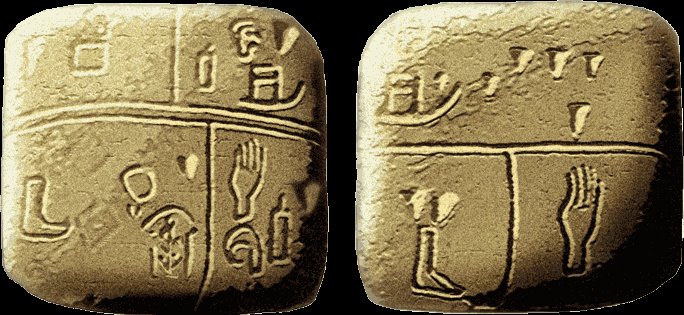
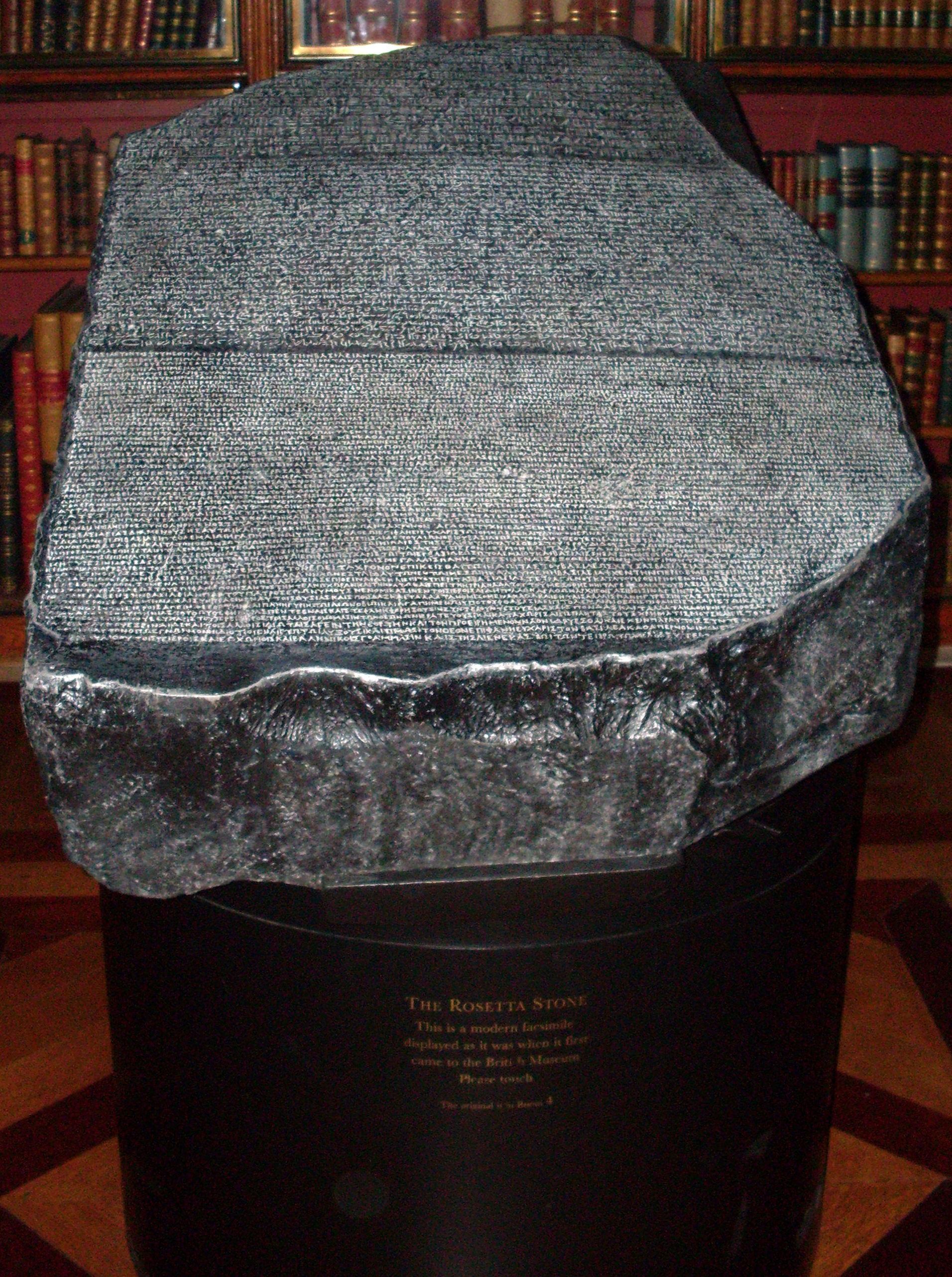
One traditional answer is the transcription hypothesis. According to this idea, a non-literate singer dictated the poem to a literate scribe, perhaps in the 6th century BC or earlier. Ancient sources unanimously say that Peisistratus, the tyrant of Athens, was the first to commit Homer’s poems to writing and arrange them in the order in which they are now read.
But not everyone accepts such an early fixing of the text. Gregory Nagy, for example, has argued that a truly canonical version may not have existed until the Alexandrian editors of the Hellenistic period, between the 3rd and 1st centuries BC, established it.
That difference matters. If the poems remained fluid for centuries, then “Homer” may refer less to a single moment of creation and more to a long process in which performance, memory, and editing all played a role.
The age of the poems and the Greek Dark Ages
Dating the poems is difficult because a long oral transmission may stand behind them. That makes it hard to pin down one precise year of composition.
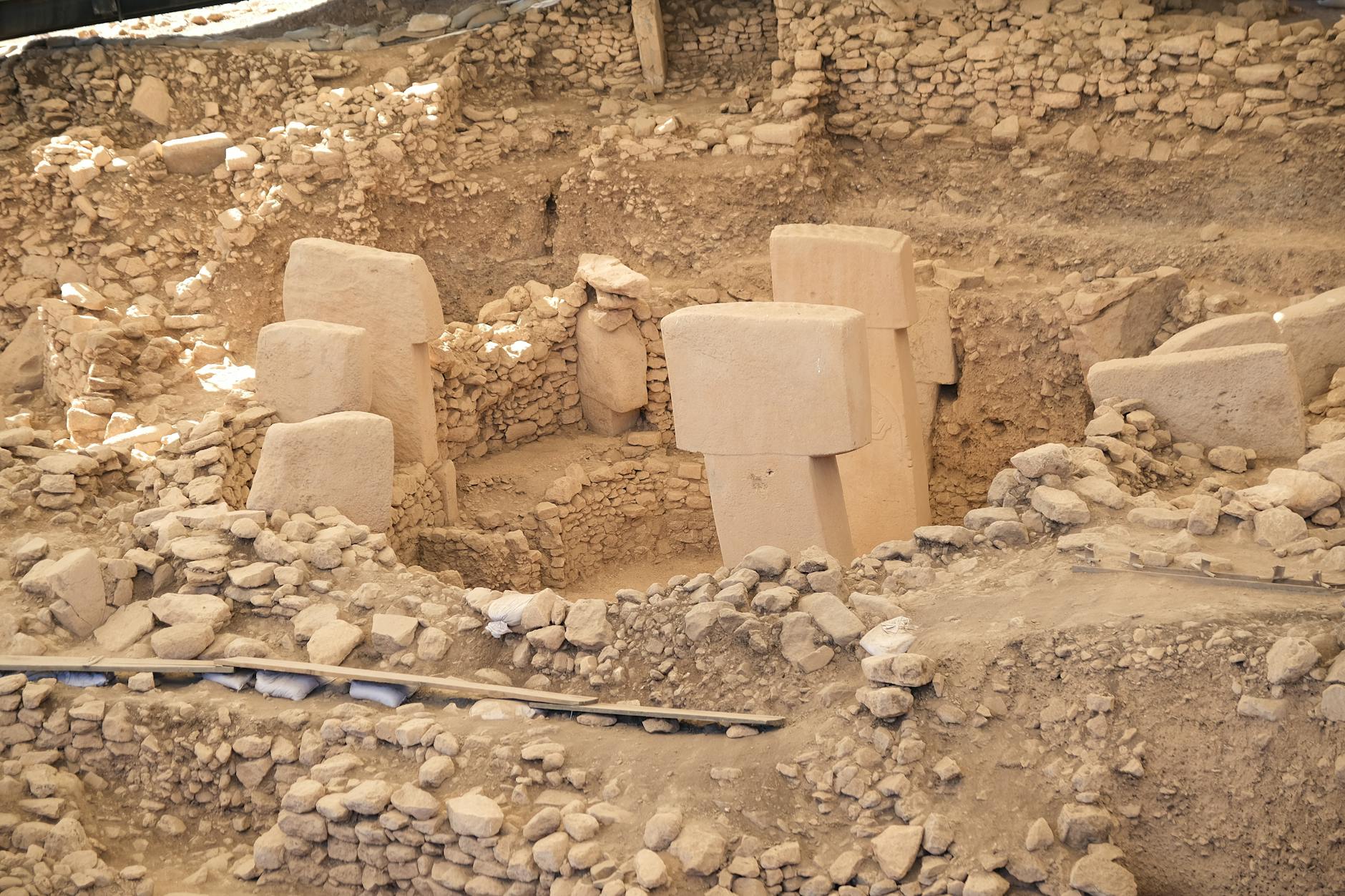
The debate is complicated further by the Greek Dark Ages, the period from about 1100 to 750 BC. This era followed the Bronze Age world of Mycenaean Greece, the setting associated with the Trojan War in the Iliad. The composition of the Iliad is generally placed after this Dark Age period, which means the story’s world and the poem’s creation may be separated by a significant stretch of time.
There is also debate over whether the Odyssey was composed later than the Iliad. One argument points to the poems’ differing portrayals of the Phoenicians. In the Iliad, Achilles’s shield is described with finely detailed metalwork associated with Phoenician craftsmanship. In the Odyssey, Phoenicians are portrayed much more negatively as “manifold scurvy tricksters.” Some scholars connect that contrast to changing Greek attitudes in the 8th and 7th centuries BC.
Were the Iliad and the Odyssey written by the same author?
This is one of the boldest parts of the Homeric Question. Most scholars agree that the two poems were probably not produced by the same author. The reasons given include differences in narrative manner, theology, ethics, vocabulary, and geographical perspective, along with passages in the Odyssey that seem to imitate parts of the Iliad.
At the same time, nearly all scholars still regard each poem as a unified work. So the debate is not simply between “genius” and “chaos.” It is possible, in the scholarly view, for each poem to be mostly the work of a single author while also drawing heavily on older oral traditions.
There are also smaller disputes inside the larger one. For example, many scholars believe the Doloneia, Book X of the Iliad, was not part of the original poem and was inserted later by a different poet.
Could “Homer” be a name for something bigger?
Some theories go even further and suggest that Homer may not have been a straightforward personal identity at all. One line of thought notes that the Greek name Homēros is identical to the Greek word for “hostage.” Another hypothesis proposes that the name was back-formed from Homeridae, meaning “sons of hostages,” the name of a society of poets.
Another possibility connects “Homer” to a Semitic word base meaning “say” or “tell,” which would make the name feel less like a personal signature and more like a title linked to storytelling itself. Other ancient and later explanations connected the name with meanings such as “to follow,” “blind,” or with Smyrna.
These ideas remain speculative, but they fit the wider fascination of the Homeric Question. The name “Homer” may point not only to a poet, but to a role, a lineage, or a cultural memory.
Why the debate still matters
The Homeric Question endures because it asks what authorship really means. In a modern literary culture, readers often imagine a book beginning with one writer and one final text. Homeric epic may not work that way.
The Iliad and the Odyssey can be seen as masterpieces shaped by memory, performance, inheritance, and later stabilization. Modern methods such as stylometry, which uses statistics to study features like word choice or even letter frequencies, have tried to test the unity of the poems in new ways. Yet the debate remains open.
That uncertainty is part of what makes Homer so compelling. The poems may preserve the work of a single extraordinary poet. Or they may preserve something even stranger and grander: the voice of a tradition that became so powerful it came to sound like one immortal author.