Full article · 7 min read
Who Named Europe? The Story Behind a Continent’s Name
The name Europe sounds simple, but its history is anything but. Behind that familiar word lies a mix of mythology, language debates, cultural identity, and centuries of contact between peoples.
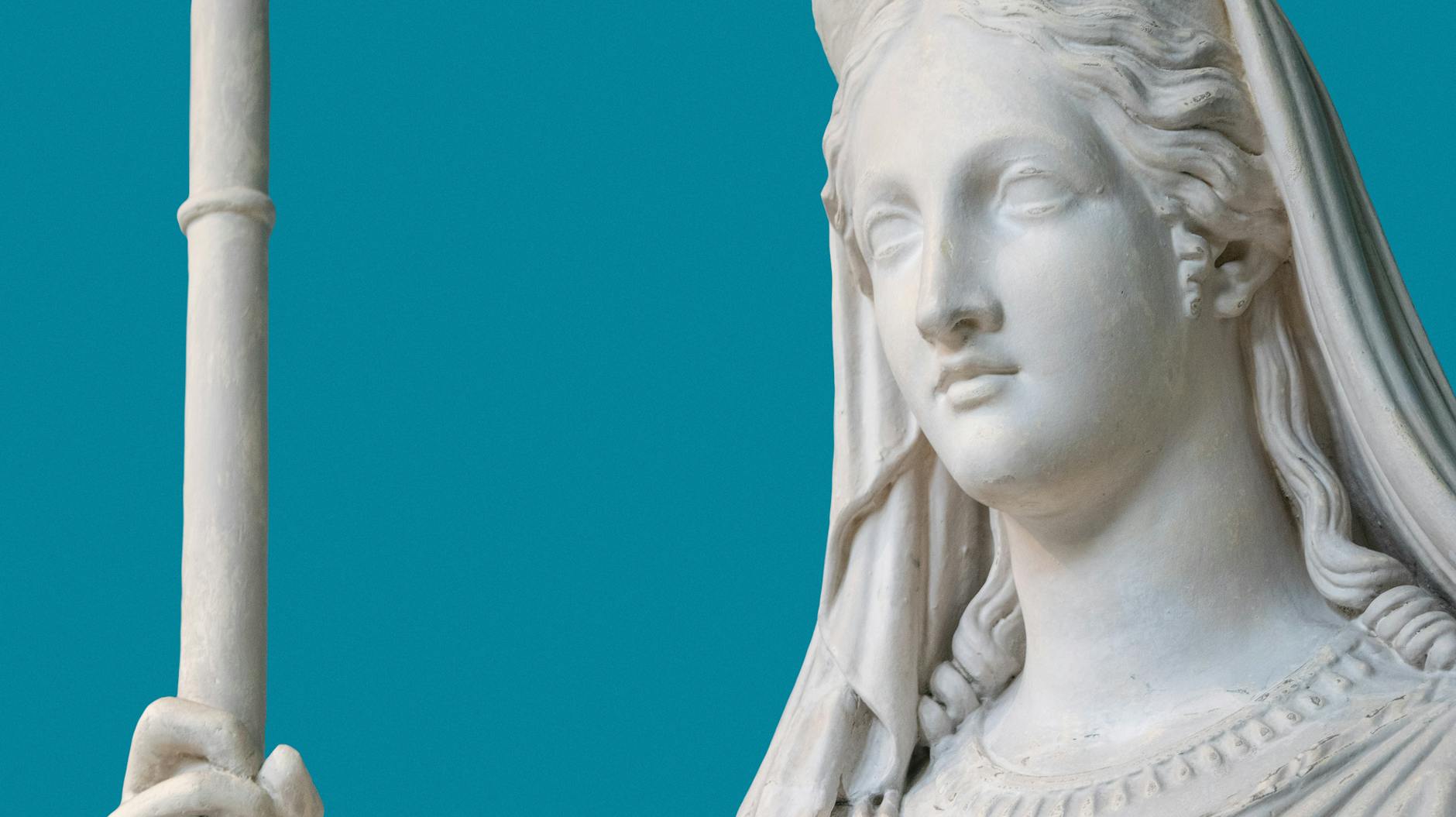
One of the oldest and most famous explanations begins with Europa, a figure from classical Greek mythology. Europa was a Phoenician princess, and her name became linked with the continent. That alone makes the name remarkable: one of the world’s major continents may trace its label to a mythic royal figure from the eastern Mediterranean.
But the deeper you look, the more complicated the story becomes. Was Europe named from Greek words meaning something like “wide-gazing”? Did the name come from an even older language? Could it be related to ancient words for “west” or “evening”? And why do some languages use names that sound nothing like Europe at all, including the striking nickname Frangistan, or “land of the Franks”?
Europa and the Greek explanation
A major traditional explanation connects the name Europe to the Greek mythological figure Europa. In this view, the name comes from Ancient Greek elements: eurús, meaning “wide” or “broad,” and ōps, meaning “eye,” “face,” or “countenance.” Put together, Eurṓpē has been understood as something like “wide-gazing” or “broad of aspect.”
That phrase can sound poetic or mysterious today, but it reflects the way ancient names were often interpreted through meaningful word parts. “Countenance” simply means a person’s face or expression, so the idea is that Europa’s name may have suggested breadth, vision, or a broad appearance.
There is also an older religious and poetic background to this kind of language. “Broad” was an epithet of Earth herself in reconstructed Proto-Indo-European religion and the poetry connected to it. An epithet is a descriptive label or title used regularly for a person, deity, or thing. That makes the “broad” element especially interesting, because it hints that the name may have carried symbolic weight long before it became tied to a continent.
Why the origin is still debated
As neat as the Greek explanation sounds, not everyone accepts it. Linguist Robert Beekes argued instead for a pre-Indo-European origin of the name. That means he believed the word may come from languages spoken in parts of Europe before Indo-European languages became dominant.
This matters because Indo-European is the huge language family that includes most of the major languages of Europe today, as well as many languages in parts of Asia. If Beekes was right, then Europe may preserve a far older linguistic layer than its Greek spelling suggests.
He also argued that if the name had really come from eurus in the expected way, it would have produced a different place-name form. In other words, the familiar breakdown of the word into tidy Greek roots may be more attractive than convincing.
Beekes also pointed to related place-names in ancient Greek territory, including Europos in ancient Macedonia. A place-name, also called a toponym, is simply the name of a place. These related names suggest that Europa may belong to a deeper naming pattern in the ancient Greek world rather than being a straightforward descriptive Greek compound.
The tempting link to “west” and “evening”
Another idea tried to connect Europe with Semitic words associated with the west. Semitic is a language family that includes languages such as Arabic and Hebrew, as well as older languages like Akkadian and Phoenician.
In this theory, the name was compared with Akkadian erebu, meaning “to go down” or “set,” as said of the sun, or with Phoenician 'ereb, meaning “evening” or “west.” The logic is easy to see: for peoples in the eastern Mediterranean, the west is where the sun sets.
This idea has an appealing poetic symmetry. Europe as “the west” sounds plausible, especially given the continent’s later role in defining itself against lands to the east. But linguistic appeal is not the same thing as linguistic proof.
Martin Litchfield West stated that the phonological match between Europa’s name and any form of the Semitic word is very poor. “Phonological” refers to how sounds line up between words across languages. Beekes also considered a connection to Semitic languages improbable. So while the “sunset” idea is memorable, major objections remain.
Why most languages still sound like Europa
Despite all the debates, one fact stands out: most major world languages use words derived from Eurṓpē or Europa when referring to the continent.
That continuity is powerful. It shows how strongly the Greek and later classical form of the name spread across languages and cultures. Even when pronunciation changes, the family resemblance remains.
Chinese uses Ōuzhōu, an abbreviation of the transliterated name Ōuluóbā zhōu. A transliteration is a way of representing a foreign name using the sounds or writing system of another language. The element zhōu means “continent,” so the full form identifies Europe directly as a continent.
Japanese also uses related forms. Ōshū, derived through Chinese usage, appears for example in the Japanese name of the European Union, Ōshū Rengō. At the same time, Yōroppa is more commonly used in Japanese for Europe in everyday language. This is a good example of how one place can carry multiple names within the same language depending on context, formality, and historical influence.
Frangistan: when Europe becomes “land of the Franks”
One of the most intriguing alternative names appears in some Turkic languages: Frangistan.
This originally Persian-derived term means “land of the Franks.” The Franks were a major historical people in Western Europe, and over time their name came to stand for much of Europe in some neighboring traditions. That is a reminder that names for places often reflect who was most visible, powerful, or culturally important to outsiders at a particular time.
Frangistan is especially fascinating because it does not try to preserve the sound of Europa at all. Instead, it labels Europe through a historical association. Rather than asking, “What did Europeans call themselves?” it asks, “Which European people stood out enough that others used their name for the whole region?”
That kind of naming is common in world history. A single people, empire, or cultural group can become shorthand for a much larger area. In this case, Europe becomes less a map label and more a memory of contact, diplomacy, trade, and power.
A name shaped by myth, geography, and identity
The story of Europe’s name is not just about vocabulary. It is also about how people imagined the world.
The first recorded use of Eurṓpē as a geographic term appears in the Homeric Hymn to Delian Apollo, where it referred to the western shore of the Aegean Sea. Later, by the 6th century BCE, thinkers such as Anaximander and Hecataeus used it as the name of part of the known world.
That means Europe was not always the large, clearly bounded continent many imagine today. It began as a more limited geographic concept and expanded over time. Its eastern boundary shifted repeatedly in historical thought, and the line between Europe and Asia was redefined many times before the modern convention gained acceptance.
Over the centuries, the term also became cultural as well as geographic. Following the fall of the Western Roman Empire, the culture that developed in its place and was linked to Latin and the Catholic Church increasingly associated itself with the concept of Europe. By the Carolingian Renaissance of the 9th century, “Europe” was being used for a cultural sphere, not just a stretch of land.
That shift matters. It means the word Europe came to carry ideas about religion, power, and belonging. In the Middle Ages, it could mean the sphere of influence of the Western Church, in contrast to the Eastern Orthodox churches and the Islamic world. So even the name itself gathered political and civilizational meaning.
Why the name still feels loaded today
Because of that long history, Europe is more than a geographic label. It is a word layered with mythological memory, ancient scholarship, linguistic uncertainty, and centuries of cultural self-definition.
Its name may evoke a Phoenician princess. It may preserve traces of languages older than Greek. It has been compared to ancient terms for sunset and west. It appears in forms like Ōuzhōu and Ōshū far from the Mediterranean where it first emerged. And in Frangistan, it becomes a nickname rooted in the historical prominence of the Franks.
That is what makes the name so compelling. Europe is not just a continent on a map. Its very name records encounters between Greeks, Phoenicians, Persians, Turkic-speaking peoples, and many others. It reflects the movement of words across empires, religions, and language families.
In that sense, the history of the word Europe mirrors the history of Europe itself: layered, disputed, connected, and impossible to reduce to a single simple origin.
Sources
Based on information from Europe.
More like this
From Europa to Frangistan, names carry history — download DeepSwipe and keep exploring the words that built the world.