Full article · 7 min read
From Iron Curtain to Open Borders: Inside the European Union
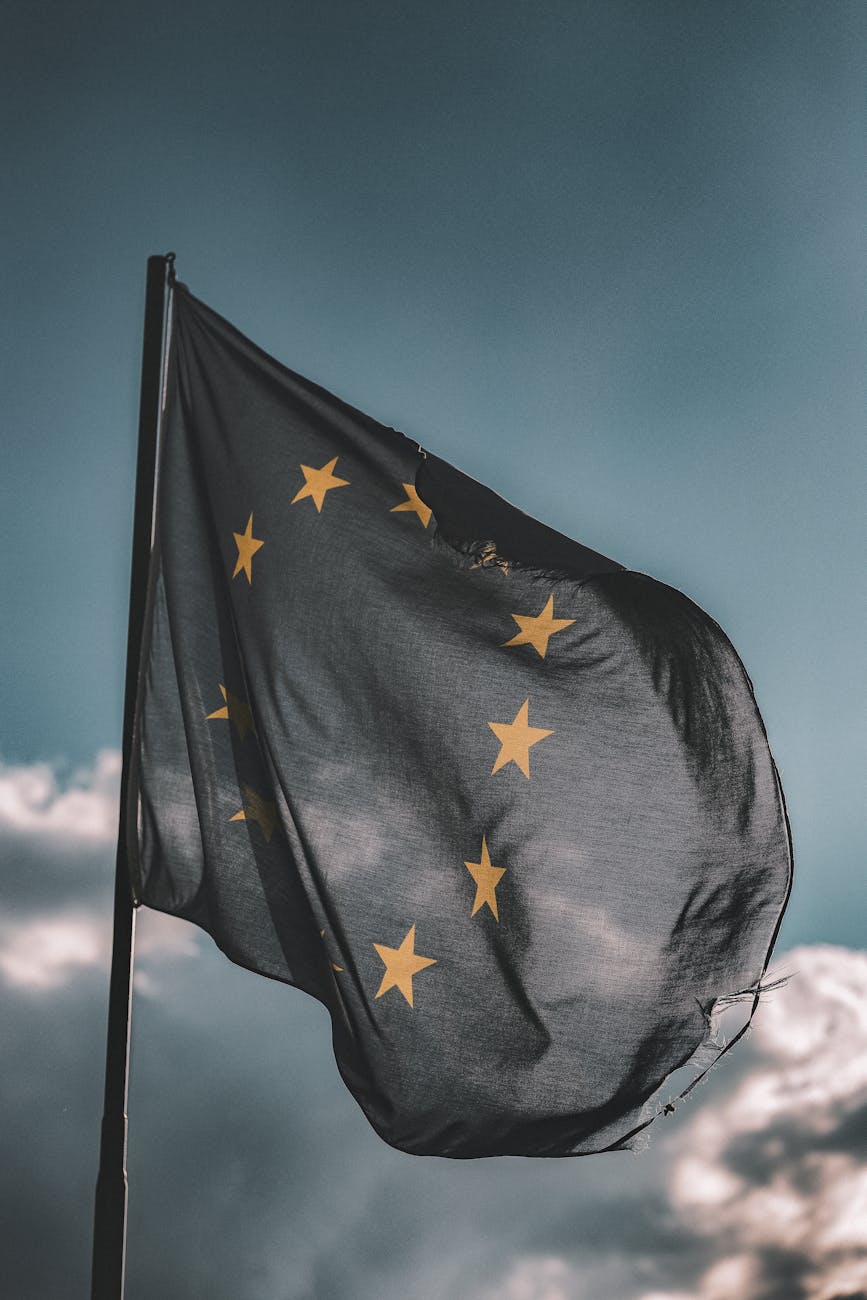
Europe spent much of the 20th century divided by war, ideology, and hard borders. Then came one of the most ambitious political experiments in modern history: a project to link countries so closely that trade, travel, and law could cross frontiers with far less friction than before. That project became the European Union.
The EU is not simply a traditional alliance, and it is not exactly a single country either. It is a supranational political entity, meaning its institutions operate above the level of individual states in certain agreed areas. It sits somewhere between a confederation and a federation, and it is built on a system of European treaties. That unusual structure is what makes it so fascinating: countries remain sovereign states, yet they also share rules, markets, elections, and in many cases even a currency.
From a divided continent to integration
To understand why the EU matters, it helps to see the Europe it emerged from. The 20th century was dominated by two world wars, both of which began in Europe and caused vast destruction across the continent. After the Second World War, Europe was redrawn and split into two blocs: Western countries and the communist Eastern bloc, divided by what Winston Churchill called the Iron Curtain.
This Cold War divide shaped politics, economics, and daily life for decades. In the West, countries moved toward cooperation. In the East, states were tied to the Soviet sphere. That division only began to collapse in the late 20th century. In the 1980s, reforms by Mikhail Gorbachev and the Solidarity movement in Poland weakened the communist system. The opening of the Iron Curtain triggered a peaceful chain reaction that led to the collapse of the Eastern bloc, the end of the Warsaw Pact, and the close of the Cold War.
The fall of the Berlin Wall in 1989 became the great symbol of that shift. Old barriers were breaking down, and previously interrupted cultural and economic relationships could resume. In that environment, European integration accelerated dramatically.
The long road to the European Union
European integration did not appear overnight. It was advanced institutionally from 1948 with the founding of the Council of Europe. A year later, in 1949, the Council of Europe was founded following a speech by Winston Churchill with the idea of unifying Europe to achieve common goals.
A more tightly focused economic path followed. The Treaty of Rome in 1957 created the European Economic Community between six Western European states with the goal of a unified economic policy and common market. In 1967, the European Economic Community, the European Coal and Steel Community, and Euratom together formed the European Community. In 1993, that project became the European Union.
This gradual evolution matters because it shows what the EU really is: not a sudden invention, but the result of decades of institution-building. Step by step, European states created shared structures to manage common interests.
What “supranational” actually means
One of the most confusing words in EU politics is supranational. In simple terms, it means that some institutions can make decisions or rules that go beyond the authority of any one member country acting alone. Countries agree by treaty to pool part of their decision-making in selected areas.
That is why the EU is often described as lying between a confederation and a federation. A confederation is usually a looser union of states, while a federation has stronger central institutions. The EU has elements of both, but it fits neatly into neither category. Its system is distinctive enough that people often discuss it as a political model of its own.
At the same time, sovereignty remains central to the debate. Sovereignty means a country’s full right to govern itself. The EU constantly tests how far states are willing to share that power in return for common benefits.
The euro, the single market, and the customs union
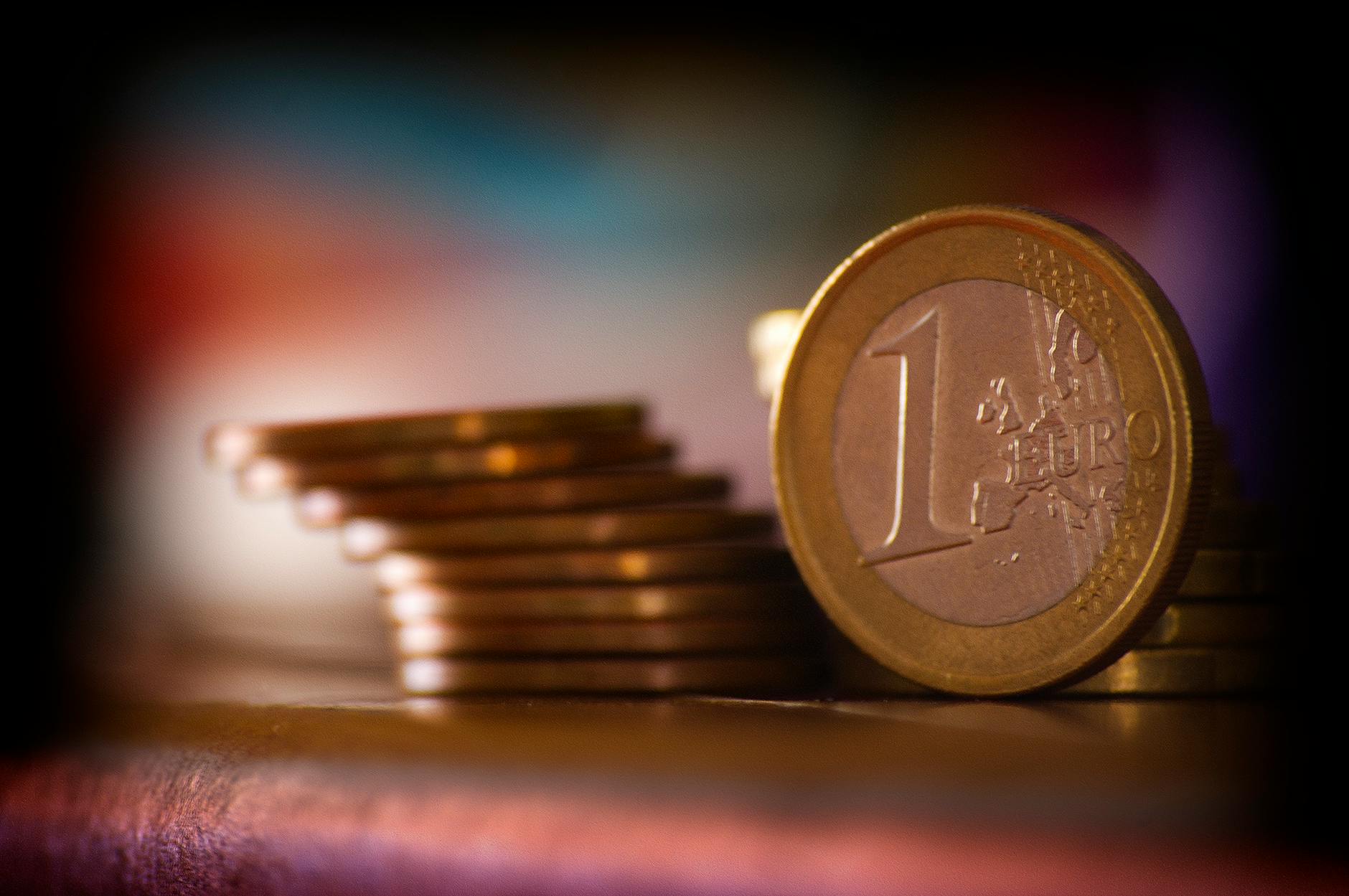
Much of the EU’s power comes from economics. A majority of its members have adopted a common currency, the euro. Sharing a currency means those countries use the same money rather than maintaining separate national currencies.
Another core feature is the European single market. A single market is a zone where goods, services, people, and capital can move more freely. That helps knit national economies into one larger economic area.
The EU also operates a customs union. In a customs union, member countries do not charge tariffs on each other’s goods and apply the same tariffs to outsiders. A tariff is a tax placed on imported goods. This arrangement makes internal trade easier while presenting a common trade boundary to the rest of the world.
These structures are a major reason the EU has become such a large economic force. The European Union, as a political entity composed of 27 European states, comprises the largest single economic area in the world. The EU economy is described as the second-largest in the world by nominal GDP and third-largest by PPP-adjusted GDP.
Open borders and the Schengen idea
One of the most visible symbols of European integration is the Schengen Area. A large bloc of countries in this area have abolished internal border and immigration controls. In everyday terms, that means crossing from one participating country to another often happens without routine passport checks at the internal border.
Not every European country is in Schengen, and not every country in Schengen is an EU member, but the idea captures something powerful: on a continent once cut by walls, military frontiers, and ideological boundaries, some borders have become almost invisible in daily travel.
This matters not only for tourism but also for work, study, and family life. It reflects the broader ambition of European integration to reduce internal barriers and treat much of Europe as a shared civic and economic space.
A continent that votes together
The EU is not only an economic arrangement. It also has democratic institutions. Regular popular elections take place every five years within the EU, and these are considered the second-largest democratic elections in the world after India.
Those elections are for the European Parliament, the EU’s directly elected law-making body. The scale alone is remarkable: voters across many countries, languages, and political traditions take part in one continent-wide democratic exercise.
That gives the EU a political character that goes beyond ordinary international cooperation. It is one thing for governments to negotiate treaties; it is another for citizens across the union to vote in recurring elections for a common institution.
Expanding east after 1991
The EU originated in Western Europe, but one of the defining changes in its modern history came after the dissolution of the Soviet Union in 1991. As communist systems fell and Central and Eastern Europe were transformed, the EU expanded eastward.
The broader post-Cold War environment made this possible. Germany was reunited after the fall of the Berlin Wall, and the maps of Central and Eastern Europe were redrawn again. Previously isolated cities such as Berlin, Prague, Vienna, Budapest, and Trieste found themselves back near the center of European life rather than stranded at the edge of opposing blocs.
Between 2004 and 2013, more Central European countries joined the EU, expanding it to 28 European countries at that time and strengthening Europe’s role as a major economic and political center of power. That eastward growth was one of the clearest signs that the old Cold War geography had been transformed.
Why the EU stands out in world politics
Europe is politically divided into about fifty sovereign states, so the EU operates in a landscape where national identity and statehood remain very strong. That is part of what makes the union so unusual. It tries to create durable shared governance without erasing the countries involved.
It also emerged from a continent with deep historical differences in language, culture, religion, and political development. Europe’s cultural landscape has long been shaped by overlapping national and regional traditions. The EU therefore represents an attempt to build common institutions across exceptional diversity and across relatively short geographic distances.
The project has not made Europe uniform, but it has created frameworks for cooperation on a scale unmatched elsewhere on the continent’s history.
The bigger meaning of European integration
The European Union is ultimately a response to Europe’s past and a bet on its future. It came after centuries in which the continent’s borders shifted through rivalry, empire, revolution, and war. It grew faster after the collapse of the Iron Curtain. And it continues to raise a fundamental question: how much can nations share and still remain themselves?
That question is why the EU keeps drawing interest far beyond Europe. It is a real-world test of whether states can pool sovereignty, build common institutions, hold continent-wide elections, open many internal borders, and still prosper as distinct countries.
For a continent once known for walls, trenches, and rival blocs, that is a remarkable transformation.
Sources
Based on information from Europe.
More like this
Cross borders without leaving your couch — download DeepSwipe and explore big ideas, EU-style.


