Full article · 6 min read
Europe’s Central Heating: Why the Gulf Stream Makes Europe Milder
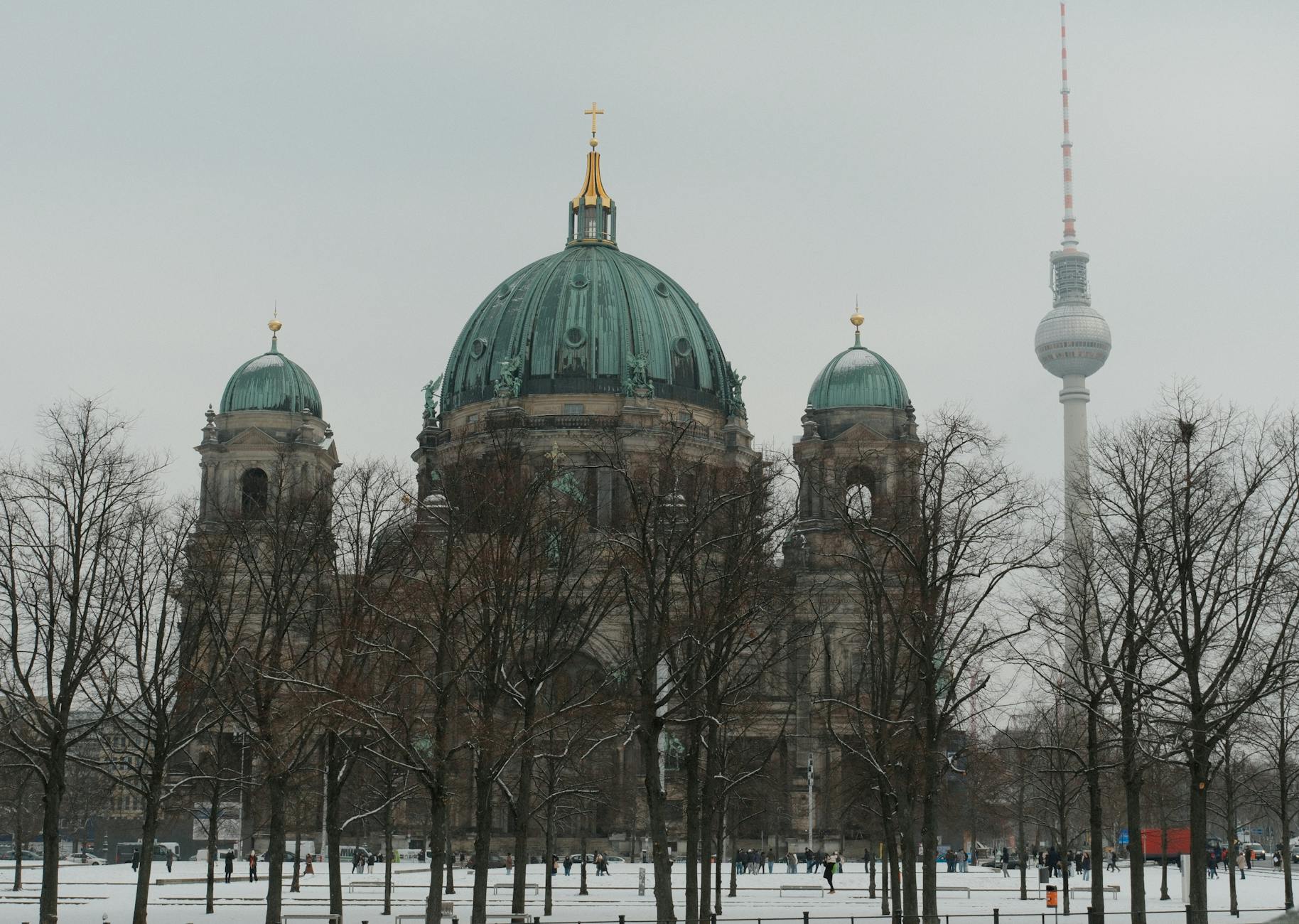
Why can Berlin feel noticeably milder in winter than Calgary, even though they sit at roughly similar latitudes? The answer lies in one of Europe’s biggest climate advantages: a warm Atlantic current often nicknamed Europe’s central heating.
This warming effect helps explain why much of Europe has a more temperate climate than many other places at similar distances from the equator. It does not make Europe uniformly warm, but it does soften extremes in many regions, especially toward the west.
The Gulf Stream and Europe’s surprising warmth
The Gulf Stream is a warm ocean current that carries water from the Gulf of Mexico across the Atlantic Ocean toward Europe. Its effect goes beyond the sea itself. As this warm water reaches the Atlantic near Europe, it also helps warm the prevailing westerly winds blowing in from the ocean.
That matters because Europe lies mainly in the temperate climate zone of the Northern Hemisphere, where those west-to-east winds are especially important. Instead of arriving cold and dry, the air reaching much of Europe is made warmer and wetter by Atlantic influence.
That is why the Gulf Stream has earned the nickname Europe’s central heating. It makes Europe’s climate milder and wetter than it would otherwise be.
Why similar latitudes can feel so different
Latitude is only part of the climate story. If latitude were the whole explanation, cities on the same horizontal band of the globe would have similar temperatures. But Europe shows that ocean currents and winds can completely change that picture.
A striking example is Aveiro in Portugal and New York City in the United States. Aveiro’s average temperature through the year is 16 °C, while New York City averages 13 °C, even though both are almost on the same latitude and border the same ocean.
Another famous comparison is Berlin, Calgary, and Irkutsk. Berlin in Germany, Calgary in Canada, and Irkutsk in far south-eastern Russia lie around the same latitude. Yet Berlin’s average January temperature is around 8 °C higher than Calgary’s, and almost 22 °C higher than Irkutsk’s.
Those are huge differences. They show that Europe’s climate is not shaped by latitude alone, but by the Atlantic Ocean and the movement of warm water and air.
What “temperate climate” actually means
When people hear that Europe has a temperate climate, they may imagine mild weather all the time. That is not quite right. A temperate climate generally means less extreme temperatures than in harsher climate zones. Winters and summers are moderated rather than pushed to extremes.
Across much of Europe, warm Atlantic currents help temper both winters and summers. In practical terms, that means winters can be less severe than expected for the latitude, while summers are often less brutally hot than they might otherwise be. This is especially true in western parts of the continent.
But Europe is large and varied. The farther you move from the sea, the more noticeable seasonal differences become. Inland regions tend to have a more continental climate, meaning bigger swings between summer and winter.
Europe gets colder from west to east
Many people assume Europe mainly gets colder from south to north. That is true in a broad sense, but it is only half the story. Europe also gets colder from west to east.
Western Europe feels the ocean’s influence most strongly. The Atlantic helps moderate temperatures, and the Gulf Stream strengthens that effect. As you move eastward, that oceanic influence weakens. Air masses coming inland lose some of their warming and moistening effect, and the climate becomes less oceanic.
This west-to-east cooling is one reason winter conditions can grow much harsher deeper inside the Eurasian landmass. The sea acts like a climate buffer. The farther away you are from it, the less buffering you get.
The Mediterranean matters too
The Atlantic is not Europe’s only climate-shaping body of water. The Mediterranean Sea also plays an important role. Large water bodies tend to equalise temperatures over daily and yearly timescales, meaning they reduce some of the sharpest temperature jumps.
The Mediterranean is especially important in southern Europe. Its waters influence nearby coastal regions and help shape the climate of the south. The sea stretches from the Sahara region toward the Alpine arc in the northernmost part of the Adriatic Sea near Trieste, showing just how deeply it reaches into Europe’s climate system.
So when talking about Europe’s mildness, the Gulf Stream deserves the spotlight, but the Mediterranean also helps smooth out temperatures in important ways.
Europe’s climate is shaped by geography as well as water
Europe’s climate does not come from ocean currents alone. The shape of the continent matters too. Europe has a high ratio of coast to landmass compared with other continents or subcontinents, meaning many places are relatively close to the sea.
That helps maritime influences travel inland. “Maritime” simply means connected to the sea. A maritime climate is usually more moderated, with fewer extremes than inland climates.
Europe’s landscape also varies a lot. The south is generally more mountainous, with major ranges such as the Alps, Pyrenees, and Carpathians, while broad low plains spread across much of the north and east. These differences in relief can affect how air moves and how climates feel from one region to another.
Still, the broad climate pattern remains clear: western Europe is generally more oceanic, and eastern Europe generally more continental.
Why Europe’s central heating matters
The Gulf Stream’s warming effect is not just a weather curiosity. It helps shape how and where people live. Europe had a population of about 745 million in 2021 and around 742 million in 2023, and much of that population lives in regions where the climate is strongly affected by the Atlantic.
A milder climate has long influenced settlement, agriculture, and daily life. While Europe includes enormous climatic variety, from the far north to the Mediterranean south, the warming effect of the Atlantic is one of the great reasons much of the continent avoids the harsher temperature extremes seen elsewhere at comparable latitudes.
This is especially important because Europe stretches far north. Without the warming effect of Atlantic currents and winds, many parts of the continent would likely feel dramatically colder.
A continent of contrasts
Even with Europe’s central heating, the continent is far from climatically uniform. Southern regions are generally warmer. Northern regions are generally colder. Western regions are milder and wetter. Eastern regions often have stronger seasonal contrasts.
So the climate pattern can be summed up in a simple way:
- north is generally colder than south
- east is generally more extreme than west
- coasts are more moderated than interiors
- warm Atlantic currents soften much of western and central Europe
That is why one city can feel unexpectedly mild while another, on a similar latitude elsewhere in the world, endures far colder winters.
The big takeaway
Europe’s climate makes more sense when you stop looking only at maps of latitude and start looking at moving water and wind. The Gulf Stream carries warm water from the Gulf of Mexico across the Atlantic, and that warmth helps heat the westerly winds that blow into Europe.
The result is one of the continent’s defining features: a temperate climate across much of Europe, especially in the west, with winters and summers moderated by the ocean. It is a powerful reminder that climate is not only about where a place sits on the globe, but also about the systems that connect oceans, atmosphere, and land.
So the next time you wonder why Berlin can out-mild Calgary in January, remember that Europe has a giant warm-water assist running through the Atlantic.
Sources
Based on information from Europe.
More like this
Warm up your brain with Europe’s central heating of facts — download DeepSwipe and let curiosity stream in daily.