Full article · 7 min read
Human Evolution and the Mystery of Chromosome 2
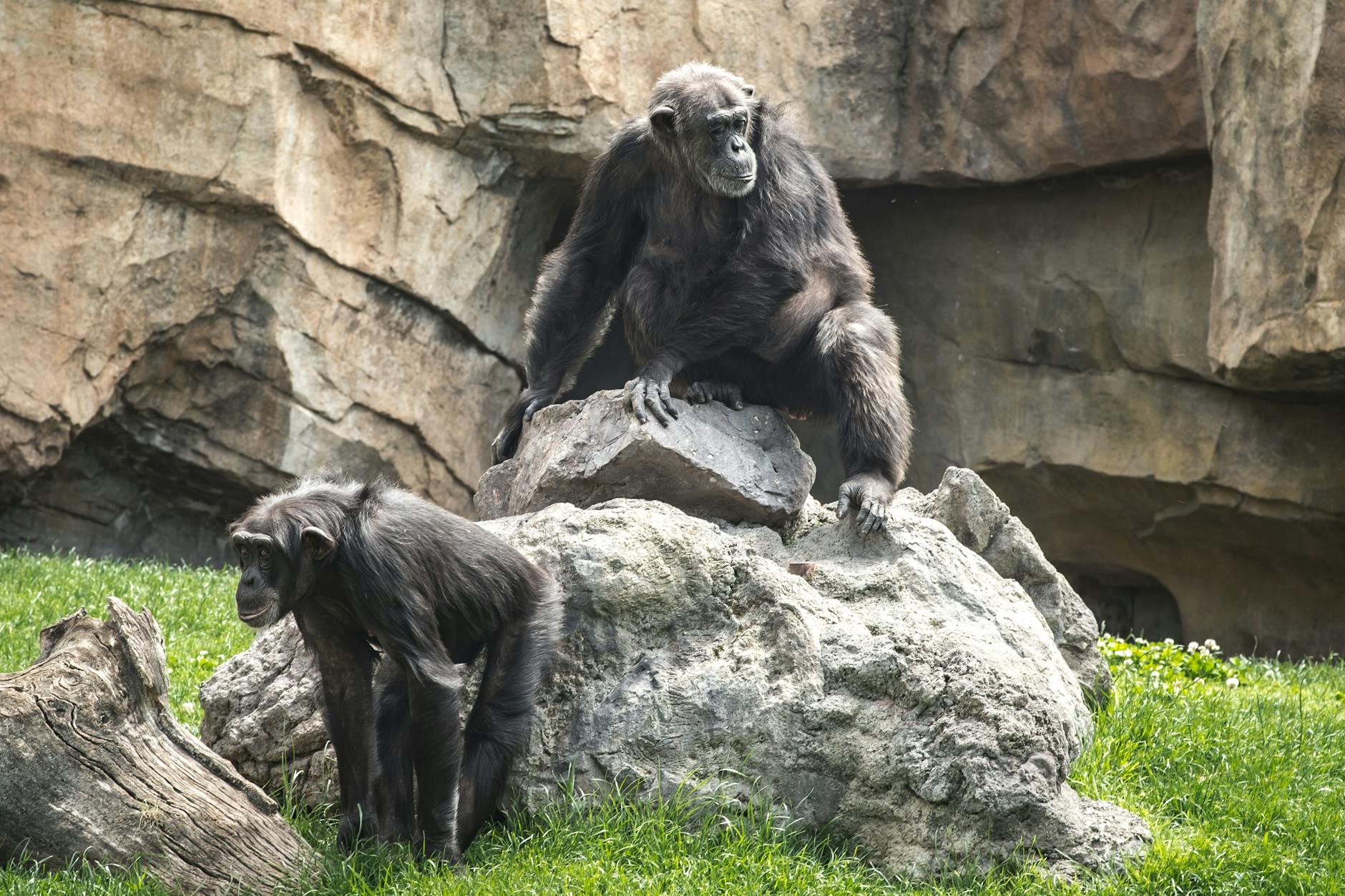
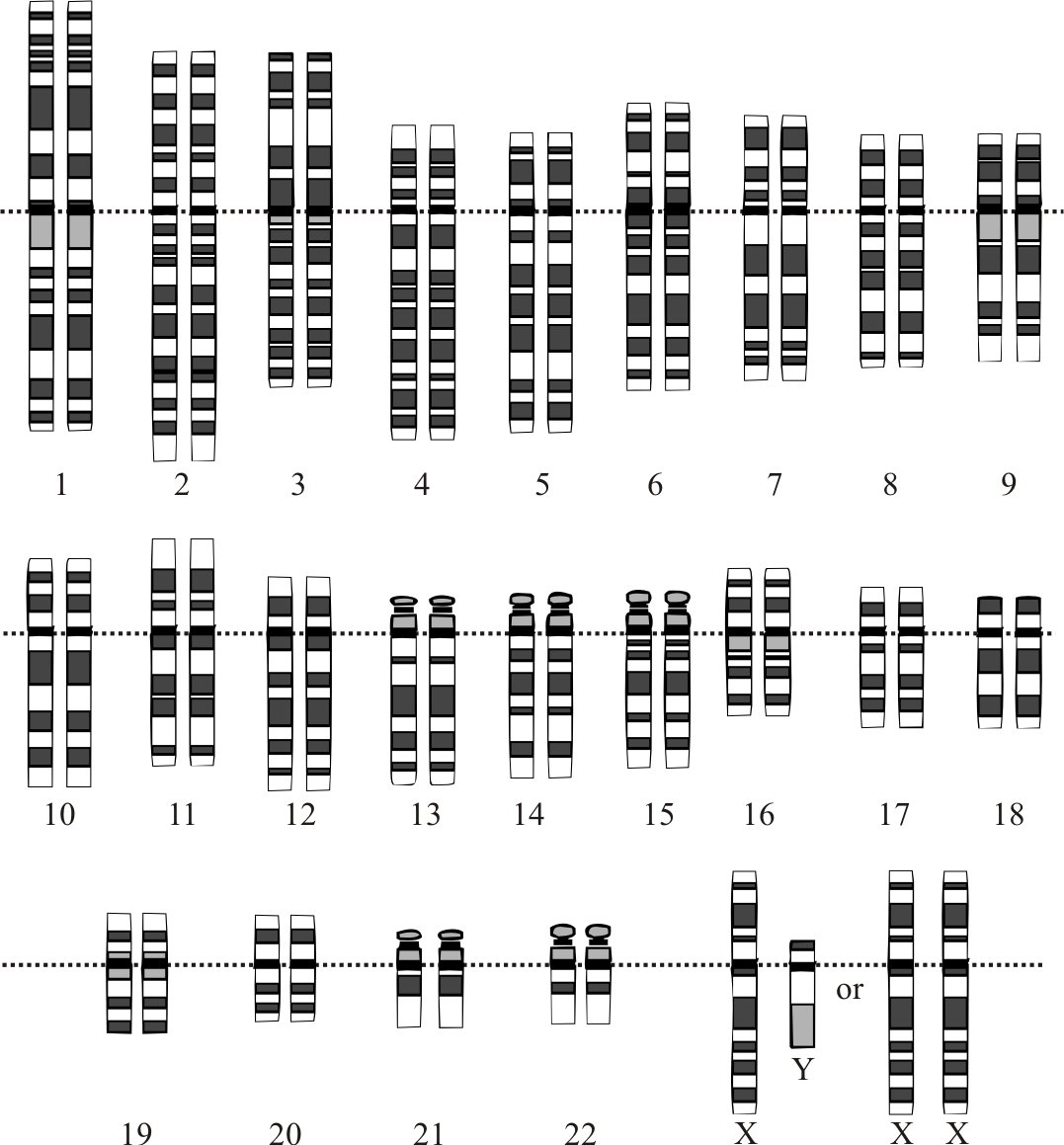
One of the most intriguing clues to human evolution is hidden in our cells. Humans have 23 pairs of chromosomes, while the other great apes have 24 pairs. That single-pair difference has become one of the most talked-about genetic markers of what makes the human lineage distinct.
The key to this puzzle is human chromosome 2. In the lineage that led to humans, two ancestral chromosomes joined together end to end, creating a single larger chromosome. This fusion helps explain why humans have one fewer chromosome pair than chimpanzees, bonobos, gorillas, and orangutans.
It is a small numerical difference, but it points to a major story: humans are part of the ape family, yet our evolutionary path took a distinctive turn.
Humans Are Apes — But a Unique Kind
Humans belong to the biological family of apes, known as the Hominoidea. Over millions of years, the lineage that eventually gave rise to humans split from the lineages that led to other living apes.
The branching happened in stages. First came the split from gibbons, then from orangutans, then from gorillas, and finally from the lineage shared with chimpanzees and bonobos. That last split took place around 8 to 4 million years ago, during the late Miocene epoch.
It was during this split between the human line and the chimpanzee–bonobo line that chromosome 2 was formed from the joining of two other chromosomes. As a result, humans ended up with 23 pairs of chromosomes, while the other apes retained 24 pairs.
A chromosome is a package of DNA inside cells. DNA carries genes, and genes help shape everything from development and physiology to inherited traits. In humans, most body cells contain 23 pairs of chromosomes: 22 pairs of autosomes and 1 pair of sex chromosomes. Females typically have XX sex chromosomes, while males typically have XY.
Why Chromosome 2 Matters
Chromosome 2 matters because it offers a striking sign of common ancestry. Rather than suggesting humans appeared separately from the rest of the apes, this chromosome count difference fits into a broader evolutionary picture in which humans and the other apes share deep biological roots.
In simple terms, the evidence points to this: our ancestors did not gain an entirely new chromosome. Instead, two older chromosomes fused into one. The total amount of genetic material was reorganized, leaving the human lineage with one fewer pair.
This does not mean chromosome number alone tells the whole story of being human. Human evolution involved many other changes too, including obligate bipedalism, increased brain size, hairlessness, and shifts in behavior and development. But chromosome 2 stands out because it is such a specific and concrete feature.
The Split From Our Closest Living Relatives
Chimpanzees and bonobos are our closest living relatives. The human lineage separated from their lineage sometime between 8 and 4 million years ago. After that split, the hominins diversified into many species and at least two distinct genera.
A hominin is a member of the human family after the split from the common ancestor shared with chimpanzees and bonobos. Over time, this family included multiple species, but today only one survives: Homo sapiens.
That makes our species the sole extant member of the genus Homo. The word extant simply means still living. Other members of Homo are extinct and are often called archaic humans.
This surviving status can make the human story seem simple in hindsight, but it was not. Human evolution was not a straight ladder upward. It involved diversification, migration, adaptation, and interbreeding between related lineages.
From Early Homo to Homo sapiens
The genus Homo evolved from Australopithecus, although the exact timing of the divergence remains debated. The earliest known record of Homo is a 2.8 million-year-old specimen from Ethiopia. The earliest named species include Homo habilis and Homo rudolfensis, both present by 2.3 million years ago.
Later came Homo erectus, which evolved about 2 million years ago. This species was especially important in human evolution. It was the first archaic human species to leave Africa and disperse across Eurasia, and it was also the first to evolve a characteristically human body plan.
Homo sapiens emerged in Africa at least 300,000 years ago from a species commonly designated as either Homo heidelbergensis or Homo rhodesiensis, themselves descendants of Homo erectus that remained in Africa. From there, Homo sapiens migrated out of Africa and gradually replaced or interbred with local populations of archaic humans.
Human Evolution Was Not a Straight Line
For a long time, people often imagined evolution as a neat sequence: one species turning cleanly into the next. But the human story was more tangled than that.
Genomic research shows that interbreeding between substantially diverged lineages was common in human evolution. DNA evidence indicates that several genes of Neanderthal origin are present among all non-sub-Saharan-African populations. Neanderthals and other hominins, such as Denisovans, may have contributed up to 6% of the genome of present-day non-sub-Saharan-African humans.
So while chromosome 2 marks one distinctive feature of the human lineage, that lineage was never completely isolated from related groups. Human evolution included both separation and mixing.
What Else Changed in Humans?
Chromosome 2 is only one piece of a much larger transformation. Since the split from the last common ancestor shared with chimpanzees, humans have undergone major morphological, developmental, physiological, and behavioral changes.
Among the most significant are:
- hairlessness
- obligate bipedalism, meaning walking on two legs as a normal and necessary mode of movement
- increased brain size
- decreased sexual dimorphism, meaning somewhat reduced average physical differences between males and females compared with some earlier relatives
Humans also have unusually large brains relative to body size, a measure sometimes called a high encephalization quotient. The prefrontal cortex, a region associated with higher cognition and executive functions, is especially expanded compared with other primates.
These changes helped humans adapt to varied environments, develop sophisticated tools, and build complex social structures.
A Species That Spread Everywhere
After emerging in Africa, Homo sapiens dispersed widely. The movement out of Africa happened in at least two waves: one around 130,000 to 100,000 years ago, and another around 70,000 to 50,000 years ago.
Over time, humans colonized all continents and larger islands, arriving in Eurasia by 125,000 years ago, Australia around 65,000 years ago, and the Americas around 15,000 years ago. In much more recent times, humans also reached remote islands such as Hawaii, Easter Island, Madagascar, and New Zealand.
Today, humans are present in all eight biogeographical realms, though presence in Antarctica is limited mostly to research stations and declines during winter. Humans have even explored the deep sea and outer space, visited the Moon, and maintained a continuous human presence in space since 2000 through habitation on the International Space Station.
That global reach makes the chromosome story even more remarkable: every one of the more than 8 billion living humans belongs to the same species, Homo sapiens, carrying the legacy of that ancient lineage.
One Surviving Human Species
The episode’s final point is perhaps the most haunting one: all but one hominin lineage are extinct.
Although the genus Homo once included multiple species, only Homo sapiens remains today. Other lineages disappeared for reasons that are still debated. Proposed explanations for the extinction of archaic humans such as Neanderthals include competition, violence, interbreeding with Homo sapiens, and inability to adapt to climate change.
This means modern humans are both ordinary and exceptional. Ordinary, because we are clearly part of the ape family and shaped by the same evolutionary processes as other life. Exceptional, because among all the known human lineages, we are the only one left.
The Bigger Meaning of the Missing Pair
The “missing chromosome” is not really missing at all. It was merged.
That merger, preserved as chromosome 2, is one of the clearest biological signatures of the split between the human lineage and the chimpanzee–bonobo lineage. It helps explain why humans have 23 chromosome pairs while other apes have 24. More importantly, it anchors a much bigger truth: human evolution is written not only in fossils and artifacts, but also in the architecture of our DNA.
Inside nearly every human cell is a record of deep time — a reminder that our species is both connected to the rest of the apes and singular in its survival.
Sources
Based on information from Human.
More like this
Unlock the missing pieces of evolution — download DeepSwipe and fuse curiosity with knowledge every day.