Full article · 7 min read
Agriculture and the Pesticide Treadmill: Why More Chemicals Haven’t Solved the Pest Problem
Modern farming has dramatically increased food production, but one of its most stubborn problems has never really gone away: pests. Insects, weeds, mites, and plant diseases can all damage crops, reduce yields, and threaten farmers’ livelihoods. For decades, pesticides have been one of the main tools used to fight them.
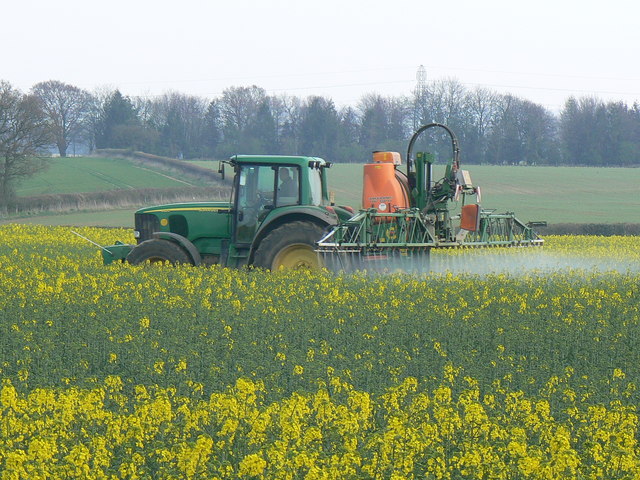
But there is a catch. Worldwide pesticide use has risen sharply since 1950, reaching about 2.5 million short tons annually, while crop losses from pests have remained relatively constant. That paradox is often described as the pesticide treadmill: farmers apply chemicals to control pests, pests evolve resistance, and the response becomes even more chemical use.
It sounds efficient at first. In practice, it can become a cycle that is costly, difficult to escape, and dangerous for both people and the environment.
What the pesticide treadmill means
The idea is simple. A pesticide may work well at first, killing a large share of a pest population. But over time, some pests survive. Those survivors reproduce, and gradually a more resistant population emerges. Once resistance builds up, the original pesticide becomes less effective. Farmers may then need larger amounts, more frequent applications, or entirely new chemicals.
That repeating cycle is the “treadmill.” Like running on a machine at the gym, there is constant effort without much forward progress.
This problem is not limited to one kind of pest. Agriculture deals with weeds, insects, mites, and diseases, and all of them can be managed in ways that unintentionally encourage resistance. The result is a system where chemical control can become self-reinforcing.
The numbers behind the problem
Pesticide use has increased enormously over the last several decades. Yet the overall level of crop loss due to pests has stayed roughly the same. That does not mean pesticides never work. It means that increasing use has not delivered a permanent victory over pests.
The human toll has also been severe. In 1992, the World Health Organization estimated that three million pesticide poisonings occur annually, causing 220,000 deaths. Those figures show that pesticide use is not just an agronomic issue, meaning a farming-management issue. It is also a major public health issue.
Workers on farms face particular risks. Agriculture is considered one of the most hazardous economic sectors. Farmers and farmworkers are exposed not only to machinery and harsh weather, but also to pesticides and other chemicals. Exposure can cause illness, and workers exposed to pesticides may even have children with birth defects. Because farming is often both a workplace and a home, entire families can be exposed.
Why pesticides became so widespread
To understand the treadmill, it helps to understand why pesticides became central to modern farming in the first place.
From the 20th century onward, agriculture in many countries became more intensive. Intensive agriculture aims to maximize productivity using high levels of inputs such as water, fertilizer, pesticides, and automation. Alongside synthetic fertilizers and mechanization, pesticides became one of the major tools that helped raise crop yields.
Large-scale monocultures also played a role. A monoculture is the planting of one crop variety across a large area. This can simplify planting and harvesting, but it also reduces biodiversity. When nutrient use is uniform and large areas are occupied by the same crop, pests can build up more easily. That often leads to heavier pesticide and fertilizer use.
In other words, the structure of modern industrial farming can make pesticide dependence more likely.
The environmental costs of heavy pesticide use
Pesticides are designed to kill living organisms, so their effects do not always stay neatly confined to the target pest. Agriculture is a major source of toxins released into the environment, including insecticides, especially those used on cotton.
Pesticide use can damage nature directly. It can kill insects, plants, and fungi beyond the intended target. This contributes to the broader environmental pressures linked to agriculture, including habitat change, biodiversity loss, water pollution, and toxic emissions.
There are also knock-on effects. Agriculture already imposes external costs on society through pesticide damage to nature, nutrient runoff, excessive water use, and loss of natural environments. An external cost means harm that is not fully reflected in the price of the product itself. Food may seem cheap at the checkout, while some of its environmental and health costs are borne elsewhere.
Critics of heavy pesticide use argue that farming does not have to accept an unavoidable trade-off between protecting nature and producing food. That is where alternative pest-management strategies become especially important.
Integrated pest management: pesticides as a last resort
One of the clearest alternatives to the treadmill is integrated pest management, often shortened to IPM.
Integrated pest management tries to control pest populations below the level that would cause economic loss, while reducing unnecessary chemical use. Instead of reaching for pesticides first, it combines multiple methods:
- chemical control, meaning pesticides
- biological control, also called biocontrol
- mechanical methods such as tillage
- cultural practices, meaning farming techniques that reduce pest pressure
Biocontrol means using living organisms to suppress pests. Cultural practices include methods such as crop rotation, culling, cover crops, intercropping, composting, avoidance, and resistance.
Crop rotation means growing different crops in sequence on the same land rather than repeating the same crop over and over. This can disrupt pest life cycles. Intercropping means growing several crops at the same time in the same area, which can make it harder for pests to spread. Cover crops are plants grown mainly to protect and improve the soil rather than for harvest. Resistance refers to using crop varieties that are less vulnerable to a given pest or disease.
The key principle of integrated pest management is that pesticides should be a last resort, not the default solution.
Push–pull: a clever ecological strategy
One especially elegant method is the push–pull technique. This approach uses plant aromas in two ways at once: some plants repel pests away from the main crop, while others attract pests to a different location where they can be trapped or removed.
That is why it is called push–pull. One set of plants “pushes” pests away. Another set “pulls” them in.
This matters because it shows that pest control does not have to rely only on killing. It can also rely on behavior. By shaping where pests want to go, farmers can protect crops more selectively and potentially reduce pesticide use.
Push–pull is a good example of a broader idea in sustainable farming: working with ecological relationships instead of overriding them with a chemical-only strategy.
The wider debate: yield, food, and the environment
Supporters of intensive high-yield farming sometimes argue that pesticides help save nature by allowing more food to be grown on less land. The logic is that if yields rise, less land needs to be converted to farmland.
Opponents argue that this framing is too simplistic. They point out that pesticides can replace good agronomic practices rather than complement them, and that biodiversity losses, pollution, and health harms are real costs. They also emphasize that alternatives such as crop rotation and integrated pest management can reduce pest damage without locking farming into a resistance spiral.
This debate sits inside a larger global challenge. Agriculture must feed billions of people, yet it is also both a cause of and sensitive to environmental degradation. Soil degradation, biodiversity loss, climate change, and water stress can all reduce crop yields. At the same time, conventional farming practices can worsen those very pressures.
The pesticide treadmill is one small window into that larger contradiction.
Why breaking the cycle matters
Escaping the pesticide treadmill is not just about using fewer chemicals. It is about redesigning pest control so that it remains effective over time.
If resistance keeps building, each new chemical fix may be temporary. If health harms continue, farmworkers and rural families bear the risk. If ecosystems are damaged, agriculture can undermine the natural systems it depends on.
Smarter pest control means thinking beyond short-term suppression. It means using a mix of tools, understanding pest biology, and making farming systems less favorable to outbreaks in the first place. That is why integrated pest management and push–pull methods are so important: they offer ways to manage pests without feeding the very cycle that makes pest control harder.
In the end, the pesticide treadmill is a reminder that agriculture is not just about producing more. It is also about how that production is achieved, who bears the risks, and whether the solution today creates a bigger problem tomorrow.
Sources
Based on information from Agriculture.
More like this
Don’t get stuck on the knowledge treadmill — download DeepSwipe and let smarter ideas, not just more inputs, do the work.