Full article · 8 min read
Women in Agriculture: Essential to Food Production, Still Facing Unequal Conditions
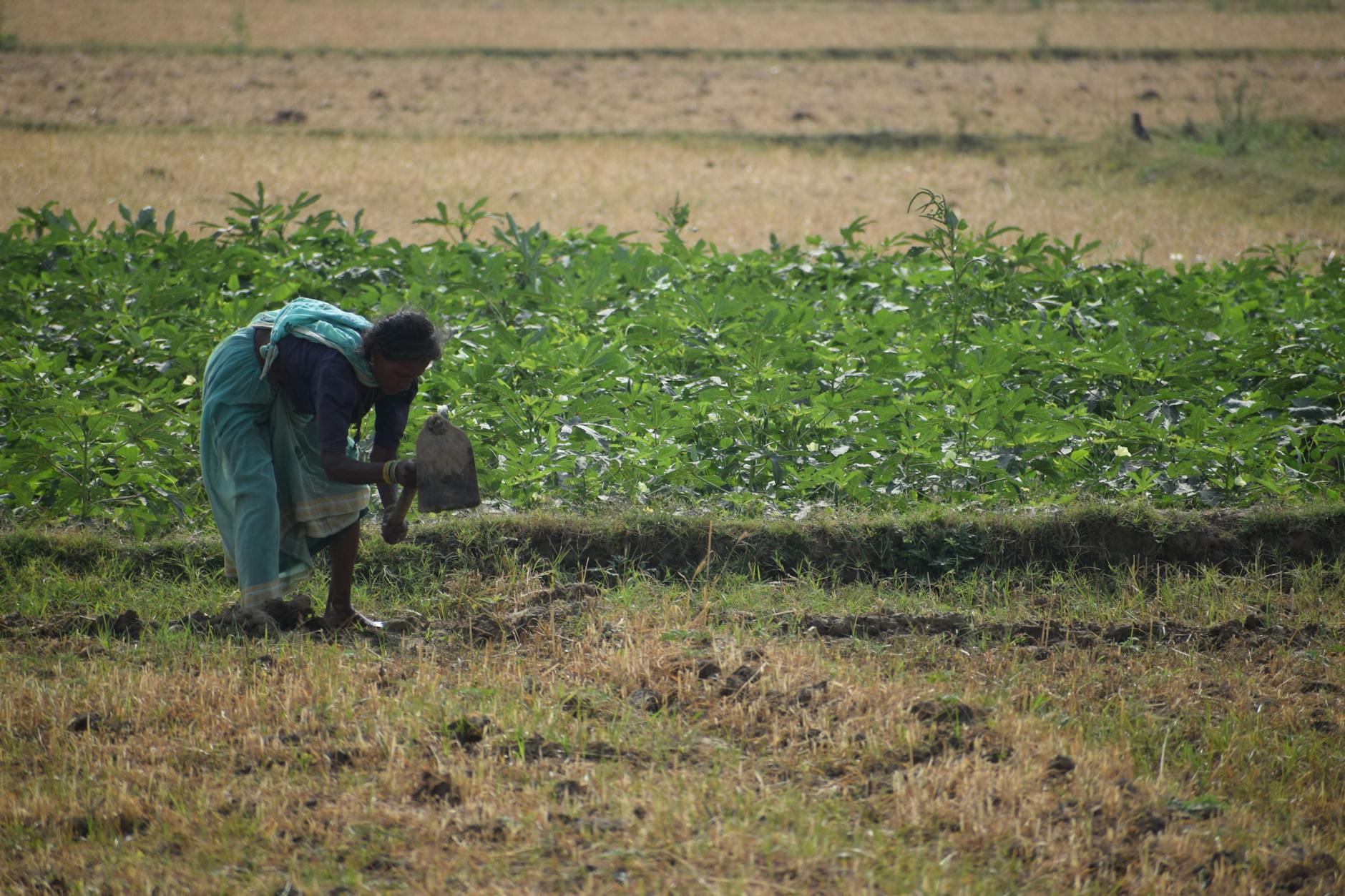
Women are central to agriculture around the world, yet their work is often shaped by unequal access to land, tools, wages, and opportunity. In sub-Saharan Africa, women make up 47% of the agricultural workforce, showing just how vital they are to food production and rural life. But the numbers also reveal a harder truth: women in agriculture often work under more difficult conditions and receive less in return.
Agriculture includes cultivating crops, raising animals, and producing goods that sustain human life. It has shaped civilization for thousands of years, and it still employs a huge share of the global workforce. In 2021, agriculture employed 873 million people, or 27% of workers worldwide. In many low-income countries, and especially in rural areas, it remains one of the most important sources of work. That makes inequality in agriculture not just a fairness issue, but a major question about livelihoods, food production, and development.
Why women matter so much in farming
Across the world, women make up a large share of the people employed in agriculture. This share is growing in all developing regions except East and Southeast Asia, where women already make up about half of the agricultural workforce. In many places, women’s roles are also changing. The Food and Agriculture Organization of the United Nations has noted a shift in some contexts from subsistence farming to wage employment, and from contributing household members to primary producers, especially where men migrate away from rural areas.
Subsistence farming means farming mainly to feed one’s family or local community, with little surplus left to sell or transport elsewhere. In many poorer regions, women are deeply involved in this kind of agriculture. Their labor helps sustain households and local food systems, even when it is undercounted or undervalued.
At lower levels of economic development, women often account for a greater share of agricultural employment. The reasons are not simply cultural. Limited education, poor access to infrastructure and markets, heavy unpaid work burdens, and weak opportunities outside agriculture all restrict women’s ability to move into other kinds of employment.
The productivity gap: why female-managed farms often produce less
One of the starkest figures in agriculture is the gender gap in land productivity. Female-managed farms of the same size as male-managed farms produce 24% less, on average. That does not mean women are less capable farmers. In fact, the broader evidence points in another direction: women have significantly less access than men to the inputs that help farms perform better.
In agriculture, “inputs” are the resources used to grow crops or raise animals. These include improved seeds, fertilizers, mechanized equipment, irrigation, and other tools that increase productivity. If one farmer has better seeds, more reliable water, and access to machinery while another does not, their yields are unlikely to be equal.
Yield refers to how much a farm produces from a given area of land. When female-managed farms have lower yields, the article ties this to unequal access to the things that improve productivity. Women still have significantly less access than men to improved seeds, fertilizers, and mechanized equipment. Progress in closing the gap in access to irrigation and livestock ownership has also been slow.
Irrigation is the artificial application of water to crops when rainfall is insufficient or unreliable. In many farming systems, it can make the difference between stable production and poor harvests. Mechanized equipment refers to powered tools and machines that reduce labor and improve efficiency. If women are less able to use these resources, they are operating at a disadvantage before the season even begins.
The wage gap in agricultural work
Women in agriculture also face a wage gap. On average, they earn 18.4% less than men in wage employment, meaning women receive 82 cents for every dollar earned by men.
Wage employment means being paid for labor, rather than farming one’s own land or contributing unpaid work to a household farm. This matters because agriculture includes both self-employed farmers and hired workers. Women are often less likely to participate as entrepreneurs and independent farmers, and more likely to be employed in lower-paid parts of the sector.
The article also notes that women who work in agricultural production tend to do so under highly unfavorable conditions. They are concentrated in the poorest countries, where alternative livelihoods may be scarce. Their work also continues under climate-induced weather shocks and in situations of conflict, increasing both insecurity and hardship.
Unequal access, not unequal ability
A crucial point is that women are as likely as men to adopt new technologies when the necessary enabling factors are in place and they have equal access to complementary resources.
That finding cuts through a common assumption that low adoption reflects reluctance or lack of interest. In reality, technology adoption in agriculture usually depends on whether a person can access the tool itself and the systems around it. “Complementary resources” means the other things needed to make a technology useful, such as money, connectivity, equipment, infrastructure, or associated inputs.
Agricultural technologies can include improved seeds, mechanized tools, irrigation systems, and digital tools. More broadly, agricultural automation includes machinery and equipment used to improve diagnosis, decision-making, or the performance of agricultural operations. This can range from motorized machines to digital tools such as sensors. Precision agriculture, for example, uses technologies to improve the timing and precision of farm operations.
When women have equal access to these resources, they adopt innovation just as readily as men. The barrier is not willingness. The barrier is inequality.
Signs of progress in digital and financial access
There are some encouraging developments. In low- and middle-income countries, the gender gap in access to mobile internet fell from 25% to 16% between 2017 and 2021. The gender gap in access to bank accounts also narrowed, from 9 to 6 percentage points.
These changes matter because digital and financial access increasingly shape who can participate fully in modern agriculture. Mobile internet can help connect people to information, services, and technologies. Bank accounts can make it easier to save, receive payments, or engage with formal financial systems.
This does not mean inequality has disappeared. But the narrowing of these gaps suggests that some of the barriers preventing women from accessing tools and opportunities are becoming less severe. Since women adopt new technologies as readily as men when access is equal, even modest improvements in connectivity and finance could have wider effects on agricultural participation and productivity.
Why these gaps persist
The disadvantages women face in agriculture are tied to broader social and economic conditions. In many places, women carry a high unpaid work burden, which limits time for paid labor, farm management, training, or travel to markets. Rural infrastructure may be weak, making access to information, tools, and services more difficult. Markets themselves may be distant or hard to enter.
The article also highlights that women are less likely to be entrepreneurs and independent farmers and are often engaged in producing less lucrative crops. “Less lucrative” simply means less profitable. If women are concentrated in lower-return activities while also lacking access to productivity-enhancing inputs, then income gaps can become deeply entrenched.
These conditions are especially severe in poorer countries and in periods of climate stress or conflict. Agriculture is already highly sensitive to environmental change, including droughts, floods, changing rainfall, and climate extremes. When women are working with fewer resources in already vulnerable settings, they often face the sharpest edge of these pressures.
Women, agriculture, and the future of food
Agriculture remains one of the foundations of human society. It produces food, fibers, fuels, and raw materials, and it shapes rural economies and communities. Yet despite rising production, hunger still affects hundreds of millions of people. In that context, improving fairness and access in agriculture is not a side issue. It is closely linked to productivity, livelihoods, and food security.
Food security means reliable access to enough food. If a large share of the agricultural workforce faces systematic disadvantages, then improving equality has the potential to strengthen the whole food system. The evidence here is simple but powerful: women are already indispensable to agriculture, they face measurable disadvantages in yield and wages, and when access is equal, they adopt new technologies just as readily as men.
That makes the issue less mysterious than it may seem. Women do not need proof that they belong in agriculture; they already sustain it. What they need is equal access to the resources that let their work be fully productive, fairly paid, and properly recognized.
A clearer picture of the field
The image of agriculture is often reduced to land, crops, and machinery. But it is also a story about labor, inequality, and who gets the tools to thrive. Women help grow the world’s food under conditions that are too often unequal. In sub-Saharan Africa alone, nearly half the agricultural workforce is female. Yet lower access to inputs, lower wages, and fewer opportunities as independent producers continue to shape outcomes.
Still, the trend lines offer reason for cautious optimism. Gaps in mobile internet and banking access have narrowed. And where women receive equal access to the resources they need, they keep pace with men in adopting technology. The lesson is clear: when barriers fall, potential rises.
In the fields of the world, women are not on the margins of agriculture. They are at its center.
Sources
Based on information from Agriculture.
More like this
Dig deeper than the topsoil—download DeepSwipe and grow your knowledge one swipe at a time.


