Full article · 8 min read
Food Lost Before the Store: The Hidden Leak in Global Agriculture
A huge amount of food never even gets the chance to sit on a store shelf. Around 14% of the world’s food is lost from production before it reaches retail. That is an astonishing figure on its own, but it becomes even more striking when placed next to the scale of global agriculture: the world produces about 11 billion tonnes of food each year.
When losses happen this early in the chain, the impact goes far beyond empty plates. Agriculture uses land, water, labor, machinery, fertilizers, and transport systems. So when food disappears before retail, many of the resources used to produce it have effectively been spent for nothing. That makes food loss one of the most important hidden issues in modern agriculture.
What “food loss before retail” actually means
Food loss before retail refers to food that is produced but does not make it to the stage where shops and markets can sell it. In other words, the loss happens somewhere between production and the retail level.
That matters because agriculture is an enormous global system. It includes cultivating soil, planting, raising, and harvesting crops, as well as livestock production. Food classes within agriculture include cereals or grains, vegetables, fruits, cooking oils, meat, milk, eggs, and fungi. With such a vast range of products moving through farms and supply chains, even a modest percentage lost before retail represents a very large physical quantity of food.
Why 14% is such a big deal
At first glance, 14% may not sound overwhelming. But percentages can hide scale. If global agricultural production is approximately 11 billion tonnes of food, then losses before retail represent a massive drain on the food system.
This is especially important because agriculture is under pressure from many directions at once. It must feed a large global population while facing environmental degradation, climate change, soil degradation, biodiversity loss, and growing freshwater demand. When food is lost early, the system has to work harder to produce enough usable food.
And despite increases in agricultural production and productivity, hunger remains widespread. Between 702 and 828 million people were affected by hunger in 2021. Food insecurity and malnutrition can result from conflict, climate extremes and variability, economic swings, and structural conditions such as income status and natural resource endowments. In that context, reducing food loss before retail becomes even more significant.
The resources behind every lost tonne
Food is not just food. Every tonne produced carries a whole bundle of inputs behind it.
Agriculture represents 70% of freshwater use worldwide. In some of the least developed and landlocked developing countries, agricultural water withdrawal ratios can be as high as 90% of total withdrawals. That means food lost before retail may also represent water used without delivering its full benefit.
The same is true for land. In 2021, global agricultural land covered 4.79 billion hectares. One hectare is about 2.5 acres. Roughly one-third of total agricultural land was cropland, while about two-thirds were permanent meadows and pastures. Producing food requires access to these landscapes, and agricultural land is already linked to major environmental pressures including habitat change and biodiversity loss.
Then there is labor. Agriculture employed 873 million people in 2021, or 27% of the global workforce. Farms also shape rural society and support broader businesses that serve farming populations. When food is lost before retail, it affects not just output totals but the value created by the work of millions of people.
Food loss in a world of small farms and giant farms
The structure of farming also helps explain why these losses matter.
As of 2021, small farms produce about one-third of the world’s food, and the vast majority of them are one hectare or smaller. Five out of every six farms in the world are smaller than 2 hectares, yet they occupy only around 12% of all agricultural land. On the other hand, very large farms dominate land use: just 1% of farms are larger than 50 hectares, but they encompass more than 70% of the world’s farmland.
This contrast shows how widespread the challenge can be. Food loss before retail is not just about one kind of farm. It matters across very small holdings and very large operations alike. Since farms strongly influence rural economies and societies, improving how food moves from production toward market could have broad ripple effects.
Why agriculture cannot afford unnecessary loss
Modern agriculture has dramatically increased yields through agronomy, plant breeding, agrochemicals such as fertilizers and pesticides, and technological development. Since 1900, productivity has risen strongly in many parts of the world through mechanization, synthetic fertilizers, pesticides, and selective breeding.
But those gains have come with tradeoffs. Agriculture is both a cause of and sensitive to environmental degradation. It contributes to climate change, aquifer depletion, deforestation, antibiotic resistance, and pollution. It is also vulnerable to climate change, soil degradation, desertification, and biodiversity loss, all of which can reduce crop yield.
That is what makes pre-retail food loss so costly. If agriculture already places heavy demands on ecosystems, then losing part of what it produces before sale means those environmental costs are being paid without delivering the full social benefit.
Water, soil, and the cost of waste
A lost harvest is not just lost calories. It can also mean unnecessary pressure on scarce natural resources.
Water management is essential in much of the world because rainfall is insufficient or variable. Agriculture faces increasing freshwater demand while also dealing with droughts, floods, extreme rainfall, and other weather events. In some places, aquifers are being depleted. Incorrect irrigation can also contribute to salinization and waterlogging, both forms of land degradation.
Soil is under pressure too. About 40% of the world’s agricultural land is seriously degraded. Tillage can improve productivity in some circumstances, but it can also make soil more prone to erosion, release carbon dioxide from organic matter, and reduce the abundance and diversity of soil organisms. Excessive fertilization and manure application can contribute to nutrient runoff and eutrophication, which is excessive nutrient enrichment in water bodies that can trigger algal blooms, fish kills, and biodiversity loss.
When food is lost before retail, all of those soil and water pressures remain, but some of the intended value of the production disappears.
Climate change makes food loss even more serious
Climate change and agriculture are tightly linked. Changes in temperature, rainfall, storms, heat waves, pests, diseases, atmospheric carbon dioxide, ground-level ozone, and sea level all affect agriculture. Human-induced warming has already slowed the growth of agricultural productivity over the past 50 years in mid and low latitudes.
Warming is also harming crop and grassland quality and harvest stability. Climate change is expected to raise the risk of food insecurity for vulnerable groups, especially the poor. In some regions, a significant share of cropland is already in danger at 1.5 degrees of warming.
In a world where agricultural production is becoming more uncertain, reducing losses before retail looks less like a technical detail and more like a major resilience strategy. If a meaningful share of food vanishes before reaching stores, then climate stress makes that leak even harder to justify.
Technology, management, and the chance to reduce losses
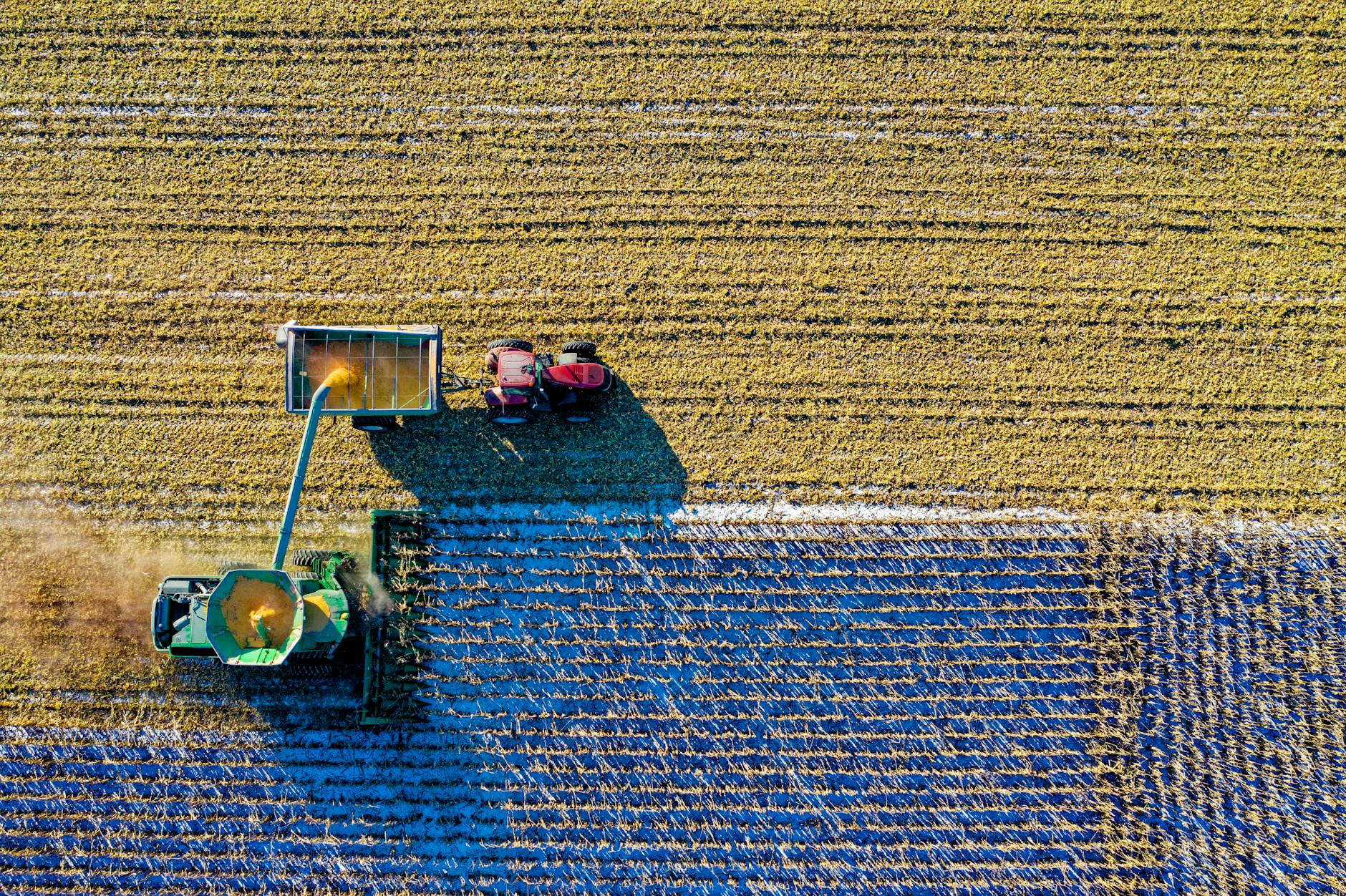
Agriculture has never stood still. Over time, it has moved from manual tools to animal traction, motorized mechanization, digital equipment, and robotics with artificial intelligence. Agricultural automation includes machinery and equipment that improve diagnosis, decision-making, or the performance of agricultural operations. Precision agriculture, sensors, drones, and autonomous machines are part of this trend.
These technologies are often discussed in terms of raising yields or reducing drudgery, but they also matter because better timing, better decisions, and more precise operations can make production systems more efficient. The same logic applies to broader production practices such as pest management, nutrient management, irrigation, and controlled-environment agriculture.
The article also notes that reducing hunger risk could be helped by combining agricultural technologies rather than relying on one innovation alone. A model cited by the International Food Policy Research Institute found that the number of people at risk from hunger could be reduced substantially if multiple technologies are adopted together.
That makes food loss before retail part of a bigger picture: the challenge is not only producing more, but making better use of what is already produced.
Why this matters for farms, water, and wallets
For farms, lower food loss could mean more value retained from the same production effort. For water systems, it could mean better returns on the vast share of freshwater already devoted to agriculture. For households and economies, it matters because agriculture is deeply tied to employment, rural life, and national policy.
Governments spend heavily on agricultural support. A 2021 report found that global support to agricultural producers accounted for almost US$540 billion a year, equal to 15% of total agricultural production value. Agriculture also sits at the center of debates over sustainability, food security, subsidies, market access, and environmental protection.
So when 14% of food is lost before retail, the issue is not just spoilage or inefficiency. It is a system-wide leak affecting food availability, resource use, environmental pressure, and economic value.
The overlooked opportunity
The world already produces an immense quantity of food. Yet a notable share vanishes before it can even be sold. At the same time, agriculture faces hunger, climate risk, water scarcity, land degradation, and environmental damage.
That is why food loss before the store deserves attention. It is one of the clearest examples of how improving agriculture is not only about growing more. Sometimes the biggest gains come from keeping more of what has already been grown.
Sources
Based on information from Agriculture.
More like this
Don’t let great knowledge get lost before it reaches your brain — download DeepSwipe and harvest something smart every day.