Full article · 7 min read
How War Changed Since 1945
The end of World War II is often imagined as the start of a more peaceful era. In one important sense, that is true: since 1945, wars between the greatest powers have become less frequent, territorial conquest has declined, and formal declarations of war have become rarer. But that does not mean war itself went away.
What changed was the pattern. Instead of seeing repeated giant clashes between the world’s strongest states, the post-1945 period has been marked much more by civil wars and insurgencies. At the same time, battle deaths and casualties have declined, and war has become more tightly shaped by international humanitarian law, the body of rules designed to limit suffering in war, especially for civilians, prisoners, and the wounded.
That combination creates a strange modern reality: war became in some ways less deadly than before, yet it remained persistent and widespread.
A World With Fewer Great Power Wars
One of the biggest shifts after 1945 was the decline in wars among the strongest states. The frequency of great power wars fell, and so did overt territorial conquest. Formal war declarations also became less common.
In Western Europe, the change is especially striking. Since the late 18th century, more than 150 conflicts and about 600 battles took place there, yet no battle has taken place in Western Europe since 1945. That does not mean political tensions vanished, but it does show how dramatically the character of conflict changed in one of the regions that had previously seen repeated warfare.
This post-1945 shift did not mean all interstate war stopped. Major exceptions included the Korean War, the Indo-Pakistani War of 1971, the Iran–Iraq War, the Gulf War, the Eritrean–Ethiopian War, and the Russo-Ukrainian War. Even so, the broader pattern remained: the classic model of repeated wars between major powers became less common.
The Rise of Civil Wars and Insurgencies
If war between major states became rarer, what replaced it? Increasingly, conflict took the form of civil war and insurgency.
A civil war is a war fought within a state rather than between separate countries. An insurgency is a rebellion against authority in which irregular forces take up arms to change an existing political order. These conflicts often look very different from conventional wars between national armies. They may involve guerrilla tactics, shifting front lines, struggles over political legitimacy, and efforts not only to defeat an armed opponent but also to influence or control the population.
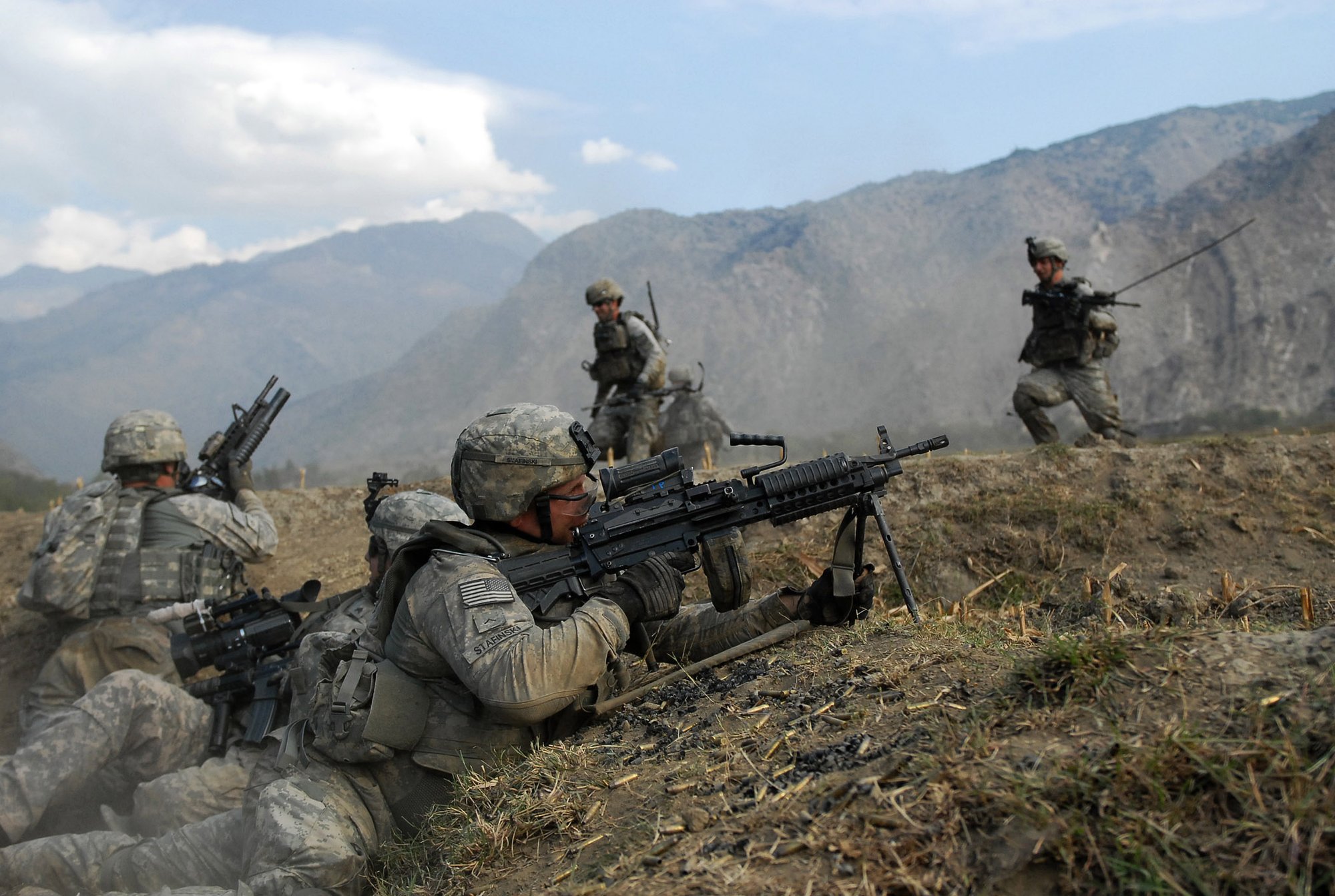
Since 1945, civil wars have increased in absolute terms. In fact, one of the most distinctive features of war in the post-1945 era is that combat has largely been a matter of civil wars and insurgencies. That is a major historical shift. It means that while fewer wars were being fought in the old great-power style, violence was still being sustained inside states and through organized armed movements.
This helps explain why the world after 1945 can seem contradictory. On paper, some indicators of war improved. In reality, many societies still experienced prolonged violence, instability, and destruction.
Why Modern War Can Look Less Visible but Still Be Devastating
When people think of war, they often picture huge set-piece battles between state armies. But post-1945 conflict often spreads differently.
In a war zone or conflict zone, daily life is interrupted. Travel becomes difficult or dangerous. Infrastructure can deteriorate. Civilians may be displaced or advised to leave. In civil wars and insurgencies, these disruptions can drag on for long periods, affecting ordinary life even when the conflict does not resemble a traditional battlefield showdown.
War in any form usually causes severe damage beyond combat itself. It often brings destruction of infrastructure, worsened health outcomes, reduced social spending, famine, and large-scale emigration from affected areas. Civilians may suffer atrocities, psychological trauma, or the loss of access to necessities such as drinking water. Even a medium-sized conflict with about 2,500 battle deaths has been associated with a one-year drop in civilian life expectancy, a 10% increase in infant mortality, a 3.3% increase in malnutrition, and loss of drinking water access for about 1.8% of the population.
So even if battle deaths decline, war can remain deeply destructive.
Why Battle Deaths Fell
One of the notable changes since 1945 is that battle deaths and casualties have declined. A key reason is advances in military medicine.
Military medicine refers to the treatment of the wounded and sick in wartime. Better medical care does not make war humane, but it can reduce the number of people who die from injuries, disease, and infection. Historically, disease killed enormous numbers of military personnel. From 1500 to 1914, more military personnel were killed by typhus than by military action. During Napoleon’s retreat from Moscow, more French military personnel died of typhus than were killed by Russian forces. In the Seven Years’ War, the Royal Navy reported that of 184,899 sailors conscripted, 133,708 died of disease or were listed as missing.
This broader historical background makes the post-1945 decline in casualties easier to understand. Improvements in treatment, evacuation, and care for the wounded help explain why some modern wars have lower death rates than conflicts in earlier eras, even when weaponry has become more advanced.
War Became More Regulated
Another major change since 1945 is that war has been increasingly regulated by international humanitarian law.
International humanitarian law is a set of rules intended to limit suffering during armed conflict. It is especially concerned with protecting civilians, prisoners, and the wounded, and with placing limits on what can be done in war. This does not mean all wars follow these rules perfectly, or even consistently. But it does mean that warfare has increasingly been judged against formal standards of conduct.
This matters because war is not only about who fights, but also about what fighters are permitted to do. The ethics of war have long revolved around questions such as when a war may be justified and what conduct is acceptable during war. One of the key ideas here is the distinction between combatants and non-combatants. Combatants are those taking part in the fighting; non-combatants are those who are not, especially civilians. A related principle is proportionality, which concerns how much force is necessary and morally appropriate.
These principles reflect an effort to restrain the worst effects of war, even if war itself continues.
Fewer Declarations, Different Kinds of Conflict
The decline in formal declarations of war is another sign that post-1945 conflict often operates differently from older models. In earlier periods, war between states was more openly framed as a declared political act. In the modern era, conflict may unfold without the same formal rituals.
That change fits with the broader move toward civil wars, insurgencies, and other less conventional forms of fighting. Warfare now includes a wide range of forms, from conventional warfare between states to insurgencies and other irregular conflicts. In many modern cases, the line between war and political struggle can seem less clear-cut than in the classic image of two states formally declaring war and sending uniformed armies into battle.
Why the Post-1945 Era Still Matters
Since 1945, war has not followed a simple story of decline. Some older forms became less common: great power wars, territorial conquest, and formal declarations all decreased. Battle deaths and casualties also fell, helped in part by advances in military medicine. And warfare became more regulated by international humanitarian law.
But conflict did not disappear. Civil wars increased in absolute terms, and insurgencies became a defining feature of the period. That means the modern history of war is not really a story of peace replacing violence. It is a story of transformation.
The result is a world in which war may be less likely to look like the giant interstate clashes of the first half of the 20th century, yet still remain a powerful force shaping politics, societies, and everyday life.
Understanding that shift is essential. If you only look for wars between great powers, the post-1945 world can seem unusually calm. If you look at civil wars, insurgencies, and the lived reality of conflict zones, a different picture appears: war changed form, and that change is one of the defining realities of the modern era.
Sources
Based on information from War.
More like this
War changed shape after 1945 — your curiosity can too. Download DeepSwipe and explore the twists of history, one smart swipe at a time.