Full article · 8 min read
Human Settlement Mapping: How Satellites Help Map Where People Live
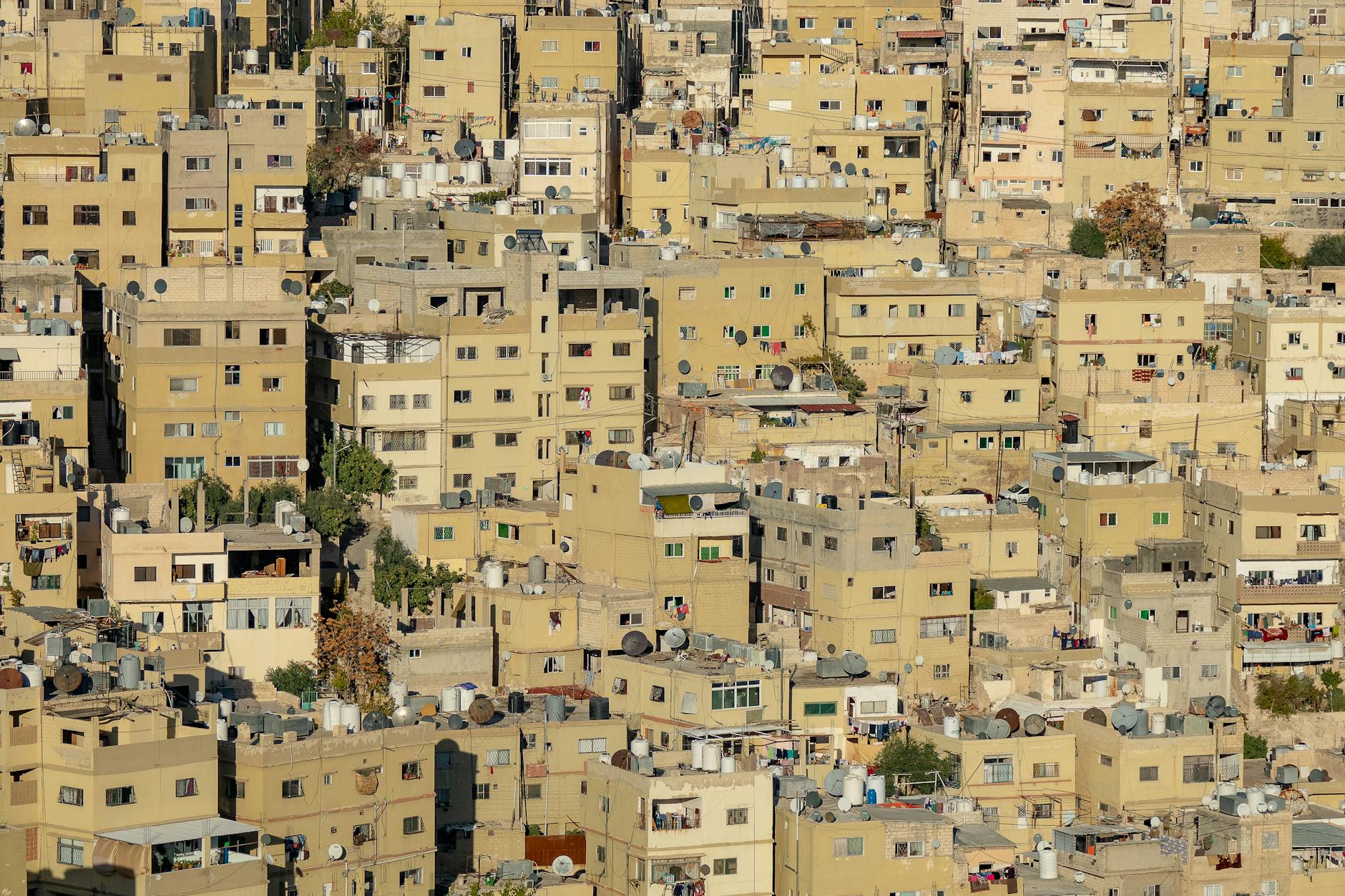
Human settlement mapping is about turning the spread of people, buildings, and infrastructure into something that can be seen, measured, and compared across the planet. In geospatial modeling, a settlement means a city, town, village, or another agglomeration of buildings where people live and work. In simpler terms, it is a place where human presence leaves a visible footprint on the landscape.
That idea may sound straightforward, but mapping settlements at a global scale is a huge challenge. Human communities range from tiny clusters of dwellings to massive cities surrounded by extensive urbanized areas. Settlements can include homesteads, hamlets, villages, towns, and cities. They also often include constructed features such as roads, enclosures, field systems, boundary banks and ditches, ponds, parks, woodlands, windmills, watermills, manor houses, moats, and churches. A map of settlement is therefore not just a map of houses. It is often a map of how humans have organized land.
What geospatial modeling means here
Geospatial predictive modeling uses map-based computer analysis to study real places. In this context, a settlement is defined as a city, town, village, or other grouping of buildings where people live and work. The key point is that the focus is spatial: where buildings are, where people are, and how those patterns change over time.
This kind of mapping matters because modern settlement patterns are constantly shifting. Global urbanization has accelerated dramatically in recent decades. According to the United Nations' World Urbanization Prospects 2025, 45% of the world's 8.2 billion people now live in cities, 36% in towns and semi-urban areas, and 19% in rural regions. The same report projects that nearly two-thirds of global population growth between 2025 and 2050 will occur in urban areas. It also notes that the number of megacities, meaning cities with populations over 10 million, will reach 33 in 2025.
Those numbers show why automated settlement mapping has become so important. When built-up land expands nearly twice as fast as population growth, as reported since 1975, it becomes harder to understand human presence simply through traditional local surveys. Large-scale, regularly updated spatial data becomes essential.
The Global Human Settlement Layer
One of the most important systems for this work is the Global Human Settlement Layer, often shortened to GHSL. This framework produces global spatial information about human presence on Earth over time. It does this in several forms:
- built-up maps
- population density maps
- settlement maps
Each of these reveals a different side of human settlement.
Built-up maps focus on the physical footprint of construction. They help show where structures and built infrastructure are present on the land.
Population density maps focus on how many people are living in a given area. Density matters because two places can look similarly built-up while having very different numbers of residents.
Settlement maps bring these perspectives together to show broader patterns of where people live and work.
Taken together, these layers make it possible to examine settlement not as a single label, but as a dynamic combination of buildings, population, and land use.
How settlement maps are created
The GHSL framework uses heterogeneous data. That means it combines different types of information rather than relying on just one source. The system draws from:
- global archives of fine-scale satellite imagery
- census data
- volunteered geographic information
Satellite imagery provides a broad and repeated view of the Earth's surface. It is especially useful for identifying built-up areas over very large regions.
Census data adds a demographic dimension. While imagery can show where construction exists, census information helps connect those patterns to actual population.
Volunteered geographic information refers to geographic data contributed by people. This can help enrich the picture of what exists on the ground.
The framework then processes these inputs fully automatically. That is one of its most striking features. Rather than depending on place-by-place manual interpretation, it uses new spatial data mining technologies to generate evidence-based analytics and knowledge. Spatial data mining is the process of finding meaningful patterns in location-based data. In settlement mapping, that means identifying signs of population and built infrastructure across enormous datasets.
Because the process is automated, the reporting can be objective and systematic. This consistency is crucial when comparing places across countries and across time.
Why mapping settlements is harder than it sounds
A settlement may seem like an obvious thing on the ground, but definitions vary. A place called a town in one country might be classified as a village in another. A large town in one national system might count as a city elsewhere. Different governments and statistical agencies also use different terms.
For example, Australia defines a populated place as a named settlement with a population of 200 or more persons. In Sweden, the term localities is used for densely populated places and is commonly translated as urban areas. In the United Kingdom, the term urban settlement is used in some census analysis. In the United States, the Geological Survey distinguishes between populated places, census areas, and civil divisions.
These differences create a basic problem for global mapping: the world does not use one universal settlement vocabulary. That is one reason systems like GHSL are so valuable. They aim to produce global spatial information in a standardized way, even when local administrative categories differ.
Settlements are more than dots on a map
Settlement mapping is not only about current cities. The broader concept of settlement includes everything from a minuscule number of dwellings grouped together to the largest cities and their surrounding urbanized areas. It is also deeply tied to human migration, since the process of settlement involves people moving and establishing communities in particular places.
Historically, settlements have changed dramatically over time. The earliest geographical evidence of a human settlement comes from Jebel Irhoud, where early modern human remains of eight individuals date to the Middle Paleolithic around 300,000 years ago. The oldest remains of constructed dwellings are huts made of mud and branches from around 17,000 BC at the Ohalo site near the Sea of Galilee. Later, the Natufians built houses in the Levant around 10,000 BC. After the invention of agriculture, remains of settlements such as villages became much more common, with Jarmo in Iraq identified as the oldest found.
This long history matters for mapping because settlement is not a temporary anomaly on the Earth’s surface. It is one of the central ways humans shape landscapes.
From settlement geography to urban growth
Settlement patterns can also be studied through their form, or morphology. In landscape history, settlements may be described as dispersed or nucleated. A dispersed settlement pattern spreads dwellings over a larger area, while a nucleated pattern groups them more tightly together. Urban morphology is a specialized way of studying how urban settlements take shape as part of the cultural-historical landscape.
A settlement hierarchy can classify places by size, centrality, or other factors. Centrality refers to how important a place is as a focal point within a wider area. This helps explain why a map of human settlement is not merely a record of occupied land. It can also reveal how communities are organized in relation to one another.
These ideas become especially relevant as urban growth accelerates. The built-up footprint of human settlement has expanded rapidly, and not always in direct proportion to population. The growth in per capita urban land use from 44 square meters to 63 square meters since 1975 reflects increasing economic and infrastructure demands. In other words, settlement mapping today is not just about counting people. It is about tracking how much land human activity occupies.
Mapping places that have been left behind
Settlement mapping also includes abandonment. Some populated places lose the economic activity that supported them. Others are affected by government action, such as the building of a dam that floods a town. Floods, uncontrolled lawlessness, and war can also contribute to abandonment.
These abandoned populated places may still contain accessible structures, as in a ghost town, and some become tourist attractions. Interestingly, places that look like ghost towns may still be defined as populated places by government entities. This shows that settlement is both a physical and an administrative idea. A location may appear deserted on the ground while still existing in official records.
For geospatial systems, this creates another challenge: visible structures do not always match current population status. That is why combining built-up maps with population density maps is so useful.
Open data and why it matters
A notable feature of the GHSL framework is its open and free data and methods access policy. Its approach is described as open input, open method, open output. That means the data, the process, and the results are all intended to be accessible.
This openness matters because human settlement is a global subject. Researchers, planners, and the public all benefit when settlement information can be examined and reused. Open methods also make it easier to understand how results were produced.
A planet increasingly visible through settlement maps
Human settlement mapping turns the traces of daily life into a readable global picture. By combining satellite imagery, census data, and volunteered geographic information, automated systems can show where people live, where infrastructure has spread, and how those patterns evolve over time.
As urbanization continues and built-up land expands, these maps become more than technical products. They are tools for seeing how humanity occupies the planet, from isolated clusters of buildings to sprawling megacities. In that sense, settlement mapping is not just about geography. It is a way of measuring human presence itself.
Sources
Based on information from Human settlement.
More like this
Map your curiosity like a satellite scans the planet — download DeepSwipe and explore new knowledge layer by layer.