Full article · 6 min read
Comets: Why Meteor Showers Happen
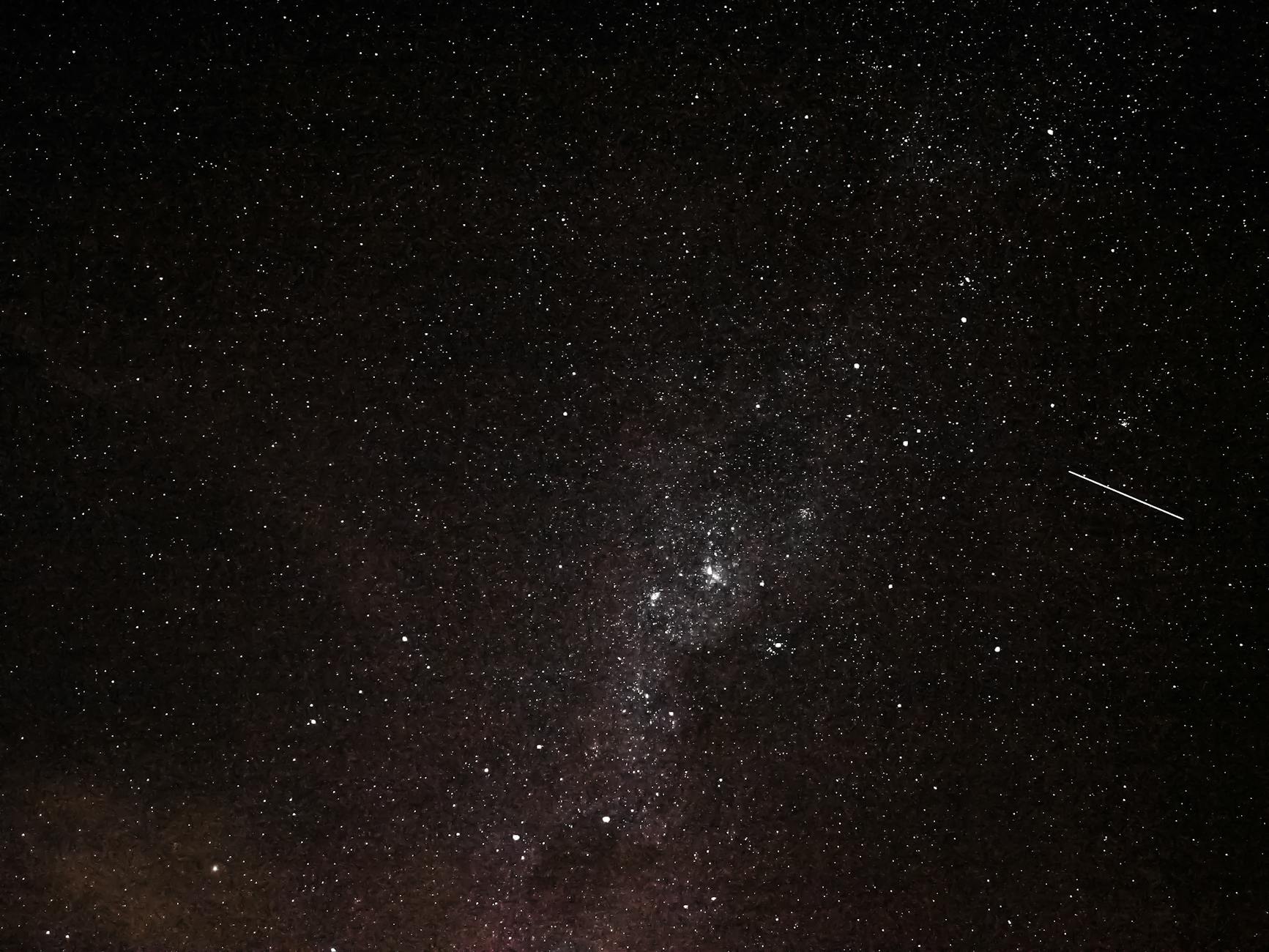
When you watch a meteor shower, you are not really seeing stars fall. You are watching Earth run through debris left behind by a comet.
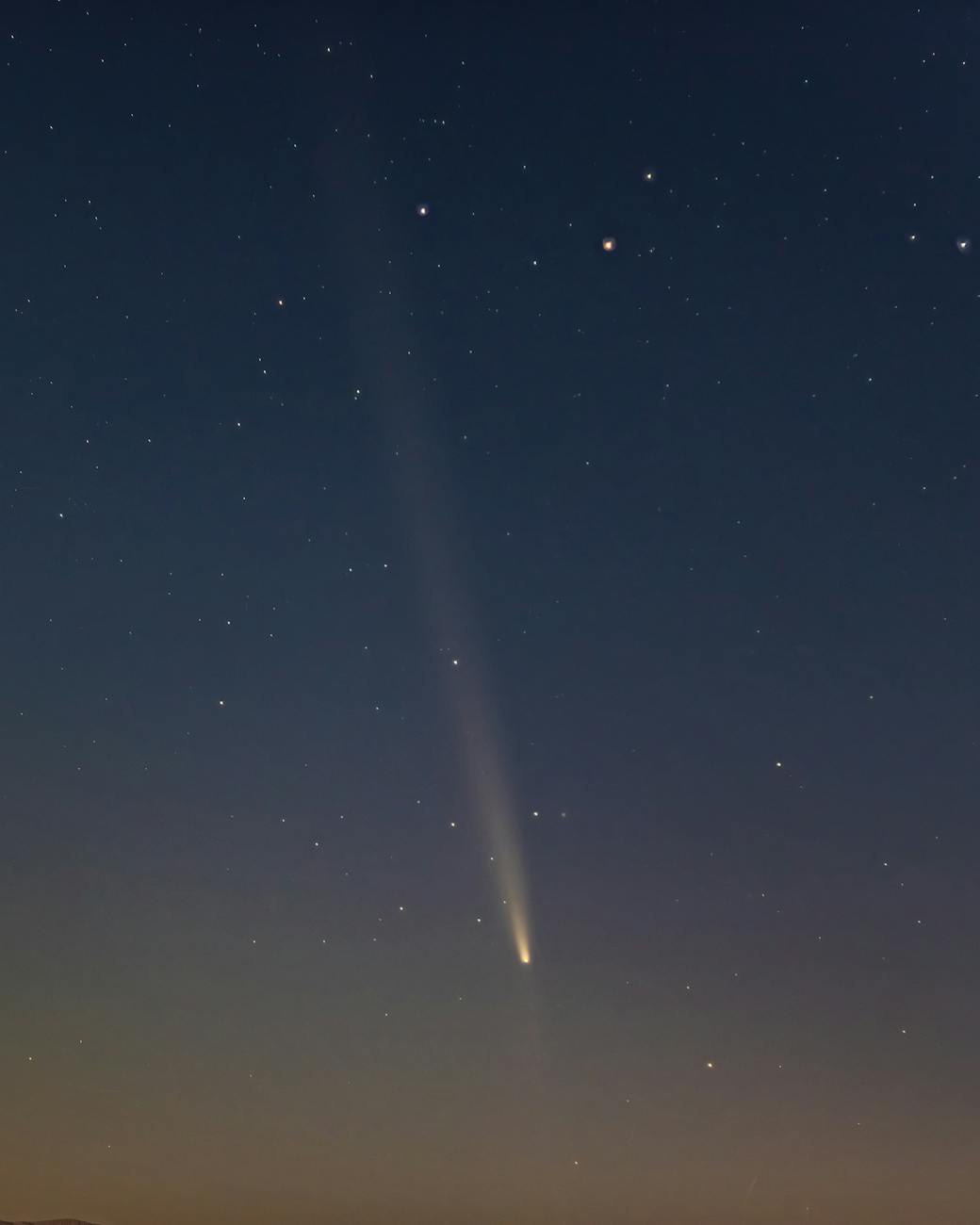
That is the key idea behind some of the sky’s most famous annual light shows. Comets are icy small bodies that release gas and dust when they pass close to the Sun. As they warm up, material streams away from the comet’s nucleus and forms a coma, a huge thin atmosphere around it, and often a tail. But not all of that material vanishes into space. Some of it remains spread along the comet’s orbital path like a dusty trail.
When Earth crosses one of these trails, tiny bits of rocky material hit our atmosphere and create the bright streaks we call meteors. In other words, meteor showers are the visible leftovers of a comet’s repeated trips through the inner Solar System.
How a comet leaves behind a trail
A comet’s solid center is called its nucleus. This nucleus is made of rock, dust, water ice, and frozen gases such as carbon dioxide, carbon monoxide, methane, and ammonia. When the comet gets closer to the Sun, solar heating drives off volatile material — substances that vaporize easily. This process is known as outgassing.
Outgassing does more than create a pretty tail. It also releases solid debris. The dust and gas streaming from the nucleus produce the coma and tails, but some of the heavier debris is too large to be swept away by radiation pressure and the solar wind. Instead, that material lingers near the comet’s orbit.
Over time, the comet effectively sprinkles its path around the Sun with particles. Those particles can remain as a debris trail, waiting for a planet to pass through.
What Earth sees as a meteor shower
If Earth’s orbit intersects that trail of comet debris, the particles plunge into our atmosphere at high speed. The result is a meteor shower.
The debris is made mostly of fine grains of rocky material. As these tiny particles enter the atmosphere, they create streaks of light. That glowing streak is the meteor. The shower is not caused by the comet itself hitting Earth, but by countless small fragments shed long ago.
This is why meteor showers tend to return at roughly the same time each year. Earth follows its own yearly path around the Sun, and if that path crosses the same debris stream every year, the shower becomes seasonal.
Why some showers are intense and others are gentle
Not all meteor showers look the same, and the reason comes down to the density of the debris trail.
Denser trails produce quick but intense meteor showers. If Earth hits a particularly crowded stream of particles, the sky can briefly become much more active.
Less dense trails create showers that last longer but are less dramatic. In that case, the debris is more spread out, so meteors appear over a broader stretch of time but in smaller numbers.
The density of the trail is generally related to how long ago the parent comet released the material. That means a shower’s character can depend on the history of the comet that made it.
Famous examples: Perseids and Orionids
Two of the best-known meteor showers come directly from comet debris.
Perseids
The Perseid meteor shower occurs every year between 9 and 13 August. It happens when Earth passes through the orbit of Comet Swift–Tuttle. The Perseids are one of the classic annual showers and are closely tied to this comet’s dusty trail.
Orionids
The Orionid meteor shower appears in October and comes from Halley’s Comet. That means every Orionid meteor is a tiny remnant associated with one of the most famous comets ever observed.
Halley’s Comet is especially notable in the history of astronomy because Edmond Halley showed that the comets seen in 1531, 1607, and 1682 were actually the same object returning again and again. Its October meteor shower is a yearly reminder that comets do not just put on a show when they appear in the sky — they can leave one behind for Earth to revisit.
Why comets are such effective meteor-makers
Comets are especially suited to producing debris because they change dramatically when they approach the Sun. Far from the Sun, they remain frozen and inactive. Closer in, solar radiation causes volatile materials to vaporize and stream out of the nucleus, carrying dust with them.
Comets can also produce jets — streams of gas and dust breaking out from weak spots on the surface. Uneven heating can cause these jets, and in some cases they can even make the nucleus spin or split apart. That means a comet is not just quietly melting; it can be actively blasting material into space.
Some comets are fragile enough to break up entirely. Others lose more and more material every time they pass close to the Sun. Over long timescales, this process can greatly affect a comet’s lifetime. The more matter stripped away, the shorter the comet’s active life may become.
All of this helps explain why comet orbits can become littered with debris streams capable of producing meteor showers on Earth.
Dust trail vs. tail: an easy distinction
It helps to separate two related ideas: the comet’s visible tail and the debris trail that causes meteor showers.
A comet often has distinct tails of dust and ionized gas. The dust tail tends to curve and stay closer to the comet’s orbital path, while the ion tail points directly away from the Sun because it is pushed by the solar wind and shaped by magnetic effects.
The debris trail responsible for meteor showers is not just the dramatic glowing tail seen in photographs. It is the longer-lasting material left along the comet’s orbit, especially solid debris that is not easily blown away. That lingering trail is what Earth runs into.
A bigger picture: comets as changing worlds
Meteor showers are only one consequence of comet activity. Comets can have comae thousands or even millions of kilometers across, and their tails may stretch for immense distances. Their nuclei are dark, irregular, and often surprisingly unreflective. Some extinct comets may even come to resemble asteroids after losing nearly all of their volatile ices and dust.
That makes a meteor shower feel even more impressive: a brief streak of light in our atmosphere can trace its origin to an ancient, dark, icy body orbiting the Sun on a long elliptical path.
Comets have been observed since ancient times, often inspiring fear, wonder, and wild speculation. Today, they are also linked to one of the most reliable sky events ordinary observers can enjoy. A meteor shower is a visible connection between Earth and a comet’s past behavior.
The next time you see one
The next time a meteor shower peaks, think of what is really happening. Earth is crossing a trail of fine rocky debris released when a comet was heated near the Sun. Each flash is a tiny piece of that trail meeting our atmosphere.
So a meteor shower is not random sky sparkle. It is evidence that comets are active, evolving bodies that shed material as they travel. The Perseids from Swift–Tuttle and the Orionids from Halley’s Comet are famous examples, but the basic story is the same: comet debris plus Earth’s orbit equals a shower of meteors.
It is one of the most beautiful chain reactions in astronomy — a comet circles the Sun, sheds dust, leaves a trail, and much later Earth turns that invisible path into a night of fire streaks overhead.
Sources
Based on information from Comet.
More like this
Catch more cosmic crumbs for your brain — download DeepSwipe and let knowledge shower down daily.