Full article · 7 min read
Communication Technologies That Rewired Human Life
Human communication has a long history, but some inventions changed far more than the speed of sending messages. They changed how people remember, store knowledge, spread ideas, and organize society itself. From oral storytelling to writing, from pictograms to print, and from telegraphs to the internet, each major communication technology altered everyday life in a different way.
Before writing, memory carried the world
In early societies, spoken language was the primary form of communication. Most knowledge was passed on through speech, often in the form of stories or wise sayings. That made human memory incredibly important. If a culture wanted to preserve practical knowledge, beliefs, or history, it had to keep repeating them from person to person.
But oral communication had a limitation: it did not produce stable knowledge. What people remembered depended on imperfect human memory. As a result, details could change from one retelling to the next, and different storytellers could present the same material differently.
This is why writing was so transformative. It created stable records that did not rely on memory alone. Once information could be preserved externally, it became easier to pass knowledge between generations with much less distortion. Writing did not just help people remember more. It changed what memory was for.
As societies settled into agricultural communities, they grew in size and complexity. That growth created a stronger need for durable records, especially for things like ownership of land and commercial transactions. Writing emerged as a solution to problems that spoken communication alone could not reliably handle.
Proto-writing came before full writing
Long before full writing systems developed, people already used long-lasting visible marks to store information. This is often called proto-writing. It included things like decorations on pottery, knots in a cord used to track goods, and seals used to mark property.
These systems were useful, but they were more limited than later writing systems. They could preserve information in visible form, yet they did not offer the same flexibility as a complete writing system for expressing a wide range of ideas.
Even so, proto-writing shows an important pattern in communication history: people kept inventing ways to move information out of the mind and into durable media.
Early writing looked like the world it described
Many early writing systems used pictograms. A pictogram is a graphical symbol that conveys meaning by visually resembling a real-world object. This makes the basic idea easy to grasp: instead of writing a word with alphabetic letters, the symbol looks like the thing itself.
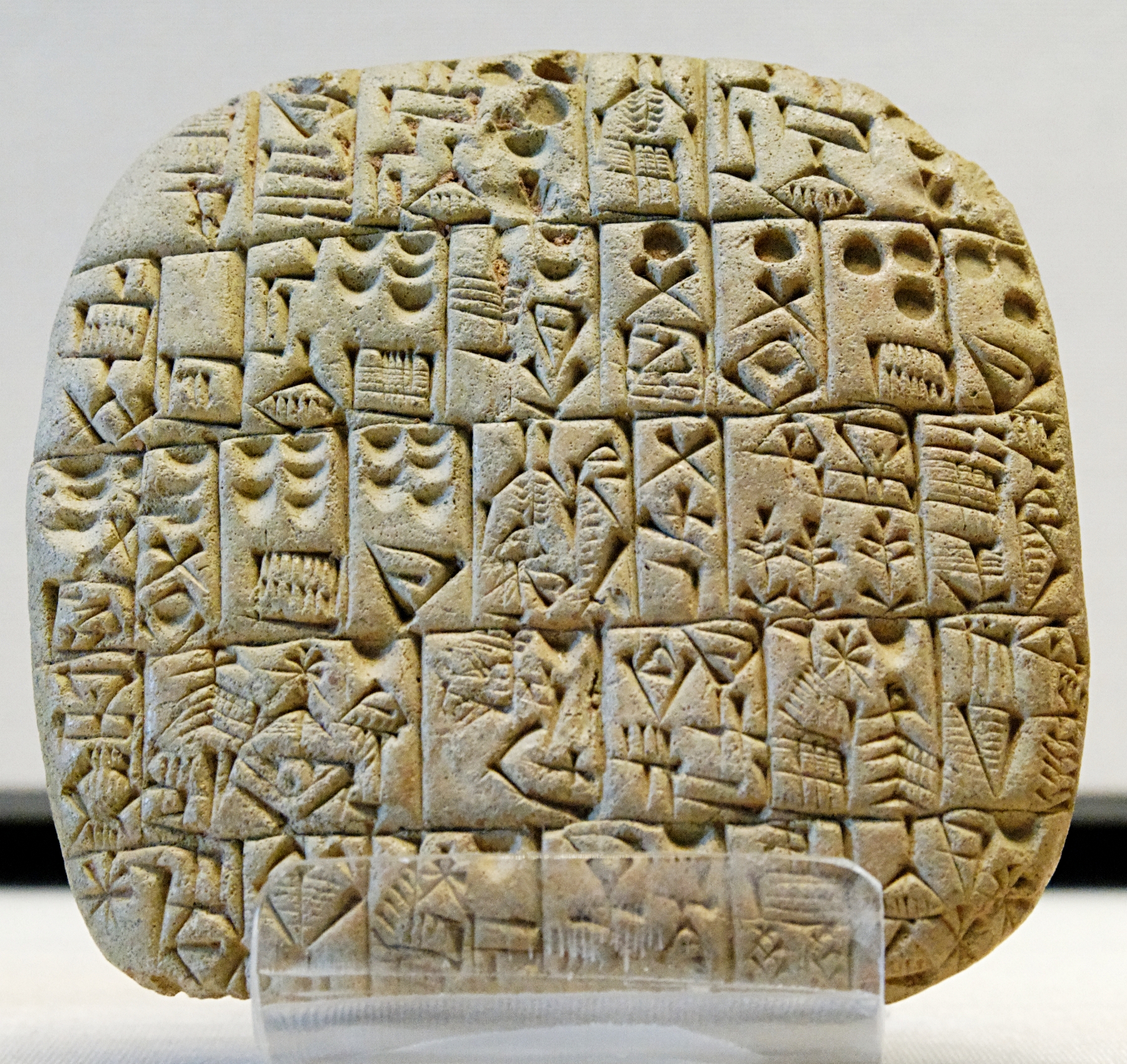
The use of basic pictographic symbols to represent items such as farming produce was common in ancient cultures and began around 9000 BCE. The first complex writing system to include pictograms was developed by the Sumerians around 3500 BCE. That system is known as cuneiform.
Pictograms may sound ancient, but the underlying idea is still familiar. Modern no-smoking signs and the male and female symbols on bathroom doors work on the same principle. They communicate through visual resemblance rather than through spelled-out sentences.
Pictographic systems had a major disadvantage, though. They required a very large number of symbols to represent all the objects a society might want to refer to. That limitation helped drive the development of other writing systems.
From pictures to more flexible writing systems
Later writing systems solved some of the problems pictograms could not handle efficiently. In alphabetic writing systems, the symbols do not stand for ordinary objects. Instead, they relate to the sounds used in spoken language. Other early systems included logographic and ideographic writing systems.
This shift mattered because it made writing more adaptable. Rather than needing a separate symbol for every object, people could build words from a smaller set of signs. That made it easier to represent a broader range of meanings.
The materials used for writing also shaped communication. Some early media, such as the clay tablets used for cuneiform, were not very portable. That made written communication harder to transport and share across distance. This problem changed when the Egyptians invented papyrus around 2500 BCE. Later developments, including parchment and paper, improved portability even further.
The history of communication is not only about symbols and language. It is also about the physical forms that carry messages. A message written on a heavy clay tablet and one written on paper may contain the same information, but they do not travel through society in the same way.
Printing removed a huge bottleneck
For centuries, almost all written communication had to be copied by hand. That made texts expensive and limited how widely written media could circulate. The spread of mass printing in the middle of the 15th century changed this dramatically.
Johann Gutenberg’s role in the popularization of mass printing helped trigger rapid social change. Once copying by hand was no longer the main bottleneck, written documents could circulate much more widely. New forms of written media, including newspapers and pamphlets, spread more easily through society.
This expansion of written media had a major side effect: it significantly improved the general literacy of the population. In other words, as written material became more available, more people gained the ability to read it.
The consequences reached far beyond books. Increased circulation of print helped lay the foundation for revolutions in science, politics, and religion. Communication technology was no longer just helping people preserve knowledge. It was accelerating social transformation.
Electric communication shrank distance
In the 19th and 20th centuries, scientific discoveries led to another major wave of communication change. Telegraphs and telephones made it far easier and faster to transmit information from one place to another without physically transporting written documents.
At first, these systems depended on cable connections. Later, wireless transmission using radio signals changed the scale of communication again. Radio made it possible to reach wide audiences and quickly became one of the central forms of mass communication.
Other innovations expanded communication into new formats. Developments in photography enabled images to be recorded on film, leading to cinema and television. Then satellites extended the reach of wireless communication even further by allowing radio and television signals to be broadcast to stations around the world.
The result was astonishing by historical standards: information could be shared almost instantly across the globe. Compared with the long delays of oral relay, hand-copied manuscripts, or physically transported letters, the change was enormous.
The internet made global exchange ordinary
The development of the internet marked another milestone in communication history. It made it easier than ever for people to exchange ideas, collaborate, and access information from almost anywhere in the world.
What makes the internet especially powerful is that it combines many forms of communication in one environment. People can use websites, e-mail, social media, and video conferences to share information in different ways. A medium once defined by local distance and slow transfer has become one in which communication can happen across continents in moments.
This did more than increase speed. Like writing and print before it, the internet also changed habits, expectations, and required skills. New communication technologies usually demand new abilities from users, and the internet is no exception.
Why these technologies mattered so much
Across all these stages, one pattern stands out: new communication technologies changed the relationship between people and information.
- Writing made knowledge more stable.
- Portable writing materials made records easier to share.
- Printing expanded circulation and improved literacy.
- Telegraphs, telephones, radio, and television reduced the importance of physical distance.
- Satellites and the internet made near-instant global communication part of ordinary life.
Communication history is often divided into ages based on the dominant form of communication, including speaking, writing, print, electronic mass communication, and the internet. These shifts were not merely technical upgrades. They restructured how ideas moved through society and how societies themselves functioned.
What began with stories and sayings carried by memory became a world of stable records, mass circulation, and global networks. Human life was rewired not by a single invention, but by a chain of communication technologies that kept changing what it meant to know, remember, and connect.
Sources
Based on information from Communication.
More like this
From pictograms to push notifications, communication never stops evolving — download DeepSwipe and keep your brain in the conversation.