Full article · 7 min read
Communication Breakdown: Why Messages Get Distorted
We often talk as if communication were simple: one person has an idea, says it, and another person understands it. In reality, a message has to survive a whole chain of steps before it reaches someone else. It must be expressed in some code, sent through a channel, and interpreted by a receiver. At any point along the way, something can interfere.
That interference is often called noise. And it is one of the most important reasons messages break down.
Noise does not just mean sound
In everyday language, noise usually means something loud or distracting. In communication theory, the term is broader. Noise is anything that interferes with a message on its way to the receiver and distorts it.
That means noise is not limited to background chatter or static on a line. The key idea is distortion: the received message may differ from what was originally intended. When that happens, communication can fail, or at least become less accurate.
Barriers to effective communication can take many forms. A message may be poorly expressed. It may use terms the receiver does not know. It may contain too little information, too much information, or information that is not relevant to the receiver's needs. Distraction, selective perception, and lack of attention to feedback can also interfere. Ambiguous expressions create additional problems because the receiver may have to choose between several possible interpretations.
So even when two people are both trying to communicate, misunderstanding is always a possibility.
The Shannon–Weaver model makes the process visible
One of the most influential ways of explaining this process is the Shannon–Weaver model. It presents communication as a chain of components working together.
In this model, a source creates a message. A transmitter turns that message into a signal. The signal travels through a channel. At the other end, a receiver translates the signal back into a message so it becomes available to the destination.
This model is especially useful because it shows exactly where distortion can happen. Noise interferes with the signal while it is traveling through the channel. If the signal changes too much, the destination may not get the same message the source tried to send.
The model is a linear transmission model, meaning information flows in one direction from sender to receiver. Later models added feedback and more emphasis on meaning-making, but the Shannon–Weaver model remains powerful for understanding breakdowns in transmission.
A phone call is a perfect example
A landline telephone call shows the whole chain in a concrete way.
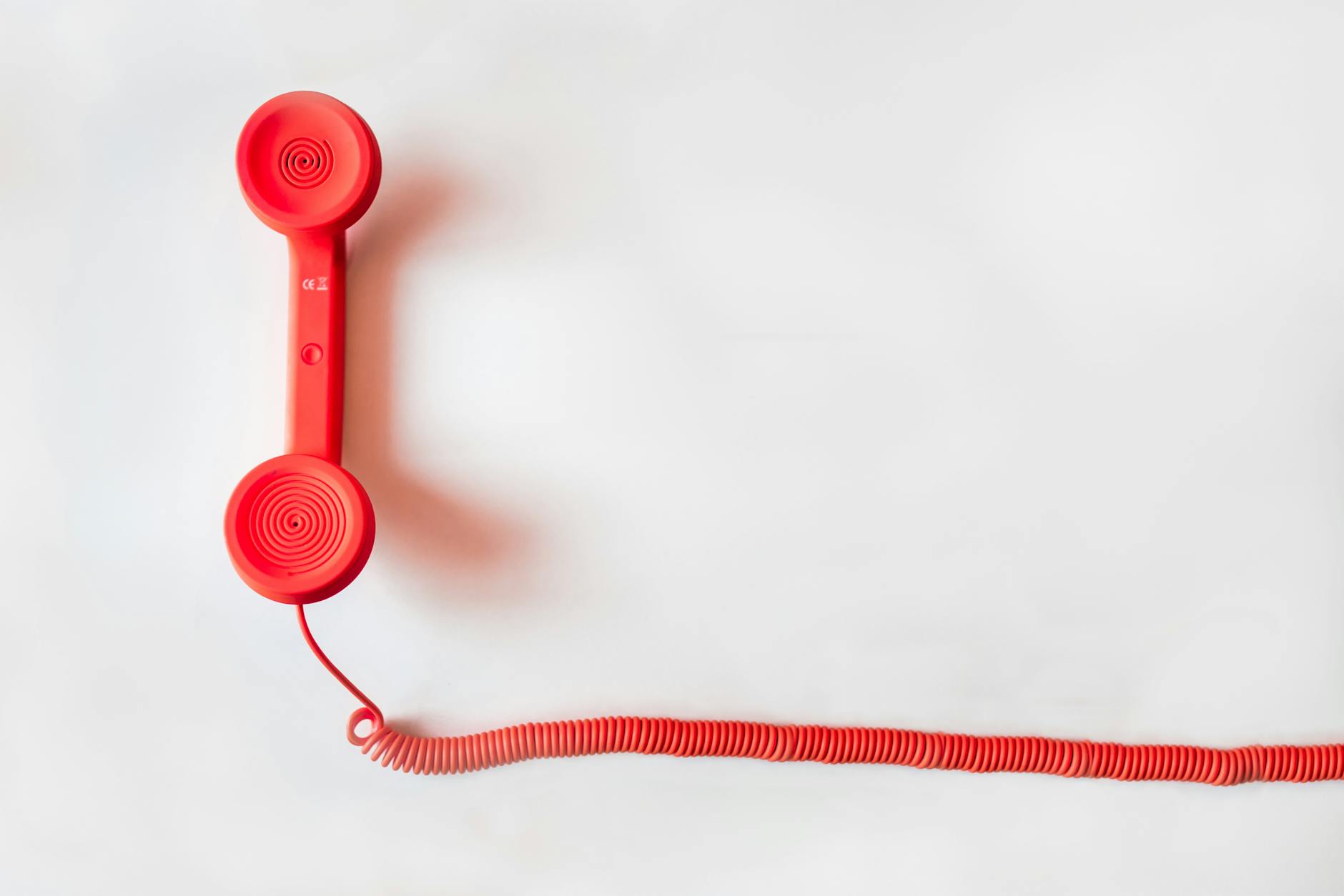
The person making the call is the source. Their telephone is the transmitter. The transmitter converts the message into an electrical signal. That signal moves through the wire, which acts as the channel. On the other side, the other telephone is the receiver, and the person answering is the destination.
This example helps explain why communication depends on more than just having something to say. The message must also survive the technical process of transmission. If the signal is distorted along the wire, the final message may be incomplete or altered.
The same basic logic applies well beyond telephones. Communication always depends on some medium or channel, whether that is sound, written signs, bodily movement, electricity, or another means of transmission.
Why channels matter so much
A channel is the way a message gets from sender to receiver. In the broadest sense, channels include both natural and technological means of transmission. They can involve hearing, seeing, touching, smelling, or tasting, as well as books, cables, telephones, radio waves, and television.
Different channels allow different kinds of cues. A telephone call, for example, allows verbal language and paralanguage but excludes facial expressions. Paralanguage refers to non-verbal elements in speech, such as pitch, loudness, rhythm, fluency, and intensity. These features can convey emotion or attitude even when the words themselves stay the same.
Because channels differ, they shape what kind of message can be sent clearly. Face-to-face communication can combine spoken words with visual non-verbal cues like posture and facial expression. A phone call cannot. This makes the chosen channel part of the message's fate.
Communication can also happen through multiple channels at once. When this works well, the channels reinforce each other and help the receiver understand. When they conflict, confusion can grow. A person may verbally agree while non-verbally showing disagreement through facial tension or posture. In that case, reconstructing the intended message becomes harder.
Code, encoding, and decoding
Another reason messages break down is that communication depends on coding systems.
A code is a sign system used to express an idea. In communication models, the sender typically encodes a message, meaning they put their idea into a form that can be transmitted. The receiver must then decode it, meaning they interpret that form to recover the message.
This sounds straightforward, but it depends on shared understanding. If the code is unfamiliar, decoding becomes difficult or impossible. This is one reason technical jargon, unclear phrasing, or culturally specific expressions can cause trouble.
Wilbur Schramm's interaction model emphasizes that previous experience matters here. Successful communication requires some overlap in the fields of experience of source and destination. In simple terms, people need enough shared background to encode and decode messages in compatible ways.
That insight helps explain why misunderstanding is not always caused by bad intentions or lack of intelligence. Sometimes the sender and receiver simply do not share enough context.
How redundancy helps recover meaning
One of the most practical ideas in the Shannon–Weaver model is that successful communication can still happen despite noise. One reason is partial redundancy.
Redundancy means the message includes extra clues. These repeated or overlapping cues can help the receiver reconstruct meaning even if part of the signal is lost or distorted. If enough of the message remains, decoding is still possible.
This is why repetition is often useful rather than wasteful. Redundancy can protect meaning.
In practice, this principle appears everywhere. A speaker may restate a point in different words. A written message may repeat key information. Face-to-face conversation may combine words with tone of voice and facial expression. All of this increases the chances that the receiver can still understand even if one part of the message fails.
Why communication failure is normal
It is tempting to think a failed message means someone communicated badly. But communication models suggest something more interesting: the possibility of misunderstanding is built into the system.
Communication depends on multiple parts working together: source, message, code, channel, receiver, and interpretation. A problem in any one of them can alter the outcome. The sender may choose unclear words. The channel may restrict important cues. Noise may distort the signal. The receiver may interpret the message through a different cultural background or field of experience.
This is one reason communicative competence matters so much. Communicative competence is the ability to communicate effectively and appropriately in a given situation. It includes not only producing messages but also receiving and understanding them. Effective communication is about achieving the intended result, while appropriate communication fits social standards and expectations.
When people communicate well, they are not merely transmitting words. They are choosing forms, channels, and expressions that increase the likelihood of successful decoding.
More than transmission, but transmission still matters
Some theories of communication argue that communication is not just the transfer of information. Transactional and constitutive views hold that communication also creates meaning. In these perspectives, meaning is produced during communication rather than simply packed into a message and shipped across.
Even so, transmission problems remain crucial. Before people can build shared meaning, they still need enough of the message to arrive in a usable form. That is why noise, channel limits, encoding, decoding, and redundancy remain such powerful ideas.
They explain a truth everyone has experienced: saying something is not the same as being understood.
The real lesson of communication breakdown
A message does not travel untouched from one mind to another. It must pass through systems, signals, channels, and interpretation. Along the way, it can be distorted by noise, weakened by a poor choice of channel, or lost because the receiver cannot reconstruct what was intended.
That is why communication is never only about expression. It is also about transmission, structure, and recovery. The best communicators do more than send messages. They make messages resilient.
And sometimes, the difference between being understood and being misunderstood is just a little redundancy in the right place.
Sources
Based on information from Communication.
More like this
Don’t let great ideas get lost in the noise — download DeepSwipe and decode something fascinating every day.