Full article · 9 min read
Black Holes: Origins from Dying Stars to Quasar Giants
Black holes are among the most extreme objects in the universe, but their beginnings are surprisingly varied. Some are born in the violent deaths of massive stars. Some bulk up by swallowing nearby matter. Some may have started as unusually large “seed” black holes that grew into the monster objects found in galactic centers. And some proposed origins reach all the way back to the early universe.
What unites them is gravity. A black hole forms when enough mass is packed into a small enough region that not even light can escape. The boundary of no return is called the event horizon. Once a black hole exists, it can continue to grow by accreting matter from its surroundings or by merging with other compact objects, including other black holes.
The most familiar origin: collapsing massive stars
The best-known route to making a black hole begins with a very massive star. Near the end of its life, a star runs out of hydrogen to fuse and starts fusing heavier elements. Eventually it reaches iron in its core. That is a dead end for fusion, because fusing elements heavier than iron requires more energy than it releases.
At that point, if the core is too massive, the star can no longer support itself against its own gravity. It undergoes gravitational collapse. In some cases, this collapse happens during a supernova explosion; in others, it may happen by direct collapse. Either way, if pressure inside the star cannot stop the inward crush, a black hole can form.
This is where degeneracy pressure matters. Degeneracy pressure is a quantum-mechanical effect that resists squeezing particles into the same state. For smaller stellar remnants, electron degeneracy pressure can hold up a white dwarf. For more massive ones, neutron degeneracy pressure can hold up a neutron star. But if the remnant is too massive, even neutron degeneracy pressure is not enough. Gravity wins, and collapse continues toward a black hole.
The minimum mass for a black hole produced by stellar collapse is thought to be around two to four times the mass of the Sun. These stellar black holes can later gain even more mass by pulling in gas or matter from a nearby companion star.
More than one size: the black hole family
Black holes come in several broad size classes.
Stellar black holes
These form from collapsing stars and typically start out in the range of about 10 to 100 solar masses, though the exact upper end depends on the kind of star that formed them. They are the black holes most closely tied to supernovae, X-ray binaries, and the deaths of massive stars.
Intermediate-mass black holes
These are thought to span roughly 10² to 10⁵ solar masses. They seem to be rarer than both stellar and supermassive black holes. Only a small number of candidates have been observed so far. Possible ways to make them include collisions in star clusters, formation in low-mass galaxies, or mergers of smaller black holes.
Supermassive black holes
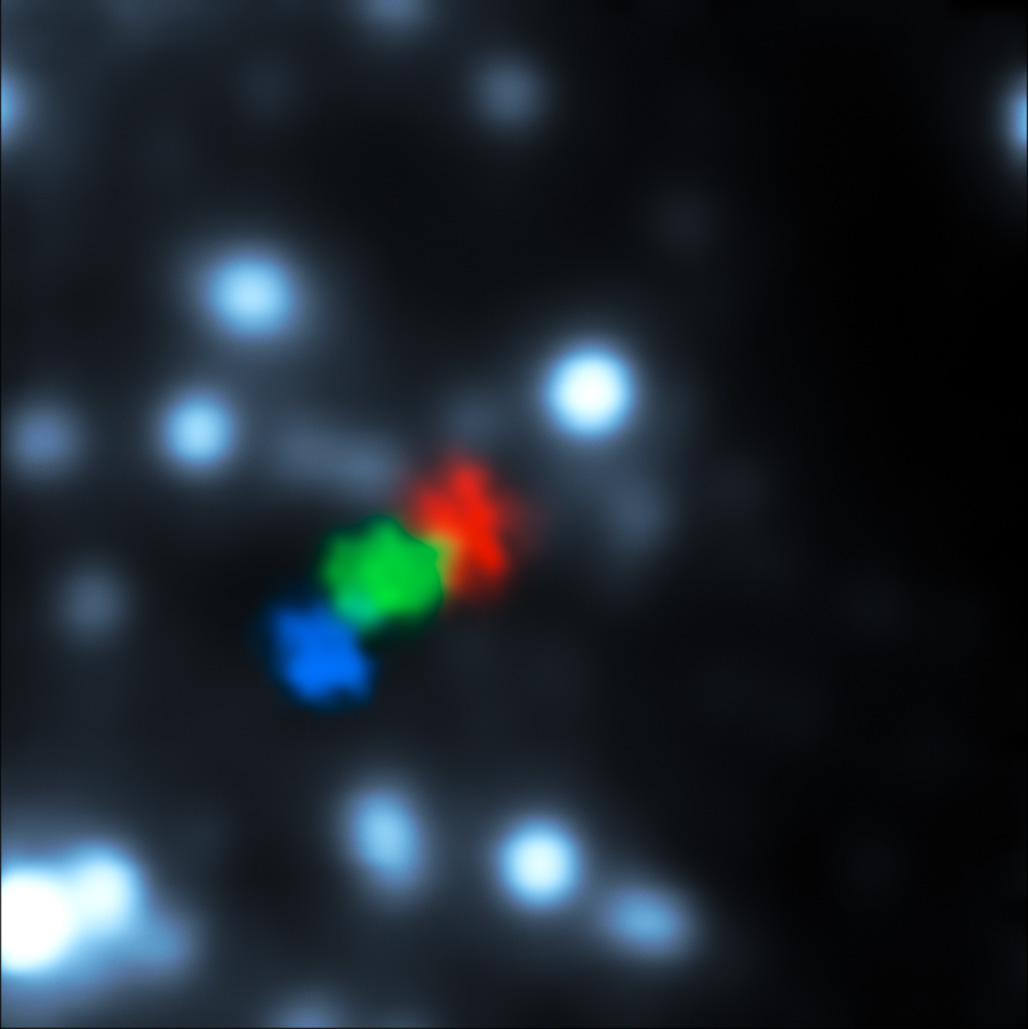
These giants have masses above a million Suns, and they are believed to exist in the centers of almost every large galaxy, including the Milky Way. The compact radio source Sagittarius A* at the center of our galaxy contains a supermassive black hole of about 4.3 million solar masses.
These central black holes can be quiet, or they can become spectacularly bright if they are actively feeding. When gas falls inward, it forms an accretion disk: a flattened, rotating disk of infalling matter. Friction heats this material until it emits intense radiation. In the most extreme cases, the result is a quasar, one of the brightest kinds of objects in the universe.
Feeding and mergers: how black holes grow up
Forming a black hole is only the beginning. Growth can continue in two major ways.
The first is accretion, meaning a black hole absorbs matter from its surroundings. Gas spiraling inward through an accretion disk heats up and radiates strongly, especially in X-rays. This process can convert a significant fraction of the matter’s mass into energy before the material reaches the black hole.
The second is mergers. Black holes can collide and combine with stars, neutron stars, or other black holes. Mergers are thought to have been especially important in the early growth of supermassive black holes. In recent years, merging black holes have been detected directly through the gravitational waves they emit. These are ripples in spacetime produced by accelerating massive objects.
This combination of feeding and merging helps explain how a black hole that begins modestly can become enormous over cosmic time.
Direct collapse: skipping the usual stellar route
One of the most intriguing formation ideas is direct collapse. In this scenario, a large gas cloud falls inward fast enough to form a black hole without first settling down into an ordinary star.
This idea has become especially important because of a major cosmic puzzle: extremely bright quasars existed less than a billion years after the Big Bang. That is surprisingly early. Standard growth by ordinary accretion may not be fast enough to build such huge black holes from small stellar remnants in that short time.
A proposed solution is that the early universe could produce very large seed black holes through direct collapse of nearly pure hydrogen gas clouds with low metallicity. Metallicty here means the abundance of elements heavier than helium. In the young universe, gas had very few of those heavier elements. Under the right conditions, a supermassive star could form and then collapse into a black hole, or a gas cloud might collapse more directly.
Some suggested seed black holes from this route could begin with masses around 10⁵ solar masses. Starting that big would make it much easier to grow into the billion-solar-mass engines of early quasars.
There is a catch: such large gas clouds tend to fragment into many smaller stars instead of collapsing into one giant object. That instability is one reason the problem remains open.
Too big, too soon: the early quasar mystery
The appearance of ultraluminous quasars at redshift around 7 is one of the biggest clues that black hole formation may have more than one path. Redshift is a way astronomers measure how far away, and therefore how far back in time, an object is. A redshift near 7 corresponds to a time less than a billion years after the Big Bang.
These early quasars are powered by supermassive black holes, but explaining how they became so massive so quickly is difficult. Several possibilities have been explored:
- direct-collapse black holes that start out already massive
- mergers of smaller black holes
- unusually rapid accretion
- primordial black holes formed in the early universe
Another key concept here is the Eddington limit. This is the approximate rate at which the outward pressure of radiation from infalling, heating gas becomes strong enough to resist further infall. In simple terms, it is a usual speed limit on how fast a black hole can feed. If early black holes grew beyond this limit for extended periods, that would help explain the giant quasars. Growth faster than this usual limit is called super-Eddington accretion.
Some models suggest dense gas in the accretion flow may reduce the effectiveness of outward radiation pressure, allowing faster growth. But the issue is not fully settled.
Primordial black holes: older than stars?
Another possibility reaches back to the earliest moments of the cosmos. Primordial black holes are hypothetical black holes formed from density fluctuations in the early universe, before stars existed.
Soon after the Big Bang, some regions may have been denser than their surroundings. If the curvature of spacetime in such a region became large enough, it could collapse into a black hole. Different early-universe models predict a wide range of possible masses, from tiny values up to hundreds of thousands of solar masses.
These objects remain speculative, but they are especially interesting because high-mass primordial black holes could, in principle, help seed the supermassive black holes found in galaxies.
Very low-mass primordial black holes would have evaporated by now through Hawking radiation, the predicted process by which black holes slowly lose mass by emitting radiation. That means only sufficiently massive primordial black holes could still survive today.
Why almost every galaxy seems to have one
Modern observations indicate that supermassive black holes are widespread in galactic centers. In fact, nearly every galaxy appears to contain one. Their masses are also correlated with properties of the galaxies around them, especially the velocity dispersion and mass of stars in the central bulge. This connection is known as the M–sigma relation.
That correlation strongly suggests that galaxies and their central black holes grow together in some linked way. Black hole activity can even influence star formation. Winds from rapid accretion can compress nearby gas and accelerate star formation, or, if strong enough, blow gas out and quench it. Jets from black holes can also affect the hot gas in galactic cores.
So black holes are not just passive sinkholes hidden in galaxies. They may help shape how galaxies evolve.
From theory to evidence
For a long time, black holes were treated as a mathematical curiosity. That changed as theory matured and observations piled up.
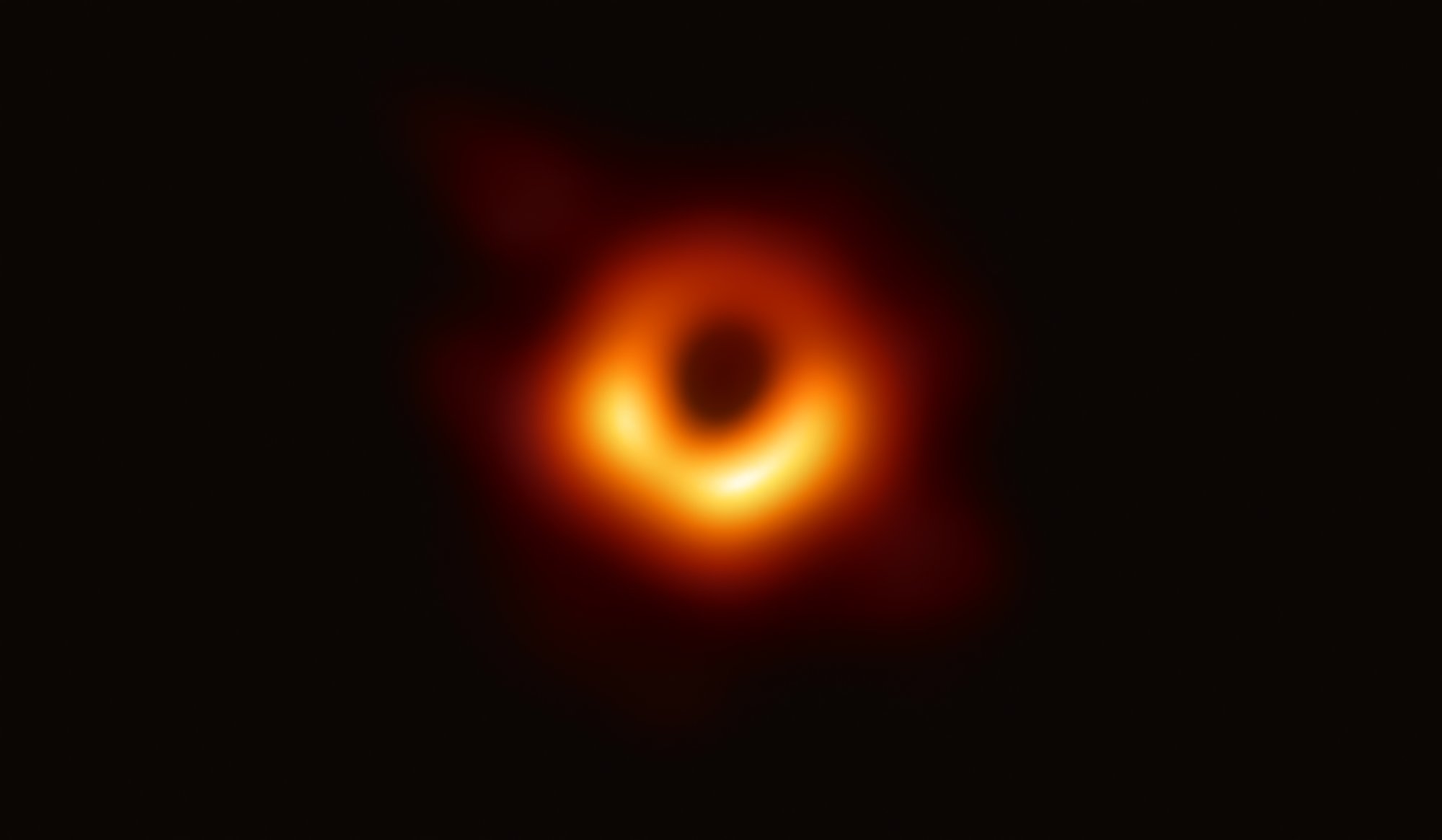
Cygnus X-1 became the first astronomical object widely accepted as a black hole in the early 1970s. Later, tracking the orbits of stars near Sagittarius A* provided strong evidence for a supermassive black hole in the Milky Way. More recently, gravitational-wave detections revealed black hole mergers directly, and the Event Horizon Telescope produced landmark images of the black holes in Messier 87 and Sagittarius A*.
Together, these discoveries show that black holes are not rare oddities. They are a major part of the universe’s architecture, with origin stories ranging from stellar collapse to possible direct-collapse seeds and perhaps even primordial beginnings.
The big picture
Black holes are not all born the same. Some are the final act of massive stars. Some may arise when gas clouds collapse without ever becoming normal stars. Some grow gradually by feeding, while others bulk up through mergers. And the earliest quasars hint that the universe may have found especially efficient ways to make giant black holes very quickly.
That is what makes black hole origins so compelling: every newly found black hole is also a clue about cosmic history. From dying stars to quasar giants, their birth stories trace how gravity built some of the most dramatic objects in existence.
Sources
Based on information from Black hole.
More like this
Fall into a knowledge accretion disk — download DeepSwipe and let your curiosity grow from tiny seed to quasar-bright.