Full article · 8 min read
Deities and Gender Across Cultures
When people imagine a god, many instinctively picture a male figure. But religious history is far more varied than that. Across cultures, deities have been described as male, female, both male and female, or beyond gender altogether. Even the words people use for divine beings have shifted over time, shaped by language, ritual, and changing religious traditions.
This wider view matters because ideas about divine gender are never just about grammar. They influence how communities imagine power, creation, fertility, justice, nature, and the structure of the universe itself.
Why divine gender varies so much
A deity is broadly understood as a supernatural being with authority over some aspect of life or the universe, and many are regarded as sacred and worthy of worship. But there is no universal rule for how a deity must be imagined. Not every god is all-powerful, all-knowing, or eternal, and not every god is gendered in the same way.
Some monotheistic religions traditionally refer to God in masculine terms. But that does not mean all religious traditions do the same. In many cultures, deities appear in a much wider range of forms: gods, goddesses, male-female pairs, and beings described as hermaphroditic or genderless.
This diversity reflects a larger truth: people in different societies have understood the divine through their own languages, symbols, and social values. Some personified the sun, moon, fertility, war, water, or justice. Others described deities as ethical concepts, natural forces, or realities present within living beings.
Masculine language in monotheistic traditions
Many monotheistic religions have commonly used masculine terms for God. In Judaism, God is referred to as “He,” and one explanation given is linguistic: Hebrew has no neuter form, and the word for God is grammatically masculine. In Christianity, God the Father is central to mainstream formulations of the Trinity, alongside God the Son and the Holy Spirit. In Islam, Allah is the one indivisible God, and Islamic belief is strictly monotheistic.
Yet even where masculine language dominates, the idea of deity is not defined by maleness itself. A deity does not have to possess any single fixed set of characteristics in order to count as a deity. Across cultures, divine beings have been imagined in many other ways.
Female deities are central, not secondary
In many traditions, goddesses are not minor figures on the sidelines. They are creators, protectors, and guardians of crucial parts of life.
Ancient Egypt revered many female deities, including Neith, a creator goddess, and Nut. Egyptian religion linked deities to natural phenomena, physical objects, and social life, often as hidden forces within them.
In the ancient Near East, the Canaanite pantheon included Asherah as consort of El, while Anat was a goddess of war and Astarte a goddess of love. In the Inca tradition, Mama Qucha was the goddess of the sea, lakes, rivers, and waters, while Mama Killa was a moon goddess and Mama Sara a goddess of grain.
Maya religion included Ixchel, a benevolent female deity associated with earth, weaving, and pregnancy. In the Yoruba tradition, Osun was an immensely powerful feminine deity connected with fertility, water, maternal life, health, social relations, love, and peace.
These examples show that femininity in divine form has often been associated not just with nurturing, but with authority, creation, and cosmic significance.
The Yoruba model of paired powers
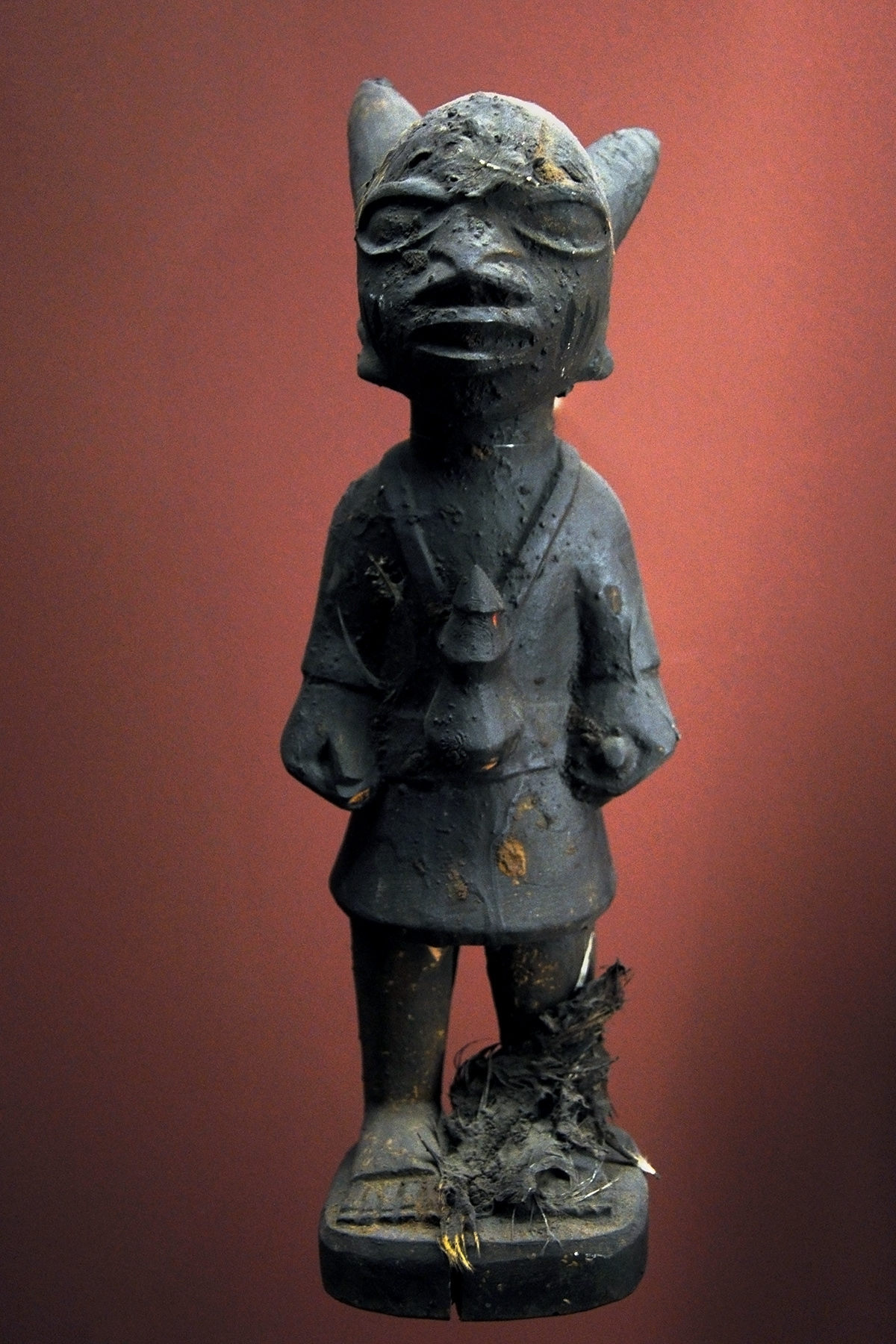
One striking example of divine gender balance comes from the Yoruba religion of West Africa. Two especially prominent deities are Ogun and Osun.
Ogun is a primordial masculine deity. He is connected with tools, metal working, hunting, war, protection, and the ascertaining of equity and justice. In simple terms, “primordial” here means deeply original or ancient within the religious worldview, and “ascertaining equity and justice” points to a role in recognizing or upholding fairness.
Osun is an equally powerful primordial feminine deity. She is a guardian of fertility, water, maternal life, health, social relations, love, and peace. Rather than being a lesser counterpart, she stands as a multidimensional divine power in her own right.
Together, Ogun and Osun illustrate a pattern seen in many cultures: masculine and feminine divine forces can be complementary rather than oppositional. Their traditions were also carried across the Atlantic on slave ships and preserved in plantation communities in the Americas, where their festivals continue to be observed.
When the Sun is female and the Moon is male
Many people assume the sun is imagined as male and the moon as female. But African traditions show that these roles can reverse.
In one Southern African cosmology, the supreme deity includes Nladiba, a male creator sky god, and Nladisara, his two wives. The Sun is female and the Moon is male, and both are viewed as offspring of these divine beings. They are also seen as manifestations of the supreme deity, and worship is directed toward them.
Elsewhere in Africa, the pattern can flip again: in some cultures the Sun is male and the Moon female. This swapping of genders is a reminder that divine symbolism is not fixed by nature. Different peoples can look at the same sky and tell very different sacred stories.
Mwari: a deity with male and female aspects
In Zimbabwe, the supreme deity Mwari Shona is envisioned as androgynous, with both male and female aspects. “Androgynous” means combining male and female characteristics in one being rather than fitting neatly into one category.
Mwari is described as the giver of rain and is treated simultaneously as the god of darkness and light. That combination is especially revealing. Instead of dividing reality into separate male and female divine camps, Mwari gathers opposites into one sacred power.
This kind of deity challenges rigid assumptions about gender. A supreme being can be understood not as exclusively male or female, but as containing or expressing both.
Language changes the gender of gods
Sometimes divine gender is shaped not only by theology, but by grammar and history.
The English word deity comes through Old French and Latin from a term meaning “divine nature,” linked to a Proto-Indo-European root associated with shining. Related words appear across ancient languages. The Sanskrit deva means a shining or heavenly being, while devi is its feminine equivalent.
The history of the word god is also revealing. In early Germanic languages, words cognate with “god,” such as Old English god and Old Norse guð, were originally neuter nouns. “Neuter” means neither masculine nor feminine in grammatical gender. Later, under the influence of Christianity, these words shifted toward being generally masculine because the Christian god was typically seen as male.
That shift is important. It shows that even the gender of divine language is not timeless. It can be reshaped by religious change. Earlier Indo-European cultures recognized both masculine and feminine deities, but later usage in Germanic languages became more male-centered.
Gender diversity beyond male and female
Some traditions go beyond a simple masculine-feminine split. The broader history of religion includes deities described as hermaphroditic or genderless.
“Hermaphroditic” in this context refers to having both male and female aspects or traits. “Genderless” means not being classified as male or female at all. These categories matter because they show that divine identity is not always imagined through the same social boxes used for human beings.
The article’s overview makes clear that cultures have referred to their deities in a variety of ways: male, female, hermaphroditic, or genderless. That diversity suggests that people often use divine figures to imagine realities larger and stranger than ordinary human categories.
Gender and the roles gods play
Divine gender is often connected to what a deity governs, but the link is never universal.
In some traditions, female deities are tied to fertility, water, pregnancy, harvest, weaving, or love. Male deities may be linked to war, sky, tools, protection, or hunting. But there are many exceptions. The female Sun and male Moon in parts of Africa overturn familiar patterns. Mwari unites male and female aspects in one supreme being. In other cases, deities are not primarily defined by gender at all, but by their function, such as justice, air, perception, or the afterlife.
This means gender in religion is symbolic, flexible, and culturally specific. It may reflect social structures, but it also often stretches beyond them.
A wider way to think about the divine
Looking across cultures, one lesson stands out: there has never been just one way to imagine a deity. Some traditions emphasize a single God and use masculine terms. Others honor goddesses as creators and protectors. Some pair male and female powers. Some envision a supreme being with both aspects at once. And some allow for divine forms that are neither straightforwardly male nor female.
The result is a much richer picture of religious imagination. Divine gender is not a universal constant. It is a cultural choice, a linguistic habit, a theological idea, and sometimes a mystery.
If you grew up thinking all gods are “He,” history offers a fascinating correction: the sacred has worn many faces.
Sources
Based on information from Deity.
More like this
Swipe past one-size-fits-all ideas of the divine — download DeepSwipe and discover how wide the world’s imagination really is.