Full article · 6 min read
Humans and Trade: How Exchange Helped Shape Our World
Trade is one of the clearest behaviors that sets humans apart. The voluntary exchange of goods and services did more than move objects from one place to another: it helped spread ideas, supported survival, and gave Homo sapiens a major advantage over other hominids. Long before digital payments and global markets, humans were already building connections across distance.
This story of trade is also a story of inequality. Exchange can enrich societies, expand knowledge, and create new opportunities. But it can also concentrate wealth unevenly, leaving some people with extraordinary power while many others are left with far less.
Why trade mattered so much for early humans
Evidence suggests that early Homo sapiens used long-distance trade routes to exchange both goods and ideas. That matters because trade was not just about obtaining useful materials. It also allowed people to share techniques, knowledge, and culture across groups.
In practical terms, this gave humans an edge. Trade could provide extra food sources when hunting was sparse, reducing risk in difficult times. It also helped move valuable materials over long distances. One example is obsidian, a volcanic glass often used for making tools. Access to materials like this could improve toolmaking and, in turn, daily survival.
What makes this especially striking is the contrast with Neanderthals. The evidence described here suggests that the kinds of long-distance trade networks seen in early H. sapiens did not exist for Neanderthals. That difference may have contributed to the broader success of Homo sapiens.
Trade was never only about objects
Human beings are highly social and tend to live within layered networks of groups, from families to states. Trade fit naturally into that social world. Exchanging goods also meant exchanging trust, relationships, and information.
Because humans are curious and constantly build knowledge across generations, trade likely worked as a channel for cultural growth as much as for economic gain. New ideas could travel with travelers, tools, and materials. In that sense, trade helped connect separate communities into larger human systems.
This helps explain why trade has been linked to cultural explosions. When goods and ideas moved together, societies could change faster. Innovations spread. Techniques improved. Communities gained access not only to resources, but to new ways of thinking.
The earliest economies may have been based on gifts
Modern people often imagine economics beginning with prices, markets, and money. But early human economies were more likely organized around gift giving rather than a simple bartering system.
Gift giving is exactly what it sounds like: the exchange of items or resources as part of social relationships, obligation, or reciprocity. Rather than every interaction being a direct swap of one thing for another, people may have built networks of mutual support through giving and receiving over time.
This fits well with human social life. Humans organize themselves through kinship, social roles, and obligations within groups. In that kind of setting, economic exchange is not purely transactional. It is also about status, trust, alliance, and belonging.
From cattle and shells to digital money
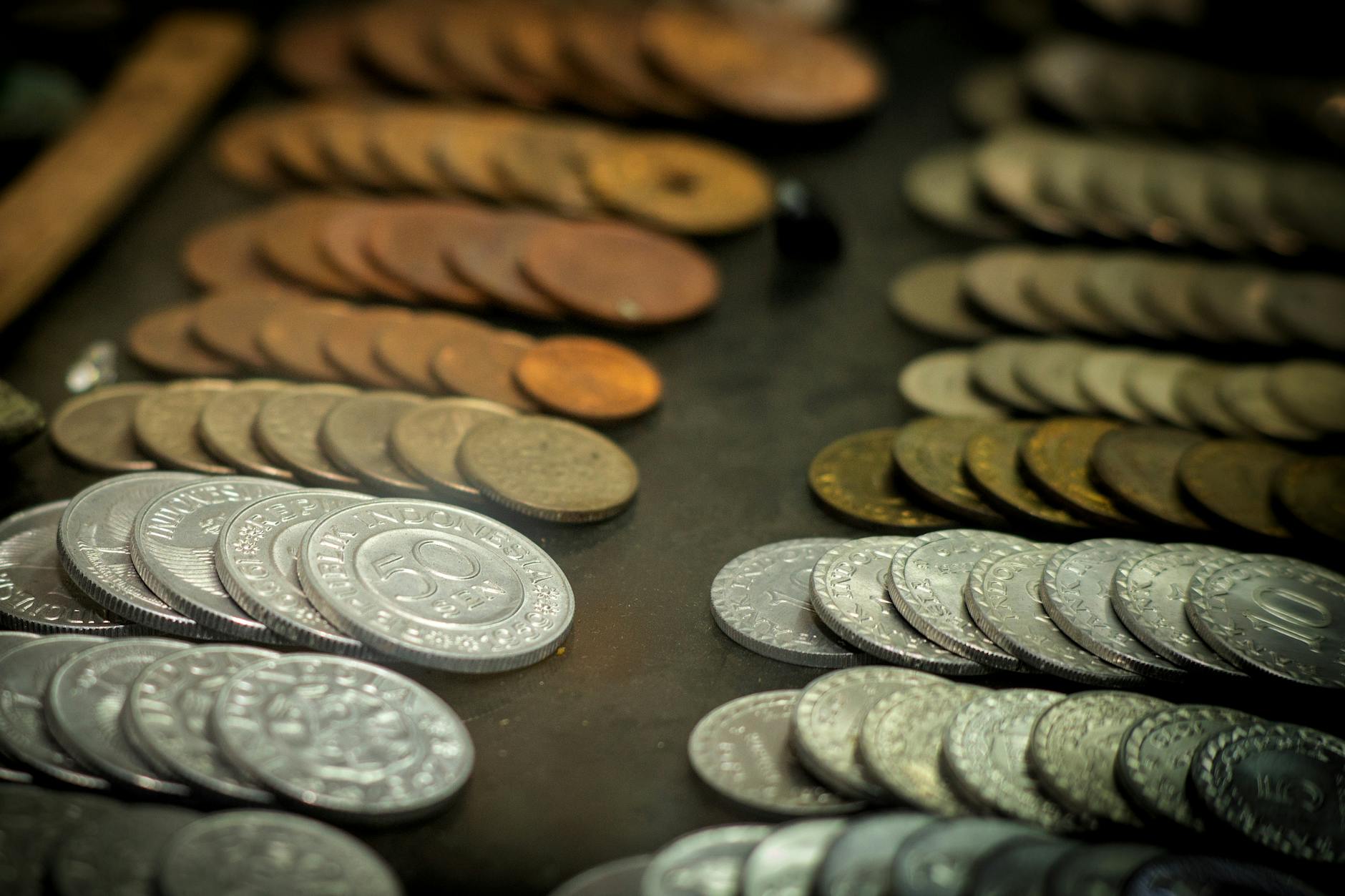
Money came later, and its forms changed dramatically over time. The oldest money included commodities, with cattle among the earliest examples. A commodity is a useful good that can itself function as something of value.
One of the most widely used forms of early money was the cowrie shell. These small sea shells were used across large regions and became a recognized means of exchange.
Over time, money evolved into government-issued coins, paper money, and eventually electronic money. That progression reflects a larger pattern in human history: people continually build on previous knowledge to develop more complex tools, systems, and institutions.
Money made exchange easier across larger populations and distances. As human societies grew from small bands into settlements, cities, states, and international systems, economic life needed more standardized ways to store and transfer value.
Trade routes grew into international systems
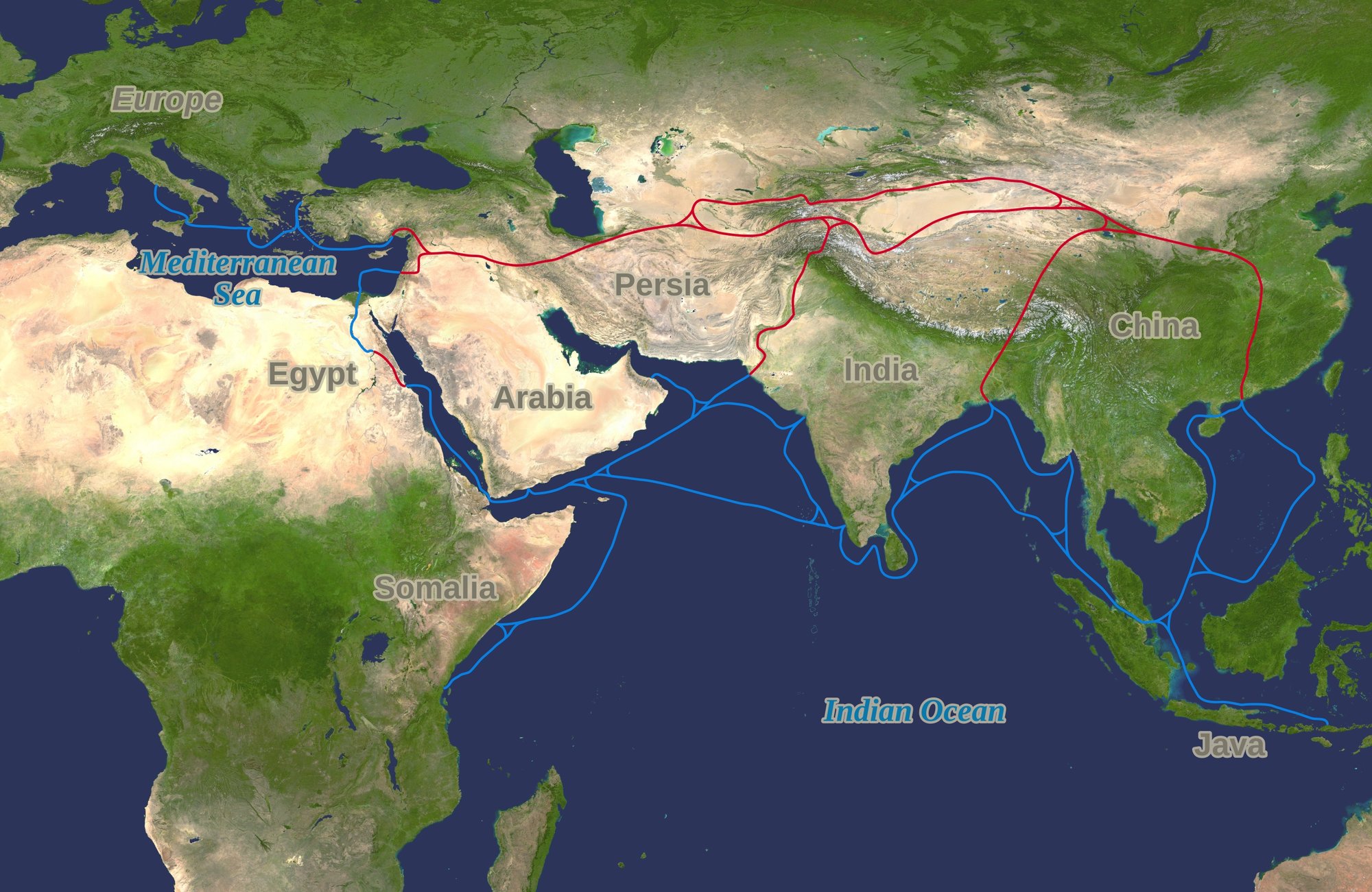
As civilizations expanded, trade networks expanded with them. The first truly international trade routes were connected to the spice trade during the Roman and medieval periods.
A trade route is a recurring path used to move goods between regions. Once routes became international, exchange linked distant societies in more sustained ways. Trade could tie together regions with different climates, resources, technologies, and cultures.
This was part of a much larger human pattern. Over time, settlements became denser, civilizations emerged, and governments formed. As communities grew, so did the need to manage resources, relationships, and exchange. Trade was not separate from this process; it was woven into it.
Trade as a human advantage
Trade has been cited as a practice that gave Homo sapiens a major advantage over other hominids. That claim makes sense when placed beside other human traits.
Humans are exceptionally adaptable. They live in nearly all regions of the world and use tools, planning, and social cooperation to survive in varied environments. Trade amplified that adaptability. A group did not have to rely only on what was immediately available nearby if exchange could bring in needed materials or resources from elsewhere.
Humans also transmit knowledge from one generation to the next and build on it. Trade helped accelerate that process by connecting different groups. A useful idea discovered in one place could spread to another. That ability to accumulate and circulate knowledge is one of the foundations of human success.
The darker side: inequality
Trade can create wealth, but wealth is not shared equally. Human societies have always included differences in income, wealth, power, and status. In the modern world, those inequalities can be enormous.
One stark example captures this imbalance: the eight richest humans are worth the same monetary value as the poorest half of all the human population. That is an extraordinary concentration of wealth.
Economics, the social science that studies how societies distribute scarce resources among different people, helps us understand this problem. Resources are limited, but the ways they are distributed are shaped by institutions, power, and historical processes. Trade can increase total wealth, yet still leave major gaps between those who benefit most and those who do not.
Trade connects, but not everyone gains equally
This is the central tension. Trade connects societies. It spreads goods, ideas, and opportunities. It can help people survive scarcity, improve tools, and create complex civilizations. But trade does not automatically produce fairness.
Humans form societies with stratification, meaning layers defined by wealth, power, and reputation. In some societies, movement between those layers is easier than in others. When trade expands within unequal systems, its rewards can collect at the top.
That is why the question “Who benefits?” matters so much. Exchange can transform societies, but the outcomes depend on how those societies are organized and how resources are distributed.
A very human story
Trade is not just an economic mechanism. It is deeply tied to what humans are: social, curious, cooperative, inventive, and capable of building institutions that last across generations.
From early long-distance exchange routes to cattle, cowrie shells, coins, paper, and electronic money, trade traces a long arc of human development. It helped Homo sapiens spread ideas and survive challenges. It linked distant groups into larger worlds. And it also revealed a recurring truth about human society: progress and inequality often grow side by side.
To understand trade is to understand something essential about humanity itself — our ability to connect, create, accumulate, and divide.
Sources
Based on information from Human.
More like this
Swap idle scrolling for idea-trading — download DeepSwipe and make your next mental investment count.