Full article · 8 min read
Ford and the Rise of Mass Production
Mass production did not appear all at once as a single breakthrough. It emerged from a longer transformation in manufacturing, as industry moved from hand production to machine-based systems, then toward ever more organized, high-volume factory work. One of the most famous moments in that story came in the late 1910s and 1920s, when Henry Ford’s Ford Motor Company popularized mass production by combining electric motors with chain, or sequential, production.
What made this so powerful was not just the presence of machines. It was the way the entire factory was organized for speed, repetition, and volume. Instead of relying on general methods and flexible handwork, Ford’s system pushed toward a tightly ordered production flow where parts, tools, and machines were all arranged around the making of one product at enormous scale.
What mass production really means
Manufacturing is the production of goods using equipment, labor, machines, tools, and processing methods. In modern industry, it includes all the intermediate steps needed to produce and integrate parts into a final product. Mass production is one of the clearest expressions of that idea: making large quantities of goods through a system designed for efficiency and consistency.
By the time Ford’s methods became famous, manufacturing had already been reshaped by the Industrial Revolution and then by the Second Industrial Revolution. Earlier changes had brought machines, steam power, water power, machine tools, mechanized factories, and later the large-scale manufacture of machine tools. After 1870, another wave of innovations helped lay the groundwork for true large-scale industrial output, including new steel-making processes, assembly lines, electrical grid systems, and increasingly advanced machinery in factories.
Ford’s achievement fit directly into that wider trend. Mass production was not a stand-alone trick. It was part of a larger industrial system that had been building for decades.
Why electric motors mattered so much
A major reason mass production expanded in the early 20th century was electrification. Factories had started to adopt electricity gradually in the 1890s, especially after practical DC and AC motors became available. The shift happened fastest between 1900 and 1930, helped by electric utilities with central stations and lower electricity prices between 1914 and 1917.
Electric motors changed manufacturing in practical ways. They allowed more flexibility in factory layout and required less maintenance than line shafts and belts. A line shaft system used rotating shafts and belts to transfer power around a factory, which could make layouts more rigid and maintenance more demanding. Electric motors made it easier to place power where it was needed.
Many factories saw a 30% increase in output as they shifted to electric motors. That is the industrial environment in which Ford’s methods flourished. When Ford applied electric motors to chain or sequential production, the result was a much more fluid and organized system for turning out large numbers of identical products.
Ford’s factory logic: one job, one tool, one step after another
One of the most striking features of Ford’s manufacturing approach was its use of special-purpose machine tools and fixtures. A fixture is a holding device that keeps a part steady and precisely positioned while work is done on it. In high-volume manufacturing, that kind of precision matters because it reduces variation and speeds up each repeated task.
Ford bought or designed and built machine tools and fixtures made for very specific operations. These were not just generic machines doing a little of everything. They were built to do one task extremely well.
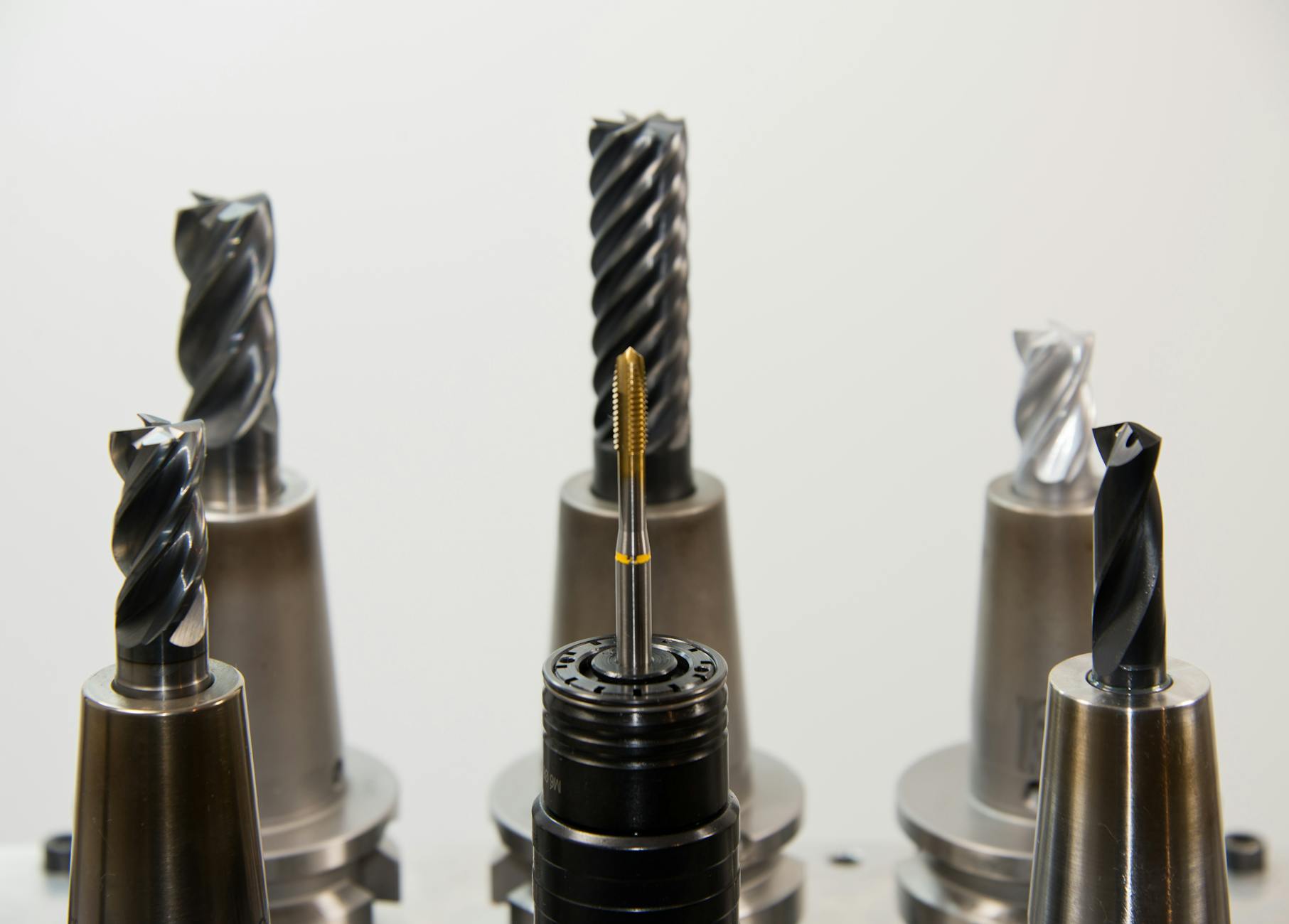
Some examples were especially dramatic. Ford used multiple spindle drill presses that could drill every hole on one side of an engine block in a single operation. A spindle is the rotating part of a machine that drives a cutting tool, so a multiple spindle drill press could work on several holes at the same time instead of one by one. Ford also used a multiple head milling machine that could simultaneously machine 15 engine blocks held on a single fixture. Milling is a machining process in which a rotating cutter removes material to shape a part. Doing that to 15 engine blocks at once shows just how aggressively the system was optimized for output.
This was the heart of Ford-style mass production: break work into repeatable steps, build machines around those steps, and remove as much wasted motion and delay as possible.
The production line as a system
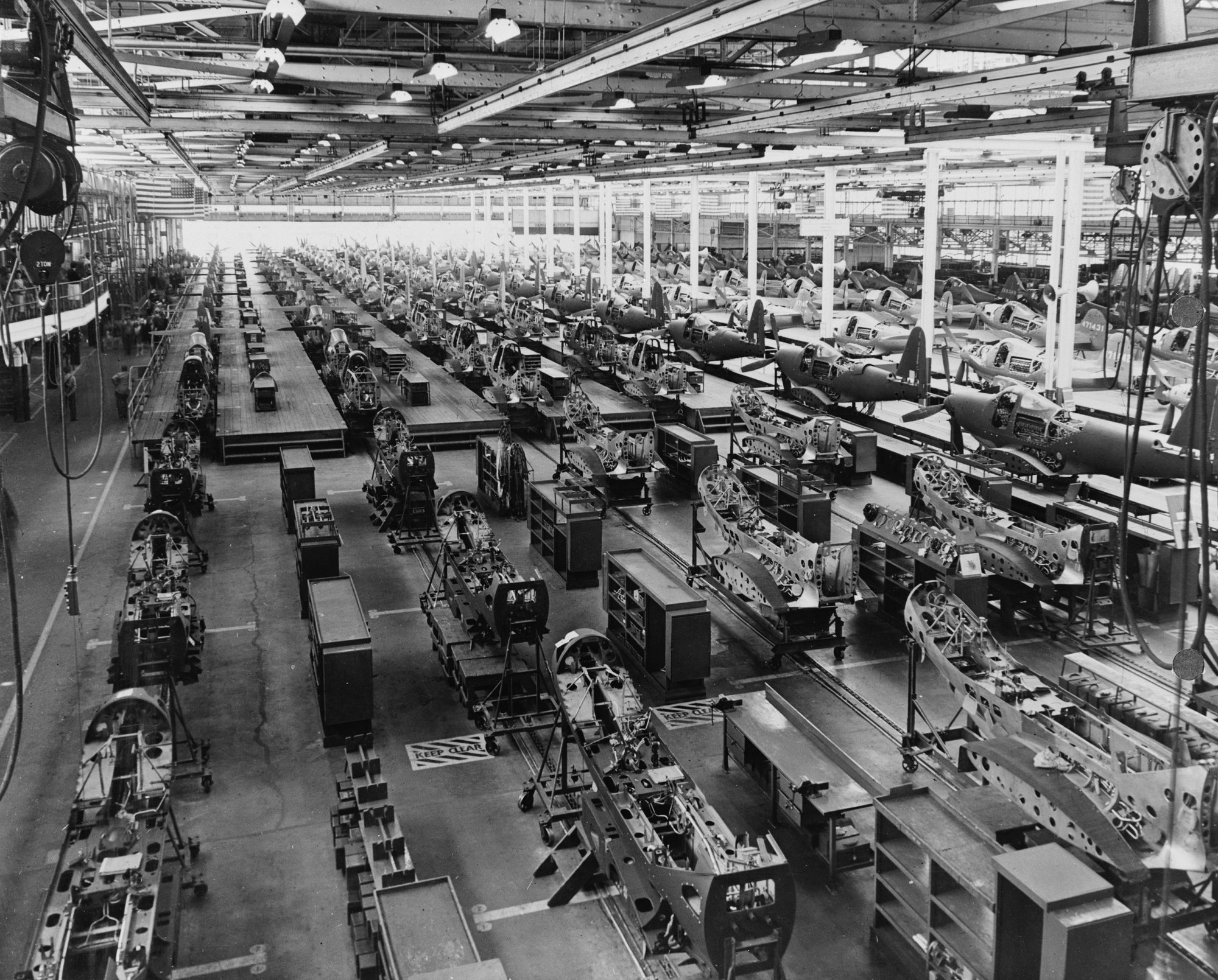
Ford’s real genius was not only in individual machines, but in how those machines were arranged. The tools were organized systematically in the production flow. That means they were placed in the order the work needed to happen, so parts moved from one stage to the next with as little interruption as possible.
In that sense, the line itself became a kind of machine. Manufacturing was no longer just about a worker operating a single tool or even about a factory filled with separate machines. It became about choreography: the timing, order, and movement between machines, parts, and operations.
Some of Ford’s equipment even used special carriages for rolling heavy items into machining positions. A carriage in this context is a movable support or platform that helps position large parts where they need to be worked on. This mattered because heavy industrial parts are slow and difficult to handle. If moving them takes too long, production slows. If they can be rolled directly into place, the whole line runs faster.
That is why mass production is best understood as an ecosystem. It includes machine tools, fixtures, transport methods, factory layout, power systems, and production sequencing all working together.
The astonishing scale of the Model T system
Nothing captures the scale of Ford’s approach better than one number: production of the Ford Model T used 32,000 machine tools.
That figure reveals something important. Mass production was not simply an assembly line with a few clever devices. It was a vast industrial structure built around one product. To make a product relentlessly well, over and over again, Ford’s system relied on thousands upon thousands of specialized tools organized into a larger manufacturing network.
This also reflects a broader reality of manufacturing: high output often depends on large industrial machinery and carefully planned production systems. In many industries, manufacturing is not just about raw materials and labor. It also requires the installation, arrangement, and coordination of major equipment.
How Ford fits into manufacturing history
Ford’s popularity helped define mass production for the modern imagination, but his success grew out of deeper manufacturing trends. The Industrial Revolution had already shifted production from hand methods to machines. The Second Industrial Revolution had added new steel processes, assembly lines, electrical systems, and machine-tool manufacturing on a larger scale.
Electrification then gave factories more flexibility and power. In other industries, automated systems were already replacing older craft labor. At the Ball Brothers Glass Manufacturing Company, for example, glass blowing machines replaced 210 craftsman glass blowers and helpers, while electric trucks, mixers, and cranes dramatically changed the movement of materials and heavy loads inside the factory. Ford’s system belongs to this same era of industrial reorganization, when factories became increasingly automated, electrified, and optimized for output.
What made Ford stand out was the intensity with which he integrated these ideas. Electric motors, sequential production, special-purpose machinery, and tightly ordered production flow were all brought together into a system that made mass production famous.
Why this mattered beyond cars
Mass production changed more than automobile manufacturing. It demonstrated that manufacturing performance could be transformed by focusing on process design as much as product design. In manufacturing engineering, the process by which raw materials become a final product is just as important as the product itself. Ford’s methods showed that organizing the steps of production could unlock enormous gains in volume and speed.
This insight connects to larger ideas in manufacturing strategy. Manufacturing performance is often assessed across dimensions such as cost, quality, dependability, flexibility, and innovation. Ford’s model became iconic because it pushed cost reduction and output to remarkable levels through specialization and flow.
It also showed one of the enduring truths of industry: sometimes the biggest breakthroughs do not come from inventing a completely new machine, but from arranging existing machines, power systems, and operations into a better whole.
Mass production as an ecosystem
The story of Ford and the Model T is often told as if one invention changed everything. But the real lesson is more interesting. Mass production was a whole ecosystem built to make one product relentlessly well.
It depended on electrified factories, machine tools designed for single operations, fixtures that held parts in exactly the right place, systematic production flow, and equipment for handling heavy components efficiently. It turned the factory into a coordinated sequence rather than a loose collection of machines.
That is why Ford’s system became so influential. It captured a new industrial logic: when every tool, every movement, and every step is arranged for repetition and volume, manufacturing stops looking like isolated acts of making and starts looking like a machine made of machines.
Sources
Based on information from Manufacturing.
More like this
Like a Model T assembly line for your curiosity, keep the knowledge flowing — download DeepSwipe today.