Full article · 6 min read
Manufacturing Before Factories
When people hear the word manufacturing, they often picture smokestacks, assembly lines, and huge industrial buildings. But the story starts far earlier than factories. Manufacturing began when early humans learned to take raw material from the world around them and deliberately turn it into useful objects.
That basic idea is the same one that still defines manufacturing today: transforming materials into products. Long before engines, electricity, or machine tools, humans were already doing exactly that with stone, bone, wood, and later metals.
The first manufactured tools
The earliest known stone tool making, called the Oldowan industry, dates back at least 2.3 million years ago. Direct evidence of tool usage has been found in Ethiopia within the Great Rift Valley and dates to 2.5 million years ago. That means manufacturing is older than Homo sapiens, which emerged about 200,000 years ago.
These first tools were not random broken rocks. To make a stone tool, early humans selected a hard stone with useful flaking properties, such as flint, and struck it with a hammerstone. This removed pieces from the core and created sharp edges. Those edges became practical tools, often choppers or scrapers.
Even this simple process shows a key manufacturing principle: choosing a material for its properties, applying a method, and producing a tool suited to a task. In this case, the task was survival. Sharp-edged tools helped hunter-gatherers process food and shape softer materials such as bone and wood.
From hitting stone to planning stone
Over time, prehistoric manufacturing became more sophisticated. By the Middle Paleolithic, around 300,000 years ago, people used what is known as the prepared-core technique. Instead of striking stone in a rough, one-step way, they shaped a core in advance so that multiple blades could be produced quickly from a single stone.
This was a major leap in efficiency. Rather than simply making one tool at a time by chance or brute force, people were planning ahead. They were organizing the material so it could yield several useful cutting pieces. In modern terms, that sounds a lot like process optimization.
Another important advance was pressure flaking, developed during the Upper Paleolithic beginning about 40,000 years ago. In pressure flaking, a wood, bone, or antler punch was used to press off very small flakes and shape stone with much finer control. That allowed tools to be refined more precisely than by heavy striking alone.
The difference matters because it shows that early manufacturing was not just about making something usable. It was also about improving accuracy, control, and repeatability.
The Neolithic shift to polished tools
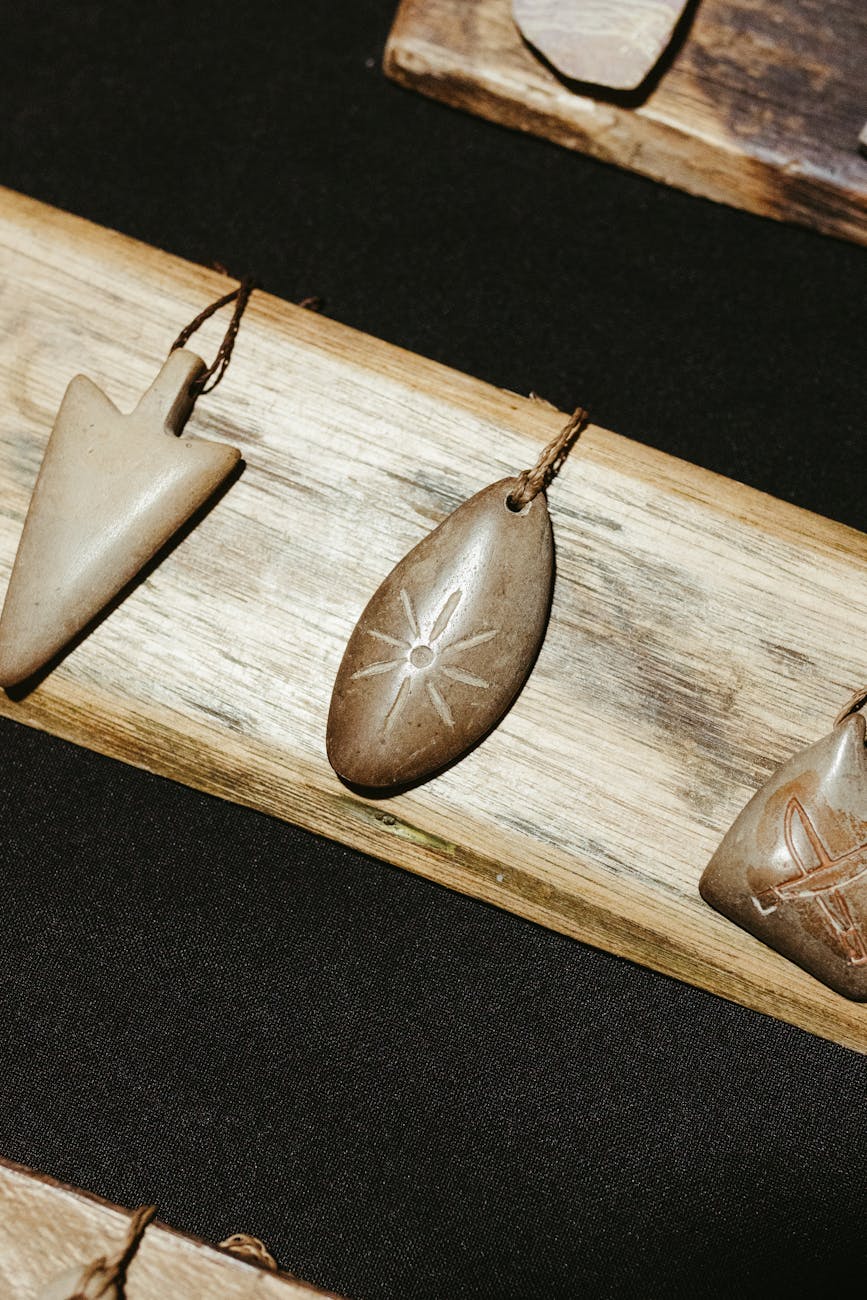
During the Neolithic period, stone tools became more varied and more carefully finished. People manufactured polished tools from hard rocks including flint, jade, jadeite, and greenstone. These materials were shaped into polished axes and used alongside projectiles, knives, and scrapers.
The Neolithic is often described as the later part of the Stone Age, when people began farming and making more polished tools. That change in lifestyle likely increased the need for dependable, durable implements. A polished axe, for example, represents more work than a roughly chipped stone, but also a more advanced level of manufacturing skill.
What makes this stage especially interesting is that humans were not limited to one material. Stone remained important, but tools were also manufactured from wood, bone, and antler. That broader use of materials suggests growing knowledge of what each substance could do best.
Manufacturing is older than civilization
One of the most striking things about early manufacturing is that it did not wait for cities, kingdoms, or industrial systems. It existed long before ancient civilizations rose.
Humans and their ancestors were already solving practical production problems in prehistory. They had to identify raw materials, understand their physical behavior, shape them with available techniques, and make objects that could be used again and again. That is manufacturing in its most essential form.
The later growth of civilization built on this foundation. As ancient societies developed, advances in manufacturing supported new technologies. In Mesopotamia, several of the classic simple machines were invented. The wheel and axle mechanism first appeared with the potter's wheel in Mesopotamia during the 5th millennium BC. In Egypt, papyrus paper and pottery were mass-produced and exported around the Mediterranean basin. Ancient Egyptian builders used bricks made mainly of clay, sand, silt, and other minerals.
These developments were still part of the same deep story: people taking available materials and reshaping them into useful forms.
Why the earliest tools mattered so much
A sharp stone may seem humble compared with later achievements like steel, factories, or electric motors. But those first tools changed human life in powerful ways. They allowed early humans to cut, scrape, shape, and build more effectively. They also made it easier to manufacture other objects from softer materials.
That creates an important chain reaction. A tool is not just a product. It can also be a way to make more products. Once humans had cutting and scraping tools, they could work bone and wood more effectively, which expanded the range of what they could produce.
This is one reason manufacturing became so central to human development. It is not only about making finished goods. It is also about improving the ability to make the next generation of goods.
Before factories, there was process
Factories are only one chapter in manufacturing history. The Industrial Revolution later transformed production through machines, steam power, mechanized factories, and eventually mass production. But the basic logic of manufacturing had already existed for millions of years.
Even in prehistory, people were working through recognizable production steps:
- selecting a raw material
- shaping it with a technique
- refining it for better performance
- using tools to create other useful things
That sequence is remarkably close to how manufacturing is still described today. Modern manufacturing begins with design and materials specification, and then those materials are modified through a process to become the desired product. The tools and scale are very different now, but the underlying idea is ancient.
Ingenuity before industry
The phrase “before factories” is important because it reminds us that manufacturing did not appear suddenly with modern industry. It emerged from human ingenuity.
Early toolmakers had no electric motors, no machine tools, no assembly lines, and no industrial design departments. What they did have was observation, experimentation, and skill. They learned that certain stones fractured in useful ways. They discovered that a prepared core could yield multiple blades. They developed pressure flaking for fine shaping. They polished hard stone into stronger, more finished tools. And they expanded beyond stone into wood, bone, and antler.
In other words, they were already improving materials, methods, and output long before any factory existed.
The oldest manufacturing lesson
The oldest lesson in manufacturing may be the simplest one: usefulness can be made.
A rock in the ground is just raw material. Strike it correctly, shape it carefully, and it becomes a cutting tool. A piece of bone or wood can become part of another tool. A hard stone can be polished into an axe. This act of transformation is one of humanity's oldest and most important skills.
So while modern manufacturing is often associated with industrial scale, its roots are deeply human and astonishingly old. It began with a sharp rock, but it quickly became something much bigger: a way of reshaping the world to meet human needs.
Sources
Based on information from Manufacturing.
More like this
From sharp rocks to sharp facts — download DeepSwipe and keep manufacturing more knowledge every day.