Full article · 7 min read
World War II: From Victory to the Cold War
When World War II ended in 1945, the fighting stopped, but global tension did not. The collapse of Nazi Germany and the surrender of Japan transformed the balance of power across the world. Old empires were weakened, new international institutions were created, and two countries in particular emerged with unmatched influence: the United States and the Soviet Union. What followed was not another world war, but a long era of rivalry, military pressure, political division, and indirect conflict known as the Cold War.
The end of the war changed the world order
World War II was the deadliest conflict in history, causing the deaths of 60 to 75 million people. It devastated economies, destroyed cities, uprooted populations, and shattered the political dominance of many traditional European powers. In the wake of that destruction, the global system had to be rebuilt.
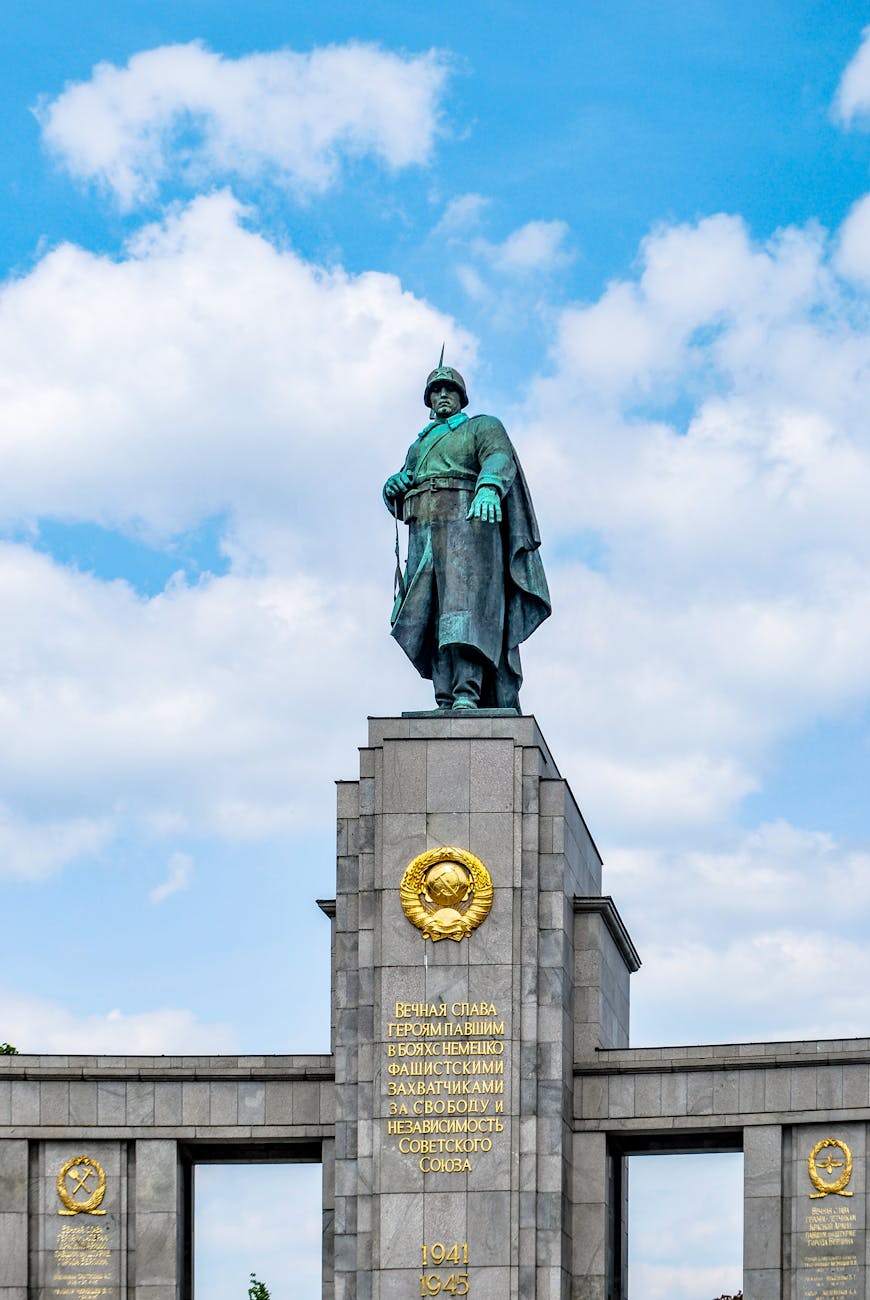
The end came in stages. Germany surrendered unconditionally in May 1945 after the fall of Berlin to Soviet troops. In Asia, Japan surrendered in August 1945, with the formal surrender document signed on 2 September 1945. After victory, Germany, Austria, Japan, and Korea were occupied, and German and Japanese leaders were tried for war crimes.
But the peace did not restore the old world. Instead, it opened the door to a new one.
The United States and the Soviet Union became rival superpowers
One of the biggest consequences of the war was the rise of the United States and the Soviet Union as rival superpowers. A superpower is a state with enormous military, political, and economic influence beyond its own borders. Before the war, Europe had contained several great powers that shaped world politics. After the war, Europe was devastated, and its influence waned.
The alliance between the Western Allies and the Soviet Union had already begun to deteriorate before the war was even over. Once their common enemies were defeated, their differences became impossible to ignore. The Soviet Union and the United States emerged from the war with tremendous power, and their rivalry set the stage for the Cold War.
This rivalry shaped international relations for the rest of the 20th century and even into the 21st. It was marked not by direct full-scale war between the two superpowers, but by political confrontation, military competition, and struggles for influence across the globe.
The United Nations was created to prevent future catastrophe
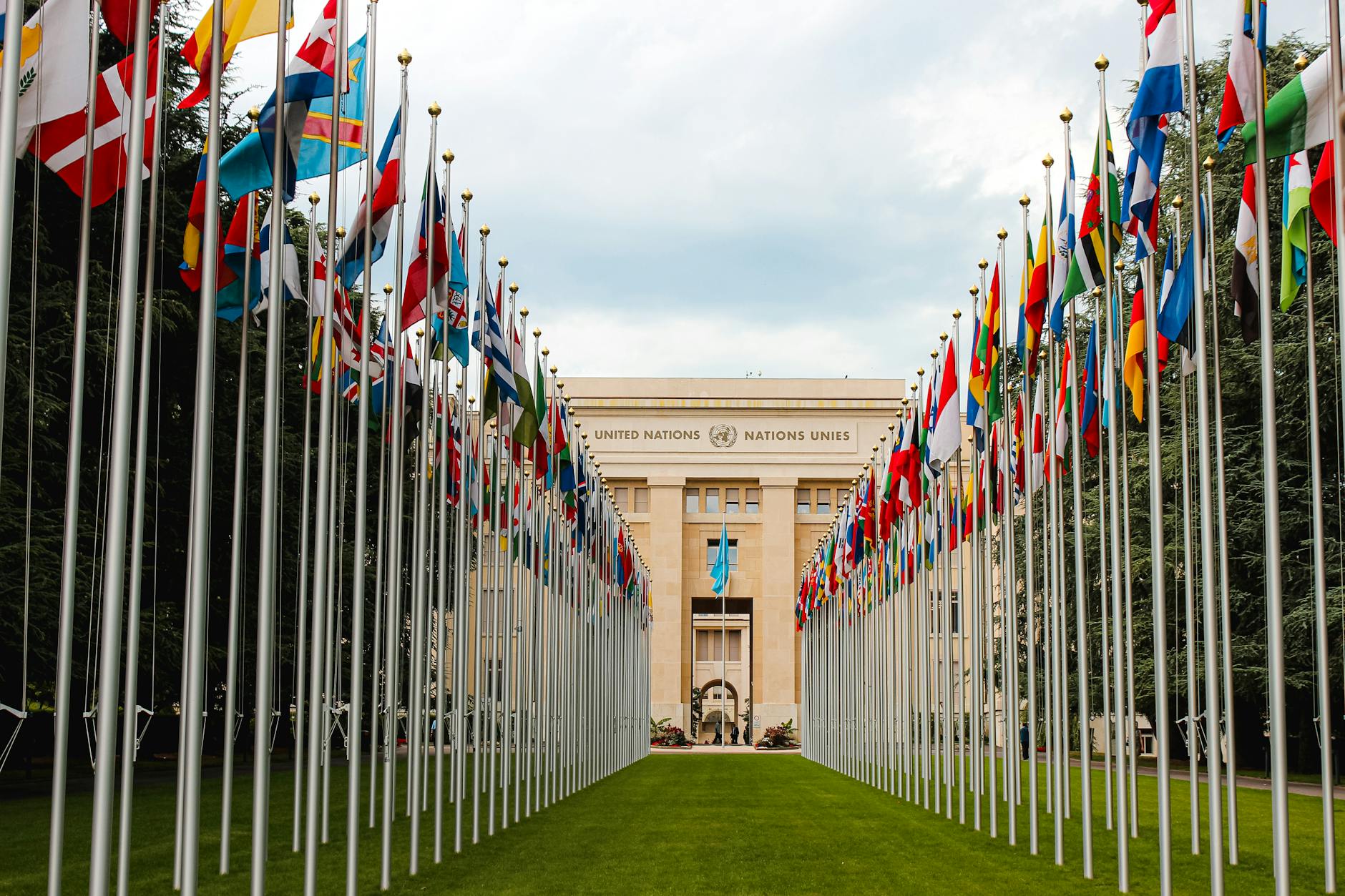
After two world wars in a generation, world leaders wanted a stronger system for international cooperation. The result was the United Nations, created to foster international cooperation and prevent future conflicts.
The UN officially came into existence on 24 October 1945. Its structure reflected the realities of power after the war. The victorious great powers—China, France, the Soviet Union, the United Kingdom, and the United States—became the permanent members of the Security Council.
The Security Council is one of the UN’s most powerful bodies, dealing with international peace and security. Permanent membership meant these five states would hold a lasting central role in global decision-making. Those same five permanent members remain in place today, though two seats later changed hands: the Republic of China was replaced by the People’s Republic of China in 1971, and after the Soviet Union dissolved in 1991, its successor state, Russia, inherited its seat.
The postwar order was not only about stopping wars. It was also about building new norms. In 1948, the United Nations adopted the Universal Declaration of Human Rights as a common standard for member nations.
Europe was split into Western and Soviet spheres
After the war, Europe was not reunited politically. It was divided.
Much of eastern and central Europe fell into the Soviet sphere of influence. A sphere of influence is a region where a powerful state exerts major political or military influence, even without formally annexing it. In these countries, Communist-led regimes were established with full or partial support from Soviet occupation authorities.
East Germany, Poland, Hungary, Romania, Bulgaria, Czechoslovakia, and Albania became Soviet satellite states. A satellite state is formally independent, but heavily controlled or guided by a more powerful country. Yugoslavia was communist as well, but it followed an independent path that caused tension with the Soviet Union.
Elsewhere, western European countries aligned with the United States and its allies. Greece, for example, remained aligned with the West after a communist uprising was put down with Anglo-American support.
Germany became the clearest symbol of this division. It was occupied after the war and split between western and eastern occupation zones. In 1949, those zones became separate countries: West Germany and East Germany. Austria was also occupied and divided into western and eastern zones, but its path was different. In 1955, Austria was reunified as a democratic state that was officially non-aligned.
Old empires weakened and decolonisation accelerated
The war did more than divide Europe. It weakened Europe’s great powers so deeply that their global dominance began to unravel. In the wake of Europe’s devastation, the influence of its great powers waned, triggering the decolonisation of Africa and Asia.
Decolonisation means colonies gaining independence from imperial powers. European states that had once controlled vast overseas empires emerged from the war damaged in prestige, resources, and economic strength. Attempts to retain colonial empires increasingly failed.
This was one of the most important long-term effects of World War II. The postwar world was no longer centred in the same way on London, Paris, or other imperial capitals. Power was shifting, and many colonised peoples pushed for self-rule in that changing environment.
The Cold War became a global standoff
The division of the world after 1945 was eventually formalised in two rival military alliances. On one side stood NATO, led by the United States. On the other stood the Warsaw Pact, led by the Soviet Union.
NATO, short for the North Atlantic Treaty Organization, was the US-led alliance. The Warsaw Pact was the Soviet-led military alliance that grouped Eastern European countries together. These alliances turned political rivalry into an organised military standoff.
The Cold War was defined by a long period of political tension and military competition between these blocs. It also brought an unprecedented arms race. An arms race is a competition in which rival countries build up military power, weapons, and technology in response to one another.
This era was also marked by proxy wars. A proxy war is a conflict where major powers support opposing sides rather than fighting each other directly. Instead of direct war between the United States and the Soviet Union, struggles played out through allied states, client governments, and movements around the world.
Asia was also reshaped by the postwar settlement
The postwar split was not limited to Europe. In Asia, the United States led the occupation of Japan, while the Soviet Union annexed South Sakhalin and the Kuril Islands. Korea, which had been under Japanese colonial rule, was divided between the Soviet Union in the north and the United States in the south between 1945 and 1948. Separate republics emerged on either side of the 38th parallel in 1948, with each claiming legitimacy over all of Korea. This division eventually led to the Korean War.
China also returned to civil war after World War II. Nationalist and communist forces resumed fighting in 1946. The communists ultimately prevailed and established the People’s Republic of China on the mainland, while the nationalists retreated to Taiwan in 1949.
These developments showed that the postwar order was not a neat peace settlement. It was a shifting and often unstable rearrangement of power.
A new age began after 1945
World War II ended one global struggle and launched another. The postwar era saw the creation of the United Nations, the division of Europe into Western and Soviet spheres, the rise of the United States and the Soviet Union as superpowers, and the steady decline of older European empires. It also set the stage for NATO, the Warsaw Pact, proxy wars, and the long Cold War rivalry that shaped modern history.
The war’s legacy was not only destruction. It was also the remaking of the world. Borders shifted, alliances hardened, colonies moved toward independence, and international politics entered a new era defined by tension, ideology, and the constant fear that another global conflict might begin.
Sources
Based on information from World War II.
More like this
Swipe from world war to Cold War in minutes — download DeepSwipe and turn history’s biggest turning points into your daily scroll.


