Full article · 7 min read
History of Japan: When the Military Took the Wheel
Japan’s slide into militarism in the early Shōwa period was not a single sudden turn. It was a chain reaction: radical officers acting on their own, weak civilian control, political assassinations, party politics collapsing, and war expanding faster than the state could restrain it. What began with a staged incident in Manchuria in 1931 grew into full-scale war in China, then a Pacific conflict with the United States and its allies, and finally national ruin by 1945.
This period is one of the most dramatic and tragic chapters in Japanese history because it shows how a modern state with elected institutions could still be overtaken by military force and extreme nationalism.
The Manchurian Incident: a staged crisis that changed everything
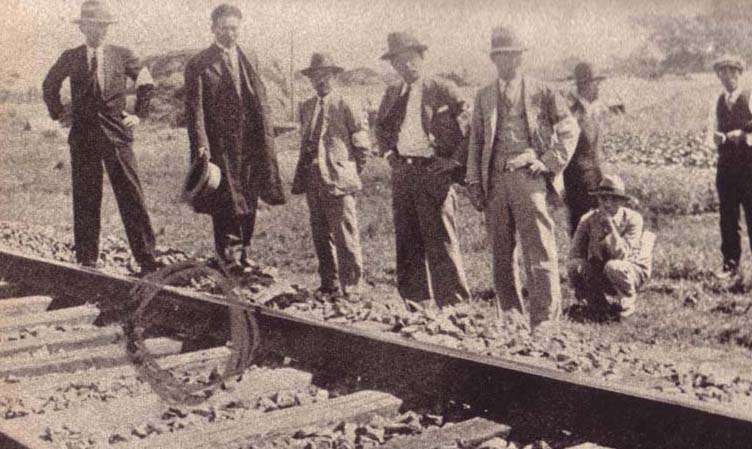
In 1931, officers in the Kwantung Army, a Japanese army stationed in China along the Japanese-owned South Manchuria Railroad, bombed a small portion of the railway. They then falsely blamed the attack on the Chinese and used it as a pretext to invade Manchuria.
This was the Manchurian Incident. The significance of the event lies not only in the invasion itself, but in the fact that the army acted without permission from Japan’s government. That revealed a dangerous imbalance: the military was becoming capable of making foreign policy through force, even when civilian leaders had not authorized it.
After conquering Manchuria, Japan established Manchukuo, a puppet government under Japanese control. A puppet state is a government that appears independent but is actually directed by another power. International criticism followed, and Japan withdrew from the League of Nations. That withdrawal mattered symbolically and politically. It showed Japan pulling away from the international order rather than adjusting its actions to outside pressure.
Why civilian politics began to collapse
By the end of the Taishō period, left-wing groups had already faced violent suppression, while radical right-wing groups inspired by fascism and Japanese nationalism were growing in influence. In this atmosphere, party politicians were increasingly attacked as corrupt, weak, or self-serving.
Prime Minister Tsuyoshi Inukai of the Seiyūkai Party tried to restrain the Kwantung Army, but in 1932 he was assassinated by right-wing extremists. His death was a turning point. He was the last party politician to govern Japan before World War II.
This helps explain the episode’s theme of “when the military took the wheel.” Control did not pass neatly through a legal reform or one official decree. Instead, elected party government was undermined by violence, intimidation, and the growing prestige of military action.
The failed coup that strengthened the army
In February 1936, young radical officers of the Imperial Japanese Army attempted a coup d'état. A coup d'état is an attempt to seize state power suddenly and illegally, usually by force. During this failed uprising, they assassinated many moderate politicians.
Although the coup was suppressed, the result was not a strong revival of civilian rule. Instead, the military consolidated its control over the political system. In 1940, most political parties were abolished when the Imperial Rule Assistance Association was founded.
The Imperial Rule Assistance Association was a wartime mass political organization designed to control politics and society. In practical terms, it helped replace open party competition with centralized wartime mobilization. This was another major step in the disappearance of plural politics in Japan.
Expansion in China and the road to wider war
Japan’s expansionist goals became bolder as military influence grew. Many leaders wanted new territory for resource extraction and for settlement of surplus population. In 1937, this vision helped drive the outbreak of the Second Sino-Japanese War.
After taking Nanjing, the Japanese military committed the Nanjing Massacre. The war did not end quickly, however. The Japanese military failed to defeat the Chinese government led by Chiang Kai-shek, and the conflict turned into a long, bloody stalemate that lasted until 1945.
Japan said its goal was the Greater East Asia Co-Prosperity Sphere, described as a vast pan-Asian union under Japanese domination. Whatever the rhetoric, the war became increasingly brutal. During this broader era of conflict, Japan committed war crimes in the Asia-Pacific that included forced sexual slavery, human experimentation, and large-scale killings and massacres.
Sanctions, alliances, and the push toward Pearl Harbor
The United States opposed Japan’s invasion of China and answered with increasingly strict economic sanctions meant to deprive Japan of the resources needed to continue the war. Rather than backing down, Japan moved closer to other authoritarian powers.
In 1940, Japan formed the Tripartite Pact with Germany and Italy. Relations with the United States worsened further in July 1941, when the United States, the United Kingdom, and the Netherlands froze Japanese assets after Japan completed its invasion of French Indochina by occupying the southern half of the country.
By late 1941, Japan’s government under Prime Minister Hideki Tojo chose war. On 7 December 1941, the Imperial Japanese Navy launched a surprise attack on the American fleet at Pearl Harbor, bringing the United States into World War II on the side of the Allies.
At first, Japan advanced rapidly, invading the Philippines, British Malaya, Hong Kong, Singapore, Burma, and the Dutch East Indies. But early victories did not solve the deeper problem: Japan was now in a huge war against powerful industrial enemies.
The tide turns against Japan
The balance shifted after the Battle of Midway in June 1942 and the Battle of Guadalcanal. From that point, Japan’s position worsened steadily.
The military’s conduct during the war became notorious. Japanese forces were responsible for mistreatment of prisoners of war, massacres of civilians, and the use of chemical and biological weapons. They also earned a reputation for fanaticism, including banzai charges and fighting almost to the last man in hopeless situations.
In 1944, the Imperial Japanese Navy began deploying kamikaze pilots. The word kamikaze means “divine wind.” These were pilots who deliberately crashed their planes into enemy ships. The term echoed the typhoons that had once helped destroy Mongol invasion fleets centuries earlier, but in World War II it came to symbolize desperate self-destructive tactics.
War on the home front
As the war turned against Japan, civilian life deteriorated sharply. Food was tightly rationed, electrical outages became common, and dissent was brutally suppressed. After the United States captured Saipan in 1944, widespread bombing raids on the Japanese mainland became possible. These raids destroyed more than half of the total area of Japan’s major cities.
The Battle of Okinawa, fought from April to June 1945, was the largest naval operation of the war. It killed 115,000 soldiers and 150,000 Okinawan civilians. The scale of the losses suggested that any invasion of the Japanese mainland would be even more catastrophic.
The final blows: Hiroshima, Nagasaki, and surrender
On 6 August 1945, the United States dropped an atomic bomb on Hiroshima, killing over 70,000 people. It was the first nuclear attack in history.
Then on 9 August, the Soviet Union declared war on Japan and invaded Manchukuo and other territories. That same day, Nagasaki was hit by a second atomic bomb, killing around 40,000 people.
These were the final shocks in a country already devastated by bombing, shortages, and military collapse. Japan communicated its surrender to the Allies on 14 August 1945, and Emperor Hirohito broadcast the news by radio the next day.
Why this period matters
The fall of party politics in Japan was not just a story of battlefield aggression. It was also a story of institutions failing under pressure. Civilian leaders could not control radical officers. Assassination destroyed political moderation. A failed coup ended up empowering the military further. Political parties were pushed aside and eventually folded into a wartime structure built for obedience, not debate.
By the time Japan reached Pearl Harbor, the pattern was already clear: military action was driving policy, and every new conflict made it harder to reverse course. The result was catastrophic war across Asia and the Pacific, immense human suffering, and national defeat.
Understanding how the military took control helps explain not only how Japan entered World War II, but how fragile political systems can become when violence, extremism, and unchecked armed power overwhelm civilian government.
Sources
Based on information from History of Japan.
More like this
Don’t let your history lessons be staged like the Manchurian Incident—get the real story with DeepSwipe. Download the app and keep your curiosity in command.