Full article · 7 min read
Asexual Reproduction: More Than Simple Splitting
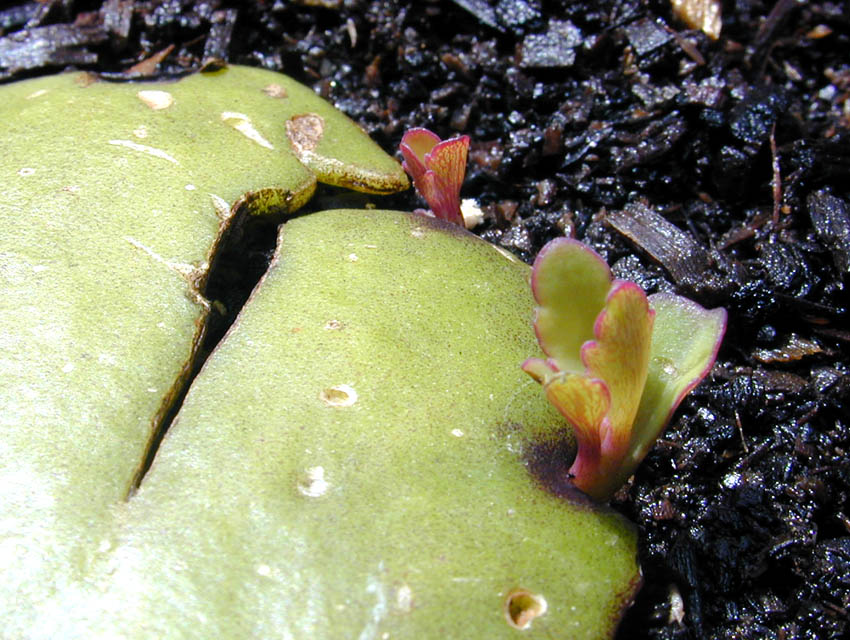
Asexual reproduction can sound like a niche trick used only by microbes, but it is much broader than that. In biology, reproduction is the process by which organisms produce offspring, and one major route is asexual reproduction: creating a genetically similar or identical copy without genetic material from another organism.
That means no mating and no fertilization are required. But that does not mean there is only one way to do it. From bacteria dividing in two, to hydras sprouting new bodies, to embryo development without fertilization, asexual reproduction includes a surprising range of methods used by many kinds of life.
Not Just for Tiny Organisms
A common misconception is that asexual reproduction belongs only to single-celled life. In reality, it appears across a wide variety of organisms.
Bacteria reproduce asexually by binary fission, a process in which one cell divides into two cells. Viruses also produce more of themselves by taking control of host cells. But asexual reproduction goes well beyond microscopic life. Hydras, which are invertebrates in the order Hydroidea, can reproduce this way. So can yeasts. Jellyfish are also among the species capable of asexual reproduction.
Plants are especially notable here. Most plants have the ability to reproduce asexually, and many can also reproduce sexually depending on circumstances. One particularly striking example is the ant species Mycocepurus smithii, which is thought to reproduce entirely by asexual means.
In many asexual species, there are not different sexes in the way people usually think of them. Instead, the organism can effectively generate a new individual from its own body or cells.
What Asexual Reproduction Really Means
The key feature of asexual reproduction is that only one organism is needed. There is no contribution of genetic material from a second parent. As a result, the offspring are genetically similar or identical to the parent.
Cloning is one form of asexual reproduction. In simple terms, this means producing a copy of an organism without combining genes from two parents.
This genetic similarity can be useful. If conditions are favorable, an organism can reproduce quickly and increase in number rapidly. Populations that reproduce asexually tend to grow exponentially. When food is abundant, shelter is adequate, climate is favorable, disease pressure is low, and other conditions are suitable, asexual reproduction can be an efficient way to take advantage of those good times.
But sameness can also come with a cost. Because variation depends largely on mutation, members of an asexual species may share similar vulnerabilities.
Binary Fission: The Straightforward Split
Binary fission is one of the simplest and best-known methods of asexual reproduction. It is used by bacteria.
In binary fission, one cell divides into two. The result is a rapid and efficient way to produce more individuals. It is easy to picture, which is probably why asexual reproduction is often oversimplified as “just splitting.” But binary fission is only one method among many.
Budding: Growing a New Individual Off the Parent
Hydras and yeasts can reproduce by budding. In budding, a small outgrowth forms on the parent body and develops into a new individual.
This is very different from binary fission. Instead of one organism dividing evenly into two, the parent remains intact while a new organism grows from it. That makes budding a vivid example of how varied asexual reproduction can be.
Hydras are especially interesting because they are not single-celled organisms. Their ability to reproduce by budding shows clearly that asexual reproduction is not limited to microscopic life.
Fragmentation and Spore Formation
Other asexual methods include fragmentation and spore formation.
Fragmentation happens when a parent breaks into pieces and those pieces can develop into new individuals. This approach is used by some species of starfish.
Spore formation is another route. Spores are reproductive units that can grow into new organisms. In the context of asexual reproduction, spore formation involves only mitosis.
Mitosis is a type of cell division that occurs in somatic cells, meaning non-reproductive body cells. In mitosis, the resulting cells have the same number of chromosomes as the parent cell. The number of resulting cells is twice the number of original cells.
That contrasts with meiosis, the cell division process associated with gametes in sexual reproduction. Meiosis produces cells with half the number of chromosomes and unfolds in two phases, meiosis I and meiosis II.
Parthenogenesis: Offspring Without Fertilization
One of the most fascinating forms of asexual reproduction is parthenogenesis.
Parthenogenesis is the growth and development of an embryo or seed without fertilization. In very simple language, it is the production of offspring from an egg without sperm fertilizing it.
This occurs naturally in several kinds of life. It appears in lower plants, where it is called apomixis. It also occurs in invertebrates such as water fleas, aphids, some bees, and parasitic wasps. Among vertebrates, it is found in some reptiles and some fish, and very rarely in domestic birds.
That range is what makes parthenogenesis so striking. It is not restricted to one corner of the living world. It shows up in plants, animals without backbones, and even some animals with backbones.
The term invertebrate simply refers to animals without backbones. That includes a huge variety of organisms, from tiny insects to jellyfish-like creatures.
Some Species Can Do Both
Asexual and sexual reproduction are not always either-or categories. Some organisms are capable of both.
Hydra, yeast, and jellyfish may reproduce asexually, but some species among them may also reproduce sexually. Most plants are also capable of both sexual reproduction and vegetative reproduction, which is reproduction without seeds or spores.
This flexibility matters because different methods can be useful in different environments. When conditions are favorable, some organisms use asexual reproduction to expand quickly. When food becomes scarce, climate turns hostile, or survival is threatened by environmental change, sexual reproduction can come into play.
Sexual reproduction mixes genetic material from two organisms, producing variation in offspring. That variation can make some individuals better suited to survive changing conditions.
Why Asexual Reproduction Can Be So Effective
Asexual reproduction has a big practical advantage: speed.
An organism does not need to find a mate. It can reproduce on its own and, under suitable conditions, populations can increase very rapidly. This makes asexual reproduction an efficient strategy for exploiting a rich supply of resources.
Many organisms that use asexual reproduction can quickly fill an environment when food supply, shelter, climate, and other lifestyle conditions are favorable. In that sense, asexual reproduction is a powerful short-term success strategy.
It also avoids some of the costs associated with sexual reproduction. Sexual reproduction is described as having a two-fold cost because only 50% of organisms reproduce, and each organism passes on only 50% of its genes.
The Trade-Off: Similarity vs. Variation
The major trade-off is genetic variation.
Because asexual reproduction creates genetically similar or identical offspring, populations may be more vulnerable if conditions change or disease strikes. Members of the species may share the same weaknesses.
Sexual reproduction tends to produce fewer offspring, but it generates much more variation in genes. That variation can make a population less susceptible to disease and more able to adapt.
This contrast helps explain why many organisms retain both options. Asexual reproduction is excellent for rapid multiplication in good conditions. Sexual reproduction can be valuable when environments become unpredictable or harsh.
More Than “Simple Splitting”
Asexual reproduction is often introduced as the easy, simplified version of reproduction. But looking closer reveals something much richer.
It includes binary fission in bacteria, budding in hydras and yeasts, fragmentation in some animals, spore formation through mitosis, and parthenogenesis in plants, invertebrates, reptiles, fish, and very rarely domestic birds. Many plants can reproduce asexually, and one ant species is thought to do so entirely.
So the next time asexual reproduction is described as “just splitting,” it is worth remembering how incomplete that picture is. In biology, copying yourself can involve division, growth, breakage, spores, or even embryo development without fertilization. It is one concept, but many tricks.
Sources
Based on information from Reproduction.
More like this
Clone your curiosity the smart way — download DeepSwipe and grow a fresh batch of fascinating facts every day.


