Full article · 8 min read
Oceania’s Weather on Overdrive
Oceania is often imagined as a blue-water paradise of tropical islands, but its climate is anything but simple. Across this vast region, weather can swing from scorching desert heat to bitter inland frost, from monsoon rains to typhoons, and from tropical humidity to near-polar conditions at higher elevations. That dramatic variety is one of the most fascinating things about Oceania: it is the ocean-linked home of deserts, rainforests, storm belts, and islands where several climate zones can exist in a surprisingly small area.
From Australia’s blistering interior to New Zealand’s coldest recorded temperatures, and from rain-soaked Micronesian mountains to the sharply varied conditions of Hawaiʻi, Oceania shows how geography can supercharge weather.
A region of climate extremes
One of the clearest ways to understand Oceania’s climate is through its temperature records. The highest recorded temperature in Oceania was 50.7 °C, measured at Oodnadatta in South Australia on 2 January 1960. At the other end of the scale, the lowest temperature ever recorded in Oceania was −25.6 °C, at Ranfurly in Otago, New Zealand, in 1903.
That is an extraordinary range within a single geographic region. It reflects the fact that Oceania includes tropical Pacific islands, semi-arid and desert interiors, temperate coastlines, and mountainous landscapes where altitude changes conditions dramatically.
Australia is a major reason the hot end of the scale is so extreme. Much of the Australian landmass has a desert or semi-arid climate, especially in the outback, the vast interior where dry conditions dominate. While the southern coastal corners are more temperate and the north is tropical, inland Australia is known for heat and aridity on a continental scale.
New Zealand helps define the cold end of the range. Most of the country lies in the temperate zone and has a maritime climate, meaning the surrounding ocean strongly influences temperatures and seasonal patterns. Maritime climates often reduce extremes compared with inland continental climates, but elevation and local geography still matter. Snow falls in New Zealand’s South Island and at higher altitudes in the North Island, and the country’s cold records show that Oceania is not only a warm-weather region.
Why Oceania’s weather varies so much
A big reason Oceania’s weather is so diverse is that the region spans a huge area and includes very different landforms. Some places are continental, like Australia. Others are mountainous islands, coral islands, volcanic islands, or uplifted coral platforms. Each type of landscape interacts with wind, rain, and temperature in different ways.
High islands, for example, are of volcanic origin and often rise steeply from the sea. That matters because mountains can force moist air upward. As air rises, it cools, and the moisture condenses into clouds and rain. This is one reason some Pacific islands can have astonishingly wet locations.
The Pacific Ocean also gives Oceania a kind of climatic unity while creating huge local contrasts. Ocean waters influence humidity, storms, and rainfall patterns. But even nearby islands can have very different weather depending on elevation, exposure to prevailing winds, and whether they sit in a monsoon or typhoon zone.
Islands that squeeze rain from the sky
Some of the wettest places in Oceania are found on Pacific islands. Pohnpei, in Micronesia’s Senyavin Islands, is described as the wettest settlement in Oceania and one of the wettest places on Earth. In certain mountainous locations there, annual recorded rainfall exceeds 7,600 mm.
That number is enormous. For comparison in plain terms, 7,600 mm means 7.6 metres of rain in a year.
Another rainfall giant is the Big Bog on the island of Maui in Hawaiʻi, which receives an average of 10,271 mm annually. That makes it the wettest place in Oceania.
These spectacular totals are tied to island topography and moist ocean air. In simple terms, mountains on islands can act like weather machines, lifting moisture-laden air and wringing out huge amounts of precipitation. This is why a relatively small island can contain both very wet and much drier zones.
Hawaiʻi: a weather world in miniature
Hawaiʻi offers one of the most striking examples of compressed climate diversity in Oceania. Although it lies in the tropics, the island of Hawaiʻi hosts four of the five major Köppen climate groups on a very small surface area: tropical, arid, temperate, and polar.
That sounds almost impossible until you consider the geography. Climate groups are broad categories used to describe the long-term weather patterns of a place. Tropical climates are warm year-round and often wet. Arid climates are dry. Temperate climates have milder seasonal variation. Polar climates are associated with very cold conditions.
The reason these can all exist on one island is the combination of latitude and geography, especially elevation. Hawaiʻi includes very high volcanic mountains, and conditions can change quickly with altitude. What begins as warm tropical weather near sea level can become much cooler higher up.
The Hawaiian Islands also receive most of their precipitation during the winter months, from October to April. That seasonal pattern adds another layer of complexity. Even in a place associated with sun and beaches, rainfall timing can be highly structured.
Some islands in the northwest of Hawaiʻi’s wider Pacific neighborhood, such as Guam, are also susceptible to typhoons in the wet season.
The Pacific’s big weather drivers
Oceania’s climate is not shaped only by local geography. It is also influenced by large-scale weather systems that operate across the Pacific.
One of the most important is the El Niño Southern Oscillation, often shortened to ENSO. In the tropical and subtropical Pacific, ENSO affects weather conditions. The term refers to a recurring pattern in the Pacific that shifts ocean and atmospheric behavior, which in turn influences rainfall, temperature, and seasonal conditions over wide areas.
Another major force is the monsoon in the tropical western Pacific. A monsoon is a seasonal wind system linked to shifts between wet and dry periods. In this part of Oceania, the monsoon and the related wet season during the summer months contrast with dry winds in winter that blow over the ocean from the Asian landmass.
That means the year is not simply divided into “hot” and “cold,” but often into “wet” and “dry,” depending on where you are.
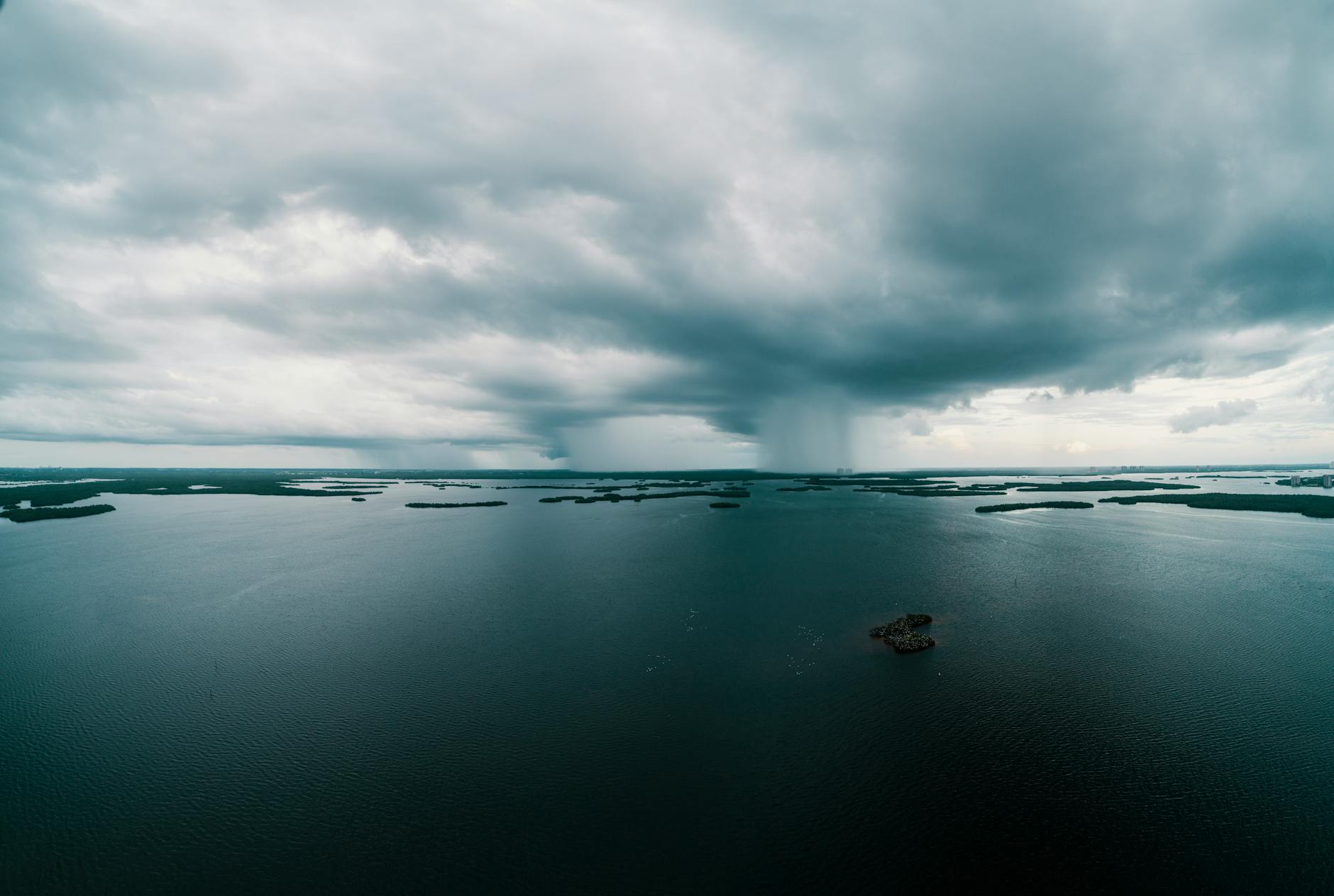
Tropical cyclones are another powerful part of the region’s weather story. A cyclone basin is an ocean region where tropical cyclones form. Remarkably, November is the only month in which all the tropical cyclone basins are active. That makes it a uniquely busy point in the annual storm calendar.
In everyday language, typhoons are powerful tropical cyclones in the Northwest Pacific. The article notes that islands such as Guam are vulnerable to them during the wet season. Across Oceania more broadly, tropical cyclone activity is a recurring hazard that can reshape local weather and life.
Australia: desert heart, tropical north, temperate edges
Australia packs several climate zones into one country and helps explain why Oceania is so meteorologically dramatic.
To the southwest of the region, in the Australian landmass, the climate is mostly desert or semi-arid. The northern parts of the country have a tropical climate. Meanwhile, the southern coastal corners are temperate, with oceanic and humid subtropical climate on the east coast and Mediterranean climate in the west.
That means Australia contains everything from dry inland heat to wetter coastal environments. Snow falls frequently on highlands near the east coast, including in Victoria, New South Wales, Tasmania, and the Australian Capital Territory. So even within the part of Oceania most associated with heat, cold-weather conditions are part of the picture too.
This climatic spread is matched by Australia’s landscapes. The country contains tropical rainforests in the northeast, mountain ranges in the southeast, southwest, and east, and desert in the centre. Those physical differences help create the weather contrasts seen across the continent.
New Zealand: temperate, maritime, and surprisingly varied
New Zealand’s climate is shaped strongly by the ocean, but that does not make it uniform. Most regions belong to the temperate zone and have a maritime climate characterized by four distinct seasons.
Even so, conditions vary widely. The West Coast of the South Island can be extremely wet, Central Otago is almost semi-arid, and Northland is subtropical. Snow falls in the South Island and at higher altitudes in the North Island, while snow at sea level in the North Island is extremely rare.
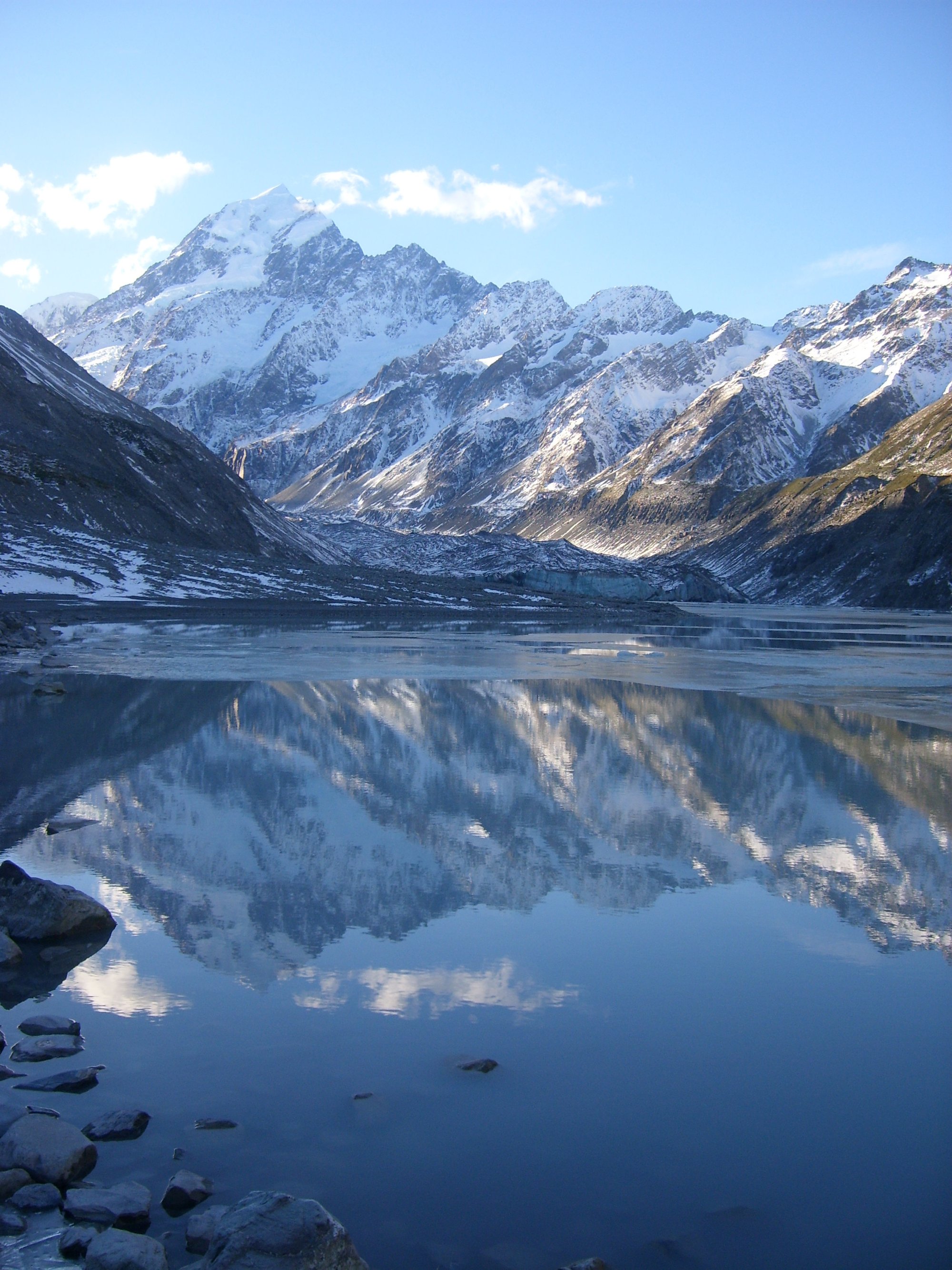
New Zealand’s varied landscape contributes to this range. The South Island is dominated by the Southern Alps, which include 18 peaks over 3,000 metres. Mountains can affect wind, rainfall, and temperature on either side of a range, creating local climatic contrasts over relatively short distances.
So while New Zealand may not produce Oceania’s greatest heat, it certainly contributes to the region’s climatic drama through cold records, snow, strong regional variation, and a weather pattern deeply shaped by mountains and surrounding seas.
A region where geography writes the forecast
The most striking thing about Oceania’s weather is how strongly it reflects place. Coral islands, volcanic islands, continental interiors, high mountain chains, and open ocean exposure all help determine what the sky does next.
In one region, you can find the hottest temperature ever recorded in Oceania, the coldest ever recorded in Oceania, one of the wettest settlements on Earth, and an island with tropical, arid, temperate, and polar climates all packed together.
Oceania is not just a tropical postcard. It is a region of climate contrasts on overdrive, where monsoons and typhoons shape the calendar, ENSO shifts the rules, mountains manufacture rain, and the same ocean that links the islands also helps make their weather wildly different.
Sources
Based on information from Oceania.
More like this
From typhoons to tropical rainforests, let your curiosity travel the Pacific — download DeepSwipe and catch a new knowledge storm every day.