Full article · 9 min read
Climate Basics: Why Weather and Climate Are Not the Same Thing
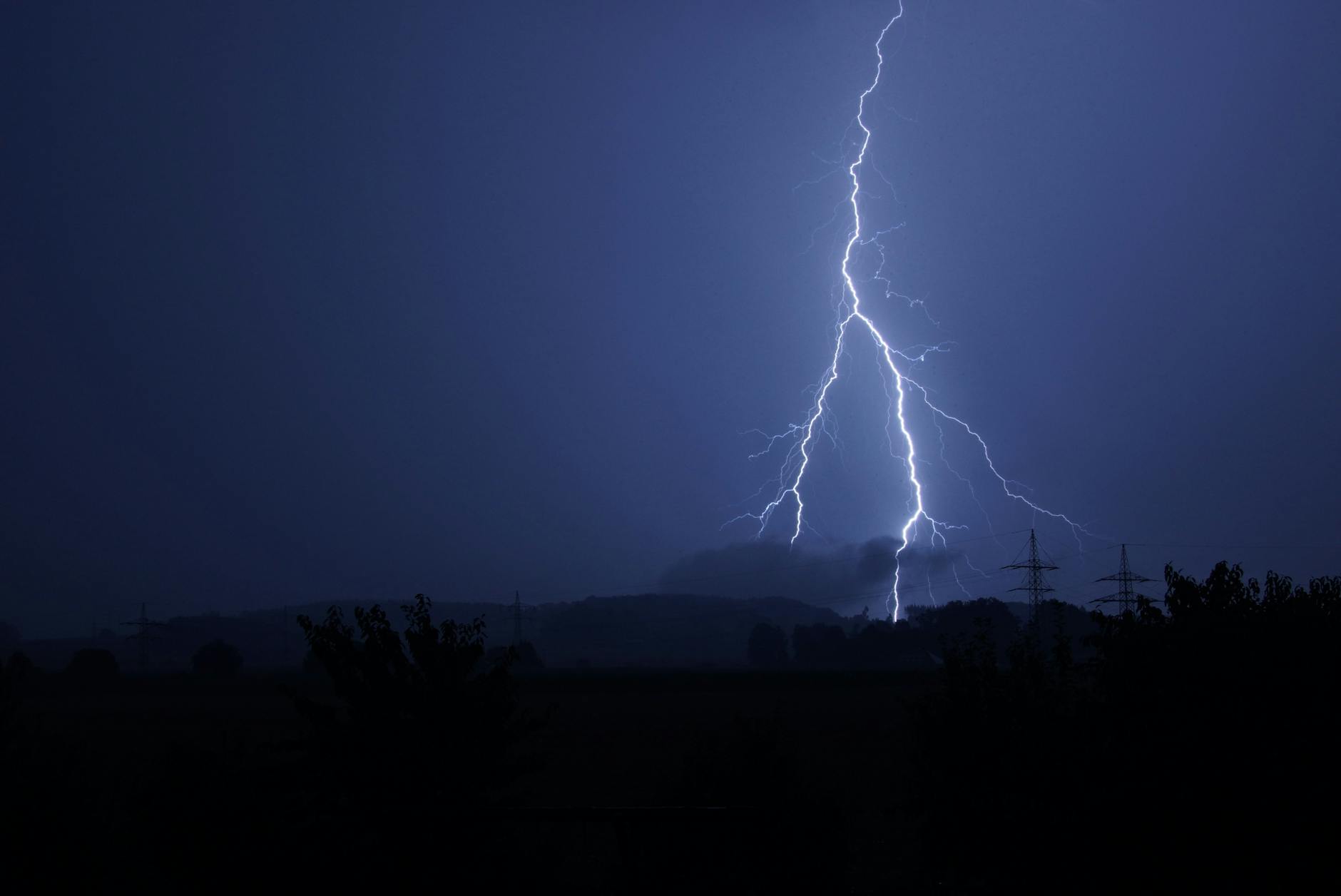
A single thunderstorm can soak your street, knock out power, and change your weekend plans. But it still tells you very little about climate.
Climate is the long-term pattern of weather in a place, usually averaged over 30 years. That long view is what makes climate different from weather. Weather is what happens right now or over the next few days. Climate is what you expect after looking at many years of temperature, rain, wind, and other conditions.
A useful way to think about it is this: weather is what you get, climate is what you expect. One hot day, one snowstorm, or one windy week does not define a region’s climate. Instead, climate describes the average conditions and also how much those conditions vary from day to day, year to year, and even over much longer spans of time.
Why 30 Years Matters
Climate is often described using a 30-year average. This period is long enough to smooth out year-to-year swings and unusual events, but short enough to reveal longer trends.
These 30-year reference periods are often called climate normals. They act as a baseline for comparing current conditions with what is considered typical. In practice, climatologists collect measurements such as air temperature, pressure, precipitation, and wind over decades to build up that picture. Other observations can also help, including humidity, visibility, cloud amount, solar radiation, soil temperature, pan evaporation rate, and even the number of days with thunder or hail.
That is why climate is not just a simple average. It is also a statistical description of how conditions behave over time. A place may have the same average temperature as another, but if one has wild swings and the other stays steady, their climates are not really the same.
Climate Is More Than Temperature
When people talk casually about climate, they often jump straight to temperature. But climate includes much more.
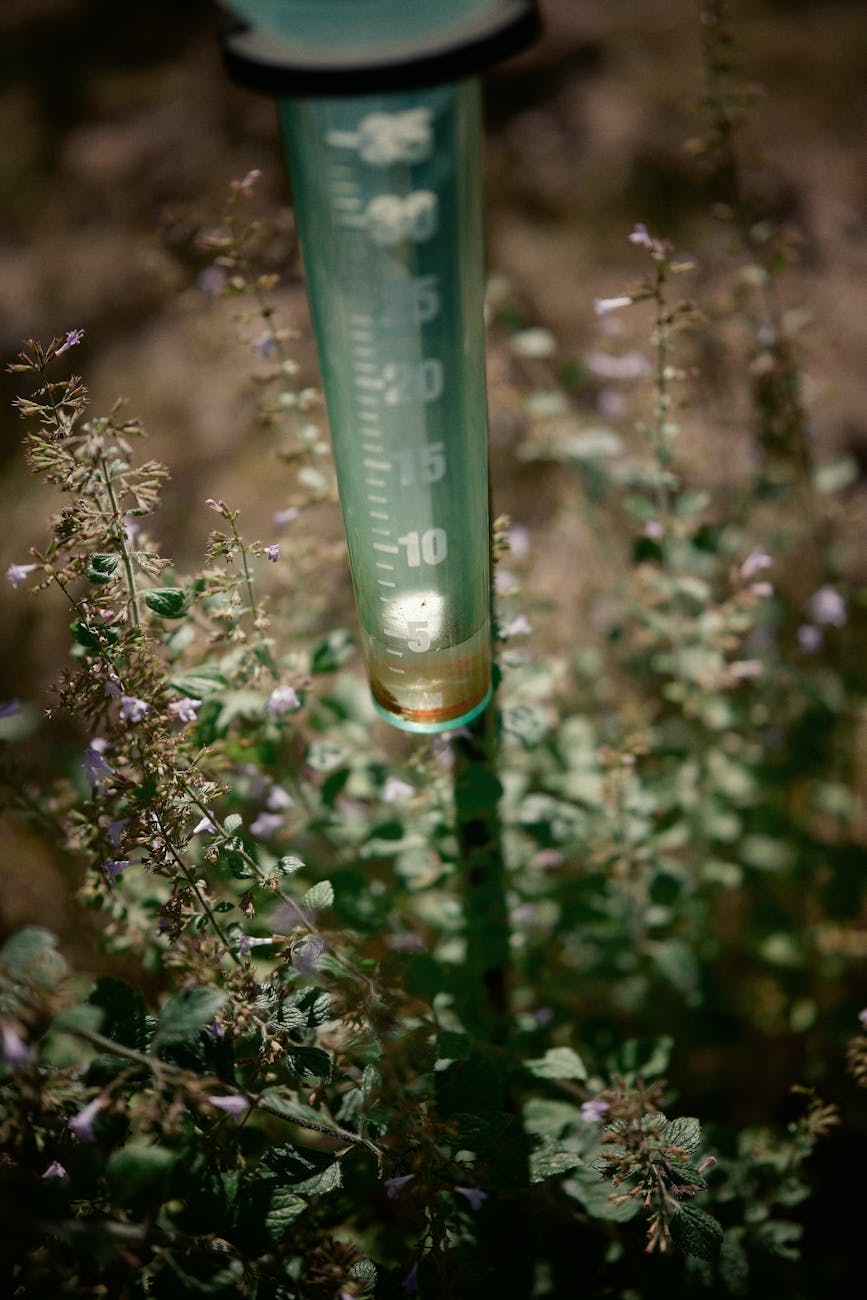
Commonly measured climate variables include temperature, humidity, atmospheric pressure, wind, and precipitation. Precipitation means water that falls from the atmosphere, such as rain or snow. Humidity refers to the amount of water vapor in the air. Atmospheric pressure is the force exerted by the air around us. These variables together shape what a region feels like over the long term.
Just as important, climate includes variability. That means how much those conditions change. A region’s climate is not only defined by its mean temperature or average rainfall, but also by whether conditions stay relatively stable or swing sharply between extremes.
This broader view helps explain why climate can be studied over periods ranging from months to thousands or even millions of years. The basic idea remains the same: climate is about patterns, averages, and variation over time.
Climate Is a Whole System, Not Just the Air
Climate is often described as if it lives only in the sky, but it is really the result of interactions across an entire planetary system.
That system includes the atmosphere, hydrosphere, cryosphere, lithosphere, and biosphere.
The atmosphere is the layer of gases surrounding Earth. The hydrosphere includes water in oceans, lakes, and rivers. The cryosphere is Earth’s frozen water, such as ice and snow. The lithosphere refers to the land and rocky outer surface of the planet. The biosphere includes living things.
Climate emerges from the interactions among all of these parts. Oceans store and move heat. Ice reflects sunlight. Land shape affects wind and rainfall. Vegetation changes how much heat is absorbed and how much water is retained. Life itself is part of the climate system, not just a passenger inside it.
That is why climate cannot be understood by looking at air temperature alone. It depends on connected processes playing out across the whole Earth system.
What Shapes the Climate of a Place?
The climate of a location is affected by latitude, longitude, terrain, altitude, land use, and nearby water bodies and their currents.
Latitude matters because it influences how directly sunlight reaches a region. Altitude matters because conditions change with elevation. Terrain can redirect winds and affect rainfall. Nearby oceans or lakes can moderate temperature and influence moisture in the air.
Some factors change very slowly over immense spans of time. These include latitude, altitude, the proportion of land to water, and proximity to oceans and mountains, all of which are tied to large-scale features of Earth and even processes such as plate tectonics.
Other influences are more dynamic. Ocean circulation can redistribute heat. The thermohaline circulation, for example, leads to a warming of the northern Atlantic Ocean compared with other ocean basins. Vegetation coverage also matters because it affects solar heat absorption, water retention, and rainfall on a regional level.
Greenhouse gases are another major factor. Changes in the amount of atmospheric greenhouse gases, particularly carbon dioxide and methane, affect how much solar energy the planet retains. That can lead to warming or cooling.
How Scientists Classify Climate
Because climate varies so much from place to place, scientists have developed systems to classify it.
The most widely used is the Köppen climate classification, first developed in 1899. Climate classifications sort the world into categories based on patterns such as temperature and precipitation. These systems often overlap with biome classifications because climate strongly influences the kinds of life that can thrive in a region.
Different classification systems approach the problem in different ways. Some are genetic methods, which focus on the causes of climate, such as air masses or weather patterns. Others are empiric methods, which focus on the effects of climate, such as plant hardiness or evapotranspiration.
Evapotranspiration is the combined movement of water into the atmosphere through evaporation and through plants. The Thornthwaite system includes evapotranspiration along with temperature and precipitation and has been used to study biological diversity and the effects of climate change. Its major classification groups are microthermal, mesothermal, and megathermal.
Another approach is the Bergeron and Spatial Synoptic Classification systems, which focus on the origin of the air masses that shape a region’s climate.
One limitation of many climate classification systems is that they draw sharp boundaries between categories, while real climate often changes gradually across space.
Climate Changes Over Time
Climate is not fixed. It varies on many spatial and temporal scales beyond individual weather events.
Some climate variability appears random, sometimes called noise. Other variability is periodic, meaning it recurs relatively regularly in recognizable modes or patterns. There are correlations between Earth’s climate oscillations and astronomical factors, as well as with the way heat is distributed through the ocean-atmosphere climate system.
Climate change refers to variation in global or regional climates over time. These changes can reflect shifts in the average state of the atmosphere or in its variability, and they can occur over decades or over millions of years. Causes can include processes internal to Earth, external forces such as variations in sunlight intensity, and human activities.
Earth has experienced major climate shifts in the past, including four major ice ages. These included colder glacial periods and warmer interglacial periods. During glacial periods, the buildup of snow and ice increases surface albedo, meaning more of the Sun’s energy is reflected back into space, which helps maintain lower temperatures. Increases in greenhouse gases, such as from volcanic activity, can raise global temperature and contribute to interglacial conditions.
Suggested causes of ice age periods include the positions of the continents, variations in Earth’s orbit, changes in solar output, and volcanism.
In recent usage, the term climate change often refers specifically to modern changes, including global warming, the rise in average surface temperature. According to the EU’s Copernicus Climate Change Service, average global air temperature passed 1.5C of warming over the period from February 2023 to January 2024.
How We Know About Past Climate
Modern weather instruments only go back a few centuries, so how do scientists study climates from long before thermometers and satellites?
That is the job of paleoclimatology, the study of past climate over long stretches of Earth’s history. Paleoclimatologists use proxy evidence, which means indirect clues that preserve information about older climate conditions.
These clues include ice sheets, tree rings, sediments, pollen, coral, and rocks. Ice cores and lake-bed sediments can preserve records of environmental conditions. Tree rings can reflect changing growth conditions over time. Coral can also provide evidence about past climate.
Using these records, scientists can identify periods of stability and periods of change, and sometimes detect recurring patterns or cycles.
How We Measure Modern Climate
The modern climate record comes from instruments such as thermometers, barometers, and anemometers. A thermometer measures temperature. A barometer measures atmospheric pressure. An anemometer measures wind.
These records have improved over time, but they also come with challenges. Instruments, observation frequency, error, immediate surroundings, and exposure have all changed over the years, which matters when comparing records across centuries.
Long-term records also tend to be denser in population centers and affluent countries. Since the 1960s, satellites have made it possible to gather observations on a global scale, including from regions with little or no human presence, such as the Arctic and the oceans.
Climate Models: Simulating a Complex World
Climate is so complex that scientists use mathematical models to simulate it.
Climate models describe how radiative energy moves between the atmosphere, oceans, land surface, and ice using physics equations. They are used to study climate dynamics and to project future climate.
At the heart of these models is a balance between incoming short-wave electromagnetic radiation reaching Earth and outgoing long-wave infrared radiation leaving it. If that balance shifts, Earth’s average temperature changes.
Climate models can be simple or extremely complex. Some treat Earth as a single point and average energy flows. Others divide the planet vertically or horizontally. The most complex models couple the atmosphere, ocean, and sea ice and solve equations for mass transfer, energy transfer, and radiant exchange.
Models also vary in resolution, from scales greater than 100 kilometers down to 1 kilometer. Higher resolution requires far more computational resources. Global models can also be downscaled to regional climate models to examine local impacts more closely.
One of the most discussed uses of climate models is estimating the effects of increasing greenhouse gases, especially carbon dioxide. These models predict an upward trend in global mean surface temperature, with the most rapid increase projected for the higher latitudes of the Northern Hemisphere.
The Big Picture
Climate basics are simple to state but powerful to understand. Climate is not yesterday’s forecast or today’s storm. It is the long-term pattern of weather, usually tracked over 30 years. It includes temperature, rain, wind, pressure, and humidity, but also the variability of those conditions through time.
Most importantly, climate is not just about the air. It is the product of a connected system involving the atmosphere, oceans, ice, land, and life. Once you see climate that way, a thunderstorm stops being a final answer and becomes what it really is: one tiny moment inside a much larger pattern.
Sources
Based on information from Climate.
More like this
Don’t stop at the forecast—zoom out to the big picture. Download DeepSwipe and get a climate-sized dose of knowledge every day.