Full article · 7 min read
Ice Ages and Modern Climate Change
Earth’s climate has not always stayed the same. Over long stretches of time, the planet has shifted between colder and warmer states, including four major ice ages. These ancient swings help show that climate can change naturally. But they also make one modern fact stand out: today’s climate change is happening much faster, and that rapid change is linked to greenhouse gas emissions from human activities.
Climate vs. Weather: Why the Long View Matters
To understand ice ages and modern warming, it helps to know what climate actually means. Climate is not the weather on a particular day. Instead, it is the long-term pattern of weather in a region, usually averaged over 30 years. That includes not only average conditions, but also how much conditions vary from day to day or year to year.
Scientists commonly look at meteorological variables such as temperature, precipitation, wind, humidity, and atmospheric pressure. In a broader sense, climate also includes the state of the whole climate system: the atmosphere, water, ice, land, and living world, plus the interactions between them.
That bigger picture matters when talking about ice ages, because ice, oceans, land surfaces, and greenhouse gases all influence how much energy Earth keeps or reflects.
Earth Has Gone Through Four Major Ice Ages
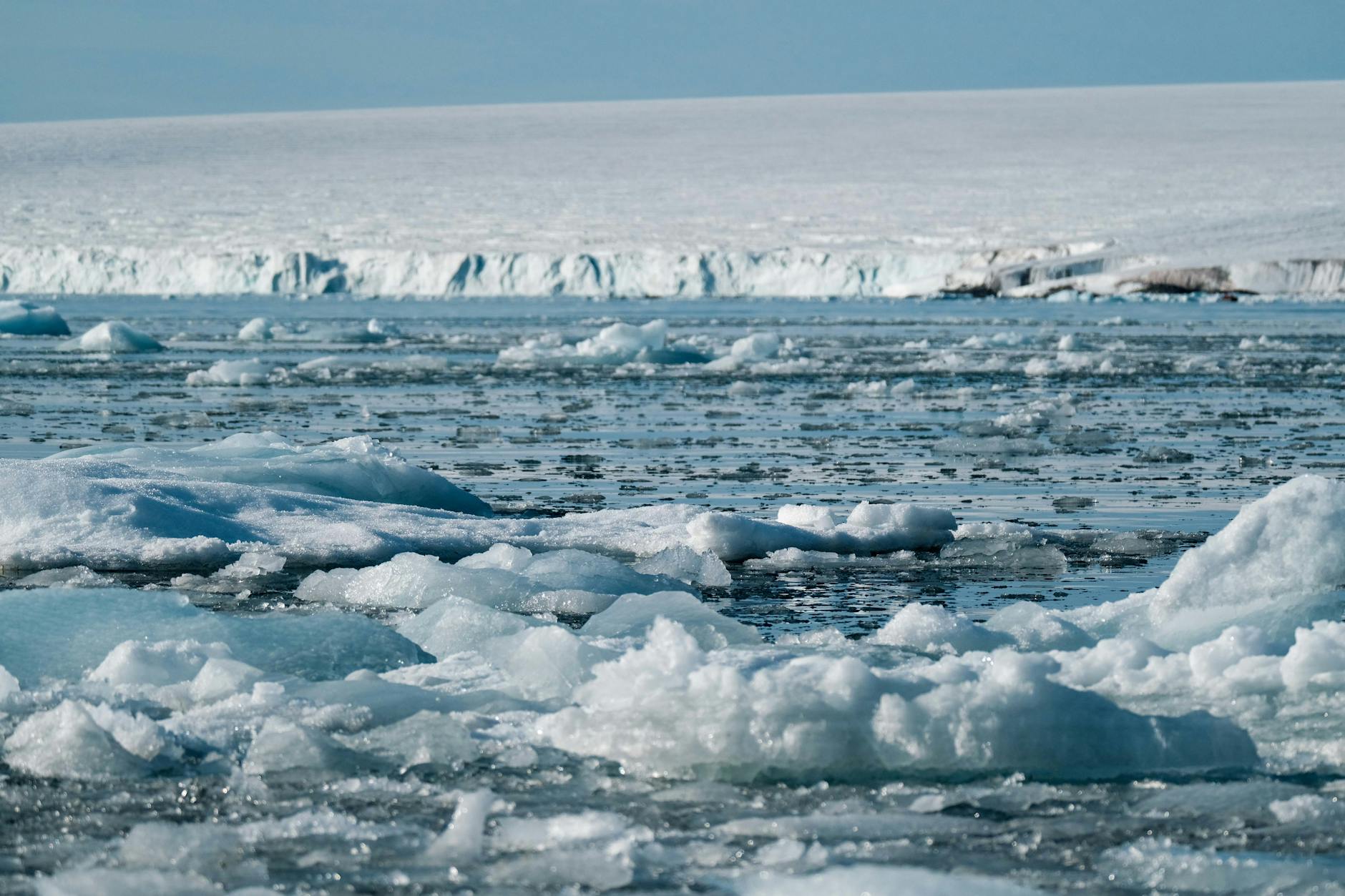
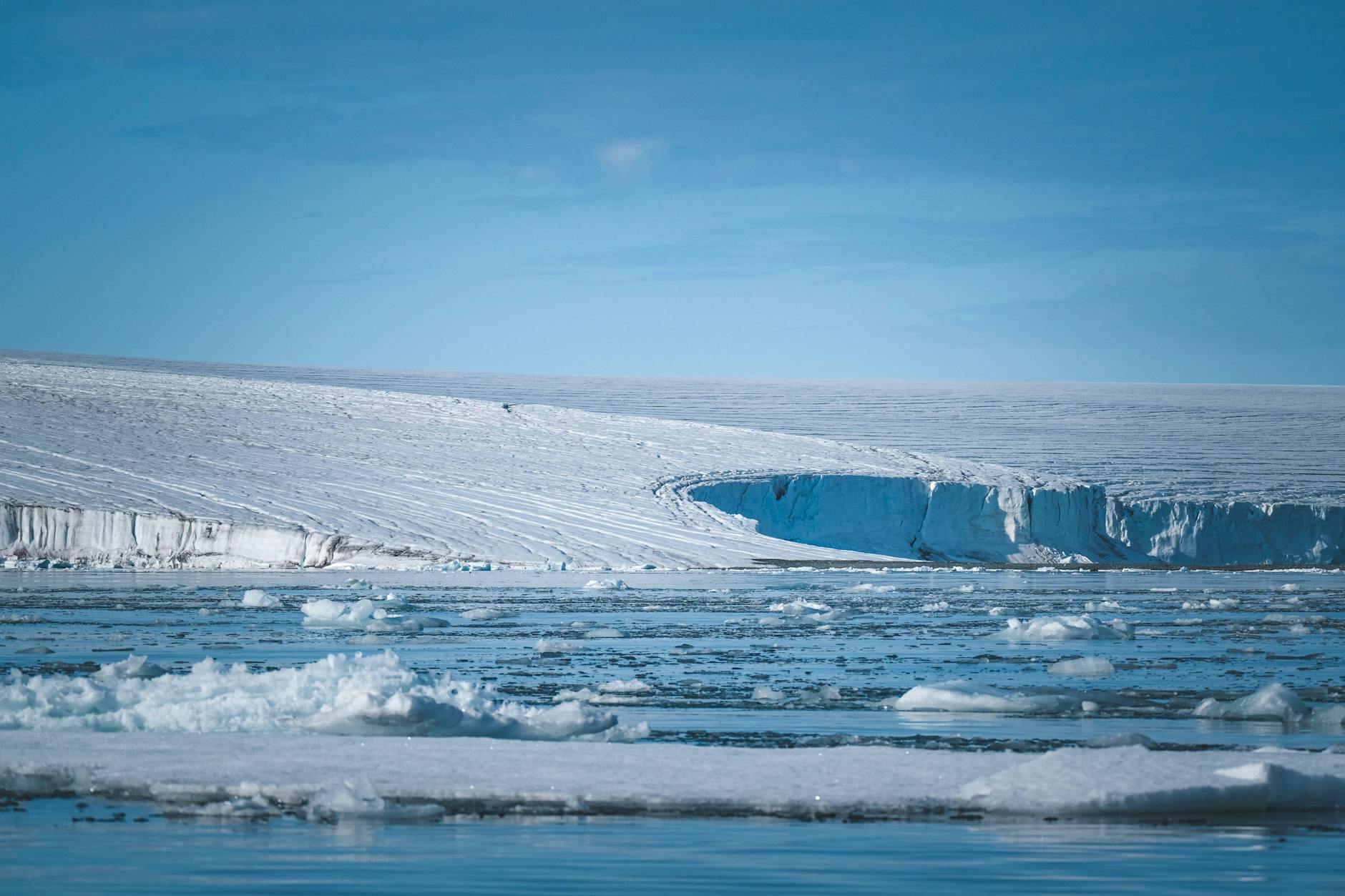
The planet has experienced periodic climate shifts in the past, including four major ice ages. These were not just brief cold snaps. Each ice age included glacial periods, when conditions were colder than normal, and interglacial periods, which were warmer intervals between them.
A glacial period is a long stretch of time when snow and ice build up and large ice sheets spread. An interglacial period is the relatively warmer phase between those colder intervals. These alternating phases show that Earth’s climate system can operate in very different modes over time.
The study of these ancient climates is called paleoclimatology. Because there were very few direct observations before the 19th century, scientists reconstruct past climates using proxy evidence. That evidence includes ice sheets, tree rings, sediments, pollen, coral, and rocks. These records reveal both periods of stability and periods of major change.
Why Ice Can Make a Cold World Colder
One of the most important feedbacks during an ice age involves reflectivity. When snow and ice accumulate during a glacial period, they increase Earth’s surface albedo.
Albedo is a measure of how much incoming sunlight a surface reflects back into space. Bright surfaces such as snow and ice reflect more solar energy than darker land or ocean surfaces. As a result, expanding ice sheets can help maintain lower temperatures by sending more of the Sun’s energy away rather than absorbing it.
This creates a reinforcing effect: more snow and ice can lead to more reflection, which helps keep temperatures lower, which in turn supports the persistence of snow and ice. In simple terms, ice can help lock in more ice.
What Can End an Ice Age?
Cold periods do not last forever. According to the information available from past climate studies, increases in greenhouse gases such as those produced by volcanic activity can raise global temperature and produce an interglacial period.
Scientists have suggested several causes for ice age periods and climate shifts over Earth’s history. These include:
- the positions of the continents
- variations in Earth’s orbit
- changes in solar output
- volcanism
These influences operate over very long time scales. They help explain why climate has changed naturally in the deep past, long before modern industry.
Natural Climate Change vs. Modern Climate Change
The key difference today is not that climate is changing for the first time. The key difference is the rate.
Natural climate shifts have occurred before, but they unfolded much more slowly than the present rate of change. The current change is linked to the emission of greenhouse gases by human activities.
Greenhouse gases affect how much solar energy the planet retains. Altering the quantity of atmospheric greenhouse gases, especially carbon dioxide and methane, changes the amount of energy held within the climate system. That can lead to global warming or global cooling, depending on the direction of the change.
In recent usage, the term climate change often refers specifically to changes in modern climate, including the rise in average surface temperature known as global warming. Scientists have also identified Earth’s Energy Imbalance as a fundamental metric for the status of global change.
Earth’s Energy Imbalance means there is a mismatch between the energy Earth receives and the energy it sends back out. Climate models are built around this principle: incoming energy arrives mainly as shortwave electromagnetic radiation, including visible light, while outgoing energy leaves as longwave infrared radiation. If those flows do not balance, Earth’s average temperature changes.
Evidence That Modern Warming Is Ongoing
Modern climate records come from instruments such as thermometers, barometers, and anemometers used over the past few centuries. Since the 1960s, satellites have made it possible to gather records on a global scale, including over oceans and in sparsely inhabited places such as the Arctic.
These observations are part of how scientists track modern climate trends. One recent benchmark is especially striking: according to the EU’s Copernicus Climate Change Service, average global air temperature passed 1.5C of warming over the period from February 2023 to January 2024.
That does not mean every place warmed equally or that every day is warmer than the past. Climate is about long-term patterns and averages. But it does show that the broader warming trend is measurable in the real world.
Climate Change Reshapes Where Life Can Live
Climate change does not only affect thermometers and graphs. It also redistributes biota, meaning living organisms and ecosystems.
A useful example comes from a comparison of temperature and geography: a 3 °C change in mean annual temperature corresponds to a shift in isotherms of about 300–400 km in latitude in the temperate zone, or about 500 m in elevation. An isotherm is a line connecting places with the same temperature. If those temperature zones move, species are expected to move too—either uphill in elevation or toward the poles in latitude.
This is one reason climate change matters so much biologically. Even if a species can survive only within a certain temperature range, that “home zone” may shift across landscapes over time.
How Scientists Study Past and Future Climate
To understand both ice ages and modern warming, scientists use a combination of records and models.
Paleoclimatology looks backward using clues stored in natural archives such as ice cores, sediments, tree rings, pollen, coral, and rocks. These sources help reveal ancient cold periods, warmer intervals, and patterns of climate variability.
Climate models look across time by simulating interactions among the atmosphere, oceans, land surface, and ice using physics equations. They can be used to study past, present, and future climates. Some are simple, while others are complex coupled atmosphere–ocean–sea ice models.
One of the best-known uses of climate models in recent years has been studying the effects of increasing greenhouse gases, especially carbon dioxide. These models predict an upward trend in global mean surface temperature, with the most rapid increase projected for the higher latitudes of the Northern Hemisphere.
The Big Takeaway
Earth has switched climate modes before. It has passed through four major ice ages, with colder glacial periods separated by warmer interglacial periods. During those cold phases, expanding snow and ice reflected more solar energy back into space, helping maintain lower temperatures.
But the existence of natural climate change in the past does not make modern climate change ordinary. Ancient shifts were driven by factors such as orbital variations, solar changes, volcanism, and continental positions, and they happened on much slower time scales. Today’s climate change is different in speed, and that speed is linked to human greenhouse gas emissions.
Understanding ice ages gives valuable perspective. It shows that Earth’s climate system is powerful, dynamic, and capable of dramatic change. Understanding modern warming shows something even more urgent: when the climate shifts quickly, the consequences can spread across temperatures, ice, oceans, and the living world.
Sources
Based on information from Climate.
More like this
From ice ages to hot takes, keep your climate knowledge moving — download DeepSwipe and warm up your brain daily.