Full article · 7 min read
Carnivorous Plants: Why Some Plants Hunt
Carnivorous plants are one of nature’s strangest plot twists. Plants are usually thought of as passive, rooted organisms that make their own food from sunlight. And that is true for most of the plant kingdom: plants are predominantly photosynthetic, using light, carbon dioxide, and water to produce sugars. But a small group takes an extra step. About 630 plant species are carnivorous, trapping small animals and digesting them to obtain mineral nutrients, especially nitrogen and phosphorus.
That combination is what makes them so fascinating. A carnivorous plant is still a plant. It does not stop being photosynthetic or suddenly behave like an animal. Instead, it combines two strategies at once: it captures light for energy and captures prey for nutrients.
Plants Usually Make Sugar, Not Meals
To understand carnivorous plants, it helps to start with how plants normally live.
Plants photosynthesize. In simple terms, they use chlorophyll, a green pigment inside chloroplasts, to capture light energy. With that energy, they turn carbon dioxide and water into sugars. Those sugars power much of life on Earth, because plants are primary producers in most terrestrial ecosystems. In other words, they are the organisms that build organic material from simple ingredients and form the base of the food web.
Photosynthesis is also a major reason plants matter so much to the planet. Green plants provide a substantial proportion of the world’s molecular oxygen, alongside photosynthetic algae and cyanobacteria. They also make up about 80% of the world biomass.
So if plants already make their own food, why would any of them need to trap animals?
Carnivory Solves a Nutrient Problem, Not an Energy Problem
The key idea is simple: prey does not replace sunlight.
Carnivorous plants still rely on photosynthesis for energy, just like other green plants. What prey gives them is something different: mineral nutrients. The most important ones highlighted in carnivorous plants are nitrogen and phosphorus.
These nutrients are essential for plant growth and development. More broadly, plants compete for mineral resources such as nitrogen, phosphorus, and potassium. A plant can have plenty of sunlight and still struggle if it cannot get enough nutrients from its environment.
That is why carnivory is such an elegant adaptation. Instead of using prey as “food” in the everyday sense, these plants use prey to fill nutritional gaps. They trap small animals, digest them, and absorb the mineral nutrients they need.
This is a useful distinction because the word food can be misleading. In ordinary language, food sounds like energy. In plant biology, though, a plant may have enough energy from sunlight while still being limited by shortages of key minerals.
What Nutrients Do Carnivorous Plants Gain?
The two nutrients especially associated with carnivorous plants are nitrogen and phosphorus.
Nitrogen is one of the common nutrients plants compete for. It is crucial for plant growth. The same is true for phosphorus, another important mineral nutrient. In many plants, these nutrients are normally absorbed by the roots from the soil. Carnivorous plants, however, supplement that supply by digesting prey.
This puts them in an unusual category among plants. They are still rooted in the same broad biological reality as all other plants: they need water, light, carbon dioxide, and mineral nutrients, and their growth is shaped by their environment. But carnivorous species have evolved a way to obtain some of those minerals from animals rather than relying only on the soil.
A Predator and a Producer at the Same Time
One of the most interesting things about carnivorous plants is that they blur categories people often keep separate.
Plants are producers. In ecology, that means they create organic material through photosynthesis and support the rest of the food web. Animals, by contrast, are usually thought of as consumers. Carnivorous plants seem to cross that line.
But they do not stop being producers. They remain photosynthetic organisms that manufacture sugars using light. Their carnivory is an added strategy, not a replacement for their basic plant nature.
That is what makes them such a biological twist: they are green plants that still contribute to the photosynthetic foundation of ecosystems, while also acting as hunters of small animals for mineral gain.
Famous Examples of Carnivorous Plants
Among the carnivorous plants specifically named are the Venus flytrap and sundews.
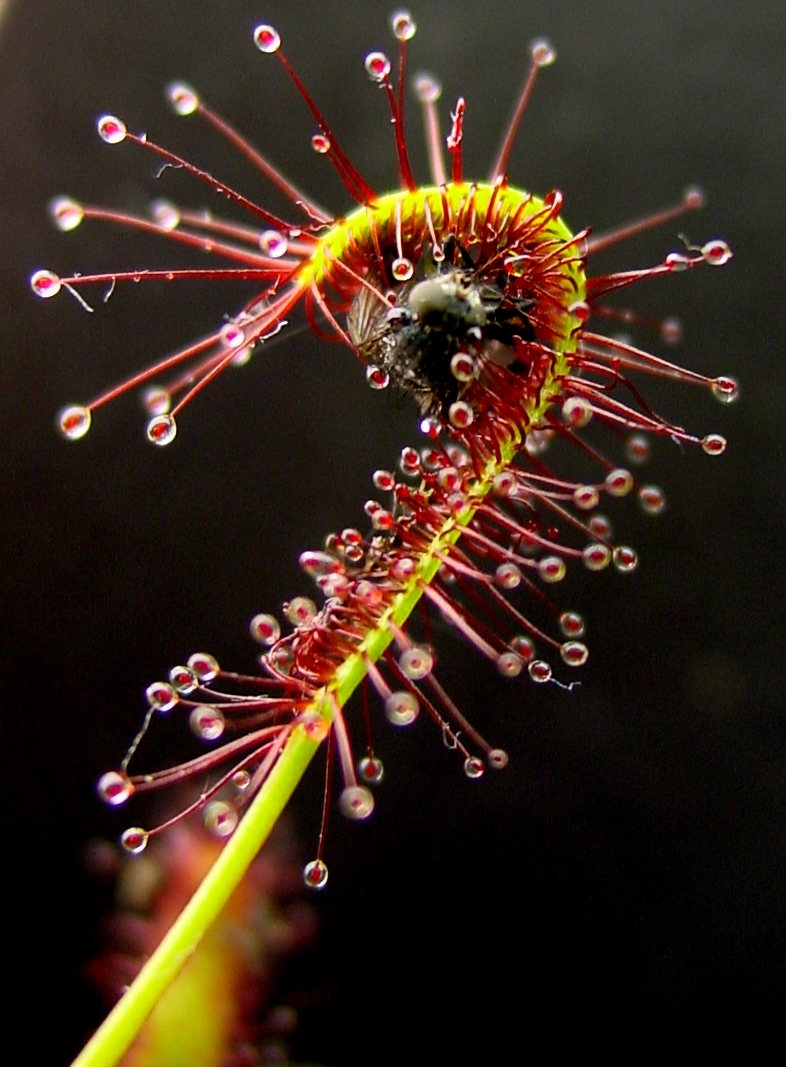
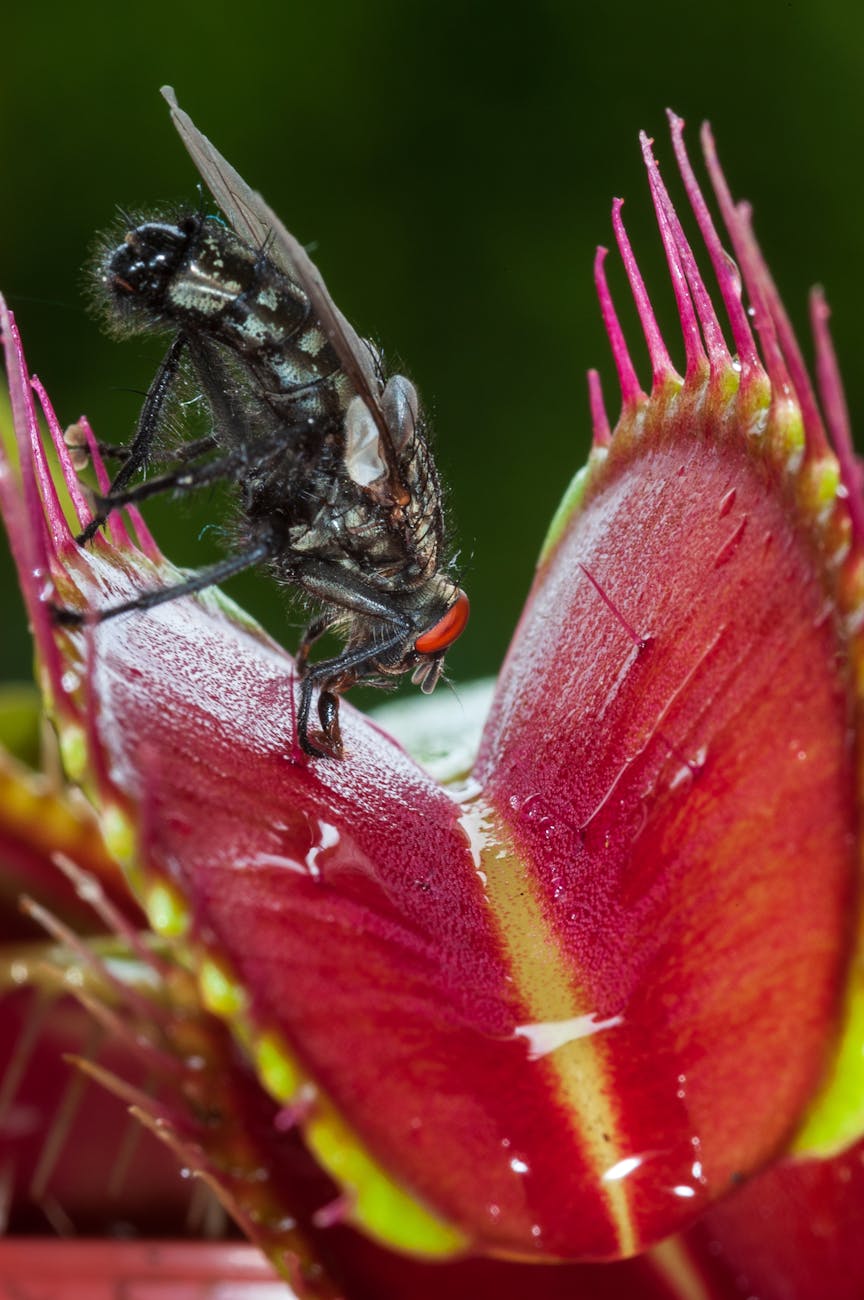
The Venus flytrap, known scientifically as Dionaea muscipula, is probably the most famous example. Sundews, grouped under Drosera species, are another well-known carnivorous lineage. Both belong to the roughly 630 species of carnivorous plants known.
These plants have become so iconic that they are also cultivated as ornamental or novelty plants. The Venus flytrap in particular is sold as a novelty, showing how strongly carnivorous plants capture human curiosity. They sit at the intersection of science, horticulture, and popular imagination.
Carnivorous Plants in the Bigger Picture of Plant Diversity
Plants are extraordinarily diverse. There are about 380,000 known plant species, ranging from single cells to giant trees. Most are multicellular, and the vast majority produce seeds. Around 85–90% of plant species are flowering plants.
Within that enormous diversity, carnivorous plants are a tiny minority. That rarity is part of their appeal. Out of hundreds of thousands of plant species, only some 630 are carnivorous.
They are also a reminder that plants are far more dynamic than they are often given credit for. The plant kingdom includes forms as different as mosses, ferns, conifers, flowering plants, parasites that have lost genes for photosynthesis, epiphytes that grow on other plants, and carnivorous species that digest small animals.
Seen this way, carnivorous plants are not a violation of what plants are. They are one more example of how flexible plant evolution can be.
Plants Have Many Ways to Get What They Need
Carnivory is unusual, but it is not the only strategy plants use to solve nutrient challenges.
Many plants work with fungi in a mutualistic symbiosis called mycorrhiza. In this partnership, fungi associated with roots help plants gain water and mineral nutrients from the soil, while the plant supplies carbohydrates made in photosynthesis.
Many legumes also partner with Rhizobium bacteria in root nodules. These bacteria fix nitrogen from the air for the plant to use, while receiving sugars in return.
Carnivorous plants solve the nutrient problem differently. Rather than leaning on root symbioses alone, they trap and digest small animals to obtain nutrients directly. In all these cases, the central issue is the same: a plant’s success depends not only on sunlight, but also on access to vital minerals.
Why Carnivorous Plants Seem So Strange
Part of the reason carnivorous plants feel so dramatic is cultural as much as biological. People tend to place plants in a mental box: silent, stationary, harmless, and predictable. Carnivorous species disrupt that image.
Yet from a scientific point of view, they fit into familiar plant biology. Plants already compete intensely for resources. They shade one another for light, extend roots for water, and vie for nutrients such as nitrogen and phosphorus. Carnivory is simply a specialized way of dealing with nutrient limitation.
In that sense, the shock comes less from the biology itself and more from our expectations. These plants reveal that being rooted in place does not mean being passive.
More Than a Curiosity
Carnivorous plants are easy to treat as a botanical oddity, but they also illustrate an important lesson about life on Earth. Organisms often face multiple challenges at once, and one solution does not solve all of them.
Photosynthesis gives a plant energy-rich sugars. That is indispensable. But growth also depends on access to minerals from the environment. Carnivorous plants show that even a highly successful strategy like photosynthesis may need to be supplemented when key nutrients are in short supply.
So the next time you hear that a plant “eats” animals, the most accurate way to think about it is this: it is not hunting because sunlight failed. It is hunting because sunlight alone cannot provide everything a plant needs.
That is the genius of carnivorous plants. They remain unmistakably plantlike, rooted in photosynthesis and the green world, while adding one of the most surprising nutrient-gathering strategies in nature.
Sources
Based on information from Plant.
More like this
Trap more fascinating facts like a Venus flytrap — download DeepSwipe and feed your curiosity daily.