Full article · 7 min read
Find a Tardigrade: The Wildlife on Your Roof

Tardigrades, often called water bears or moss piglets, are some of the most surprising animals living all around us. They are tiny eight-legged animals, usually about 0.5 millimetres long when fully grown, with short plump bodies and clawed legs. Despite their microscopic size, they have become famous for toughness, odd charm, and their ability to turn up in places people rarely expect.
One of the easiest places to go looking for them is not a remote jungle or the deep sea, but ordinary mosses and lichens on walls and roofs. That means a patch of growth just above your head may be home to an entire miniature world.
Why roofs can hide tardigrades
Tardigrades live across an enormous range of environments in Earth’s biosphere, including mountaintops, tropical rainforests, the deep sea, and the Antarctic. But for everyday discovery, damp terrestrial habitats matter most. The majority of species live in places such as mosses, lichens, liverworts, soil, and leaf litter.
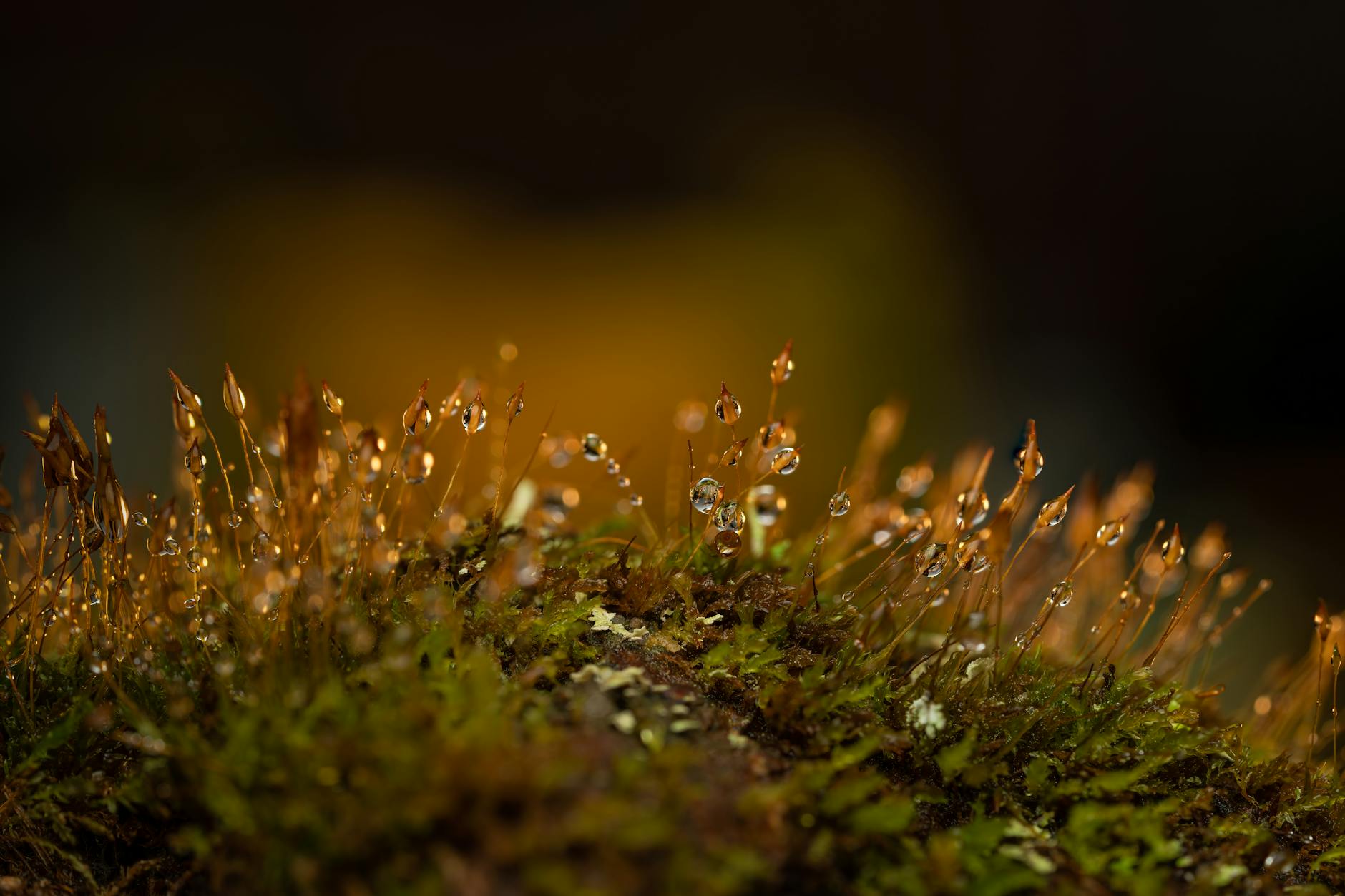
That is what makes rooftops so interesting. Mosses and lichens growing on shingles, stones, or gutters can hold thriving populations of tardigrades. These animals are especially common in such damp microhabitats, where thin films of water can form after rain or dew.
They are not just present there in tiny numbers, either. In soil, there can be as many as 300,000 tardigrades per square metre. On mosses, densities can exceed 2 million per square metre. A square metre is about the size of a small tabletop, so even a modest clump of rooftop moss may shelter a startling number of microscopic animals.
The tiny animal you can actually see
Part of the tardigrade’s appeal is that it is not locked away behind expensive lab equipment. They can readily be collected from mosses and lichens and viewed under a low-power microscope, making them accessible to students and amateur scientists.
A low-power microscope is simply a microscope that does not require extremely high magnification to reveal its subject. Since tardigrades are often large enough to be seen this way, they are a practical target for anyone curious about the hidden life in everyday habitats.
Their bodies are built in a distinctive way. Tardigrades have four pairs of hollow, unjointed legs. Each leg ends in claws, usually four to eight depending on the species, though in some species these structures are modified into sticky pads. Their gait is part of why they earned the nickname “water bear”: the way they walk reminded early observers of a bear’s lumbering movement.
Wake a water bear with a drop of water
One of the most remarkable things about tardigrades in rooftop moss is that a dry sample may still contain animals that are not dead, only dormant. Terrestrial and freshwater tardigrades can suspend their metabolism and enter a form of cryptobiosis when water is not available.
Cryptobiosis is an extreme resting state in which metabolic activity stops. In response to drying, a tardigrade pulls in its legs and forms a desiccated cyst known as a tun. A tun is the curled, compact dormant form a tardigrade takes when conditions become too dry.
This is why a dried sample of moss or lichen can be so exciting under the microscope. If tardigrades are present and in this dormant state, adding a little water can reanimate them. In practical terms, that means an animal that looked absent or lifeless can return to activity after rehydration.
This ability has helped make tardigrades famous. In the tun state, they can go without food or water for several years, and they become highly resistant to environmental stress. That does not mean they actively live in those harsh conditions the way true extremophiles do. Rather, they endure them for a time by shutting down into a protective state.
What are cysts, eggs, and tuns?
When people hear that tardigrades can travel long distances, three terms often come up: eggs, cysts, and tuns.
Eggs are the next generation. Depending on the species, tardigrade eggs may be spherical or ovoid, and some have elaborate surface ornamentation such as knobs, pyramids, or bottle-shaped structures. Aquatic species may glue eggs to a surface or leave them in a cast-off cuticle after moulting, while terrestrial eggs have drought-resistant shells.
Cysts are protective life-cycle stages. They are durable forms that help tardigrades persist through difficult conditions.
Tuns are the compact cryptobiotic form created during drying. In this state, the animal is desiccated and inactive.
These stages matter because tardigrade eggs, cysts, and tuns are small and durable enough to enable long-distance transport. They can be carried on the feet of other animals or by the wind. So the moss on one roof does not have to stay biologically isolated. Tiny hitchhikers can arrive from somewhere else entirely.
Tiny travelers on the wind
The idea of microscopic wildlife hitchhiking may sound fanciful, but tardigrades are well suited for dispersal. Their resistant eggs and dormant stages are both small and tough. Wind can move them, and animals can unknowingly carry them on their feet.
This helps explain how tardigrades as a group have become cosmopolitan, meaning they occur across many parts of the world. Individual species may be much more specialised, but as a whole the phylum occupies land, freshwater, and marine environments on a global scale.
For someone exploring rooftop moss, this adds a nice sense of drama: the creatures in that tiny sample may belong to a lineage of miniature travellers capable of crossing surprising distances.
What a tardigrade is doing in moss
Tardigrades are not just sleeping and traveling. They also feed, crawl, sense their environment, and reproduce.
They feed by sucking fluids from animal or plant cells, or from detritus, which is dead organic material. To do this, they use a pair of stylets, needle-like structures made of the mineral aragonite, to pierce their food. Muscles in the pharynx then pump fluids into the gut.
They move with muscles that work in opposing pairs, making each leg step backward and forward. Their claws help them grip surfaces and stop their legs from sliding while walking. That clumsy crawling style is one reason they have become so beloved.
In the head, tardigrades have a brain, eyespots, and sensory structures including cirri and clavae. These likely help them detect features of their environment. Remarkably, at least one species, Dactylobiotus dispar, has been shown to learn through classical conditioning, curling into a defensive tun state in response to a blue light associated with an unpleasant stimulus.
An ordinary habitat full of extraordinary toughness
The species you find on a roof are not there because roofs are extreme in the same sense as outer space or deep-sea trenches. But rooftop life can be drying, exposed, and inconsistent, which makes tardigrades well suited to it.
When moisture disappears, terrestrial and freshwater tardigrades can retreat into cryptobiosis. In that tun state, they become highly resistant to stresses including severe temperatures, lack of oxygen, vacuum, radiation, and high pressure. This tolerance is part of the reason tardigrades have such a big reputation.
Scientists once thought their long-term survival in a dried state depended mainly on the sugar trehalose. But tardigrades do not make enough trehalose for that to explain the effect. Instead, they produce special proteins in response to desiccation. Some of these are tardigrade-specific proteins, and they may protect cell membranes and form a glass-like matrix that shields the cytoplasm during drying.
That hidden molecular protection helps explain how a tiny animal in a crust of rooftop moss can dry out, wait, and then return to activity when water comes back.
Easy wildlife, big fascination
Tardigrades have become unusually popular for microscopic animals. They are accessible, strange-looking, and tied to one of the most dramatic abilities in the animal kingdom: surviving life-stopping events such as drying out. They can even be reanimated on a microscope slide with a little water if they are in the right dormant state.
That combination makes them perfect for curious beginners. You do not need to travel far. A patch of moss or lichen from a wall or roof, a low-power microscope, and a little patience can reveal an entire hidden ecosystem.
Seen this way, a roof is not just part of a building. It can also be a habitat packed with microscopic animals, dormant travelers, eggs, and crowded populations waiting to be discovered. The wildlife on your roof may be tiny, but it is anything but boring.
Sources
Based on information from Tardigrade.
More like this
Turn your next patch of roof moss into a safari — download DeepSwipe and meet more tiny wonders, one swipe at a time.


