Full article · 7 min read
The Cell and Its Code: How Life Runs Itself
Life can seem mysterious, but at its core it depends on an elegant partnership inside cells. One part stores instructions. Another part carries out the work. In simple terms: DNA and RNA hold the information, and proteins do the jobs that keep living systems going.
That basic pattern helps explain how organisms grow, function, reproduce, and pass their traits on. It also helps explain why cells are considered the fundamental unit of life.
DNA and RNA: the information system of life
All known living organisms use nucleic acids as information-bearing molecules. These include DNA, or deoxyribonucleic acid, and RNA. Alongside proteins and complex carbohydrates, they are among the major macromolecules essential for known forms of life.
DNA carries most of the genetic instructions used in growth, development, functioning, and reproduction. In many ways, it acts like a long-term information archive. RNA is also a nucleic acid and works alongside DNA in the cell’s information system.
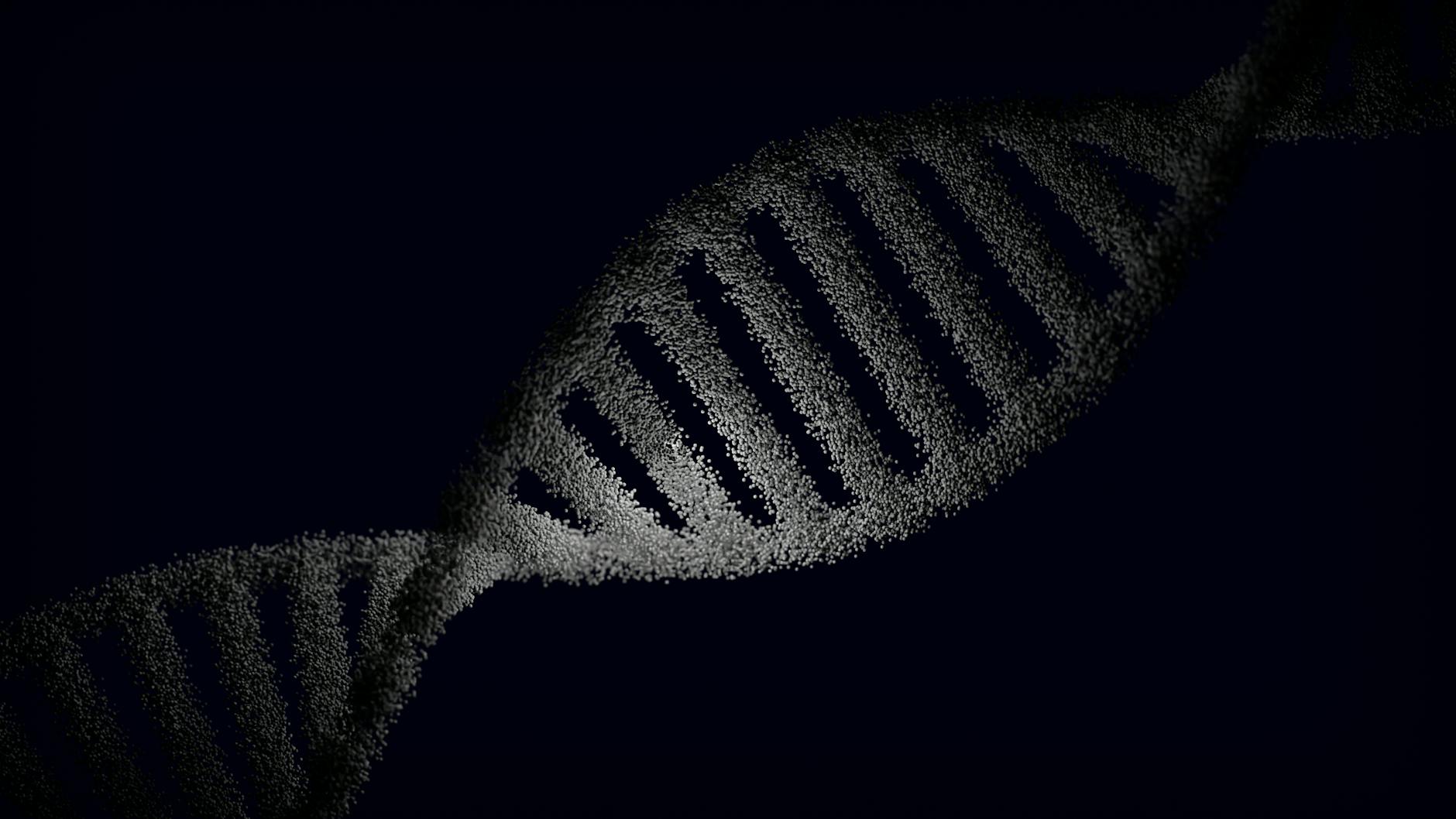
Most DNA molecules are built from two strands twisted around each other in a double helix. Each strand is made of simpler units called nucleotides. A nucleotide contains three parts: a nitrogen-containing base, a sugar called deoxyribose, and a phosphate group. The bases in DNA are cytosine, guanine, adenine, and thymine, often shortened to C, G, A, and T.
These bases pair in a very specific way: A pairs with T, and C pairs with G. Because of this base-pairing rule, each strand contains the information needed to recreate the other. That is one of DNA’s most important features. It allows genetic information to be preserved when cells reproduce.
Why each DNA strand can copy the other
The idea that each DNA strand can recreate the other is central to how life maintains continuity. The two strands are connected by hydrogen bonds between their paired bases, while the backbone of each strand is formed by alternating sugar and phosphate units linked by covalent bonds.
When a cell prepares to divide, its DNA is duplicated in a process called DNA replication. Because each strand already contains the pattern for its partner, the cell can produce a complete new copy. This is how the information stored in chromosomes is passed along during cell division.
Within cells, DNA is organized into long structures called chromosomes. During division, chromosomes are duplicated so that each resulting cell receives its own complete set. This is one of the most powerful ways life sustains itself over time: not by keeping the same cell forever, but by preserving information accurately enough for new cells to continue the system.
Proteins: the machinery that gets things done
If DNA is the instruction set, proteins are the machinery. Proteins carry out many of the chemical processes that make life possible. The molecular mechanisms of cell biology are based on proteins, and the cell depends on them for its activity.
Proteins are built through a process called protein biosynthesis. Ribosomes assemble a sequence of amino acids based on gene expression from the cell’s nucleic acid instructions. In eukaryotic cells, many proteins are then transported and processed through the Golgi apparatus before being sent to where they are needed.
This instruction-to-action flow is a defining feature of living systems. DNA stores the information for each type of protein. Proteins then help perform the work needed for metabolism, structure, regulation, and countless other tasks inside cells.
That is why the phrase “DNA writes, proteins do” is such a useful summary. The code matters, but the machinery matters too. Life depends on both.
The cell: life’s structural and functional unit
Cells are the basic unit of structure in every living thing. Cell theory, developed in the early nineteenth century and later widely accepted, states that all cells arise from pre-existing cells by division.
The activity of an organism depends on the total activity of its cells, with energy flowing within and between them. Cells also contain hereditary information, which is carried forward as a genetic code during cell division.
This makes the cell more than just a container. It is the place where information is stored, read, and acted upon. It is where proteins are made, where energy is used, and where the processes associated with life are coordinated.
Some organisms consist of only a single cell. Others are multicellular and contain many specialized cells. But whether an organism is small and simple or large and complex, the cell remains the core unit that makes life work.
Two major cell plans: prokaryotes and eukaryotes
There are two primary types of cells, reflecting their evolutionary origins: prokaryote cells and eukaryote cells.
Prokaryote cells do not have a nucleus or other membrane-bound organelles. They do, however, have circular DNA and ribosomes. Bacteria and Archaea belong to the prokaryotes.
Eukaryote cells have a distinct nucleus enclosed by a nuclear membrane. They also contain membrane-bound organelles such as mitochondria, chloroplasts, lysosomes, rough and smooth endoplasmic reticulum, and vacuoles. Their DNA is organized into chromosomes. Animals, plants, fungi, and many protists are eukaryotes.
This difference is one of the biggest divides in biology. A nucleus is a membrane-bound compartment that houses most of a eukaryotic cell’s DNA. Organelles are specialized structures inside cells that perform particular functions. In eukaryotes, this internal organization allows a greater level of complexity.
Endosymbiosis: how complex cells likely gained key organelles
One of the most intriguing ideas in biology is that major eukaryotic organelles formed through endosymbiosis. In this model, the conventional view is that eukaryotes evolved from prokaryotes, with the main organelles of eukaryotes arising through a long-term symbiosis between bacteria and the progenitor eukaryotic cell.
Endosymbiosis means one cell living inside another in a stable relationship. Over evolutionary time, that relationship can become so integrated that the once-independent cell becomes a permanent part of the host cell. The article identifies this process as the likely origin of major eukaryotic organelles.
This idea helps explain why eukaryotic cells are so different from prokaryotic ones. Rather than simply being larger versions of simple cells, they may be the result of deep biological partnerships that became built into the structure of life itself.
How cells reproduce
Cells reproduce by cell division, where one parent cell gives rise to two or more daughter cells. In prokaryotes, this occurs through fission. The DNA is replicated, the copies attach to parts of the cell membrane, and the cell divides.
In eukaryotes, cell division follows the more complex process of mitosis. Even so, the key outcome is similar: the resulting cells are identical to each other and to the original cell, except for mutations, and each can continue dividing after an interphase period.
This is where the reliability of DNA copying becomes so important. Without a stable way to preserve information, cells could not maintain the structures and functions required for life.
From single cells to multicellular life
Many living things remain single-celled, but multicellular organisms developed a different strategy. Multicellular organisms may have first evolved through colonies of identical cells. Over time, those cells developed specializations and became dependent on one another.
Specialization lets multicellular organisms use resources more efficiently than single cells. Cells also evolved ways to perceive and respond to their microenvironment, increasing adaptability. Cell signaling coordinates cellular activities and governs the basic functions of multicellular organisms.
Cell signaling can happen through direct cell contact, called juxtacrine signalling, or indirectly through exchanged agents, as in the endocrine system. In more complex organisms, coordination can occur through a dedicated nervous system.
Even in large organisms, the same core principle remains: information is stored, transmitted, and used by cells to control action.
Why this matters for understanding life
Biologists often define life descriptively, using traits such as homeostasis, organisation, metabolism, growth, adaptation, response to stimuli, and reproduction. Cells and their molecular systems sit at the heart of these traits.
Homeostasis means regulating the internal environment to maintain a stable state. Metabolism refers to the transformation of energy, including building cellular components and breaking down organic matter. Organisation means being structurally composed of one or more cells. Reproduction includes making new organisms, while response to stimuli covers reactions to changes in the environment.
DNA, RNA, proteins, and cells are what make these features possible. They are the working parts of life’s self-sustaining process.
The result is a remarkable system: molecules storing instructions, proteins carrying out tasks, and cells organizing everything into functioning living units. From bacteria and archaea to animals, plants, fungi, and protists, life runs through this cellular logic.
That logic does not make life less fascinating. It makes it more so. The deeper you look, the more impressive it becomes that living systems can preserve information, copy themselves, and keep functioning across generations using chemistry organized inside cells.
Sources
Based on information from Life.
More like this
Crack the code of life one swipe at a time — download DeepSwipe and let your neurons divide into smarter daughter cells.


