Heat feels ordinary. It warms your hands, boils water, and leaks out of car engines and laptop vents. But in physics, heat is far more than a background inconvenience. It sits at the center of one of the deepest limits in nature: you can easily turn organized energy into heat, but you cannot perfectly turn heat back into useful work.
That one-way tendency helps explain why no engine can be perfect, why energy becomes less useful as it spreads out, and why some physicists describe the far future of the universe in terms of energy that still exists but can no longer do much.
Watch the story on DeepSwipe
Heat is energy, but not the easiest kind to use
Energy is the capacity to do work and can also appear as heat and light. It comes in many forms, including kinetic energy of motion, potential energy stored by position or configuration, chemical energy, radiant energy, internal energy, and rest energy. Energy itself is conserved: it can change form, but it cannot be created or destroyed.
That does not mean every form of energy is equally useful.
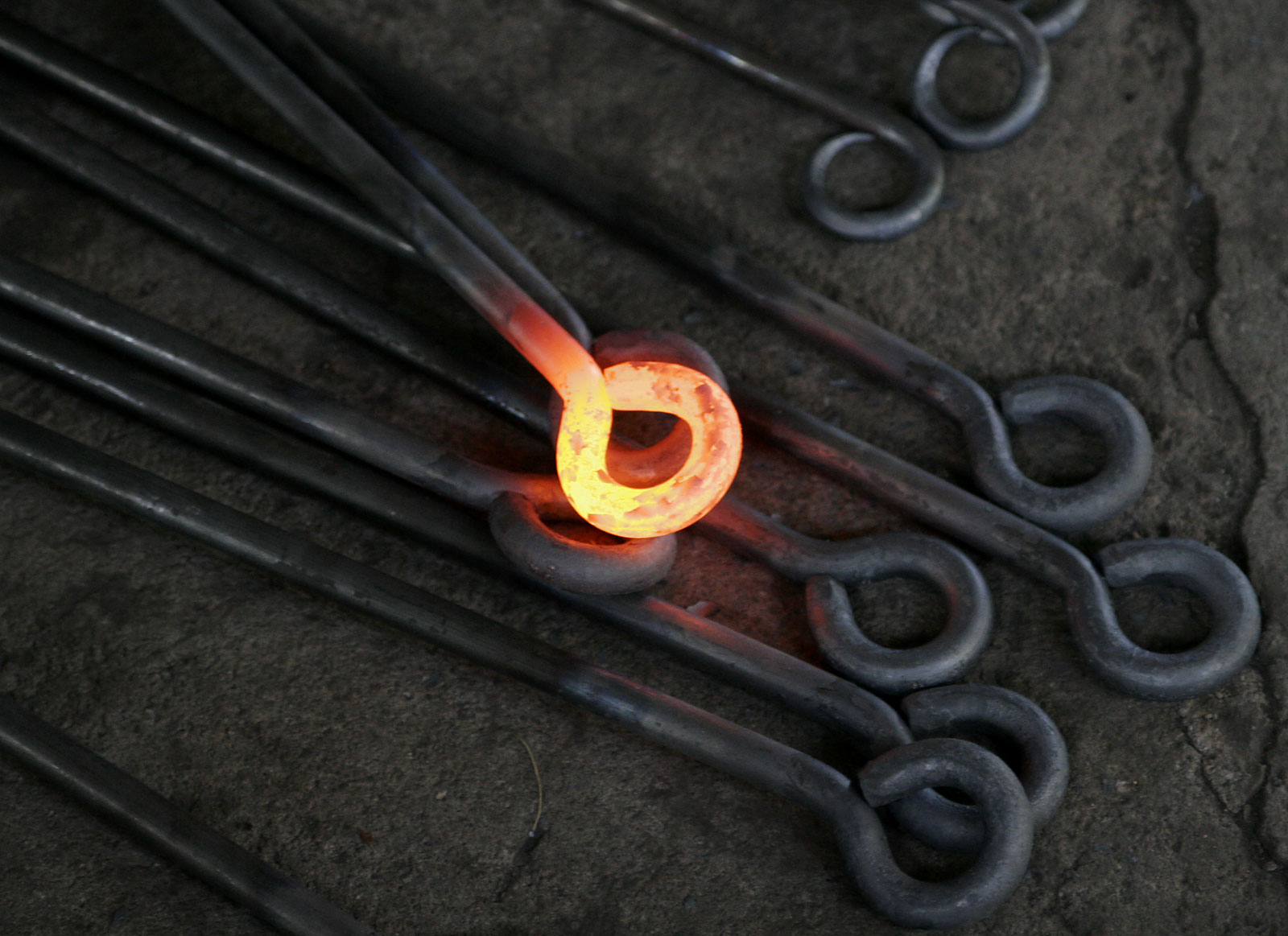
A falling object can do mechanical work. A battery can drive an electric current. Water held behind a dam stores gravitational potential energy that can spin turbines. These are examples of energy in relatively organized forms. Heat is different. In thermodynamics, heat is energy transferred in a way that does not count as work, and it is closely tied to the microscopic motion and vibration of particles.
This is why heat is such a special case. Motion, friction, impact, and resistance can all end with energy becoming thermal. But once energy has spread into the random microscopic motion of atoms and molecules, getting it all back into a clean, directed form becomes fundamentally restricted.

Why engines always waste some heat
A heat engine is a device that transforms heat into work. Steam turbines are a classic example: heat is used to drive motion that can then generate electricity. But there are strict limits to how efficiently heat can be converted into work in a cyclic process.
A cyclic process means the machine repeats the same general sequence over and over, returning to its starting condition so it can run again. Engines in cars, power plants, and many industrial systems work this way. In such systems, the second law of thermodynamics says the system doing work always loses some energy as waste heat.
That point matters because it means the shortfall is not merely due to poor design, cheap materials, or sloppy engineering. Even in principle, practical heat engines cannot convert all heat into useful work. Some energy must leave in a less useful thermal form.
This creates a limit to how much heat energy is available to do work in a cyclic process. By contrast, mechanical and other forms of energy can be transformed into thermal energy without the same kind of limitation. In everyday terms, it is easy to make things hotter by rubbing, compressing, colliding, or electrically resisting. The reverse direction is the hard one.
The deeper reason: energy naturally spreads out
The broad trend behind this limit is that energy tends to spread among available states. Physics describes this spreading using the idea of entropy.
Entropy is a measure of how evenly energy is distributed among the parts of a system. When a system has many available ways to arrange its energy, that energy tends to spread over them rather than remain concentrated in one neat, useful packet.
The article’s thermodynamic discussion gives a simple picture: if an isolated system is given more available energy states, total energy spreads over those states on average. This is part of why concentrated, ordered energy tends not to stay concentrated by itself.
The same idea appears in the discussion of transformations. On a sufficiently small scale, many transformations are possible. But on larger scales, certain changes are highly improbable because it is statistically unlikely that energy or matter will randomly move into more concentrated forms or smaller spaces.
That is why a hot engine block cools down on its own, but a cool engine block does not spontaneously pull thermal energy out of the air and organize it into rotation. The first change spreads energy. The second would require energy to become more concentrated in a coordinated way, which is overwhelmingly unlikely.
Reversible and irreversible processes
Thermodynamics separates energy transformations into reversible and irreversible processes.
A reversible process is an idealized case in which energy is transformed without being dissipated into unavailable states. An irreversible process is one in which energy is spread into available states in a volume from which it cannot be recovered into more concentrated forms without degrading even more energy.
That word “dissipated” is important. It does not mean energy vanishes. It means the energy remains present, but in a form that is harder to gather back into useful work.
At the atomic scale, thermal energy is associated with motion and vibration of atoms and molecules. When heat is generated, part of the applied energy ends up in these microscopic motions and in surrounding fields. This creates a kind of reservoir of energy that cannot be converted with 100% efficiency into other forms.
So when engineers talk about losses, the physics is deeper than broken parts or friction alone. Even in an idealized view, once energy is dispersed as heat, a full reversal is blocked by thermodynamic limits.
Waste heat is not lost energy
One of the most common confusions is to think waste heat means energy disappears. It does not. The law of conservation of energy still holds.
In a closed system, total energy remains constant unless energy is transferred in or out as work or heat. The total inflow of energy must equal the total outflow plus the change in the energy stored in the system. Energy is conserved exactly so far as known physics can tell.
The key distinction is between total energy and useful energy.
A machine can keep the books perfectly balanced while still becoming less capable of doing organized work. Energy that leaves as waste heat still exists. It is simply more spread out and less available for tasks like pushing pistons, lifting weights, or driving turbines.
This is why the fate of energy in thermodynamics is not about disappearance but degradation of usefulness.
A pendulum shows what perfect exchange would look like
A simple gravity pendulum offers a useful contrast. At its highest points, its kinetic energy is zero and its gravitational potential energy is maximum. At its lowest point, kinetic energy is maximum and equals the decrease in potential energy. In an unrealistically perfect case with no friction or other losses, the pendulum would keep exchanging potential and kinetic energy forever.
That example shows what clean energy conversion looks like in principle. But real systems are not frictionless. In reality, some energy is converted into heat, and the swing dies down.
The total energy is still accounted for. What changes is where that energy goes and how concentrated it remains.
Heat, disorder, and living systems
The spread of energy is not just a machine problem. It also appears in biology.
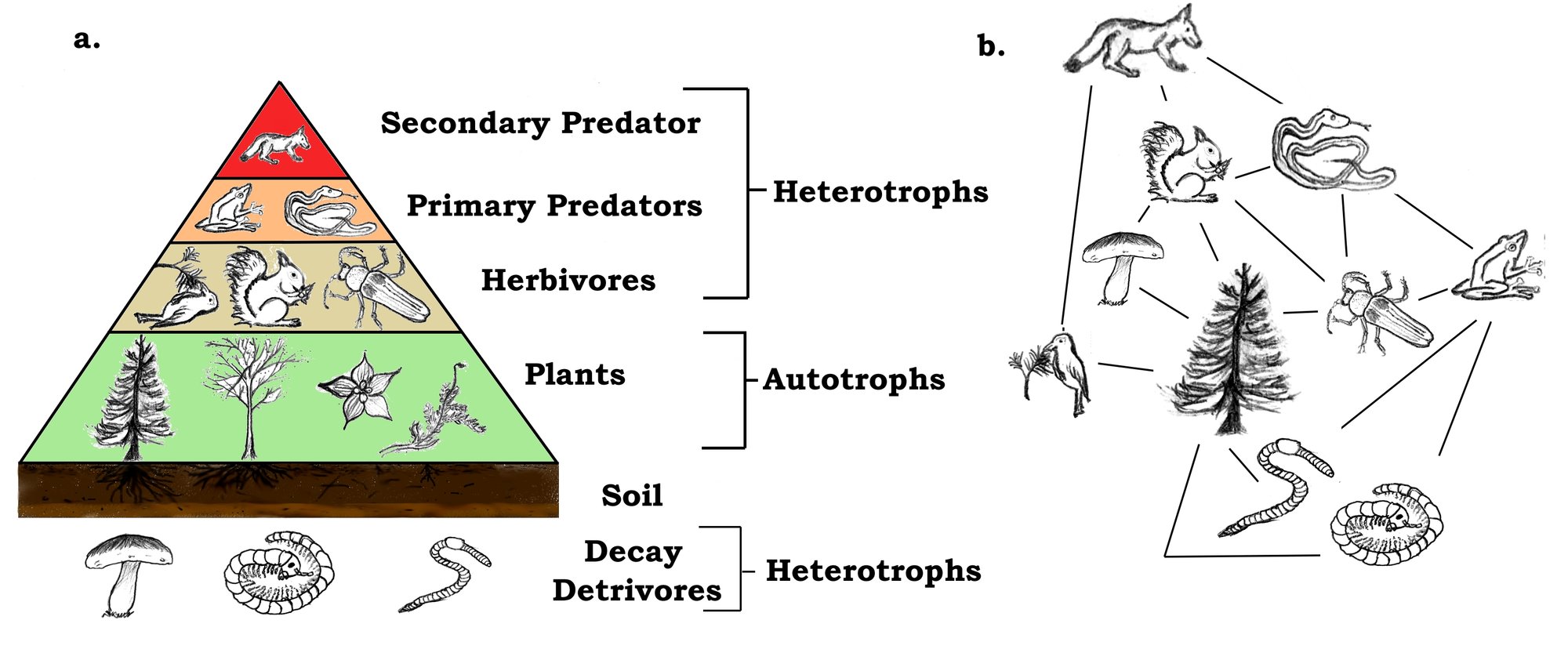
Living organisms constantly take in and release energy. Plants capture radiant energy from sunlight and store it as chemical potential energy in photosynthesis. Animals rely on chemical energy in nutrients. In cells, adenosine triphosphate, or ATP, serves as the primary energy transporter and is continually broken down and synthesized during cellular respiration.
But even here, much of the energy involved ultimately becomes heat. The article notes that in growing organisms, energy converted to heat serves an important role, because maintaining highly ordered tissue requires spreading a greater amount of energy as heat into the surroundings. This is tied to the second law of thermodynamics.
So biology does not escape thermodynamics. Life works by channeling energy through organized processes, while still producing heat and increasing the spread of energy overall.
Why the universe can keep its energy and still run down
The most haunting implication of all this is cosmic.
As time passes, more energy can become trapped in irreversible states, such as heat or other forms of increased disorder. This has led to the idea of a thermodynamic heat death of the universe.
That phrase sounds dramatic, but the underlying idea is precise: the total energy of the universe would not need to decrease. Instead, the fraction of energy available to do work through a heat engine, or to be transformed into other usable forms, would continue to decrease.
In other words, the universe could keep the same total energy while losing more and more of the energy that can actually accomplish anything interesting.
This is the same logic seen in a cooling machine, expanded to the largest scale imaginable. Energy remains. Useful gradients fade.
The real lesson of heat
Heat is not just warmth. It is the signature of energy becoming more spread out, more microscopic, and harder to harness. That is why turning motion into heat is easy, while turning heat into organized work is strictly limited. It is why perfect engines do not exist. It is why waste heat is unavoidable in cyclic machines. And it is why thermodynamics reaches from engines and cells all the way to the long-term future of the universe.
The remarkable part is that none of this contradicts conservation of energy. Energy is never destroyed. What changes is its ability to remain concentrated enough to do useful work.
That difference between “energy exists” and “energy is useful” is one of the most important ideas in physics.