The Anschluss, the annexation of Austria by Nazi Germany on 12 March 1938, was not just a political turning point. For Austria’s Jews, it marked the rapid start of humiliation, dispossession, exclusion, forced emigration, deportation, and mass death.
In Vienna and across Austria, anti-Jewish persecution did not unfold slowly over many years after the takeover. It began immediately. The annexation placed Austria under Nazi rule, and with that came the extension of Nazi racial policy into Austrian life. What followed transformed the lives of Austrian Jews within months.
Persecution began in public
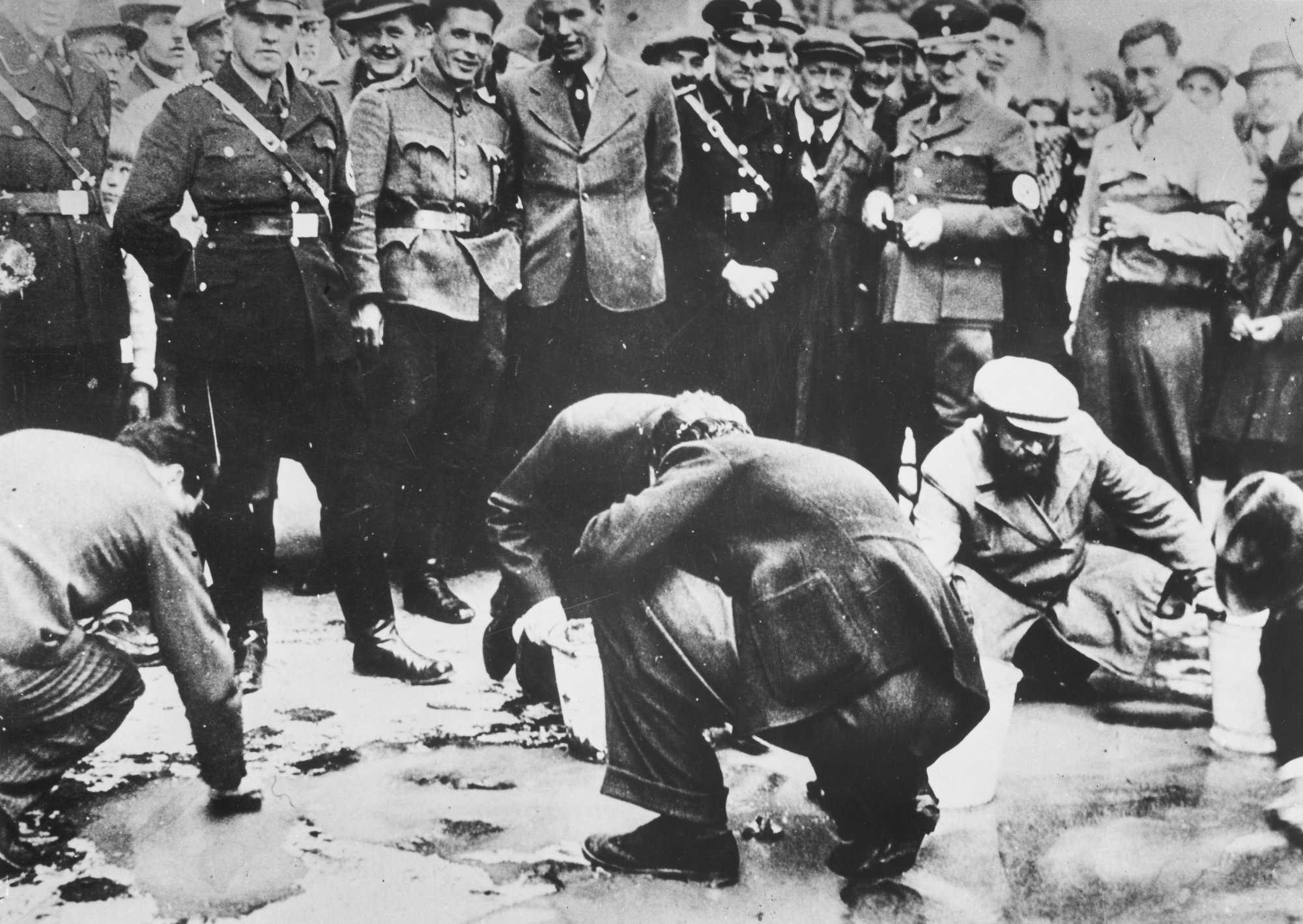
After the Anschluss, Jews were targeted openly in the streets. In Vienna, Jewish men and women were driven through public spaces while crowds watched. Their homes and shops were plundered. Some were forced to scrub away pro-independence slogans that had been painted on the streets before the planned March 1938 plebiscite. Jewish actresses from the Theater in der Josefstadt were forced by the SA to clean toilets.
These acts of public humiliation mattered for more than their cruelty. They signaled that Jews could now be attacked not only by the state, but also in full view of society. The atmosphere changed at once: persecution was no longer hidden behind political decrees alone. It was visible, performative, and designed to strip people of dignity.
At the same time, Jews were pushed out of public life. This process, known as Aryanisation, meant the transfer or seizure of Jewish property and economic life into non-Jewish hands. In practice, it was a systematic removal of Jews from business, society, and security.

Nazi racial laws spread into Austria
The legal framework of persecution followed quickly. The Nuremberg Laws, the Nazi racial laws that stripped Jews of rights, were applied in Austria from May 1938. These were then reinforced by many additional antisemitic decrees.
The effect was sweeping. Jews were gradually robbed of their freedoms. They were blocked from almost all professions, which meant many could no longer legally continue their work or earn a living. They were shut out of schools and universities, cutting off access to education and professional advancement. From September 1941, Jews were also forced to wear the yellow badge, a visible marker imposed by the regime to identify, isolate, and stigmatize them.
This combination of legal discrimination and public abuse created a trap. Jewish Austrians were stripped of rights, isolated socially, and denied normal participation in daily life.
Kristallnacht in Austria
The persecution reached a major climax in the Kristallnacht pogrom of 9–10 November 1938. A pogrom is an organized violent attack against a minority group, especially one tolerated or encouraged by authorities.
In Vienna, all synagogues and prayer houses were destroyed, and the same pattern was repeated in other Austrian cities such as Salzburg. The Stadttempel in Vienna was the only synagogue to survive, because its location in a residential district prevented it from being burned down.
Jewish businesses were devastated as well. Most Jewish shops were plundered and closed. Over 6,000 Jews were arrested overnight, and most were deported to Dachau concentration camp in the following days.
Kristallnacht made unmistakably clear that persecution in Austria had moved beyond exclusion and theft into mass organized violence.
Forced emigration came at a terrible price
The Nazi authorities dissolved Jewish organizations and institutions in Austria, hoping to force Jews to emigrate. In large numbers, they did. By the end of 1941, 130,000 Jews had left Vienna, including 30,000 who went to the United States.
But escape was not freedom without punishment. Those who left had to abandon their property behind. They were also forced to pay the Reich Flight Tax, a tax imposed on people emigrating from Nazi Germany. Some received financial help from international aid organizations in order to pay it.
Even this detail reveals the brutality of the system: the regime persecuted Jews, drove them out, took their livelihoods, and then extracted money from them for the act of fleeing.
Those who stayed faced deportation and death
For many who remained in Vienna, the outcome was catastrophic. The majority of the Jews who stayed eventually became victims of the Holocaust.
More than 65,000 Viennese Jews were deported to concentration camps. Fewer than 2,000 survived.
Those numbers show the scale of destruction. The Anschluss was not simply a prelude or background event. For Austria’s Jews, it was the beginning of the final collapse of safety, rights, community, and, for tens of thousands, life itself.
Why the Anschluss mattered so much
The annexation of Austria brought Nazi Germany’s anti-Jewish system directly into Austrian society. Before long, Austrian Jews faced the same racial laws, organized violence, economic robbery, and deportation machinery that defined Nazi rule elsewhere.
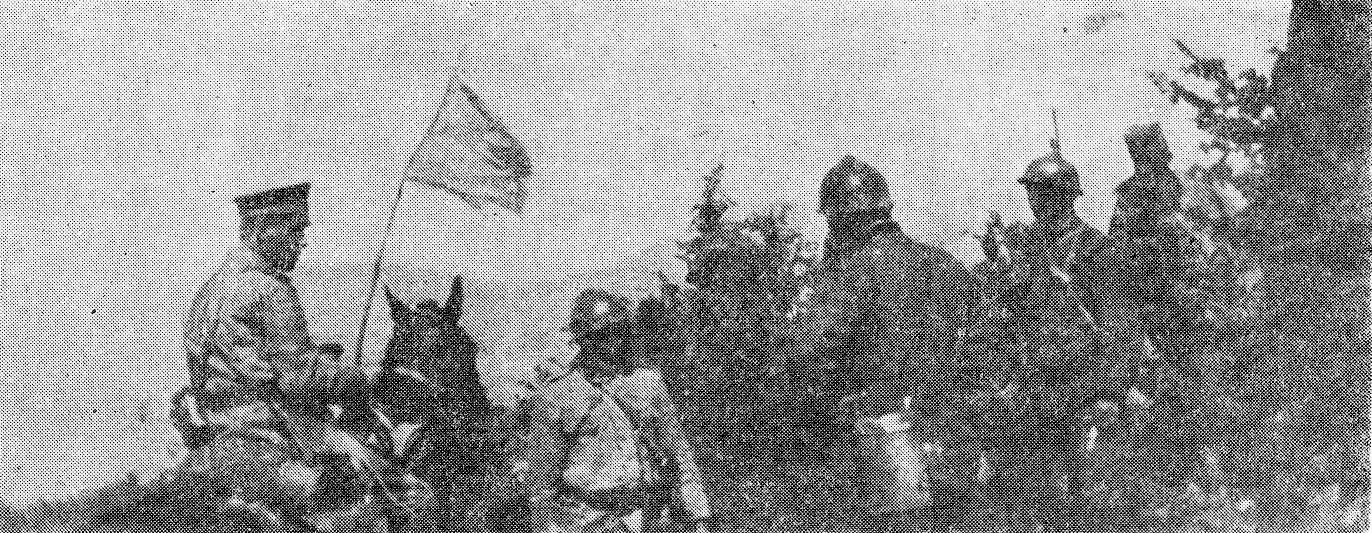
The speed is one of the most striking features. In March 1938, Austria ceased to exist as an independent state. Almost immediately, Jews were humiliated in public. Within months, the legal system had turned against them. By late 1938, synagogues were destroyed, shops were smashed, and thousands were arrested. By the end of 1941, huge numbers had fled, stripped of property. Those who remained were overwhelmingly deported, and very few survived.
That is why the Anschluss cannot be understood only as a diplomatic or territorial event. For Austrian Jews, it was the opening of a catastrophe carried out through law, public degradation, plunder, expulsion, and murder.
Remembering the human reality behind the event
Historical terms like Anschluss, Aryanisation, pogrom, and Nuremberg Laws can sound abstract at first glance. But in Austria in 1938, they translated into immediate human consequences: people forced onto the streets, families robbed, students expelled, workers dismissed, institutions dissolved, worship places destroyed, and thousands deported.
The story of Austria’s Jews after the Anschluss is a reminder that political annexation can instantly become personal disaster. In their case, it did. Almost overnight, neighbors became targets, rights vanished, and survival itself became uncertain.
To understand the Anschluss fully, it is essential to see it through this lens: not only as the annexation of a country, but as the beginning of catastrophe for Austria’s Jewish population.