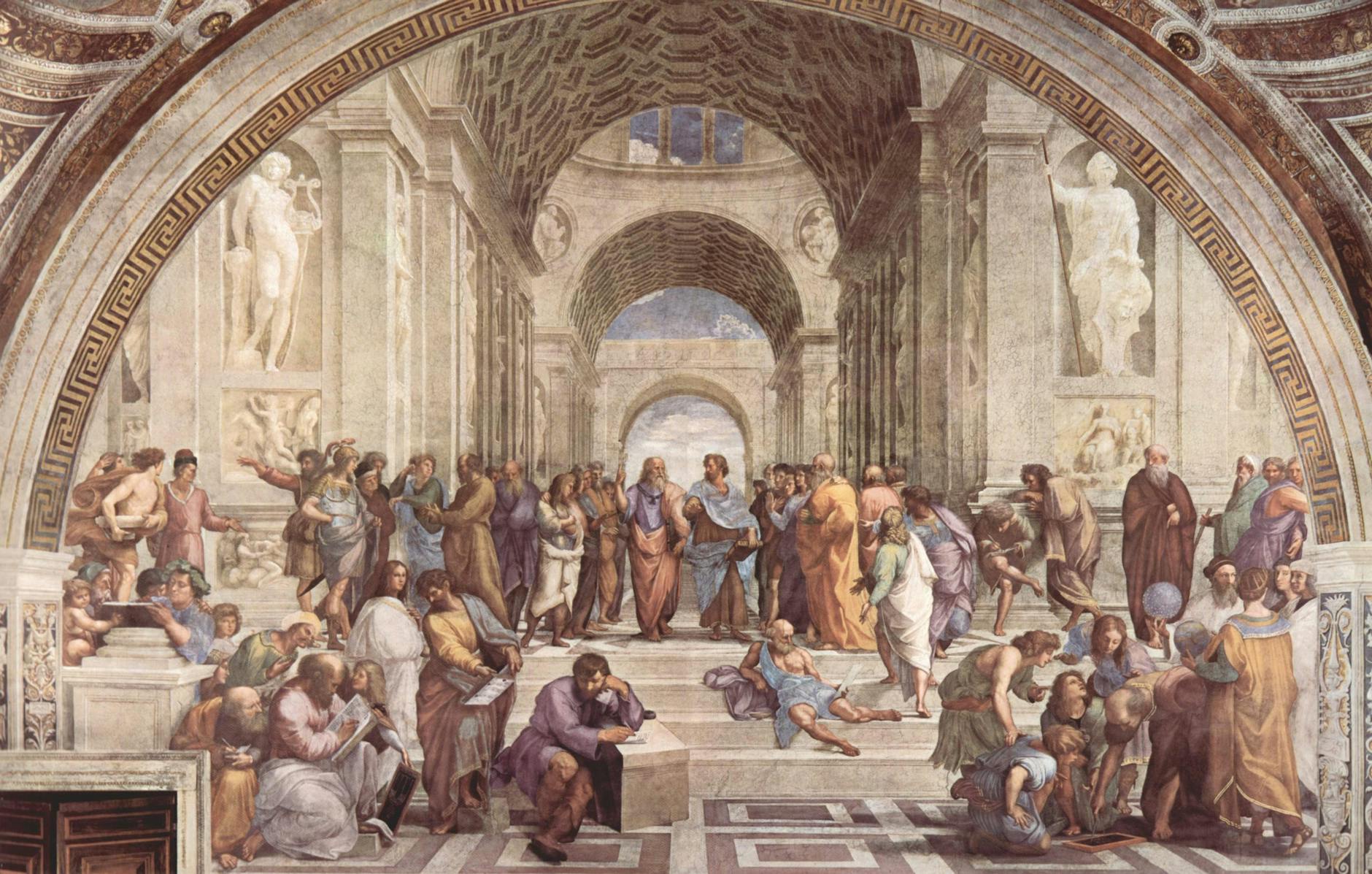
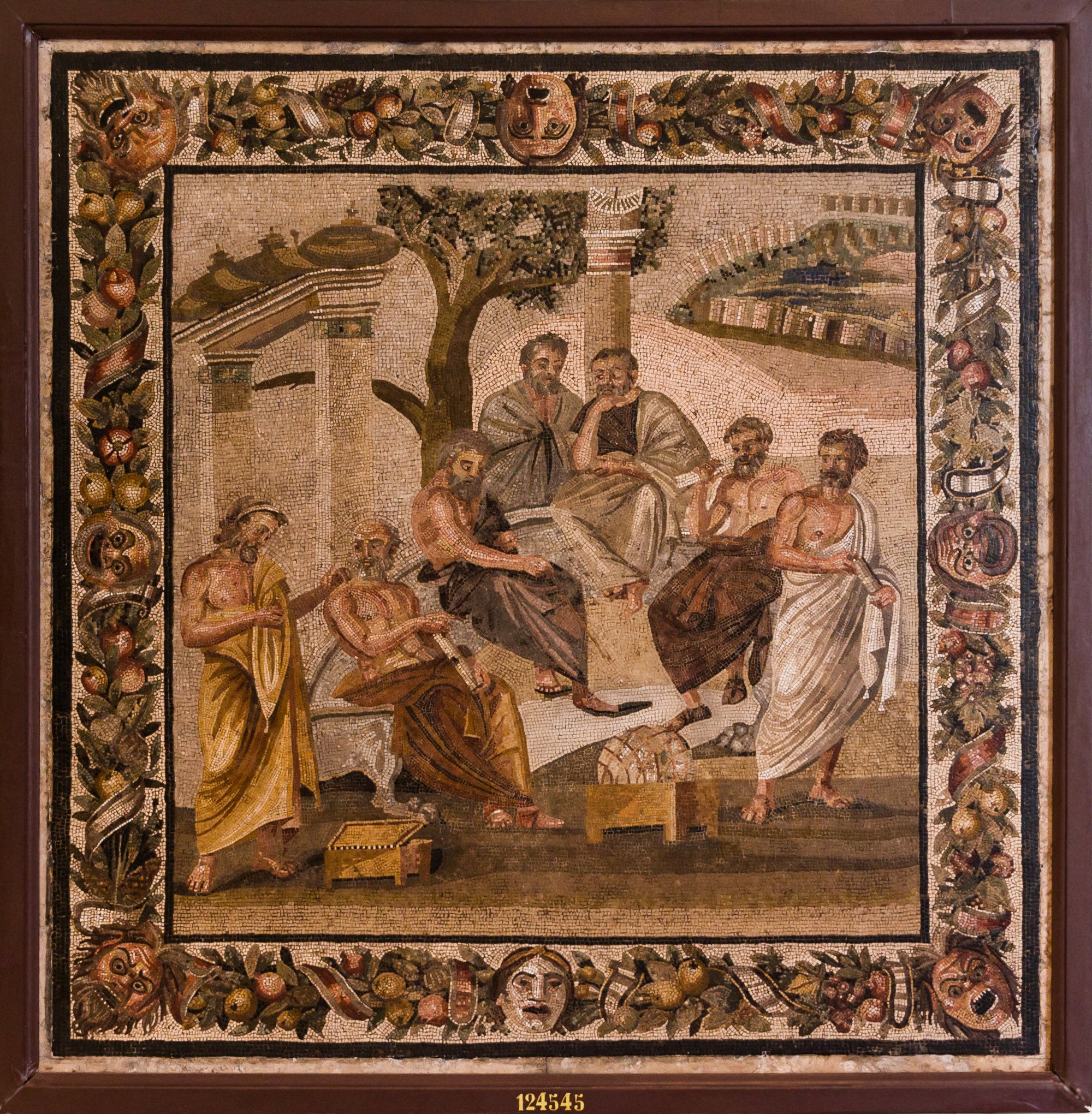
Revolutions are often imagined as explosions of anger, conflict, and dramatic events in the streets. But before crowds gather and systems change, something quieter usually happens first: people begin to argue about how society ought to work. That is where philosophy enters the story.
Philosophy is the systematic study of fundamental questions about reality, knowledge, reason, and value. It is a rational and critical form of inquiry, and one of its major branches is political philosophy, which examines the basic principles governing political systems and societies. Political philosophy asks questions that can become historically explosive: What is government for? When is political power legitimate? What counts as justice, liberty, and equality?
These are not abstract questions only for scholars. Again and again, philosophical ideas have shaped public life, influenced mass movements, and helped transform entire nations.
Watch the story on DeepSwipe

Why philosophy matters in politics
Political philosophy is concerned with the nature and purpose of government. It compares different forms of government and investigates under what circumstances the use of political power is legitimate rather than a form of simple violence. It also asks how political power, material goods, and legal rights should be distributed.
In plain terms, political philosophy tries to answer the deepest political questions: who should rule, by what right, and for whose benefit. It also explores major political ideals such as justice, liberty, equality, sovereignty, and nationalism.
This helps explain why philosophy can matter so much during periods of upheaval. When a society no longer accepts the old answers, philosophical ideas can provide a new framework. They give people a language for criticizing authority and imagining alternatives.
One of the clearest examples of philosophy influencing revolution is the role of Enlightenment thought in the rise of constitutional democracy. Constitutional democracy is a system in which government is limited by a constitution and political authority is connected to democratic rule.
The Enlightenment used reason to challenge traditional authorities. During the modern period, one of philosophy’s central concerns was how philosophical and scientific knowledge are created, with special importance given to reason and sensory experience. These innovations fed into the Enlightenment, a movement that questioned inherited power and old assumptions.
Its ideals helped lay the foundation for constitutional democracy and played a role in both the American Revolution and the French Revolution. That connection shows how philosophical inquiry can move from debates about reason and authority to concrete political transformation.
A revolution does not begin only with dissatisfaction. It also needs concepts. If people are going to replace one political order with another, they need some idea of what legitimate government should look like. Political philosophy supplied those ideas.
Marxist philosophy and communist revolutions
Philosophy has also helped drive revolutions in a very different direction. Marxist philosophy, through its exposition of communism, was one of the factors in the Russian Revolution and the Chinese Communist Revolution.
This is a reminder that philosophy does not point in only one political direction. It does not simply endorse whatever system is currently admired. Instead, it provides frameworks for analyzing society, criticizing existing institutions, and defending alternative arrangements of power and resources.
In this case, philosophy influenced developments that significantly transformed the political landscape. The article on philosophy notes, for example, that in modern Chinese philosophy the emergence of Chinese Marxism, with its focus on class struggle, socialism, and communism, led to major political change.
Ideas can therefore function as catalysts. Once a theory offers a compelling account of injustice, power, or history, it can organize collective action. Philosophical arguments may begin in texts and debates, but under the right conditions they can help mobilize entire populations.
Gandhi and the philosophy of non-violence
Not all world-changing philosophy is tied to violent revolution. In India, Mahatma Gandhi’s philosophy of non-violence shaped the Indian independence movement.
Non-violence here is more than simply avoiding harm. It is a philosophical and political method: a way of acting that reflects a view about power, morality, and legitimate resistance. The striking part is that a method of conduct can become a mass movement. This shows the close connection between ethics and politics.
Ethics is the branch of philosophy that studies right conduct, moral principles, and what it means to live a good life. Political philosophy is often treated as a subfield of ethics because political systems are never just about power; they are also about what ought to be done. Questions about justice, rights, and authority are moral questions as much as political ones.
Gandhi’s influence illustrates that philosophical ideas can reshape history not only by justifying new institutions, but also by redefining the means people are willing to use to bring change about.
What makes an idea revolutionary?
Not every philosophical theory changes the world. But some do. Why?
One reason is that philosophy works at the level of fundamentals. It does not merely ask whether a particular leader or law is good. It asks what counts as legitimacy in the first place. It examines basic assumptions and methods, often reflecting critically on beliefs that people normally take for granted.
This can be unsettling. Philosophy often challenges common sense, inherited prejudice, and the habitual beliefs of an age or nation. Because of that, it can open space for radical new possibilities.
Another reason is that philosophy is closely related to other fields and offers an interdisciplinary perspective. It bridges gaps between disciplines by analyzing their core concepts and assumptions. In politics, this means philosophical arguments can connect moral values, legal reasoning, historical interpretation, and social ideals into a single worldview.
Once such a worldview takes hold, it can become more than theory. It can become a program.
Political philosophy’s central questions
The revolutionary force of ideas becomes easier to understand when we look at the core questions political philosophy asks:
- What is the nature and purpose of government?
- When is political power legitimate?
- How should power, rights, and goods be distributed?
- What do justice, liberty, and equality require?
These questions matter in stable times, but they become urgent in moments of crisis. When a state is seen as unjust, people begin to ask whether its power is lawful authority or merely coercion. When rights are denied, they ask what equality really means. When institutions fail, they ask what a better political order would require.
Philosophy does not always produce easy answers, but it helps people understand the issue, examine their lives, and dispel confusion. That is one reason it remains politically relevant even now.
Revolutions begin in language, reason, and debate
Philosophy is often associated with abstract branches such as logic, epistemology, and metaphysics, but these areas also shape political life indirectly.
Logic is the study of correct reasoning. It asks how to distinguish good arguments from bad ones. In political conflict, that matters. Public movements depend on persuasion, justification, and criticism. A population deciding whether to trust a government, support reform, or endorse revolution is constantly weighing arguments.
Epistemology, the theory of knowledge, studies what knowledge is, how it arises, and what its limits are. Political life depends on such questions too: what counts as evidence, which beliefs are justified, and how truth is established. These issues are central not only in science and law but also in journalism and public debate.
When people challenge authority, they are often also challenging accepted claims to knowledge. They are asking: who has the right to define truth, justice, and legitimacy?
Philosophy’s long reach into public life
Philosophy is sometimes described as a meta-discipline because it clarifies the nature and limits of other fields. It has influenced medicine, business, law, journalism, science, and politics. The same habit of questioning assumptions that shapes academic philosophy also gives it public power.
Its influence on revolutions is therefore part of a bigger pattern. Philosophical ideas do not remain sealed inside books. They shape how societies understand evidence, morality, law, and authority. They can legitimize existing institutions, but they can also expose their weaknesses.
That is why the history of philosophy is not just a history of theories. It is also, at times, a history of social transformation.
The next idea that could move the world
Political philosophy is still asking the old, dangerous questions: when is power legitimate, what makes a policy just, and how should society be organized? Those questions have not gone away. They remain active wherever people debate rights, authority, and the common good.
Some philosophies have helped found constitutional democracy. Others have fed communist revolutions. Another helped shape a movement of non-violent independence. Different ideas, different methods, different outcomes — but the same underlying fact remains: arguments can move masses.
Before institutions fall or new ones rise, somebody usually changes the conversation. And sometimes, that is how nations are remade.