In 1932, Western Australia became the setting for one of the strangest military episodes ever attached to a newspaper headline. What later became famous as the Emu War began as a practical response to a farming crisis. In the Campion district and across parts of the Wheatbelt, farmers were already under severe pressure when huge numbers of emus moved into cultivated land and began destroying crops.
The result was a remarkable scene: soldiers from the Royal Australian Artillery, armed with Lewis guns and thousands of rounds of ammunition, sent into the countryside to deal with large flightless birds.
Why farmers were desperate
The story makes more sense once you see how troubled the region already was. After World War I, many discharged veterans were given land in Western Australia to become farmers. These were often agriculturally marginal areas, meaning the land was not especially ideal or reliable for farming.
Then the Great Depression hit in 1929. Farmers were encouraged to increase their wheat production, and the government promised subsidies, which are financial supports meant to help producers survive difficult conditions. Those subsidies were not delivered. At the same time, wheat prices kept falling. By October 1932, many farmers were preparing for harvest while also threatening to refuse to deliver their wheat.
That was the moment when another problem arrived in force: about 20,000 emus.
Why the emus came
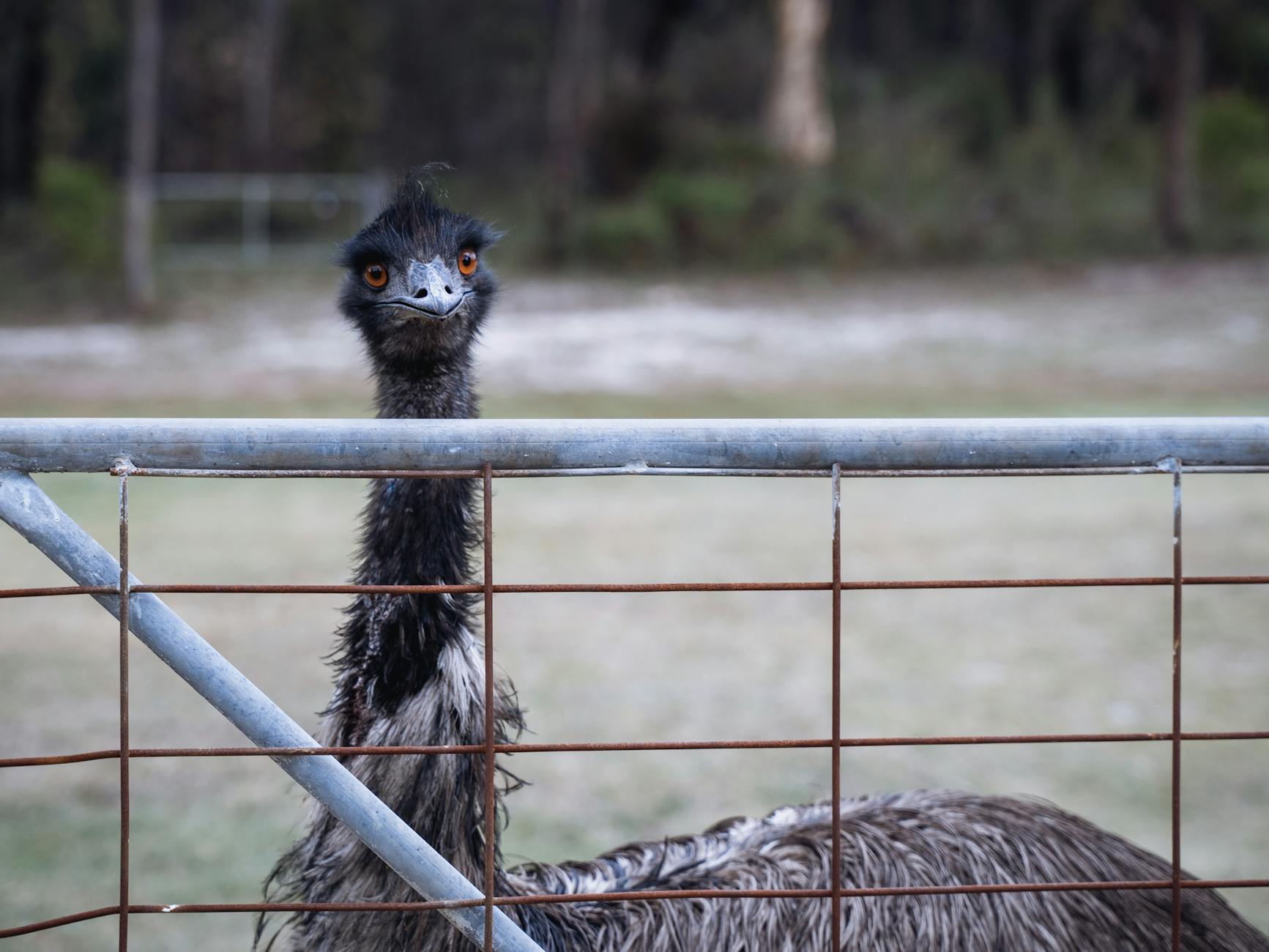
Emus regularly migrate after their breeding season, moving toward the coast from inland regions. The farming districts gave them exactly what they wanted. Cleared land and extra water supplies created for livestock made the cultivated countryside attractive habitat.
Instead of staying away from farms, the birds moved into them. Around places such as Chandler and Walgoolan, they forayed into farming land, especially the more marginal areas. They consumed crops, spoiled others, and damaged fences badly enough to leave openings for rabbits. That meant farmers were not only losing wheat to emus, but also facing new problems from rabbits getting into their fields.
For struggling wheat growers, this was not a funny curiosity. It was another blow in an already punishing year.
Why the army got involved
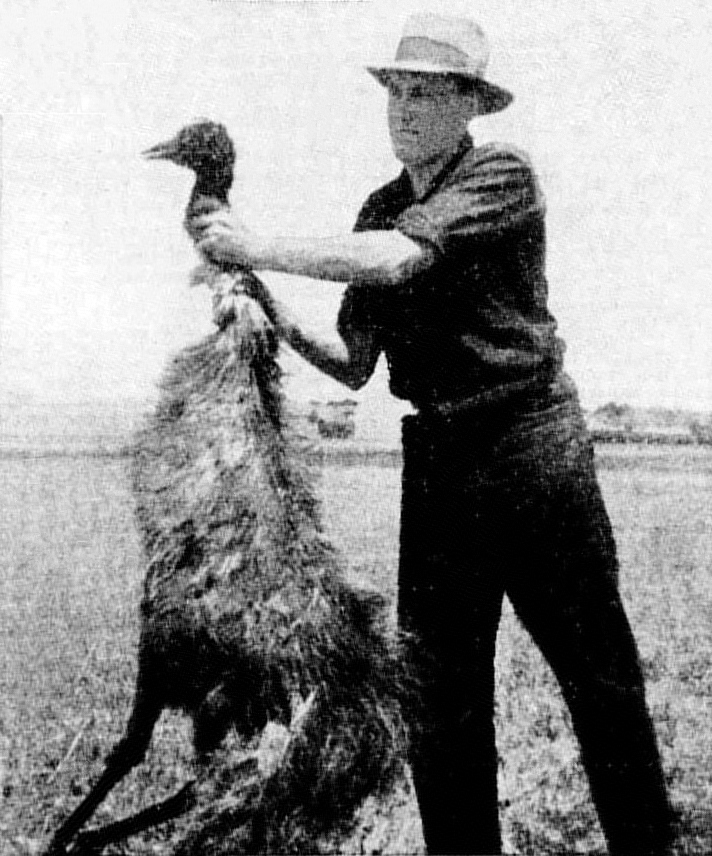
The farmers took their complaints to the government. A deputation of ex-soldiers met with the Minister of Defence, Sir George Pearce. Because many of these settlers had served in World War I, they were familiar with machine guns and believed military weapons could solve the problem quickly.
Pearce agreed to deploy them, but under specific conditions. The guns had to be operated by military personnel. The Western Australian government had to pay for troop transport. Farmers would provide food, accommodation, and payment for ammunition.
There were other motives too. Pearce supported the move partly because the birds would provide target practice. It has also been argued that the operation helped the government appear responsive to Western Australian farmers at a time of political strain. A cinematographer from Fox Movietone was even enlisted, suggesting that the operation was expected to be dramatic enough to record.
The force sent against the birds
The operation was led by Major Gwynydd Purves Wynne-Aubrey Meredith of the 7th Heavy Artillery of the Royal Australian Artillery. He commanded Sergeant S. McMurray and Gunner J. O'Halloran.
Their equipment sounded serious: two Lewis guns and 10,000 rounds of ammunition.
A Lewis gun was a light machine gun, designed to fire many rounds quickly. On paper, that should have made it well suited to dealing with large flocks. In practice, the birds turned out to be frustrating targets.
The start was delayed by rain, which scattered the emus over a wider area. Once the weather cleared by 2 November 1932, the troops were deployed. According to one newspaper account, they were also meant to collect 100 emu skins so the feathers could be used in hats for light horsemen.
The first attempt went badly
On 2 November, the men went to Campion and spotted about 50 emus. But the birds were out of range. Settlers tried to herd them into an ambush, yet the emus split into small groups and ran, making them difficult to hit.
That pattern would define the whole operation.
The first burst of fire was ineffective because of distance. A second round killed some birds, and later that same day perhaps a dozen more were killed from a small flock. But this was far from the decisive result the soldiers and farmers had hoped for.
Then came one of the most famous moments of the Emu War. On 4 November, Meredith set an ambush near a dam. More than 1,000 emus were seen moving toward the position. This looked like the perfect chance for a major success. The gunners waited until the birds were close.
Then the gun jammed after only 12 emus were killed.
The rest scattered before more could be shot.
Why the emus were so hard to stop
The birds did not bunch up neatly for machine-gun fire. They broke into smaller groups and ran fast enough to stay difficult targets. Army observers even noted that each pack seemed to have a leader: a big black-plumed bird standing about six feet high, keeping watch and warning the others.
This made the operation feel absurdly like a real campaign. The military had expected concentrated targets, but instead found scattered, mobile groups that did not behave in ways that made machine guns efficient.
At one point, Meredith tried mounting a gun on a truck to chase them. This also failed. The vehicle could not catch the birds, and the ride was too rough for accurate shooting.
By 8 November, after six days of engagement, 2,500 rounds had already been fired. The number of birds killed remained uncertain. One account put the number at 50, while others ranged from 200 to 500. Meredith's own official report delivered the line that helped secure the event's comic legacy: his men had suffered no casualties except for their dignity.
A military embarrassment becomes a media story
The operation quickly became a public spectacle. The media adopted the term Emu War, and the coverage was not flattering. Members of the Australian House of Representatives discussed the affair on 8 November.
With newspapers reporting that only a few emus had died, Pearce withdrew the military personnel and their guns that same day.
Major Meredith himself compared the birds to Zulus and praised their manoeuvrability, even when wounded. His comments reflected the frustration of a force that had arrived expecting an easy cull and instead found an elusive, highly mobile target spread across open country.
Ornithologist Dominic Serventy later gave one of the sharpest summaries of the failed effort, describing how the dream of point-blank fire into dense masses of emus vanished as the birds effectively adopted guerrilla tactics, splitting into innumerable small units.
The second attempt
The story did not end with the first withdrawal. Emu attacks on crops continued, and farmers again appealed for help. Hot weather and drought were said to be driving emus onto farms in the thousands. James Mitchell, the Premier of Western Australia, strongly supported renewed military assistance.
A report from the Base Commander said 300 emus had been killed in the first operation. On 12 November, the Minister of Defence approved a second effort. He defended the move in the Senate by describing the birds as a serious agricultural threat.
Although the original idea had been to lend the guns while local authorities supplied the operators, Meredith returned to the field because there apparently were not enough experienced machine gunners in the state.
The resumed operation began on 13 November 1932. The first two days brought some success, with about 40 emus killed. The third day was much less productive. But by 2 December, the soldiers were reportedly killing around 100 emus per week.
Meredith was recalled on 10 December. In his report, he claimed 986 confirmed kills from 9,860 rounds, exactly 10 rounds per confirmed kill. He also claimed that 2,500 wounded birds later died from their injuries, though that figure has been described as highly disputed and likely very inflated.
Was the Emu War a failure?
In popular memory, the Emu War is remembered as a humiliating defeat for the army, and there is plenty in the record to support that image. Machine guns jammed. Birds scattered. A truck-mounted gun proved useless. Huge effort produced underwhelming results.
Yet not every assessment was identical. In 1935, the Coolgardie Miner reported that, although the machine-gun method had been criticised in many quarters, it had proved effective and saved what remained of the wheat.
So the episode was both a farce and a serious attempt to protect agriculture during hard times.
What happened after 1932
The military solution did not become a permanent one. Farmers asked again for military assistance in 1934, 1943, and 1948, but the government refused.
Instead, other methods were relied upon. A bounty system that had begun in 1923 continued and was considered effective. In just a six-month period in 1934, 57,034 bounties were claimed.
Exclusion barrier fencing also became a popular way to keep emus out of agricultural areas, along with other animals such as dingoes and rabbits. In simple terms, exclusion fencing is a barrier designed specifically to stop animals from entering certain land.
The issue remained politically relevant for years. In November 1950, Hugh Leslie raised the emu problem in federal parliament and urged Army Minister Josiah Francis to release .303 ammunition for farmers. The minister approved 500,000 rounds.
Why the Emu War still fascinates people
Part of the Emu War's staying power comes from the contrast at its heart. On one side were trained soldiers, machine guns, and military planning. On the other were emus: native birds following migration patterns, finding food and water, and proving unexpectedly hard to stop.
It is often retold as a joke, but it also captures several deeper realities of the time: the struggles of veteran settlers, the economic pain of the Great Depression, the vulnerability of agriculture, and the limits of military force when applied to wildlife management.
That mix of hardship, bureaucracy, absurdity, and stubborn birds is what turned a short 1932 cull into one of Australia's most memorable historical episodes.