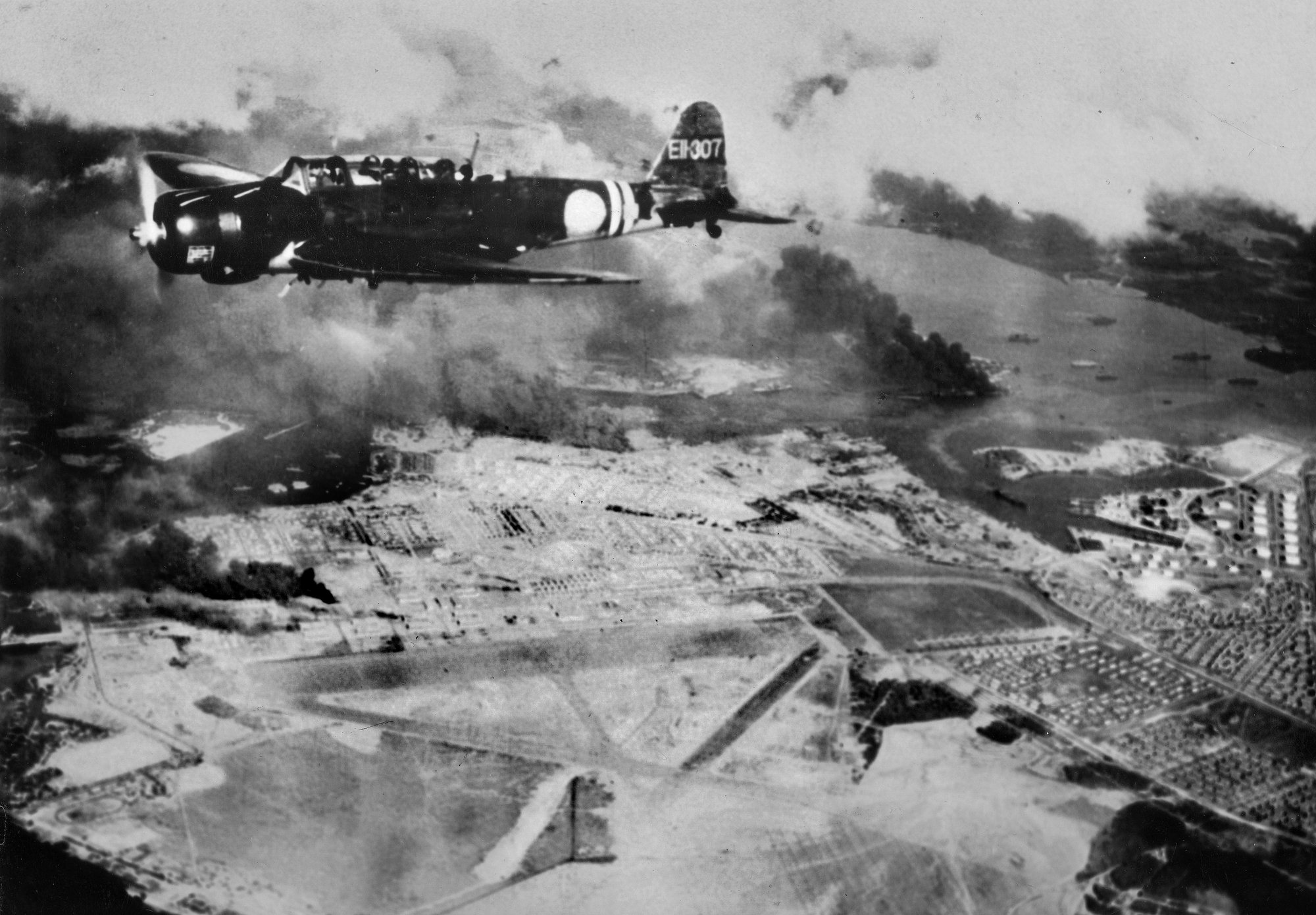
Second wave B5N2 Bomber Kate Over Hickam Field

It Was Over in 90 Minutes

On the morning of December 7, 1941, Japan attacked Pearl Harbor, a US naval base in Hawaii, in a surprise air raid. At the time, the United States was still officially neutral in World War II. In just 90 minutes, the attack pushed America into war.

Pearl Harbor: The Attack That Changed WWII
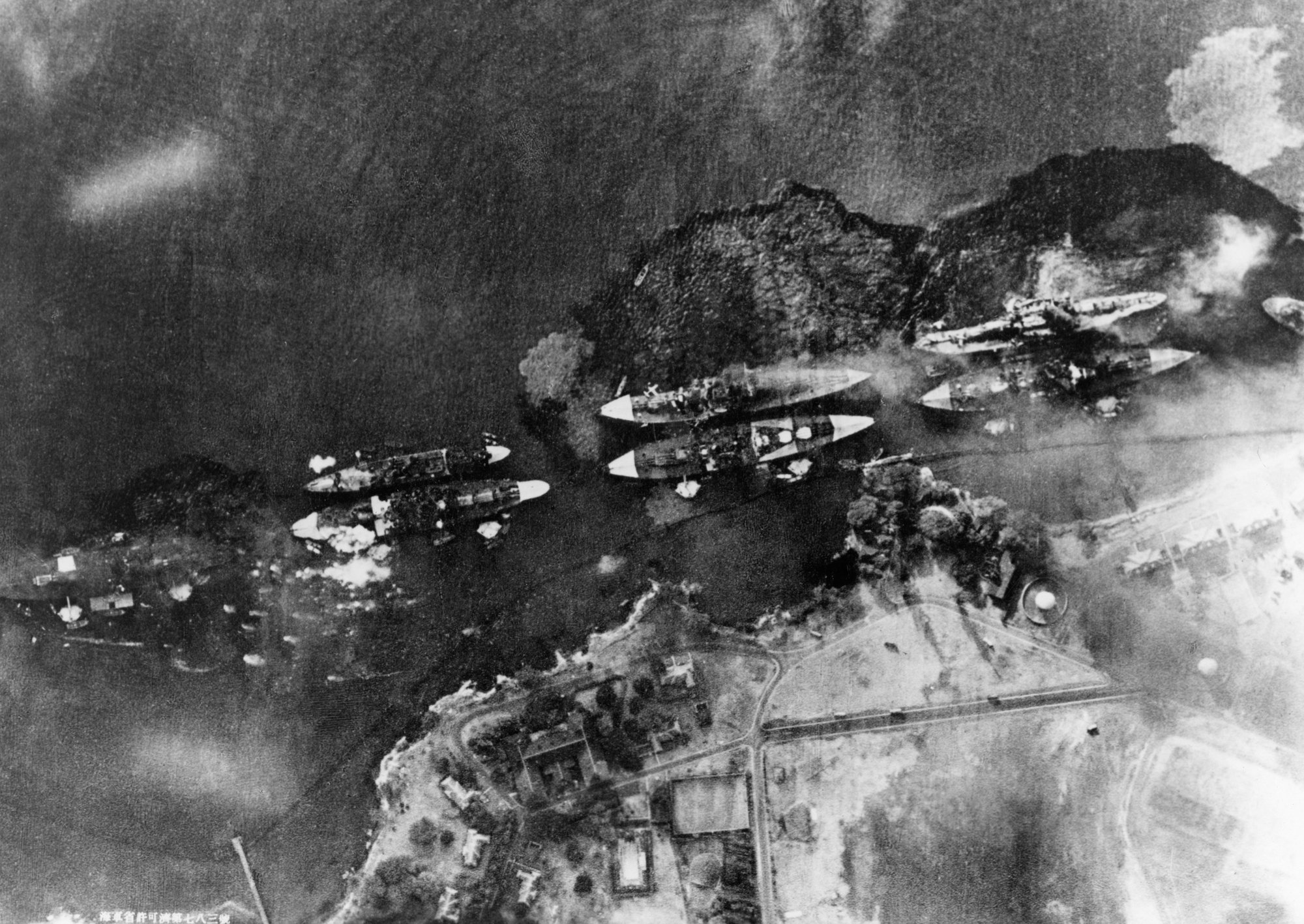
Vertical aerial view of "Battleship Row" at Pearl Harbor, beside Ford Island, during the early part of the horizontal bombing attack on the ships moored there. Photographed from a Japanese aircraft. Ships seen are (from left to right): USS Nevada; USS Arizona with USS Vestal moored outboard; USS Tennessee with USS West Virginia moored outboard; USS Maryland with USS Oklahoma moored outboard; and USS Neosho, only partially visible at the extreme right. A bomb has just hit Arizona near the stern, but she has not yet received the bomb that detonated her forward magazines. West Virginia and Oklahoma are gushing oil from their many torpedo hits and are listing to port. Oklahoma´s port deck edge is already under water. Nevada has also been torpedoed. Japanese inscription in lower left states that the photograph has been officially released by the Navy Ministry.

A Fleet Caught at Anchor

The attack came from six aircraft carriers and sent 353 aircraft toward Pearl Harbor in two waves. Eight US battleships were in the harbor, and all were damaged. Four were sunk.

Pearl Harbor: The Attack That Changed WWII

Pearl Harbor: The Attack That Changed WWII | DeepSwipe