Full article · 7 min read
Earth’s Far Future: How a Life-Friendly Planet Could Become Hostile
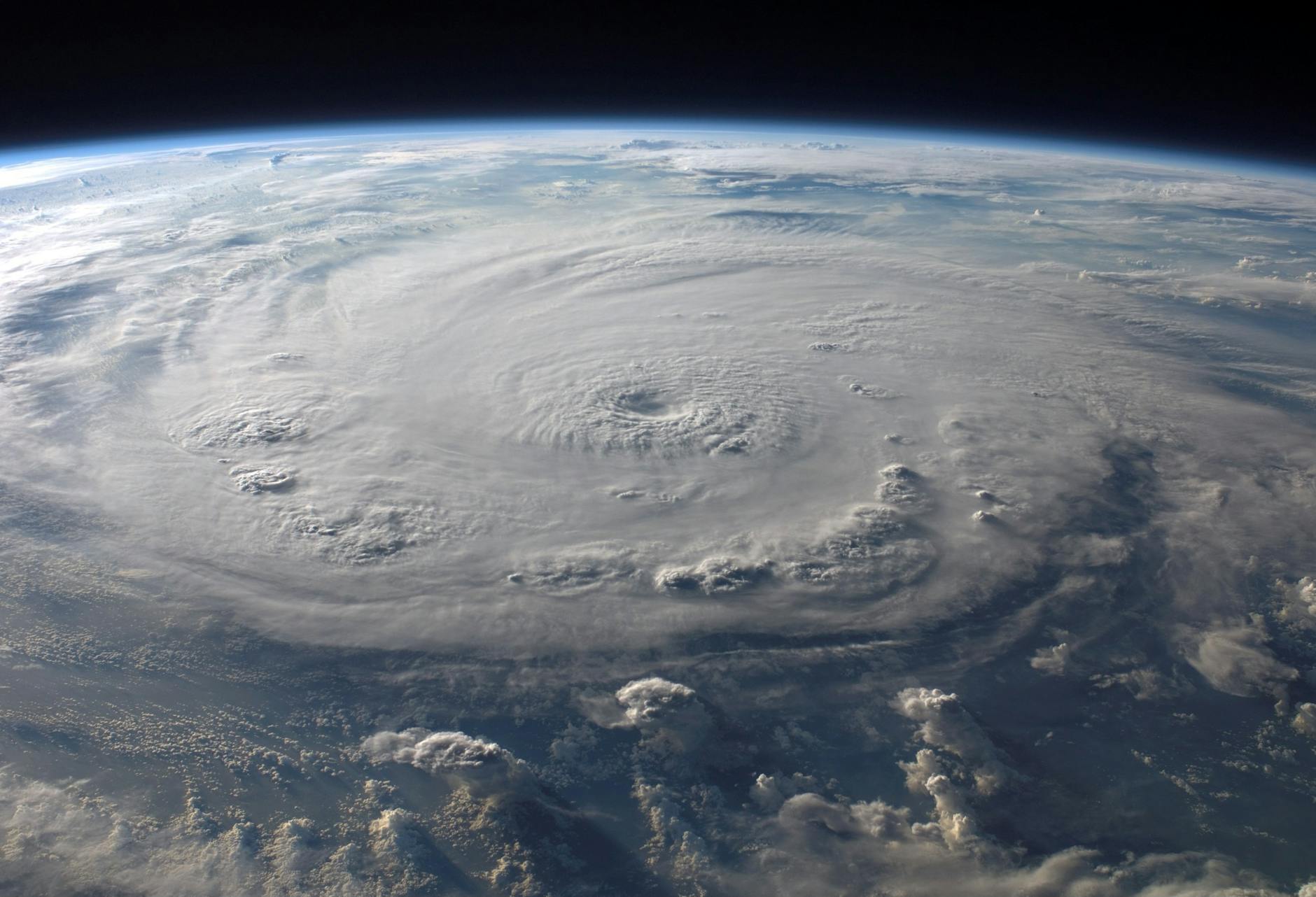
Earth is the only known world with stable liquid water at its surface and a biosphere that has transformed the planet for billions of years. But that livable balance is not permanent. Over immense timescales, Earth’s future is tied to the changing output of the Sun, and the consequences could be dramatic: carbon dioxide may fall to levels too low for many plants, the oceans may eventually evaporate, and the Sun’s final swelling phase could decide whether Earth survives in a wider orbit or is consumed.
A planet made habitable by balance
Today, Earth’s surface conditions are held in a delicate equilibrium. Its atmosphere contains greenhouse gases, especially water vapor and carbon dioxide, that trap some of the Sun’s energy and keep the average surface temperature around 14.76 °C. Without this heat-retention effect, the average surface temperature would be about −18 °C, and life in its current form probably would not exist.
Earth is especially unusual because it sustains liquid surface water. Almost all of its water is in the global ocean, which covers 70.8% of the crust. That ocean, together with the atmosphere, helps regulate climate by storing and moving heat around the planet.
Yet the same systems that make Earth habitable today also mean the planet is sensitive to long-term changes in solar energy.
The Sun is slowly getting brighter
Earth formed about 4.5 billion years ago, and its long-term future is closely linked to the Sun’s evolution. Over the next 1.1 billion years, solar luminosity is expected to increase by about 10%. Over the next 3.5 billion years, it may increase by about 40%.
Solar luminosity simply means the amount of energy the Sun emits. Even a gradual increase matters on planetary timescales. More incoming energy means higher temperatures at Earth’s surface, stronger evaporation, and major changes to the chemical cycles that keep the atmosphere stable.
This is the key idea behind Earth’s deep future: the planet does not need a sudden catastrophe to become unlivable. A slow brightening of the Sun is enough.
Rock weathering and the CO2 problem for plants
One of the first major threats may not be boiling oceans, but starving plants.
As Earth warms, the inorganic carbon cycle is expected to accelerate. In that process, rock weathering becomes especially important. Weathering is the breakdown of rocks by chemical reactions, water, and atmospheric gases. In the long run, these reactions can remove carbon dioxide from the air.
That may sound helpful, since carbon dioxide is a greenhouse gas. But plants depend on CO2 for photosynthesis. According to long-term projections, carbon dioxide concentration could fall to levels lethally low for current plants in roughly 100 to 900 million years. The article gives a benchmark of 10 parts per million for C4 photosynthesis.
C4 photosynthesis is one way some plants capture carbon dioxide efficiently, especially under hot or dry conditions. If even that pathway becomes impossible, the implications are enormous.
A world without vegetation
If vegetation disappears, the consequences spread far beyond forests and fields. Plants are deeply tied to the composition of the atmosphere. A lack of vegetation would eventually lead to the loss of oxygen in the atmosphere, making current animal life impossible.
This would mark a profound turning point in Earth’s history. Life has been reshaping the atmosphere for billions of years. Oxygenic photosynthesis evolved around 2.7 billion years ago and helped create the nitrogen–oxygen atmosphere of today. The ozone layer, formed from atmospheric oxygen, also protects life by blocking much of the Sun’s ultraviolet radiation.
If plant life collapses in the far future, that long biological partnership between life and atmosphere would begin to unravel.
From warming to runaway greenhouse
The most dramatic scenario in Earth’s future is a runaway greenhouse effect.
A greenhouse effect happens when gases in the atmosphere capture thermal energy emitted from the surface, warming the planet. Water vapor is already one of Earth’s main greenhouse gases. In a runaway greenhouse, warming causes more water to evaporate, which adds more water vapor to the atmosphere, which causes even more warming. This feedback can spiral until surface water can no longer remain stable.
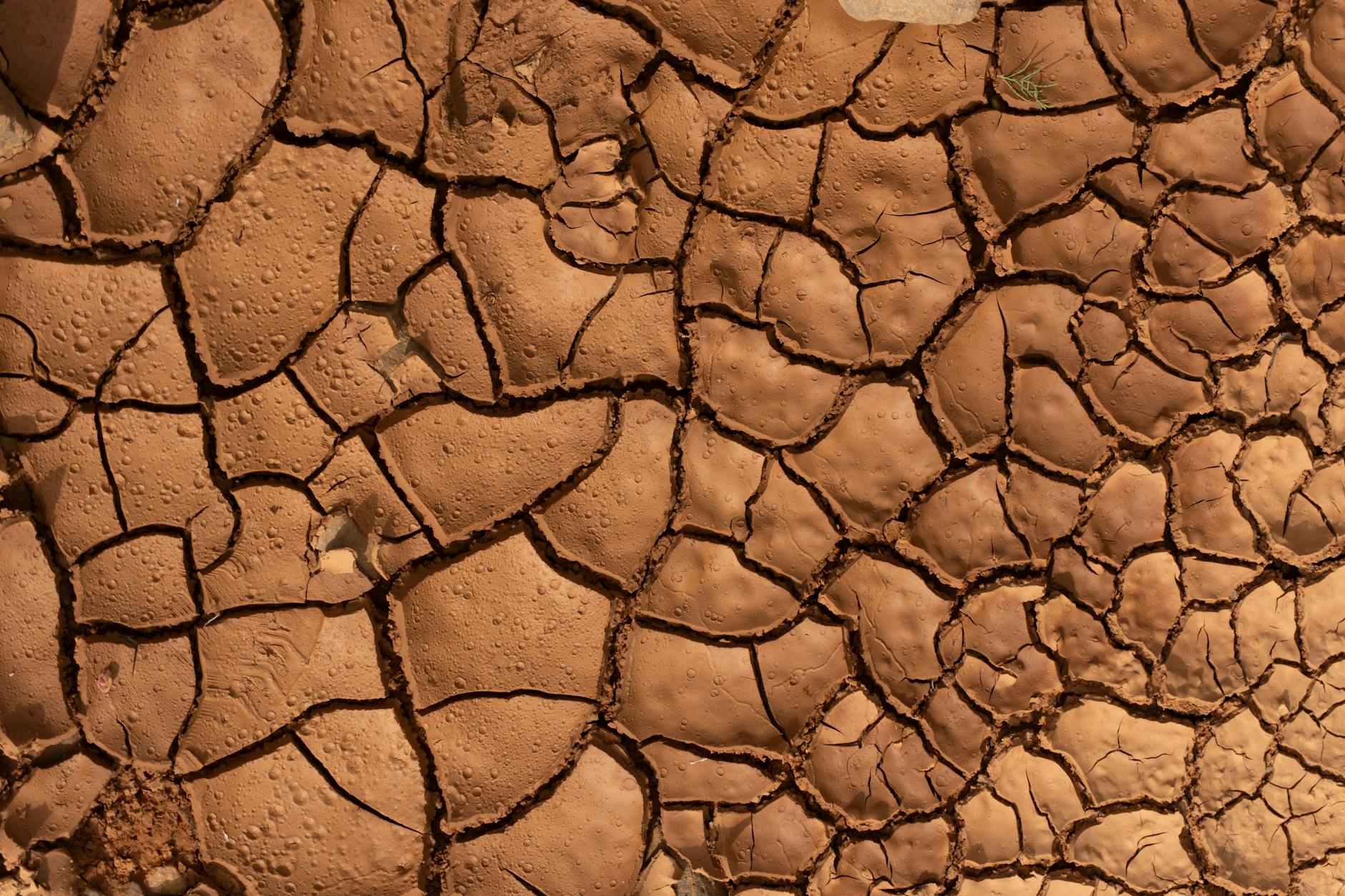
The long-term outlook suggests that Earth’s mean temperature may reach 100 °C in about 1.5 billion years. At that point, all ocean water may evaporate and be lost to space, potentially triggering a runaway greenhouse effect within an estimated 1.6 to 3 billion years.
That would transform Earth from an ocean world into something far more hostile. Today, the oceans act as a vast heat reservoir and are central to climate, weather, and the water cycle. Losing them would mean losing the system that distributes heat, fuels precipitation, and supports nearly all known ecosystems.
Why the oceans are so important
Earth’s oceans hold about 97.5% of the planet’s water and cover 361.8 million square kilometers. Their mean depth is 3,682 meters. They strongly influence climate by storing heat and helping drive oceanic and atmospheric circulation.
Water also cycles constantly between ocean, atmosphere, and land. Evaporation, cloud formation, precipitation, rivers, and groundwater are all connected. This water cycle is described as a vital mechanism for supporting life on land.
That is why the possible evaporation of the oceans is not just a detail in Earth’s future. It represents the breakdown of one of the planet’s most fundamental life-support systems.
Even without a changing Sun, Earth would still lose water
The far future contains another striking possibility: even if the Sun were stable and eternal, a significant fraction of water in the modern oceans would still descend into the mantle over time. The reason given is reduced steam venting from mid-ocean ridges as Earth’s core slowly cools.
This shows that Earth’s habitability depends not only on the Sun, but also on the planet’s own internal evolution. Earth is geologically active because it still contains substantial internal heat, generated by leftover primordial heat from formation and by radiogenic heat from radioactive decay. That heat drives mantle convection and plate tectonics.
As Earth changes internally, even the long-term fate of its oceans can shift.
The Sun’s final act: the red giant phase
The most famous chapter of Earth’s future comes much later, when the Sun becomes a red giant in about 5 billion years.
A red giant is a late stellar phase in which a star swells enormously. Models suggest the Sun will expand to roughly 1 astronomical unit, or about 150 million kilometers, around 250 times its present radius.
An astronomical unit, abbreviated AU, is the average Earth–Sun distance today. Earth currently orbits at about 1 AU. So if the Sun expands to that scale, Earth’s fate becomes uncertain.
Will Earth escape or be swallowed?
The outlook is not completely settled. As the Sun becomes a red giant, it is expected to lose roughly 30% of its mass. If tidal effects did not matter, Earth’s orbit would move outward to about 1.7 AU when the Sun reached maximum radius.
Tidal effects are gravitational interactions that can transfer energy and alter orbits. They are already important in the Earth–Moon system, where they cause tides and gradually slow Earth’s rotation.
In the distant future, those effects may matter enormously for Earth’s survival. One possibility is that Earth drifts outward and avoids direct engulfment. The other is more severe: tidal effects may pull Earth into the Sun’s atmosphere, where the planet would be vaporized, with the heavier elements sinking toward the core of the dying Sun.
So Earth’s last chapter may be either a scorched outward migration or total destruction.
A reminder that habitability is temporary
Earth often feels stable because human timescales are so short compared with planetary ones. But the far future reveals that habitability is not a permanent property. It is a temporary state maintained by a combination of solar input, atmospheric chemistry, liquid water, geological activity, and life itself.
For now, Earth remains an ocean world with a dynamic atmosphere, active plate tectonics, and a climate system capable of supporting an enormous biosphere. But over the next hundreds of millions to billions of years, that balance is expected to shift. First, plants may face carbon dioxide starvation. Later, temperatures may rise high enough to evaporate the oceans. Finally, the Sun’s red giant expansion may determine whether Earth lingers briefly in a wider orbit or disappears into the star that made life here possible in the first place.
In the very long view, Earth’s future is a story of slow change with colossal consequences.
Sources
Based on information from Earth.
More like this
Time-travel your brain before the Sun does its red-giant thing — download DeepSwipe and explore more cosmic futures.