Full article · 8 min read
Tardigrades vs Space: How Water Bears Endure the Void
Tiny, plump, and almost cartoonishly clumsy under a microscope, tardigrades do not look like space survivors. Yet these eight-legged micro-animals have done something that sounds like science fiction: they have survived exposure to outer space.
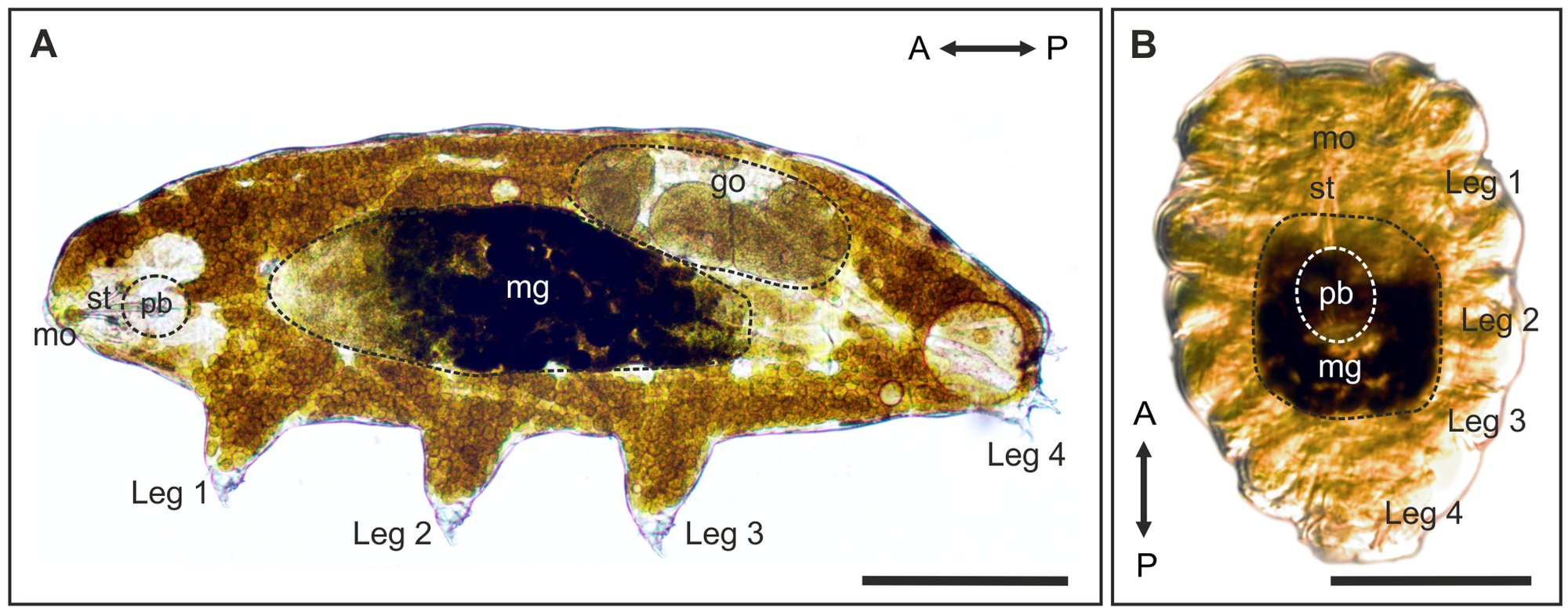
Often called water bears or moss piglets, tardigrades are usually about 0.5 mm long when fully grown, though many are smaller. They live across an astonishing range of environments, from mountaintops and tropical rainforests to the deep sea and Antarctica. Their reputation comes from one extraordinary trait: some species can endure conditions that would quickly kill most forms of life, including dehydration, radiation, extreme temperatures, air deprivation, and both very high and very low pressure.
That makes them perfect stars for one of the strangest real-life biology stories of all: what happens when you send a nearly indestructible microscopic animal into space?
What exactly is a tardigrade?
Tardigrades are a whole phylum of segmented micro-animals with four pairs of hollow, unjointed legs. Each leg ends in claws or, in some species, sticky pads. They have a short, plump body and crawl in a way that reminded early observers of a bear’s gait, which is how the nickname water bear arose.
Their formal name has a similarly charming origin. In 1776, Lazzaro Spallanzani named them Tardigrada, meaning “slow walkers.” It fits. Tardigrades are famous for their clumsy crawl, and that very visible awkwardness has helped make them popular far beyond scientific circles.
Despite their cute image, they are serious biological oddities. They have no lungs, no gills, and no blood vessels. Instead, they rely on diffusion through their cuticle and body cavity for gas exchange. Their body cavity is a haemocoel, an open circulatory system filled with colourless fluid. They also have surprisingly simple bodies, made up of only about 1000 cells.
Many tardigrades live in damp habitats such as mosses, lichens, soil, and leaf litter. Because they are common in mosses and lichens and can be viewed under a low-power microscope, they are unusually accessible to students and amateur scientists.
The secret weapon: cryptobiosis and the tun state
The key to understanding tardigrades in space is understanding their most famous survival trick: cryptobiosis.
Cryptobiosis is a state in which metabolism is suspended. In terrestrial and freshwater tardigrades, this often happens when water disappears from their environment. If the moss or pond they live in dries out, they can pull in their legs and become a desiccated cyst known as a tun.
In this tun state, no metabolic activity takes place. That means the animal is not actively growing, feeding, or reproducing. It is essentially enduring the bad times until conditions improve. Once water returns, some tardigrades can rehydrate and become active again.
This state is what gives tardigrades their remarkable tolerance. While in a tun, they can survive for several years without food or water. In that same state, they also become highly resistant to environmental stresses including vacuum, lack of oxygen, ionising radiation, high pressure, and temperatures ranging from as low as −272 °C to as much as +149 °C, at least for short periods.
That does not mean tardigrades are true extremophiles in the strict sense. They are not considered universally extremophilic because they are not adapted to thrive in many of these harsh conditions. They endure them rather than exploit them. The longer the exposure, the greater their chance of dying.
The famous space experiment
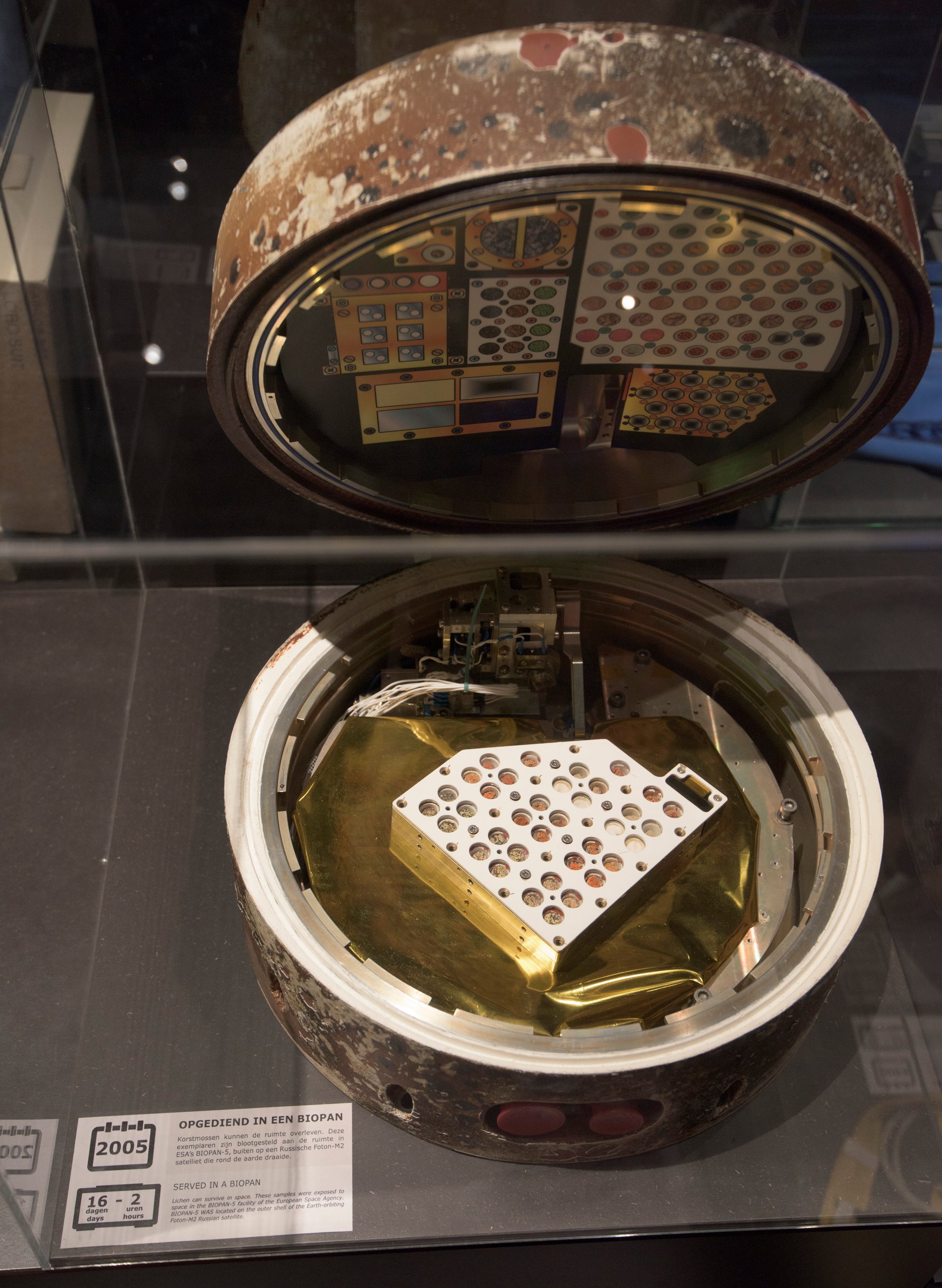
In 2007, dehydrated tardigrades were launched on the FOTON-M3 mission and exposed for 10 days either to vacuum alone or to vacuum plus solar ultraviolet radiation.
This experiment mattered because space combines several lethal threats at once. Vacuum means there is no air. Solar ultraviolet, or UV, is intense radiation from the Sun that can damage biological molecules, including DNA. A small animal that can survive both would be demonstrating a level of toughness that is extraordinary even among hardy life forms.
When the tardigrades returned to Earth, the results were remarkable. More than 68% of the individuals that had been protected from ultraviolet radiation were reanimated by rehydration. Even more striking, many of those revived tardigrades went on to produce viable embryos.
That is a crucial detail. Survival alone is impressive, but survival followed by successful reproduction suggests that the animals were not merely barely alive. They remained biologically functional enough to continue the life cycle.
Why UV mattered more than vacuum
One of the most revealing outcomes of the space exposure experiments was that vacuum by itself was not the main problem.
Hydrated tardigrades exposed to both vacuum and solar ultraviolet survived poorly. Only three individuals of Milnesium tardigradum made it through that combination. In contrast, vacuum alone did not much affect egg-laying in either Ramazzottius coronifer or Milnesium tardigradum.
That helps explain the pattern seen in the experiment slides: tun mode wins, and UV is the real killer.
The difference between hydrated and dehydrated tardigrades is especially important. A hydrated tardigrade is active and full of water. A tardigrade in a tun is dried out and metabolically suspended. The dehydrated form is much better equipped to tolerate the combined assault of space conditions.
UV radiation, however, remained a severe hazard. In Milnesium tardigradum, ultraviolet exposure reduced egg-laying. So while the vacuum of space sounds terrifying, sunlight in space may be an even bigger biological threat.
How do tardigrades protect themselves?
Scientists once thought tardigrades’ survival during desiccation depended mainly on trehalose, a sugar commonly used by other organisms that survive drying out. But tardigrades do not make enough trehalose for that to explain their resilience.
Instead, they produce intrinsically disordered proteins in response to desiccation. These are proteins that do not lock into one rigid shape. Three such proteins are specific to tardigrades and are called tardigrade specific proteins. They may protect cell membranes by associating with the polar heads of lipid molecules, and they may form a glass-like matrix that protects the cytoplasm during drying.
Tardigrades also have other molecular defenses. Their DNA can be protected from radiation by a protein called Dsup, short for “damage suppressor.” In Ramazzottius varieornatus and Hypsibius exemplaris, Dsup proteins bind to nucleosomes and protect chromosomal DNA from hydroxyl radicals. The Dsup protein of Ramazzottius varieornatus also confers resistance to ultraviolet-C by upregulating DNA repair genes.
Taken together, these protections help explain why tardigrades are such compelling subjects for space biology. They offer clues to how living tissues might endure dehydration, radiation, and freezing.
Tardigrades on the International Space Station
The story did not end with the 2007 exposure experiment. In 2011, tardigrades traveled on the International Space Station aboard STS-134.
There, they showed they could survive microgravity and cosmic radiation. Microgravity means the very weak gravity-like conditions experienced in orbit. Cosmic radiation refers to high-energy particles arriving from the Sun and from space.
This is why tardigrades are considered suitable model organisms for space biology. A model organism is a species used to test scientific ideas because it is practical to study and can reveal general biological principles. Tardigrades are useful in this role because their responses to severe stress can be observed and compared in controlled ways.
Their performance in orbit suggests they can help scientists study how life responds to the unusual conditions of space travel.
The Moon crash: tardigrades aboard Beresheet
In 2019, tardigrades entered another chapter of space history, this time involving the Moon.
A capsule containing tardigrades in a cryptobiotic state was aboard the Israeli lunar lander Beresheet. The spacecraft crashed on the Moon.
That fact alone has captured the public imagination: microscopic water bears, dried into suspended animation, riding a failed Moon mission. It sounds absurdly cinematic, but it happened.
The important point is that the tardigrades on board were in a cryptobiotic state, the same survival mode that underlies their most extreme tolerances. That does not mean they were thriving on the Moon, only that they were present there in a highly durable form when the lander crashed.
Why tardigrades fascinate people
Part of the appeal is the contrast. Tardigrades are tiny, common, and often found in ordinary mosses and lichens on walls and roofs. Yet they have survived conditions associated with the vacuum of space. They are accessible enough to be seen by beginners with a low-power microscope, but strange enough to seem almost unreal.
Their popularity has spread into culture as well as science. Their clumsy crawling has been called adorable, and they appear on clothing, soft toys, earrings, keychains, and crochet patterns. Their traits have also earned them walk-on roles in science fiction and fantasy.
But their space story is compelling even without embellishment. Few animals can be dried out into a tun, launched into orbit, exposed to vacuum, survive rehydration, and then produce viable embryos.
A tiny survivor with big scientific value
Tardigrades are not invincible, and they are not magic. They do die under extreme exposure, especially when harmful radiation is involved. But their ability to endure the near-impossible in the tun state has made them one of the most intriguing animals ever studied.
From the FOTON-M3 mission to the International Space Station and even the Beresheet Moon crash, tardigrades have shown that life can be tougher, stranger, and more adaptable than it first appears.
That is what makes water bears such captivating ambassadors for biology in space: they are tiny creatures from moss and soil that keep forcing us to rethink the limits of survival.
Sources
Based on information from Tardigrade.
More like this
Go full tun mode on boredom — download DeepSwipe and let your brain survive the void with daily bites of knowledge.